

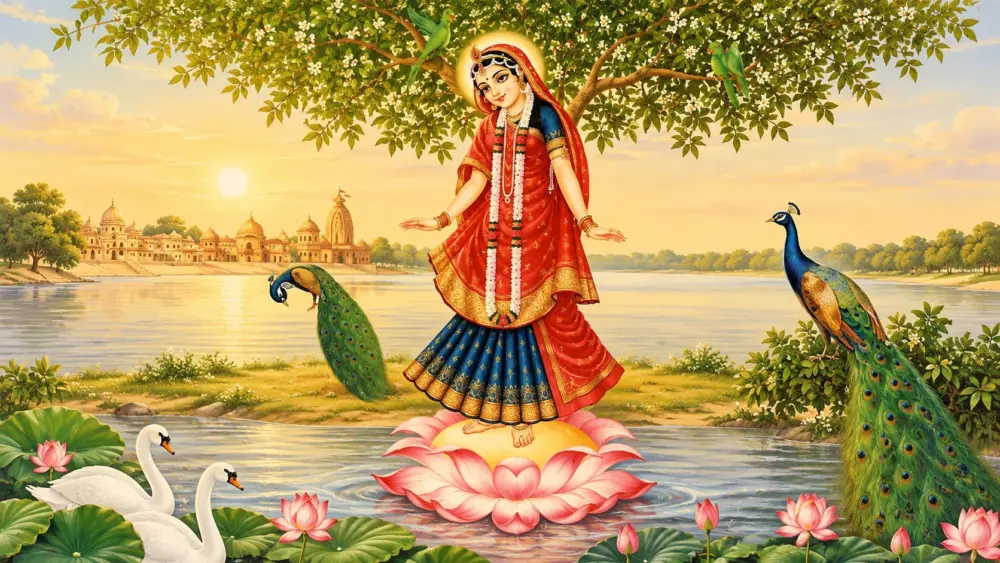
Radha Ashtami 2026 falls on Saturday, 19 September 2026, on Bhadrapada Shukla Ashtami. Radha Rani appeared at noon, so the main puja runs roughly from 11:00 AM to 1:30 PM. The day falls fifteen days after Krishna Janmashtami. It marks Shri Radha Rani’s appearance in Raval, near Barsana.
Just like shiv is incomplete without Shakti. Shri Narayan is incomplete without Maa Laxmi. When Shri Hari came to earth as shri krishna on krishna janmashtami. It was already in destiny that Maa Laxmi would come following him too. And, that’s why today we celebrate Radha Ashtami.
That was the beginning of something that even after thousands of year. Two names will be taken together – Radha-Krishna. So, let’s uncover the story of Maa Laxmi avatar – Radha Rani.
Key Takeaways
- Radha Ashtami 2026 date: Saturday, 19 September 2026 (Bhadrapada Shukla Ashtami)
- Main puja happens at midday, not at night like Janmashtami
- Radha Rani appeared in Raval and was raised in Barsana, in Braj
- Her parents were King Vrishabhanu and Mother Kirtida
- She kept her eyes closed for months until she first saw Bhagwan Shri Krishna
- The day falls exactly a fortnight after Krishna Janmashtami
What is Radha Ashtami?
Radha Ashtami is the appearance day of Shri Radha Rani, the eternal beloved of Bhagwan Shri Krishna. It falls on the Ashtami tithi of Shukla Paksha in the Bhadrapada month. Devotees across Braj treat this day as dearly and joyful as Janmashtami itself.
Radha Ashtami Meaning
The word Radha comes from “aradhana,” meaning worship. Radha Rani is the one always absorbed in worshipping Krishna. In turn, all of Braj worships her. And ashtami simply means the eighth day of the lunar fortnight.
Importance and Significance of Radha Ashtami
In Vaishnav tradition, Krishna is called Sat Chit Anand, eternal, full of knowledge, and full of bliss. Bhagwan Shri Krishna’s Hladini Shakti, the potency that keeps him in bliss, is Radha Rani herself. Without her, that bliss has no one to receive it and no one to share it with. This is why devotees say Krishna without Radha is only half the truth.
When is Radha Ashtami 2026?
If you are searching for Radha Ashtami kab hai, here is the direct answer. It falls on Saturday, 19 September 2026.
- Radha Ashtami 2026: Saturday, September 19, 2026
- Madhyahna Time: 11:19 AM to 01:45 PM
- Duration: 02 Hours 26 Mins
- Ashtami Tithi Begins: 01:00 PM on September 18, 2026
- Ashtami Tithi Ends: 03:26 PM on September 19, 2026
Radha Rani’s puja happens at noon, unlike Janmashtami, which is kept at midnight. Please match this window to your own city’s panchang, since sunrise and tithi timings shift by location.
Before we go further, take a moment to check the full Hindu festival calendar for 2026. Mark every Braj festival in advance.
Radha Rani Birth Story
Every Braj bhakt like us grows up hearing this story from their grandmother, on a charpai, under the stars. Scriptures like the Garga Samhita and the Brahma Vaivarta Purana carry the appearance pastime of Radha Rani. Small details differ between texts, as devotional literature often does.
Who Were Radha Rani’s Parents?
Her father was King Vrishabhanu, the chief of Braj and a close friend of Nand Baba. Her mother is known across Braj as Mother Kirtida. The Garga Samhita names her mother as Kalavati. Popular tradition calls her Kirti or Kirtida instead. Both names are honoured, since they come from different scriptural streams.
Where Was Radha Rani Born?
Most Braj tradition places her birth at Raval, a small village on the Yamuna near Gokul. She was raised in Barsana after Vrishabhanu Maharaj moved his family there. This followed Nand Baba’s own move from Gokul to Nandgaon. The text Bhakti-ratnakara states plainly that Radhika appeared in Raval. Her appearance, it says, filled the whole world with joy.
How Was Radha Rani Born?
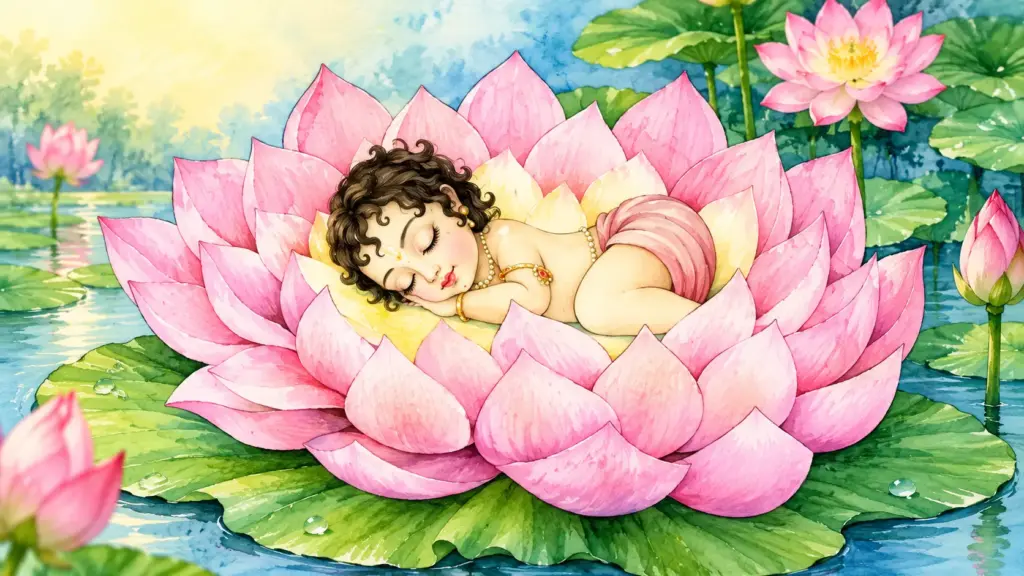
Vrishabhanu Maharaj was performing tapasya on the banks of the Yamuna, praying for a child. A golden lotus, glowing like a thousand suns, floated toward him on the water. Inside its petals was a radiant baby girl. Devotional tradition calls this an ayonija birth, meaning she did not come from a womb. She arrived as pure grace, already complete.
Why Did Radha Rani Open Her Eyes When She Saw Krishna?
The newborn Radha Rani did not open her eyes for months after her birth. Vrishabhanu and Kirtida feared she may be unable to see. Narada Muni reassured them and told them to continue the celebrations without worry. Months later, Vrishabhanu carried her to Gokul for Krishna’s own birth festival. The moment infant Radha came close to baby Krishna, she opened her eyes for the first time. She had been waiting her whole short life for that one glimpse.
| Acharya Pundrik Goswami of the Radharaman Temple in Vrindavan often explains this moment simply. Radha Rani’s eyes, he says, were made only for Krishna’s darshan. |
Why Radha Ashtami is Celebrated?
If you are asking why is Radha Ashtami celebrated, the answer sits in one idea. Devotion needs a form. Radha Rani is that form. She represents Hladini Shakti, the energy of divine love that Krishna himself carries within him. Celebrating her appearance is a way of celebrating love itself, not romance, but complete surrender.
The Padma Purana gives this festival its own chapter. In its Brahma Khanda, Chapter Seven, titled “The Greatness of Radhashtami,” the text names the tithi outright. Bhadrapada Shukla Ashtami, it says, is the day for worshipping Radha Rani’s image. Offerings include sandal paste, flowers, incense, lamps, cloth and fruit.
The chapter also states that observing Radha Janmashtami earns a hundred times the merit of a thousand Ekadashi fasts. Read this as devotional emphasis, not literal accounting. Puranas often speak this way to show that something matters more than what devotees already practice daily.
For those asking in Hindi, Radha Ashtami kyun manayi jati hai is answered the same way. Braj believes that worship reaching Krishna without first reaching Radha Rani stays incomplete. So devotees turn to her first.
Radha Ashtami 2026 Puja Vidhi
The Radha Ashtami puja vidhi is simple enough for any home. It can also grow as elaborate as a temple ceremony.
Radha Ashtami Puja Samagri:
- Panchamrit (milk, curd, honey, ghee, sugar) for abhishek
- Gangajal, roli, chandan and akshat
- Fresh flowers, especially lotus, and tulsi leaves
- Dhoop, deep and camphor for aarti
- Panjiri, makhan mishri or other milk sweets as bhog
- Seasonal fruits and a yellow or pink cloth
Radha Ashtami Puja Vidhi: Step-by-Step:
- Wake early, bathe and wear clean clothes before sunrise.
- Clean the puja space and place a Radha-Krishna idol or picture on a raised platform.
- Perform abhishek of Radha-Krishna with panchamrit, followed by clean water.
- Offer akshat, chandan, fresh flowers and tulsi at their feet.
- Light a diya and offer bhog around the midday Madhyahna Kaal.
- Chant Radha-Krishna mantras and perform aarti with full devotion.
- Distribute prasad among family members and neighbours after the puja.
The Brihannaradiya Purana describes a similar structure for this vrat. It calls for a small mandal at the puja spot, with a kalash placed at its centre.
Radha Ashtami Vrat 2026
Keeping a Radha Ashtami vrat vidhi correctly matters more to devotees than following a rigid checklist.
What Can You Eat During Radha Ashtami Vrat?
Most households follow a phalahar vrat, not a full nirjala fast. Fruits, milk, curd and sabudana dishes are allowed through the day. Grains, pulses and regular salt are usually avoided until the fast breaks.
When Should Radha Ashtami Vrat Be Broken?
The fast is generally broken after the midday puja and bhog offering, once Madhyahna Kaal ends. Some families choose to extend it further into the evening, based on their own family tradition.
Is It Necessary to Keep a Fast on Radha Ashtami?
No, a strict fast is not compulsory for everyone. Elderly devotees, pregnant women and anyone with a health condition can simply worship without fasting. Braj tradition holds that sincere devotion matters more than physical hardship.
Radha Ashtami Mantra and Prayers
These four are chanted widely across Braj homes and temples on this day.
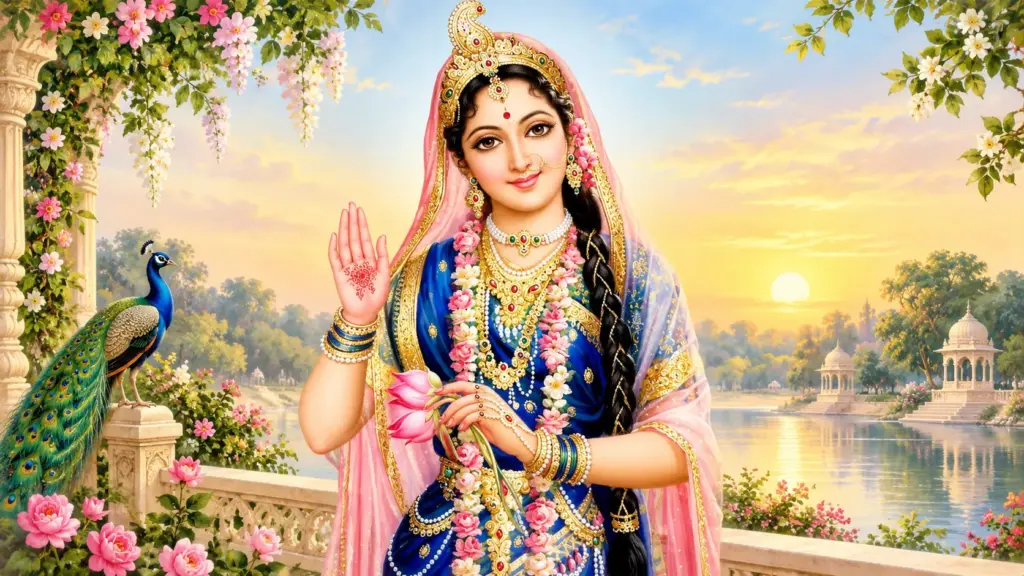
- ॐ श्री राधिकायै नमः॥ Om Shri Radhikayai Namah, the primary invocation mantra for Radha Rani.
- ॐ ह्रीं श्रीं राधिकायै नमः॥ Om Hreem Shreem Radhikayai Namah, offered during abhishek and shringar.
- राधे राधे श्याम, मिला दे मेरे श्याम। Radhe Radhe Shyam, Milade Mere Shyam, a simple, widely sung bhajan line.
- Continuous Radha Naam Jaap, simply repeating “Radhe Radhe” on a mala.
Premanand Ji Maharaj of Vrindavan teaches that chanting Radha’s name is one of the simplest and surest ways to reach Bhagwan Krishna, since her name alone carries his grace within it.
Source: Premanand Ji Maharaj in his Vrindavan satsangs
Benefits of Radha Ashtami Pooja
- Devotees believe sincere puja brings peace and harmony within the family.
- Chanting Radha’s name is said to soften a restless, worried mind.
- The day is considered auspicious for strengthening devotion and patience.
- Many households pray for lasting love and understanding between couples.
- Visiting a Radha temple on this day is held as especially fruitful.
How Is Radha Ashtami Celebrated?
Radha Ashtami Celebration at Home
Families decorate their mandir with fresh flowers and a small jhula for the deity. Many households play devotional bhajans through the day. Mero Man Lageyo Barsaane Mein is a favourite during the shringar. Children help string marigold garlands while elders prepare panjiri and other bhog items.
Radha Ashtami Celebrations in Barsana and Vrindavan
Barsana is where the festival reaches its peak. The Shriji Mandir, also called Ladli Ji Maharaj Mandir, sits atop the Bhanugarh hill. It becomes the centre of the day’s festivities. Abhishek, kirtan and chappan bhog continue from morning onward. The bhajan Barsane Mein Bangla Dekha is sung widely through the streets. In Vrindavan, the Radha Vallabh Mandir fills with kirtan. Priests there echo one simple line through the temple halls, that Radha Rani has taken birth again. Rawal, Nandgaon and Mathura hold their own smaller but heartfelt celebrations too.
Radha Ashtami and Janmashtami: What Is the Connection?
Radha Ashtami falls exactly fifteen days after Krishna Janmashtami, which is observed on 4 September 2026. Janmashtami marks Krishna’s arrival at midnight. Radha Ashtami marks Radha Rani’s own appearance at noon, a fortnight later. Braj devotees describe them as two halves of the same story. First the beloved arrives, then the one who loves him most. Readers who mark their calendar for Janmashtami often also look up Balarama Jayanti. Braj’s festival season keeps unfolding through this whole month.
Conclusion
And that is what Radha Ashtami is really about.
It is not only about keeping a vrat or following a list of puja rituals. It is about remembering Radha Rani, whose name has been woven into the story of Shri Krishna so deeply that the two are rarely spoken of apart. On Saturday, 19 September 2026, devotees will mark her appearance with puja, bhog, naam jaap and celebrations across Braj.
You can observe the day in a temple, in your home mandir, or simply by sitting and chanting “Radhe Radhe.” What is most important is the feeling with which you do it. After all, Radha Ashtami has always been less about doing more and more about remembering with a sincere heart.
So, when Radha Ashtami arrives, take a moment to remember her story, offer your prayers, and let the name Radha-Krishna fill the day. Sometimes, devotion does not need to be complicated. A little faith, a simple prayer, and two names spoken with love can be enough.
Frequently Asked Questions About Radha Ashtami 2026
No. A strict fast is not compulsory for everyone. Devotees who are elderly, pregnant, or have health concerns can simply take part in the puja and prayer without fasting.
Braj tradition generally places Radha Rani’s appearance in Raval, near the Yamuna. She was later raised in Barsana after her family moved there, which is why both places are closely associated with her.
Radha Rani’s appearance is traditionally associated with Madhyahna Kaal, so the main puja is performed around midday. This is different from Janmashtami, which is associated with Krishna’s midnight birth.
Common offerings include panjiri, makhan mishri, milk sweets, and seasonal fruits. Families can offer what they normally prepare with devotion rather than treating the bhog list like an examination paper.
Yes. A simple home puja can be done with a Radha-Krishna idol or picture, flowers, diya, incense, bhog and prayers. The article’s puja vidhi is intentionally simple enough for a home mandir.
You can chant “Oṁ Śrī Rādhikāyai Namaḥ” or “Oṁ Hrīṁ Śrīṁ Rādhikāyai Namaḥ.” Simple naam jaap such as “Rādhe Rādhe” is also included in the article as a devotional practice.
According to the devotional story, Radha Rani kept her eyes closed until she saw baby Krishna. When Krishna came before her, she opened her eyes for the first time, which devotees understand as a symbolic expression of her eternal connection with him.
Radha Ashtami is observed fifteen days after Krishna Janmashtami. Janmashtami celebrates Krishna’s appearance at midnight, while Radha Ashtami commemorates Radha Rani’s appearance at midday.
No. Many households observe a phalahar vrat instead, with fruits, milk, curd and vrat-friendly foods. Fasting practices can vary by family and tradition.
Radha Ashtami holds a particularly important place in Braj, where Radha Rani’s life and worship are deeply rooted. Barsana, Raval, Vrindavan and other parts of Braj mark the day with temple celebrations, abhishek, kirtan, bhog and devotional singing.
My Favorite Corner (MFC) brings clear, scripture-sourced explanations of Hindu philosophy and practice to readers seeking authentic spiritual guidance. Explore more of our content on dharma, karma, and the paths to liberation. Follow MFC on Instagram and Facebook to explore more sacred places, festivals, and living traditions of Sanatan Dharma.