
Every sunrise and sunset during Chhath Puja 2026 feels like the Earth pausing to breathe. Across ghats, rivers, and rooftops, millions of devotees fold their hands to the Sun, not out of fear, but gratitude.
This ancient festival honors Surya Dev, the giver of life, and Chhathi Maiya, the goddess who protects families and blesses them with prosperity. It’s four days of purity, fasting, and prayer, where faith meets nature in its purest form.
Date, Muhurat, and Tithi for Chhath Puja 2026
In 2026, the festival will run for four days in November, during the Kartik Shukla Paksha of the Hindu lunar calendar. Here’s the day-wise calendar for Chhath Puja 2026:
| Day | Date | Occasion | Tithi |
|---|---|---|---|
| Day 1 | November 13, 2026 (Friday) | Nahay Khay | Kartik Shukla Chaturthi |
| Day 2 | November 14, 2026 (Saturday) | Kharna / Lohanda | Kartik Shukla Panchami |
| Day 3 | November 15, 2026 (Sunday) | Sandhya Arghya | Kartik Shukla Shashthi |
| Day 4 | November 16, 2026 (Monday) | Usha Arghya | Kartik Shukla Saptami |
Note: The exact Chhath Puja 2026 muhurat and timings may vary slightly based on your city’s sunrise and sunset.
Why is Chhath Puja so Special?
Chhath Puja is one of the oldest Vedic rituals known to humankind. Its origins go back to the time when the Sun was worshipped as the ultimate source of energy.
The festival is celebrated mainly in Bihar, Jharkhand, Eastern Uttar Pradesh, and Nepal’s Madhesh region. But over the years, it has found homes across the world, quite literally, from ghats in India to parks in London and even rooftops in Dubai.
But, at its core, Chhath is about harmony between humans and nature. Every ritual, every offering, is a reminder to respect the forces that sustain us.
The Four Sacred Days of Chhath Puja

Every day of Chhath Puja 2026 tells its own story, one of faith, purity, and deep gratitude for nature. This festival isn’t just about rituals; it’s about discipline, love, and reconnecting with the forces that sustain life.
Day 1: Nahay Khay
Date: November 13, 2026 (Friday)
The journey of Chhath Puja 2026 begins with Nahay Khay, which literally means to bathe and eat. On this day, devotees take a sacred dip in a river or pond and prepare a simple vegetarian meal.
The food is cooked in spotless utensils, often without salt, a small act that represents purity and restraint. Homes are scrubbed clean, diyas are lit, and fruits are arranged neatly for the coming days.
This ritual marks the start of spiritual cleansing. Nahay Khay isn’t just about washing away physical impurities; it’s about quieting the mind, slowing down, and walking into the next few days with humility and devotion.
Day 2: Kharna
Date: November 14, 2026 (Saturday)
The second day, Kharna, tests both patience and faith. Devotees fast from sunrise to sunset, not even a sip of water. It’s an act of total surrender and focus.
When the sun sets, they break the fast with a simple offering of prasad made from rice, jaggery, and milk. The first portion is offered to Chhathi Maiya, and the rest is shared with family and neighbors.
There’s something incredibly grounding about this ritual. After hours of fasting, sharing the first meal together brings a wave of calm and connection. It’s a reminder that devotion is sweetest when it’s shared.
Day 3: Sandhya Arghya
Date: November 15, 2026 (Sunday)
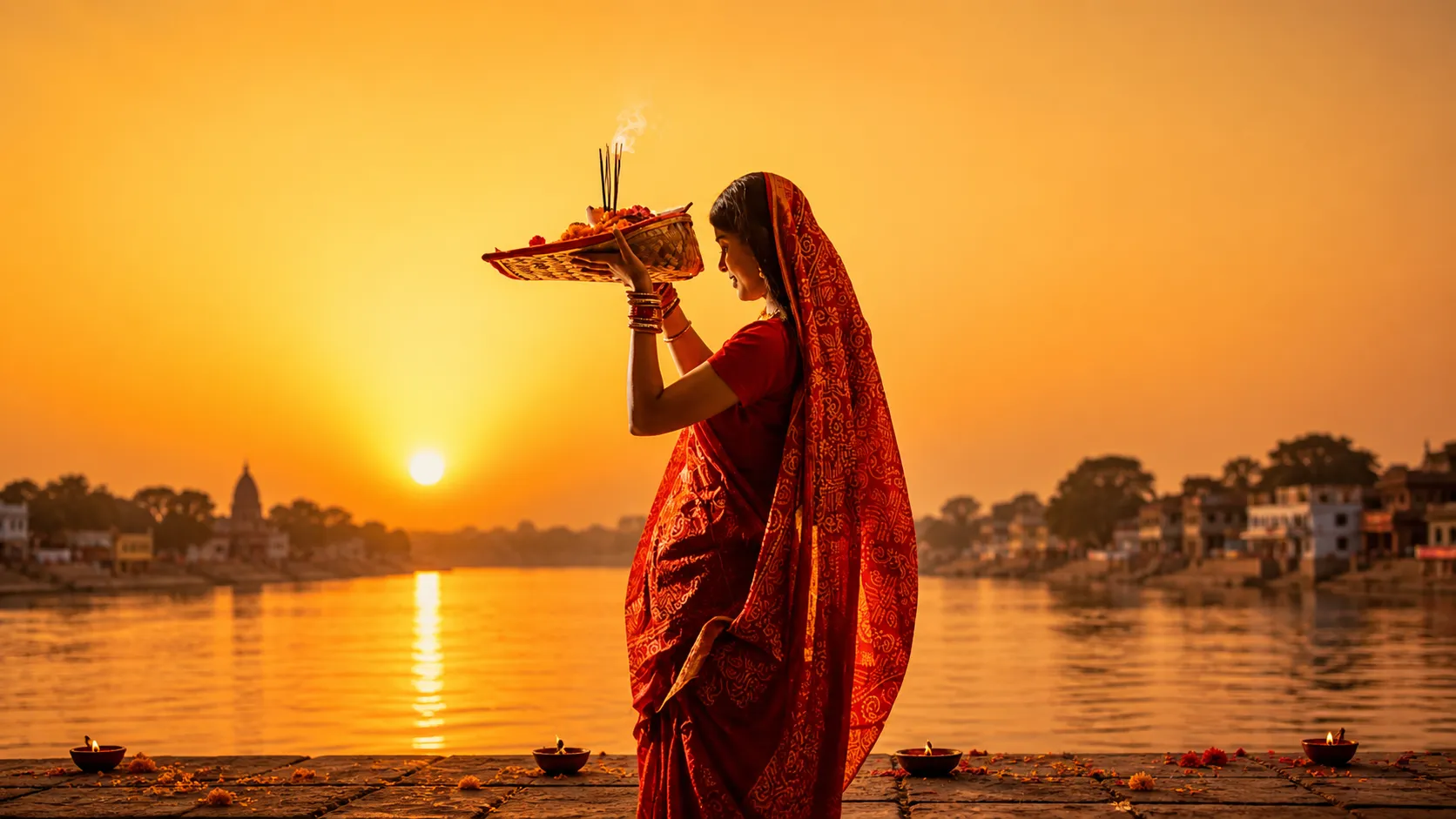
This is the heart of Chhath Puja 2026, Sandhya Arghya. As the sun dips low, devotees gather along riverbanks holding bamboo soop baskets filled with fruits, sugarcane, coconuts, betel leaves, and thekua, the festival’s beloved sweet.
Standing waist-deep in water, they offer Arghya, water, and prayers to the setting Sun. The air fills with songs of Chhath geet and the fragrance of incense. Thousands of diyas float gently on the water, reflecting golden light as the sky turns crimson.
It’s a moment that stops time. The ritual is a humble thank-you to Surya Dev, the eternal source of energy. Through Sandhya Arghya, devotees learn acceptance, honoring both sunset and sunrise as equal blessings.
Day 4: Usha Arghya
Date: November 16, 2026 (Monday)
The final day begins long before dawn. Wrapped in the quiet chill of early morning, devotees make their way back to the riverbank to offer Usha Arghya, the morning prayers to the rising Sun.
As the first rays break over the horizon, the world glows in gold. The offering marks not just the end of a 36-hour fast, but a new beginning, of hope, light, and spiritual clarity.
After the prayers, families share prasad, laugh, and sing together. The sense of peace is almost tangible. Usha Arghya closes Chhath Puja 2026 with gratitude, reminding everyone that every sunrise is a chance to start again, a little lighter, a little kinder.
Spiritual Meaning of Chhath Puja
The Sun is the ultimate source of energy, light, and healing. Worshipping him through Chhath Puja 2026 is a way of recognizing our connection with nature.
According to Hindu beliefs, Chhathi Maiya, the goddess of fertility and protection, blesses her devotees with prosperity and family well-being.
Ancient scriptures also link the ritual to Karna, the son of Surya Dev, who used to perform deep meditation and offerings to the Sun to gain strength.
Conclusion
Chhath Puja 2026 is more than a ritual. It’s a journey from darkness to light. When devotees stand before the Sun with folded hands, they’re not just praying; they’re realigning their spirit with nature’s rhythm.
This year, may the rays of Surya Dev bring you health, prosperity, and peace. And may Chhathi Maiya fill your home with light and harmony. Just remember that the Sun rises for everyone, but it shines brightest for those who rise with gratitude.
The journey does not end here. Follow MFC on Instagram and Facebook to explore more sacred places, festivals, and living traditions of Sanatan Dharma.