
Most of us first met Narada Muni on television. A saffron robe, a veena in hand, and that familiar line – Narayana, Narayana – before he walked into some king’s court and stirred up trouble. We laughed. We watched. And slowly, without realising it, we accepted that version as the real one.
It is not.
The Narada Muni of the scriptures is something far greater. He is a Deva-Rishi, a sage who moves freely between worlds, and his presence in our sacred texts is not that of a gossip but of a guide.
When young Prahlad was still a child in his mother’s womb, it was Narada Muni who spoke the glories of Bhagwaan Vishnu to his mother. That child was born already drenched in devotion. That is the kind of influence Narada carried. Not mischief. Not drama. Something that changed souls before they even took their first breath.
It was Narada who set in motion the events that gave us the Ramayana. It was Narada who found a grieving child named Dhruva and pointed him toward Bhagwaan Vishnu. Wherever there was a soul ready to turn toward the divine, Narada seemed to appear.
He was not a troublemaker. He was a catalyst. And there is a world of difference between the two.
Narada Jayanti is the day we put aside the television version and come back to the real one. A sage who walked every world with the name of Narayana on his lips and the good of every being in his heart.
What Is Narada Jayanti?
Narada Jayanti is the birthday of the sage Narada Muni. It falls on the Pratipada Tithi of Krishna Paksha in the month of Jyeshtha. In simple words, it comes one day after Buddha Purnima. The Narada Jayanti date shifts slightly each year based on the Hindu calendar.
In 2026, Narada Jayanti 2026 falls on Saturday, May 2, 2026.
Narada Muni Jayanti is especially dear to Vaishnav communities. Temples across India and Nepal hold special prayers and kirtans on this day. Musicians also hold this day close to their hearts. Narada Muni is seen as the father of devotional music in the Hindu tradition.
Who Is Narada Muni?
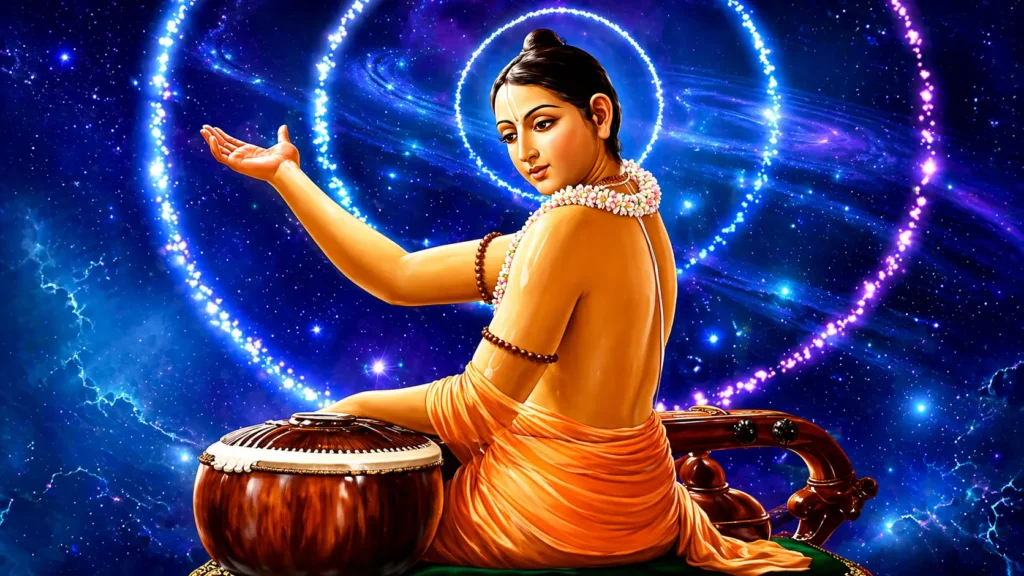
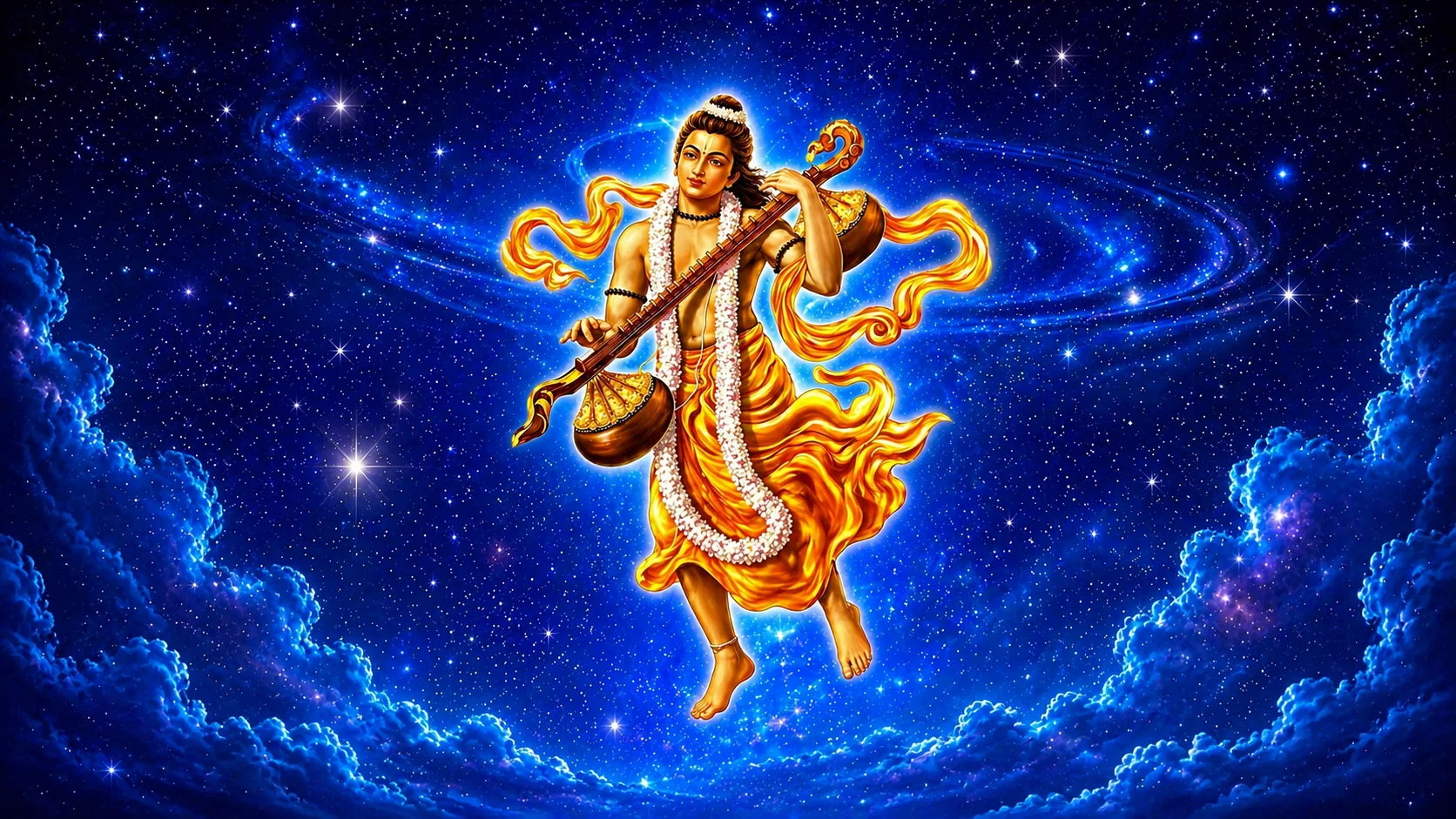
Narada Muni is one of the Saptarishis, the seven great sages of the Vedic world. He is also called a Manasaputra, which means he was born from Bhagwaan Brahma’s mind.
Deva-rishi travels freely across all three worlds, Svarga lok, Martya lok, and Patala lok, and never stays in one place.
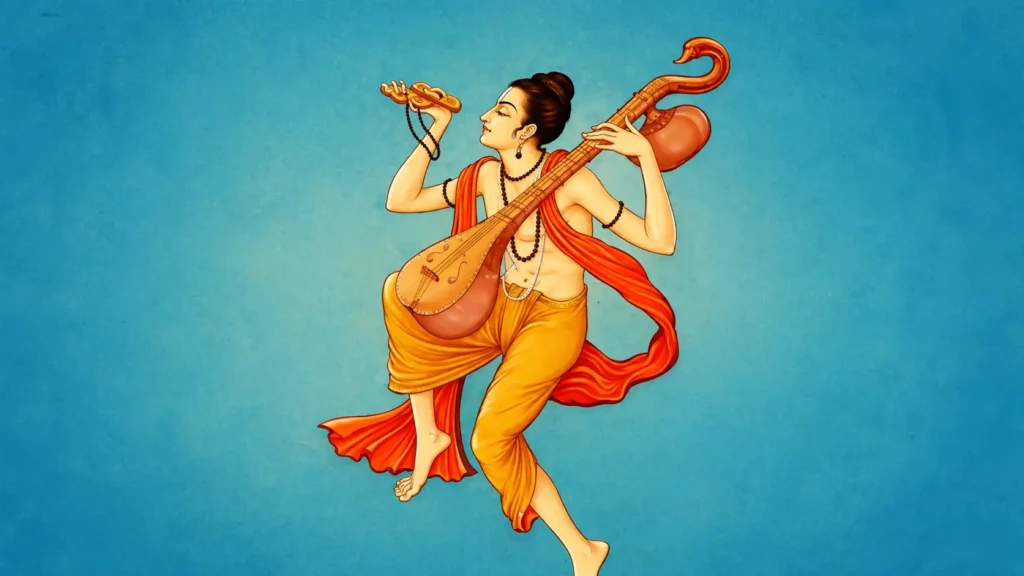
He always carries a veena in his hands. He always chants “Narayana, Narayana.” This is not just a habit. This is who he is. The Narada veena symbolism is worth understanding. The veena stands for the harmony between music and devotion. It means that every sound can become a prayer.
He is called Deva-Rishi, which means the sage among the gods and belongs to no single world. He is at home everywhere. Narada Muni characteristics include wisdom, honesty, deep love for Narayana, and fearlessness. He speaks the truth even to the most powerful beings in creation.
The Story of How Narada Muni Was Born?
The Srimad Bhagavatam tells us the most complete Narada Muni story. In a past life, Narada was a simple servant boy. He worked in the home of great Rishimunis. He served them with full sincerity and devotion with an open heart.
The sages were pleased with him. They shared their food with him. They told him stories about Bhagwaan Vishnu. Those stories changed everything for him. The love for Narayana took root in his heart and never left.
After that life ended, he was born again from Bhagwaan Brahma’s mind. This time, he came as an immortal sage, full of devotion and light. His story shows us something simple and true. Even one act of real, honest service can change your soul forever. Narada Muni is living proof of that.
Narada Muni’s Role in Hindu Mythology
His role in Hindu mythology is huge. Narada Muni shows up in almost every major Purana and every major epic. He is never a side character. He always matters.
1. Narada in the Ramayana
The role of Narada in Ramayana starts right at the beginning of the story. Before Valmiki writes a single word, he meets Narada Muni. Valmiki asks him one question: Is there a truly good person alive today?
Narada answers by describing Bhagwaan Rama. That answer becomes the seed from which the entire Ramayana grows. Without Narada, there may not have been a Ramayana at all.
2. Narada in the Mahabharata
The role of Narada in Mahabharata is just as important. He visits kings and warriors. He visits sages and goes to Yudhishthira after the Rajasuya sacrifice. And gently reminds the king to stay humble and not let pride grow. He does it with love, not with anger.
He is present at every point where things could go very right or very wrong, and nudges events toward dharma. That is his nature.
3. Narada in the Puranas
Narada stories in Puranas fill entire volumes. The Narada Purana is an entire sacred text in his name. He teaches Prahlada the bhakti of Bhagwaan Vishnu, even before Prahlada is born. Prahlada hears the stories in his mother’s womb. He comes into this world already full of devotion.
He guides young Prince Dhruva to the forest and teaches him meditation. Dhruva’s devotion becomes so strong that Bhagwaan Vishnu Himself appears before him. He gives Valmiki the spark to write the Ramayana. He shares wisdom with Vyasa that becomes the foundation of the Bhagavatam. Two of the greatest works in all of history carry his touch.
Narada Muni and the Path of Bhakti
Narada Muni and bhakti go together like the veena and its strings. You cannot talk about devotion in Hinduism without talking about him. He wrote the Narada Bhakti Sutras, a short but very deep text. It explains what bhakti is in clear, simple points. It says that love for God is the highest thing a person can feel.
His bhakti is not quiet or still. He shows us that love for God can be active, joyful, and full of life. Narada and Vishnu bhakti share a bond that is beyond words. His entire life is an offering at the feet of Narayana.
Narada teachings on devotion come down to three simple ideas:
- Love Bhagwaan without asking for anything back. That is pure bhakti.
- See the Divine in everything. Every person, every moment, every place.
- Chant the Name always. The Name of God is the path and the destination both.
This is what Narada as cosmic communicator truly means. He does not just carry news between worlds. He carries the message that God is close, and devotion is the way.
Narada Muni as the Messenger of Gods
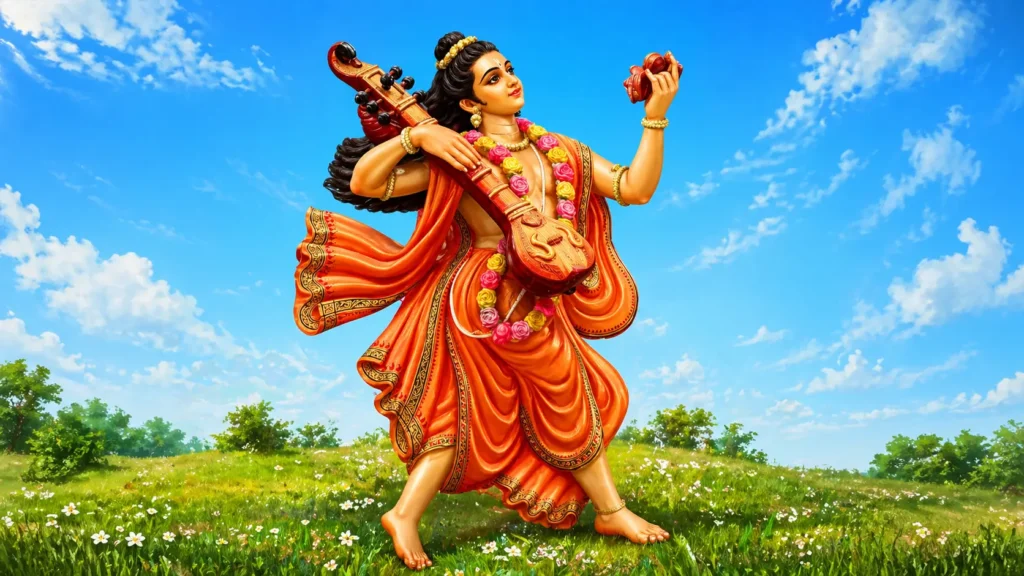
The title messenger of gods – Narada is not just a fancy name. He actually travels between Svarga, the earth, and the worlds below. He carries information, warnings, and blessings wherever he goes.
Sometimes his words look like they cause trouble. A king gets upset. Two brothers fall out. A battle begins. But look carefully at what happens next. Every situation that Narada touches ends in a greater good. A demon falls. A devotee rises. Dharma wins.
He does not create problems for fun. He breaks old patterns so that something better can grow. That is the real Narada. Not gossip but a healer. This is also why the Bollywood version gets it so wrong. What looks like stirring the pot is actually planting a seed. Narada always plants seeds of dharma.
How Is Narada Jayanti Celebrated?
Narada Jayanti celebration looks different in different places. But the heart of it is the same everywhere: honor the sage who gave us bhakti.
1. In Temples
Vaishnav temples hold special puja and abhishek in the morning. The image of Narada Muni is decorated with fresh flowers. Priests read from the Narada Bhakti Sutras and the Bhagavatam. Kirtans fill the temple hall. Devotees sing the names of Narayana together. It is a joyful and warm gathering.
2. In Homes
Many devotees keep a fast on this day. They light a lamp before Bhagwaan Vishnu and sit in quiet prayer. Some chant “Narayana Narayana” 108 times. Reading from the Srimad Bhagavatam is also a common practice. Even one chapter read with love and focus is enough.
3. Among Musicians
Musicians across India honor Narada Muni as their divine guide. Music schools and Gurukuls hold prayer gatherings and small recitals. The veena and other string instruments are garlanded and offered respect. It is a beautiful way of saying thank you to the one who brought music into devotion.
What are the Rituals on Narada Jayanti?
Narada Jayanti rituals are simple and open to everyone. You do not need special training. You just need a willing heart.
- Wake up early and take a bath. Start the day clean and fresh.
- Light a lamp before Bhagwaan Vishnu or before an image of Narada Muni.
- Chant “Om Namo Narayanaya” 108 times. This mantra is Narada’s own breath.
- Read from the Narada Bhakti Sutras or the Srimad Bhagavatam.
- Sit with other devotees. Satsang, or good company, matters a lot.
- Sing or listen to kirtan. Music is Narada Muni’s greatest gift to us.
- Keep a period of quiet during the day. Let the mind slow down and rest.
These practices are not rules you must follow. They are doors. Walk through any one of them and you will feel the difference.
What is the Significance of Narada Jayanti?
Narada Jayanti significance goes beyond a single day of prayer. It is a reminder that devotion is not passive and hidden. It is alive and it moves. Narada Muni lived in the world. He walked through courts and forests. He talked to kings, demons, sages, and gods. And through all of it, he never forgot Narayana.
That is the teaching. You do not have to leave the world to be devoted. You can be in the middle of everything and still hold God in your heart. For those already walking the bhakti path, this day is a renewal. It is a chance to look inward and rededicate yourself.
For those just starting out, Narada Muni is the perfect guide. His story is warm, real, and full of hope.
Conclusion: A Saptarishi Who Never Stopped Chanting “Narayan Narayan”
Narada Muni has been walking across the three worlds for thousands of years. He walks still, in the hearts of those who call out to Narayana. The next time you see him in a movie or a TV show, you will know the truth. That is not him. The real Narada Muni is far greater, far warmer, and far more beautiful.
He is the sage who turned a servant boy into a divine soul. He is the sage who gave Valmiki the words to write the Ramayana. Also the sage who showed Dhruva where to find Bhagwaan Vishnu.
Narada Jayanti is a day to sit with all of that. To feel grateful. To sing, and remember.
You do not need to be a scholar to honor him. You just need to say the Name once, with love. That is enough for Narada Muni. And it is enough for Narayana.
Narayana Narayana
May the blessings of Narada Muni bring more bhakti, more music, and more peace into your life.
Frequently Asked Questions About Narada Jayanti
1. When is Narada Jayanti in 2026?
Narada Jayanti 2026 falls on May 2, 2026. It is observed on the Pratipada Tithi of Krishna Paksha in the month of Jyeshtha. The date shifts each year because the Hindu calendar follows the moon.
2. Who is Narada Muni and why is he important?
Narada Muni is the Deva-Rishi, a sage who travels freely across all three worlds. He is the mind-born son of Bhagwaan Brahma and the greatest devotee of Bhagwaan Vishnu. His name means the one who gives knowledge, and that is exactly what he did his entire life.
3. Why does Narada Muni always create trouble wherever he goes?
Narada Muni does not create trouble for the sake of it. Every situation he stirs up leads to a greater good. He guided Valmiki to write the Ramayana, freed Dhruva from grief, and turned two proud demigods toward Bhagwaan Krishna. What looks like interference is always divine direction.
4. Why does Narada Muni keep wandering and never stay in one place?
Narada was cursed by Daksha Prajapati to wander the three worlds forever after turning Daksha’s sons toward moksha instead of family life. When the curse was given, Narada simply said “Tad Badham,” which means I accept. For a soul whose only home is Narayana’s name, it was no punishment at all.
5. Is Narada Muni immortal?
Yes. Narada Muni is considered an immortal soul who travels across all yugas and time cycles. The Srimad Bhagavatam describes him as a Saktyavesa Avatara, meaning a soul directly empowered by Bhagwaan Vishnu to carry out divine work across creation.
6. What is the name of Narada Muni’s veena?
Narada Muni’s veena is called Mahati. According to the Linga Purana, it was a direct gift from Bhagwaan Krishna. Because of this, the Mahati is considered non-different from God Himself. Wherever Narada plays it, he carries the divine presence with him.
7. Did Narada Muni ever curse anyone?
Yes. Narada once cursed Bhagwaan Vishnu after being tricked into falling in love with a princess and arriving at her swayamvar with the face of a monkey. In his anger, he cursed Vishnu to suffer separation from the woman he loved and be saved only by someone with a monkey’s form. That curse came true in the Ramayana.
8. What did Narada Muni teach Dhruva and Prahlada?
He gave both of them the same thing: a direct path to Bhagwaan Vishnu. He gave Dhruva the Ashtakshari Mantra and told him to meditate. Also taught Prahlada about bhakti while Prahlada was still in the womb. Both became some of the greatest devotees in all of Hindu tradition.
9. What is the Narada Bhakti Sutras?
The Narada Bhakti Sutras is a sacred text written by Narada Muni himself. It has 84 lines that describe what true devotion is and how to live it. Its core teaching is simple: love God without asking for anything back.
10. How do people observe Narada Jayanti?
Devotees take an early bath, light a lamp before Bhagwaan Vishnu, and chant “Om Namo Narayanaya” 108 times. Many read from the Narada Bhakti Sutras or the Srimad Bhagavatam. Musicians garland their instruments and hold small prayer gatherings as a mark of gratitude to Narada Muni.
The journey does not end here. Follow MFC on Instagram and Facebook to explore more sacred places, festivals, and living traditions of Sanatan Dharma.