

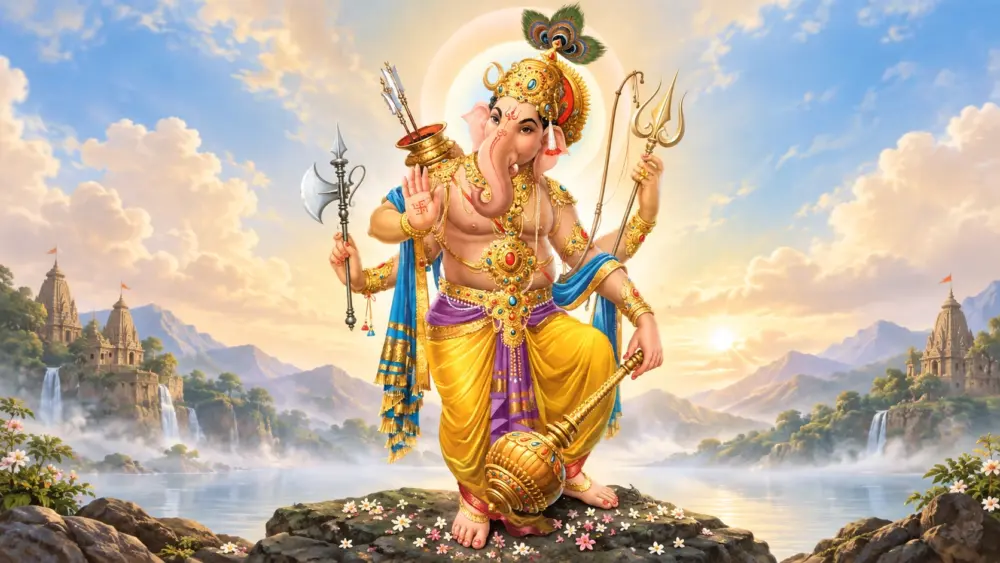
श्री गणेश जी की संपूर्ण आरती
सुखकर्ता दुःखहर्ता वार्ता विघ्नांची।
नुरवी पुरवी प्रेम कृपा जयाची॥
सर्वांगी सुंदर उटी शेंदुराची।
कंठी झळके माळ मुक्ताफळांची॥
जय देव जय देव जय मंगलमूर्ती।
दर्शनमात्रे मनकामना पुरती॥
रत्नखचित फरा तुज गौरीकुमरा।
चंदनाची उटी कुंकुमकेशरा॥
हीरे जडित मुकुट शोभतो बरा।
रुणझुणती नूपुरे चरणी घागरिया॥
जय देव जय देव जय मंगलमूर्ती।
दर्शनमात्रे मनकामना पुरती॥
लंबोदर पीतांबर फणिवरबंधना।
सरळ सोंड वक्रतुंड त्रिनयना॥
दास रामाचा वाट पाहे सदना।
संकटी पावावे निर्वाणी रक्षावे सुरवरवंदना॥
जय देव जय देव जय मंगलमूर्ती।
दर्शनमात्रे मनकामना पुरती॥
शेंदूर लाल चढ़ायो अच्छा गजमुख को।
दोंदिल लाल बिराजे सुत गौरीहर को॥
हाथ लिए गुड़लड्डू साईं सुरवर को।
महिमा कहे न जाय लागत हूँ पद को॥
जय देव जय देव जय जय जी गणराज।
विद्या सुखदाता धन्य तुम्हारो दर्शन।
मेरा मन रमता॥
अष्टौ सिद्धि दासी, संकट को बैरी।
विघ्न विनाशन मंगल मूरत अधिकारी॥
कोटि सूरज प्रकाश ऐसी छवि तेरी।
गंडस्थल मदमस्तक झूले शशिधारी॥
जय देव जय देव जय जय जी गणराज।
विद्या सुखदाता धन्य तुम्हारो दर्शन।
मेरा मन रमता॥
भावभगत से कोई शरणागत आवे।
संतति संपत्ति सबही भरपूर पावे॥
ऐसे तुम महाराज मोको अति भावे।
गोसावीनंदन निशिदिन गुण गावे॥
जय देव जय देव जय जय जी गणराज।
विद्या सुखदाता धन्य तुम्हारो दर्शन।
मेरा मन रमता॥
कर्पूरगौरं करुणावतारं
संसारसारं भुजगेन्द्रहारम्।
सदा वसन्तं हृदयारविन्दे
भवं भवानीसहितं नमामि॥
मन्दारमालाकुलितालकायै
कपालमालाङ्कितशेखराय।
दिव्याम्बरायै च दिगम्बराय
नमः शिवायै च नमः शिवाय॥
घालीन लोटांगण वंदीन चरण।
डोळ्यांनी पाहीन रूप तुझे॥
प्रेमें आलिंगीन आनंदे पूजिन।
भावे ओवाळीन म्हणे नामा॥
त्वमेव माता च पिता त्वमेव।
त्वमेव बन्धुश्च सखा त्वमेव॥
त्वमेव विद्या द्रविणं त्वमेव।
त्वमेव सर्वं मम देवदेव॥
कायेन वाचा मनसेंद्रियैर्वा।
बुद्ध्यात्मना वा प्रकृतिस्वभावात्॥
करोमि यद्यत् सकलं परस्मै।
नारायणायेति समर्पयामि॥
अच्युतं केशवं रामनारायणं।
कृष्णदामोदरं वासुदेवं हरिम्।
श्रीधरं माधवं गोपिकावल्लभं।
जानकीनायकं रामचंद्रं भजे॥
हरे राम हरे राम, राम राम हरे हरे।
हरे कृष्ण हरे कृष्ण, कृष्ण कृष्ण हरे हरे॥
गणपति बप्पा मोरया!
मंगल मूर्ति मोरया!
Overall Meaning of Sampoorna Ganesh Aarti
Sampoorna Ganesh Aarti lyrics brings together several prayers offered during Ganesh worship. The sequence begins with Sukhkarta Dukhharta. This Marathi Aarti praises Lord Ganesha as the giver of happiness and remover of troubles. It also describes his beautiful form, ornaments, and divine grace.
The next Aarti, Shendur Lal Chadhayo, praises Ganesha through loving descriptions of his form. It also asks for his blessings, protection, and grace. The prayers that follow express complete surrender to the Divine.
Karpur Gauram praises Bhagwaan Shiva and Mata Parvati together. Ghalin Lotangan expresses devotion through surrender and worship. Tvamev Mata describes God as the mother, father, friend, knowledge, and everything in life.
Kayena Vacha expresses the idea of offering every action to the Divine. Achyutam Keshavam remembers several names of Lord Vishnu and Lord Rama. The sequence then ends with the Hare Rama Hare Krishna Maha Mantra.
So, the overall message is very simple.
Devotees praise Ganesha, surrender their worries, seek blessings, and end the prayer with devotion to the Divine. The exact sequence can vary between families, temples, and regional traditions. Many Marathi Aarti collections place these prayers together as one closing devotional sequence.
Origin of Sampoorna Ganesh Aarti
The name Sampoorna Ganesh Aarti describes a complete devotional sequence that brings together multiple Aartis and prayers. The best-known part of this sequence is Sukhkarta Dukhharta.
Tradition attributes this Marathi Aarti to Samarth Ramdas, the 17th-century saint-poet of Maharashtra. The final stanza includes the phrase “Das Ramacha,” which connects the poet’s name with the composition.
Traditional accounts also connect the Aarti with Mayureshwar at Morgaon, one of the Ashtavinayak temples. Some sources describe Ramdas composing the Aarti after receiving darshan of Ganesha there. Scholars and devotional traditions continue to discuss the details of this origin story.
Shendur Lal Chadhayo aarti has a different history. Its exact authorship remains uncertain. Its final line mentions “Gosavinandan,” but reliable sources do not establish one definite author from that signature alone.
The later prayer sequence also contains texts with separate origins. For example, Karpur Gauram belongs to the Shiva-Parvati devotional tradition. The verse containing “Divyambarayai cha Digambaray” appears in the Ardhanarishvara Stotram.
Kayena Vacha also has an older Sanskrit source tradition. One published study identifies a matching verse in Mukundamala, traditionally attributed to Kulasekhara. A closely related version also appears in the Bhagavata Purana. These separate origins explain one important point.
Sampoorna Ganesh Aarti works better as a devotional collection than as the name of one historical text. That distinction helps readers understand the tradition without mixing different compositions together.
Best Time to Do Sampoorna Ganesh Aarti
Devotees can perform Sampoorna Ganesh Aarti at home during their regular Ganesh puja. Many families prefer the morning or evening. Evening Aarti often feels natural because the family can gather together.
The important part involves devotion, cleanliness, and a calm mind. The Shree Siddhivinayak Ganapati Mandir in Mumbai itself follows multiple Aarti timings. Its schedule includes an early morning Aarti and an evening Aarti.
During Ganesh Chaturthi, devotees commonly perform Aarti every day. Families may perform it after the main puja, while community pandals often perform group Aarti as well.
For a simple home routine, you can follow this pattern:
- Morning: Perform it after your Ganesh puja.
- Evening: Perform it after offering flowers, dhoop, and naivedya.
- Ganesh Chaturthi: Include it as part of your daily festival worship.
You do not need to wait for a special occasion. Many devotees also recite Ganesh Aarti on Sankashti Chaturthi, Ganesh Jayanti, and other days connected with Lord Ganesha.
How to Perform Sampoorna Ganesh Aarti at Home?
You just need to have a calm mind and clean environment to perform Complete Ganesh Aarti at home. A simple and clean puja space works well. Here is how to do complete Ganesh Aarti at home:
1. Clean the Puja Space
Clean the place before starting the puja. Place the Ganesh idol or image on a clean platform. You can place a red or yellow cloth beneath the idol.
2. Light a Diya
Light a diya with ghee or oil. You can also light incense if your family tradition allows it. Keep the flame stable and place it safely.
3. Offer Flowers and Durva
Offer fresh flowers to Lord Ganesha. Many devotees also offer durva grass, which holds a special place in Ganesh worship. You can offer fruits, modak, or another simple naivedya.
4. Begin the Ganesh Puja
Take a few moments to settle your mind. Offer your prayer with श्रद्धा and focus. You can chant Om Gan Ganapataye Namah before starting the Aarti.
5. Recite Sukhkarta Dukhharta
Begin the main Aarti with Sukhkarta Dukhharta. This Marathi Aarti praises Ganesha as the giver of happiness and remover of sorrow.
6. Recite Shendur Lal Chadhayo
Continue with Shendur Lal Chadhayo. This Aarti praises Ganesha’s divine form and asks for his blessings.
7. Continue With the Closing Prayers
Recite Karpur Gauram, Ghalin Lotangan, Tvamev Mata, and Kayena Vacha. Then recite Achyutam Keshavam and the Hare Rama Hare Krishna Maha Mantra. Different households may adjust this order. The important thing is to follow the tradition you sincerely practice.
8. Perform the Aarti
Take the lit Aarti diya or Aarti plate in your hands. Move it gently in a clockwise circle before the deity. Many families sing together during this part. You can also ring a bell if your household tradition follows that practice.
9. Pray Quietly
After the Aarti, fold your hands and pray. You can ask Lord Ganesha for wisdom, strength, peace, and a clear mind. You can also simply offer gratitude. Sometimes a quiet “Ganpati Bappa Morya” says enough.
Benefits of Reciting Sampoorna Ganesh Aarti
Devotees associate Ganesh worship with several spiritual benefits.
The most common belief connects Shri Ganesha with the removal of obstacles, wisdom, auspicious beginnings, and inner strength. Sanatan Dharma describes Ganesha as Vighnaharta, the remover of obstacles, and Sukhkarta, the giver of happiness.
Regular Aarti can also help create a steady prayer routine. When families sit together and sing, the practice can create a sense of togetherness and श्रद्धा. Many devotees also use Aarti as a way to slow down after a busy day. The benefits should therefore remain rooted in devotion rather than guaranteed worldly results.
You can look at the practice through a simple lens.
- Prayer brings attention.
- Aarti brings gratitude.
- Devotion brings surrender.
For many devotees, that itself feels like a blessing.
Festivals Where Sampoorna Ganesh Aarti Is Recited
Ganesh Chaturthi
Ganesh Chaturthi remains the most important festival for Ganesha worship. Devotees install Ganesha idols at home and in public pandals. They perform puja, offer naivedya, and sing Aarti throughout the festival. The festival may last from one and a half days to several days. Many celebrations continue until Anant Chaturdashi.
Sankashti Chaturthi
Devotees observe Sankashti Chaturthi every lunar month. Many families perform Ganesh puja and recite Aarti on this day. Some traditions follow a special focus on fasting and evening worship.
Angarki Chaturthi
When Sankashti Chaturthi falls on a Tuesday, devotees call it Angarki Chaturthi. It holds special importance in several Ganesh traditions. Many devotees perform Ganesh puja and Aarti with added devotion.
Maghi Ganesh Jayanti
Many devotees celebrate Ganesh Jayanti during the month of Magha. The day honors the birth of Lord Ganesha according to the Hindu lunar tradition. Ganesh temples hold special pujas and Aarti during the celebration.
Daily Ganesh Puja
You do not need a festival to recite Ganesh Aarti. Many families include Ganesha worship in their daily routine. The Siddhivinayak temple in Mumbai, for example, follows morning and evening Aarti timings as part of its regular worship schedule.
Final Thought
Sampoorna Ganesh Aarti brings several beloved prayers into one devotional sequence. It includes Sukhkarta Dukhharta, Shendur Lal Chadhayo, and traditional prayers such as Ghalin Lotangan and Karpur Gauram.
Each prayer carries its own history and devotional meaning. Together, they create a simple flow of praise, surrender, gratitude, and prayer. You can recite the complete sequence during Ganesh Chaturthi, Sankashti Chaturthi, or your daily puja.
You do not need a grand setup. A clean space, a diya, sincere devotion, and a focused mind are enough. And when the final “Hare Rama Hare Rama” fills the room, the purpose becomes beautifully simple. You pause. You pray. And you remember Bappa.
Dive Deep Into Our Bhakti Corner
- जय गणेश जय गणेश देवा आरती | Aarti Ganpati Ji ki With Meaning
- शिव चालीसा | Shiv Chalisa in Hindi with English Meaning
- संकटनाशन गणेश स्तोत्र | Sankat Nashan Ganesh Stotram: Meaning & Benefits
- How to Perform Ganesh Visarjan 2026? Date, Muhurat & Complete Puja Vidhi
- Ganesh Chaturthi 2026: Date, Puja Vidhi, Muhurat, Rituals & Meaning
- Why Ganesha Loves Modak | My Favorite Corner
Frequently Asked Questions About Ganesh Ji Sampoorna Aarti
Sampoorna Ganesh Aarti refers to a complete devotional sequence used during Ganesh worship. It commonly includes Sukhkarta Dukhharta, Shendur Lal Chadhayo, and closing prayers such as Ghalin Lotangan.
Sukhkarta Dukhharta is a popular Marathi Ganesh Aarti traditionally attributed to Samarth Ramdas, the 17th-century saint-poet of Maharashtra. The Aarti praises Lord Ganesha as the giver of happiness and remover of sorrow.
Shendur Lal Chadhayo is a traditional Ganesh Aarti that praises Lord Ganesha’s form, divine qualities, and grace. Its exact authorship remains uncertain, although its final stanza includes the name Gosavinandan.
Yes. Sindur Lal Chadayo and Shendur Lal Chadhayo refer to the same traditional Ganesh Aarti. Search results often use different spellings because the words come from transliteration and regional pronunciation.
Sukhkarta Dukhharta means the giver of happiness and the remover of sorrow. The phrase describes Lord Ganesha as a compassionate deity who helps devotees overcome difficulties.
Ghalin Lotangan is a traditional closing prayer that devotees commonly recite after Aarti. It expresses surrender, devotion, and respect toward the Divine. Marathi Aarti collections often place it after the main Aarti sequence.
Karpur Gauram is a Sanskrit prayer addressed to Shiva and Parvati. The well-known verse praises Shiva and Parvati together and appears in traditions connected with the Ardhanarishvara Stotram.
You can recite Sampoorna Ganesh Aarti during your morning or evening Ganesh puja. Devotees also commonly recite Ganesh Aarti during Ganesh Chaturthi and other Ganesha festivals.
Yes. You can perform Sampoorna Ganesh Aarti at home with a Ganesh idol or image, a diya, flowers, and simple naivedya. Your family tradition can guide the exact puja sequence.
In the sequence used in many Marathi devotional settings, Sukhkarta Dukhharta comes first, followed by Shendur Lal Chadhayo. Families and temples may follow their own local traditions.
Devotees believe that Ganesh Aarti supports devotion, gratitude, peace, and spiritual focus. Hindu tradition also connects Lord Ganesha with wisdom, auspicious beginnings, and the removal of obstacles.
Yes. Devotees commonly perform Ganesh Aarti during Ganesh Chaturthi as part of daily worship. Homes and public pandals often perform Aarti during the festival.
हर प्रार्थना में एक भावना होती है, और हर मंत्र में एक विश्वास। अपने रोज़ के bhakti moments को और खास बनाने के लिए explore करें Bhakti Corner, जहाँ आपको मिलेंगे aartis, chalisa, mantras और prayers सरल और सहज रूप में। और ऐसी ही bhakti और Sanatan Dharma की कहानियों के लिए My Favorite Corner को Instagram और Facebook पर follow करें।