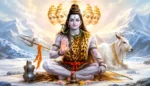

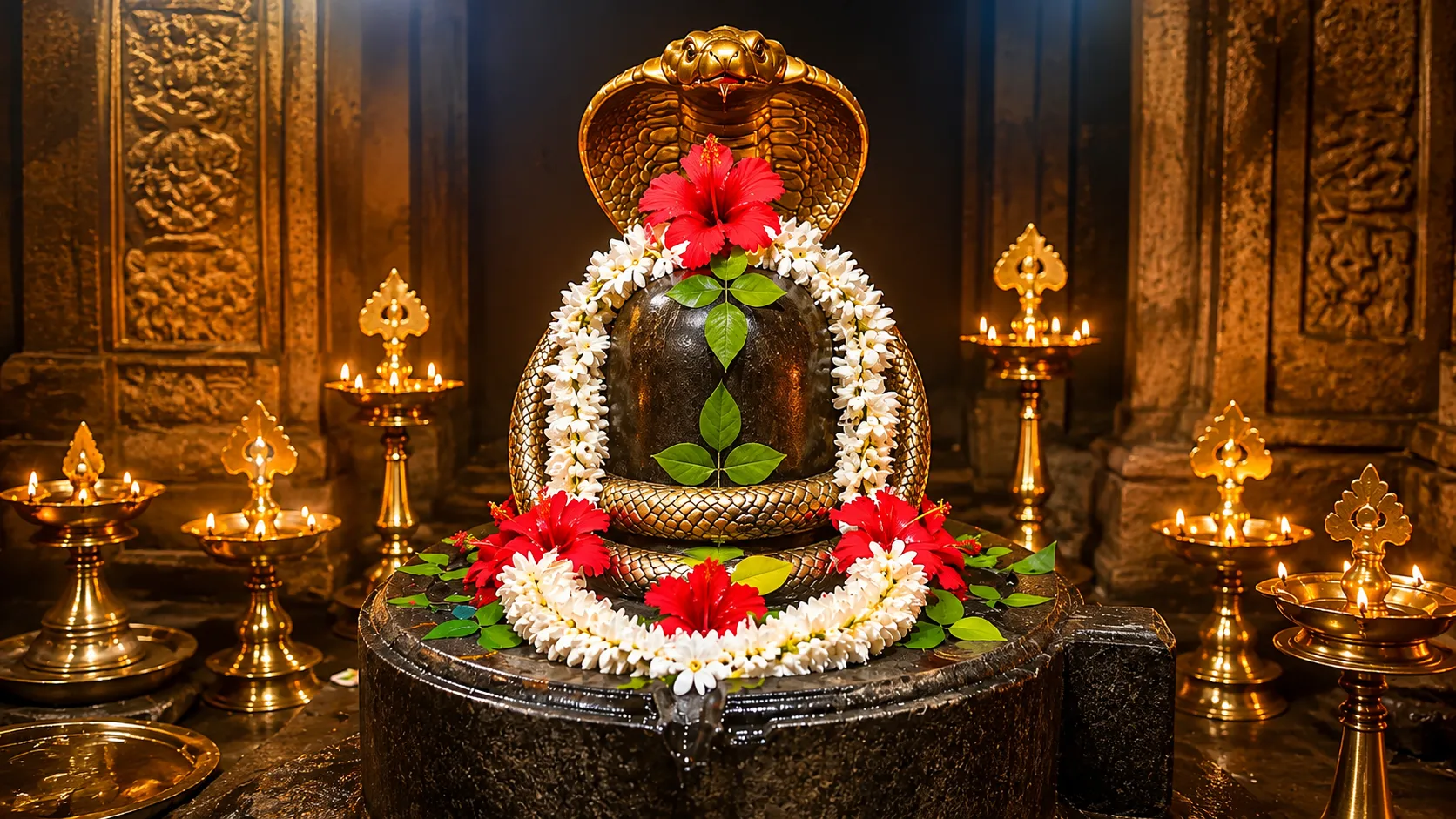
The 108 names of Mahadev are a namavali of sacred Sanskrit epithets, each paired with “Om” and “Namah” to form an independent mantra (for example, Om Shivaya Namah). Devotees chant all 108 names in sequence, often while offering one Bilva leaf or flower per name, to honor Shiva’s complete divine nature.
Key Takeaways
- The 108 Names of Lord Shiva, known as the Shiva Ashtottara Shatanamavali, describe Mahadev’s divine qualities, forms, and cosmic roles.
- Each name is a complete mantra, traditionally chanted with “Om” at the beginning and “Namah” at the end while offering a Bilva leaf or flower.
- The number 108 symbolizes spiritual completeness and is deeply connected to japa malas, the Upanishads, and Vedic tradition.
- Chanting the 108 Names of Lord Shiva is believed to bring peace, remove negativity, deepen devotion, and help devotees focus on Shiva’s many divine attributes.
- Mondays, Pradosh Vrat, and Maha Shivratri are considered especially auspicious for reciting the complete Shiva Ashtottara Shatanamavali.
- This guide includes the complete list in Sanskrit, transliteration, and English meaning, making it suitable for both beginners and experienced devotees.
The 108 names of Lord Shiva form one of the most cherished devotional practices in Sanatan Dharma. Known as the Shiva Ashtottara Shatanamavali, this collection of names describes Shiva’s infinite forms, from the gentle and compassionate Shambhu to the fierce and world-dissolving Rudra. This guide covers the origin of the namavali, why the number 108 matters, how to chant it correctly, its benefits, and a complete, verified table of all 108 names of Shiva with meaning.
108 Names of Shiva with Meaning
Below is the full, verified table of all 108 names of Shiva in Sanskrit, along with transliteration and meaning for each name. Every entry has been cross-checked against traditional Ashtottara Shatanamavali sources for accuracy.
| No. | Sanskrit Name | Transliteration | Meaning |
| 1 | ॐ शिवाय नमः | Om Shivaya Namah | Obeisances to the Auspicious One |
| 2 | ॐ महेश्वराय नमः | Om Maheshvaraya Namah | Obeisances to the Great God, Lord of all gods |
| 3 | ॐ शम्भवे नमः | Om Shambhave Namah | Obeisances to the God who exists for our happiness and prosperity alone |
| 4 | ॐ पिनाकिने नमः | Om Pinakine Namah | Obeisances to Shiva, wielder of the Pinaka bow, who guards the path of dharma |
| 5 | ॐ शशिशेखराय नमः | Om Shashishekharaya Namah | Obeisances to the God who wears the crescent moon in his hair |
| 6 | ॐ वामदेवाय नमः | Om Vamadevaya Namah | Obeisances to the God who is pleasing and auspicious in every way |
| 7 | ॐ विरूपाक्षाय नमः | Om Virupakshaya Namah | Obeisances to the God with an unusual, spotless third eye on his forehead |
| 8 | ॐ कपर्दिने नमः | Om Kapardine Namah | Obeisances to the Lord with thickly matted, coiled hair |
| 9 | ॐ नीललोहिताय नमः | Om Nilalohitaya Namah | Obeisances to the God of blue and red hue, splendid as the sun at daybreak |
| 10 | ॐ शङ्कराय नमः | Om Shankaraya Namah | Obeisances to the source of all prosperity and wellbeing |
| 11 | ॐ शूलपाणिने नमः | Om Shulapanine Namah | Obeisances to the God who carries the trident (Trishula) |
| 12 | ॐ खट्वाङ्गिने नमः | Om Khatvangine Namah | Obeisances to the God who carries the Khatvanga, a knurled ascetic’s staff |
| 13 | ॐ विष्णुवल्लभाय नमः | Om Vishnuvallabhaya Namah | Obeisances to Shiva, who is deeply dear to Lord Vishnu |
| 14 | ॐ शिपिविष्टाय नमः | Om Shipivishtaya Namah | Obeisances to the Lord whose form emits great rays of light |
| 15 | ॐ अम्बिकानाथाय नमः | Om Ambikanathaya Namah | Obeisances to the Lord and husband of Goddess Ambika (Parvati) |
| 16 | ॐ श्रीकण्ठाय नमः | Om Shrikanthaya Namah | Obeisances to he whose throat shines with a beautiful blue hue |
| 17 | ॐ भक्तवत्सलाय नमः | Om Bhaktavatsalaya Namah | Obeisances to the Lord who loves his devotees as deeply as a mother loves her newborn calf |
| 18 | ॐ भवाय नमः | Om Bhavaya Namah | Obeisances to the God who is existence itself, the source of creation |
| 19 | ॐ शर्वाय नमः | Om Sharvaya Namah | Obeisances to Shiva, who destroys all suffering and sin |
| 20 | ॐ त्रिलोकेशाय नमः | Om Trilokeshaya Namah | Obeisances to Shiva, the Lord of all three worlds |
| 21 | ॐ शितिकण्ठाय नमः | Om Shitikanthaya Namah | Obeisances to the primal soul whose throat is a deep, pure blue |
| 22 | ॐ शिवाप्रियाय नमः | Om Shivapriyaya Namah | Obeisances to the God who is dear to Goddess Parvati (Shivaa) |
| 23 | ॐ उग्राय नमः | Om Ugraya Namah | Obeisances to Shiva, whose fierce presence is awesome and overwhelming |
| 24 | ॐ कपालिने नमः | Om Kapaline Namah | Obeisances to the God who carries a garland or begging bowl of skulls |
| 25 | ॐ कामारये नमः | Om Kamaraye Namah | Obeisances to Shiva, the great enemy and conqueror of Kamadeva (desire) |
| 26 | ॐ अन्धकासुरसूदनाय नमः | Om Andhakasurasudanaya Namah | Obeisances to the Lord who slayed the demon Andhakasura |
| 27 | ॐ गङ्गाधराय नमः | Om Gangadharaya Namah | Obeisances to the God who holds the river Ganga in his matted hair |
| 28 | ॐ ललाटाक्षाय नमः | Om Lalatakshaya Namah | Obeisances to the Lord who bears a third eye upon his forehead |
| 29 | ॐ कालकालाय नमः | Om Kalakalaya Namah | Obeisances to Shiva, who is the death of death itself (conqueror of Yama) |
| 30 | ॐ कृपानिधये नमः | Om Kripanidhaye Namah | Obeisances to the God who is the boundless treasure of compassion |
| 31 | ॐ भीमाय नमः | Om Bhimaya Namah | Obeisances to Shiva, whose strength and might are awesome |
| 32 | ॐ परशुहस्ताय नमः | Om Parashuhastaya Namah | Obeisances to the God who wields an axe (Parashu) in his hand |
| 33 | ॐ मृगपाणये नमः | Om Mrigapanaye Namah | Obeisances to the Lord who holds the deer, representing the restless mind, in his hand |
| 34 | ॐ जटाधराय नमः | Om Jatadharaya Namah | Obeisances to Shiva, who bears a mass of matted, ascetic hair |
| 35 | ॐ कैलासवासिने नमः | Om Kailasavasine Namah | Obeisances to the God who resides eternally on Mount Kailasa |
| 36 | ॐ कवचिने नमः | Om Kavachine Namah | Obeisances to the Lord who is wrapped in protective armor |
| 37 | ॐ कठोराय नमः | Om Kathoraya Namah | Obeisances to Shiva, who is firm, resolute, and immensely powerful |
| 38 | ॐ त्रिपुरान्तकाय नमः | Om Tripurantakaya Namah | Obeisances to the Lord who destroyed the three demonic cities of Tripurasura |
| 39 | ॐ वृषाङ्काय नमः | Om Vrishankaya Namah | Obeisances to the God whose banner and emblem bear the mark of the bull (Nandi) |
| 40 | ॐ वृषभारूढाय नमः | Om Vrishabharudhaya Namah | Obeisances to Shiva, who rides upon Nandi, his sacred bull |
| 41 | ॐ भस्मोद्धूलितविग्रहाय नमः | Om Bhasmoddhulitavigrahaya Namah | Obeisances to the Lord whose entire body is covered with sacred ash |
| 42 | ॐ सामप्रियाय नमः | Om Samapriyaya Namah | Obeisances to the God exceedingly fond of hymns from the Sama Veda |
| 43 | ॐ स्वरमयाय नमः | Om Svaramayaya Namah | Obeisances to Shiva, who dwells within and creates through the seven musical notes |
| 44 | ॐ त्रयीमूर्तये नमः | Om Trayimurtaye Namah | Obeisances to the Lord who embodies the three Vedas: Rig, Yajur, and Sama |
| 45 | ॐ अनीश्वराय नमः | Om Anishvaraya Namah | Obeisances to the one who has no superior, the undisputed Lord |
| 46 | ॐ सर्वज्ञाय नमः | Om Sarvajnaya Namah | Obeisances to the God who knows all things, the all-knowing one |
| 47 | ॐ परमात्मने नमः | Om Paramatmane Namah | Obeisances to the Supreme Self within every being |
| 48 | ॐ सोमसूर्याग्निलोचनाय नमः | Om Somasuryagnilochanaya Namah | Obeisances to the Lord whose three eyes are the moon, the sun, and fire |
| 49 | ॐ हविषे नमः | Om Havishe Namah | Obeisances to Shiva, who receives the sacred oblation offered in fire rituals |
| 50 | ॐ यज्ञमयाय नमः | Om Yajnamayaya Namah | Obeisances to the God who is himself the embodiment of all sacrificial rites |
| 51 | ॐ सोमाय नमः | Om Somaya Namah | Obeisances to the Lord, cool and serene as the moon’s gentle glow |
| 52 | ॐ पञ्चवक्त्राय नमः | Om Panchavaktraya Namah | Obeisances to Shiva, who manifests with five sacred faces |
| 53 | ॐ सदाशिवाय नमः | Om Sadashivaya Namah | Obeisances to the eternally auspicious, ever-benevolent Shiva |
| 54 | ॐ विश्वेश्वराय नमः | Om Vishveshvaraya Namah | Obeisances to the all-pervading ruler of the entire cosmos |
| 55 | ॐ वीरभद्राय नमः | Om Virabhadraya Namah | Obeisances to Shiva in his fierce warrior form, Virabhadra |
| 56 | ॐ गणनाथाय नमः | Om Gananathaya Namah | Obeisances to the Lord and master of all the Ganas (Shiva’s attendants) |
| 57 | ॐ प्रजापतये नमः | Om Prajapataye Namah | Obeisances to the Lord and creator of all living beings |
| 58 | ॐ हिरण्यरेतसे नमः | Om Hiranyaretase Namah | Obeisances to the God who bears the golden, radiant seed of creation |
| 59 | ॐ दुर्धर्षाय नमः | Om Durdharshaya Namah | Obeisances to Shiva, the unconquerable, who cannot be overpowered |
| 60 | ॐ गिरीशाय नमः | Om Girishaya Namah | Obeisances to the Lord and sovereign of the mountains |
| 61 | ॐ गिरिशाय नमः | Om Girishaya Namah | Obeisances to the Lord who rests and abides upon Mount Kailasa |
| 62 | ॐ अनघाय नमः | Om Anaghaya Namah | Obeisances to Shiva, who is entirely free of sin and fault |
| 63 | ॐ भुजङ्गभूषणाय नमः | Om Bhujangabhushanaya Namah | Obeisances to the Lord adorned with serpents as his ornaments |
| 64 | ॐ भर्गाय नमः | Om Bhargaya Namah | Obeisances to Shiva, the destroyer of all sins and impurities |
| 65 | ॐ गिरिधन्विने नमः | Om Giridhanvine Namah | Obeisances to the God who wields Mount Meru itself as his bow |
| 66 | ॐ गिरिप्रियाय नमः | Om Giripriyaya Namah | Obeisances to the Lord, who holds deep fondness for the mountains |
| 67 | ॐ कृत्तिवाससे नमः | Om Krittivasase Namah | Obeisances to the God who wears an elephant hide as his garment |
| 68 | ॐ पुरारातये नमः | Om Purarataye Namah | Obeisances to the Lord who destroyed Tripurasura and his three cities |
| 69 | ॐ भगवते नमः | Om Bhagavate Namah | Obeisances to the Supreme Lord, the source of all divine prosperity |
| 70 | ॐ प्रमथाधिपाय नमः | Om Pramathadhipaya Namah | Obeisances to the God who leads and commands the Pramatha ganas |
| 71 | ॐ मृत्युञ्जयाय नमः | Om Mrityunjayaya Namah | Obeisances to Shiva, the great conqueror of death |
| 72 | ॐ सूक्ष्मतनवे नमः | Om Sukshmatanave Namah | Obeisances to the God whose subtle form pervades the finest of creation |
| 73 | ॐ जगद्व्यापिने नमः | Om Jagadvyapine Namah | Obeisances to Shiva, who fills and pervades the entire world |
| 74 | ॐ जगद्गुरवे नमः | Om Jagadgurave Namah | Obeisances to the Lord, the teacher and guru of all the worlds |
| 75 | ॐ व्योमकेशाय नमः | Om Vyomakeshaya Namah | Obeisances to the God whose flowing hair is the vast sky itself |
| 76 | ॐ महासेनजनकाय नमः | Om Mahasenajanakaya Namah | Obeisances to the Lord, the father of Kartikeya (Mahasena) |
| 77 | ॐ चारुविक्रमाय नमः | Om Charuvikramaya Namah | Obeisances to Shiva, whose valor and stride are graceful and beautiful |
| 78 | ॐ रुद्राय नमः | Om Rudraya Namah | Obeisances to Rudra, the fierce yet worthy-of-praise form of Shiva |
| 79 | ॐ भूतपतये नमः | Om Bhutapataye Namah | Obeisances to the Lord and master of all beings, including spirits and elements |
| 80 | ॐ स्थाणवे नमः | Om Sthanave Namah | Obeisances to Shiva, the firm, immovable, and eternal pillar of existence |
| 81 | ॐ अहिर्बुध्न्याय नमः | Om Ahirbudhnyaya Namah | Obeisances to the Lord associated with the coiled serpent energy, Kundalini |
| 82 | ॐ दिगम्बराय नमः | Om Digambaraya Namah | Obeisances to Shiva, who wears the very directions of space as his garment |
| 83 | ॐ अष्टमूर्तये नमः | Om Ashtamurtaye Namah | Obeisances to the Lord who manifests in eight sacred forms |
| 84 | ॐ अनेकात्मने नमः | Om Anekatmane Namah | Obeisances to Shiva, who takes on countless forms while remaining one soul |
| 85 | ॐ सात्त्विकाय नमः | Om Sattvikaya Namah | Obeisances to the Lord of pure, boundless sattvic energy |
| 86 | ॐ शुद्धविग्रहाय नमः | Om Shuddhavigrahaya Namah | Obeisances to him whose form is entirely pure and free of doubt |
| 87 | ॐ शाश्वताय नमः | Om Shashvataya Namah | Obeisances to Shiva, who is endless, eternal, and unchanging |
| 88 | ॐ खण्डपरशवे नमः | Om Khandaparashave Namah | Obeisances to the God who carries the broken axe, cutting through despair |
| 89 | ॐ अजाय नमः | Om Ajaya Namah | Obeisances to Shiva, the unborn, the eternal instigator of all that occurs |
| 90 | ॐ पाशविमोचकाय नमः | Om Pashavimochakaya Namah | Obeisances to the Lord who releases devotees from all worldly bondage |
| 91 | ॐ मृडाय नमः | Om Mridaya Namah | Obeisances to Shiva, the merciful one who grants happiness and comfort |
| 92 | ॐ पशुपतये नमः | Om Pashupataye Namah | Obeisances to the Lord and protector of all living creatures |
| 93 | ॐ देवाय नमः | Om Devaya Namah | Obeisances to Shiva, the foremost among the shining, radiant devas |
| 94 | ॐ महादेवाय नमः | Om Mahadevaya Namah | Obeisances to Mahadeva, the greatest of all the gods |
| 95 | ॐ अव्ययाय नमः | Om Avyayaya Namah | Obeisances to Shiva, the imperishable, who is never subject to change |
| 96 | ॐ हरये नमः | Om Haraye Namah | Obeisances to the Lord of nature, who dissolves all bondage and illusion |
| 97 | ॐ पूषदन्तभिदे नमः | Om Pushadantabhide Namah | Obeisances to the Lord who broke the teeth of the deva Pushan |
| 98 | ॐ अव्यग्राय नमः | Om Avyagraya Namah | Obeisances to Shiva, who remains steady, calm, and unwavering |
| 99 | ॐ दक्षाध्वरहराय नमः | Om Dakshadhvaraharaya Namah | Obeisances to the destroyer of Daksha’s arrogant, incomplete sacrifice |
| 100 | ॐ हराय नमः | Om Haraya Namah | Obeisances to Shiva, who withdraws and dissolves the entire cosmos |
| 101 | ॐ भगनेत्रभिदे नमः | Om Bhaganetrabhide Namah | Obeisances to the Lord who pierced the eye of the deva Bhaga |
| 102 | ॐ अव्यक्ताय नमः | Om Avyaktaya Namah | Obeisances to Shiva, the unmanifest, subtle, and unseen reality |
| 103 | ॐ सहस्राक्षाय नमः | Om Sahasrakshaya Namah | Obeisances to the Lord of a thousand eyes, seeing all of creation |
| 104 | ॐ सहस्रपदे नमः | Om Sahasrapade Namah | Obeisances to Shiva of a thousand feet, present and walking everywhere |
| 105 | ॐ अपवर्गप्रदाय नमः | Om Apavargapradaya Namah | Obeisances to the Lord who grants moksha, final liberation |
| 106 | ॐ अनन्ताय नमः | Om Anantaya Namah | Obeisances to Shiva, the infinite one, unending in every form |
| 107 | ॐ तारकाय नमः | Om Tarakaya Namah | Obeisances to the great liberator, who carries all beings across the ocean of rebirth |
| 108 | ॐ परमेश्वराय नमः | Om Parameshvaraya Namah | Obeisances to Parameshvara, the Supreme Lord and ultimate reality |
Source: Shakta Pramod Grantha, the most widely used compilation for the Shiva Ashtottara Shatanamavali. Sanskrit text, transliteration, and meaning cross-checked across traditional namavali references for accuracy.
Origin and Scriptural Source of 108 Names of Lord Shiva
The most widely used version of the 108 names of Lord Shiva comes from the Shakta Pramod Grantha, a well-known compilation of devotional namavalis for various Hindu deities. This version is the one most commonly printed in puja books, chanted during Rudrabhishek, and taught in temples across India.
Shiva also has other namavali traditions, including a separate 108-name list rooted in the Rudrayamala and various Puranic sources, and the far longer Shiva Sahasranama with 1,000 names, found in the Shiva Purana and the Mahabharata’s Anushasana Parva. The Shakta Pramod version remains the standard for daily and weekly worship because of its accessible length and its focus on Shiva’s most recognized forms and deeds.
Why 108? The Significance of the Number
The number 108 appears throughout Sanatan Dharma, and its use in the shiva ashtottara namavali is not accidental. A traditional Japa mala contains 108 beads, matching the 108 names recited here.
The Upanishads, the philosophical core of Vedic knowledge, are traditionally counted at 108. In Vedic astronomy, the average distance between the Earth and the Sun is roughly 108 times the Sun’s diameter, and the same ratio holds between the Earth and the Moon. This recurring pattern is one reason 108 is treated as a number of completeness and cosmic order.
Reciting exactly 108 names, therefore, is not simply a long list. It represents a complete, unbroken cycle of remembrance, matching the same cycle used in mantra japa.
How to Chant the 108 Names of Shiva?
Chanting the 108 names of Shiva with meaning follows a simple, traditional method that any devotee can practice at home.
- Sit facing east or north, ideally after bathing, in a clean and quiet space.
- Light a lamp (deepam) before the Shivalinga or an image of Shiva.
- Keep Bilva leaves or flowers ready, one for each of the 108 names.
- Chant each name aloud, offering one leaf or flower as you speak it.
- Move through all 108 names in sequence, without skipping or reordering.
- Close with a moment of silent gratitude, thanking Shiva for his presence and protection.
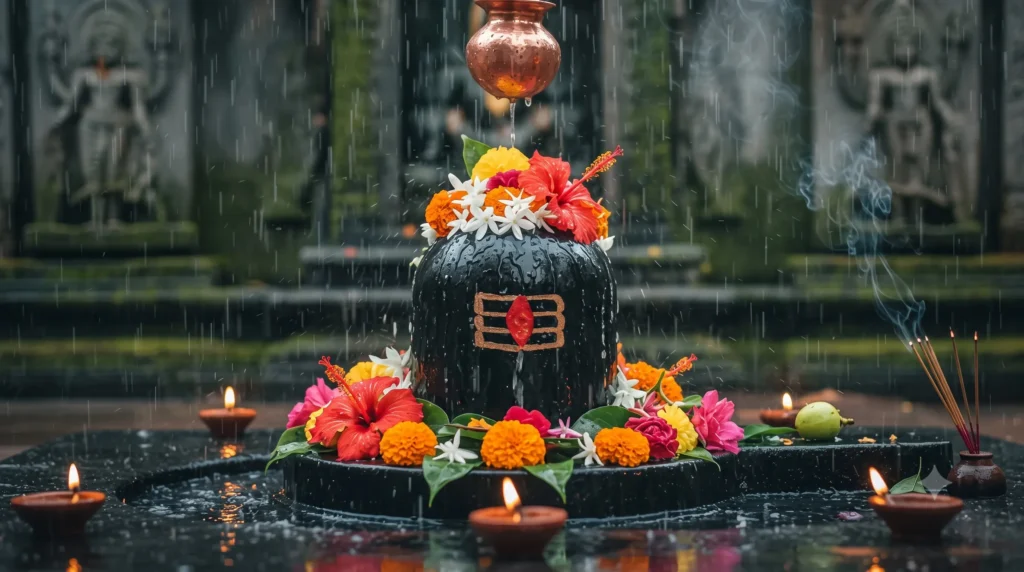
This method is also the standard practice during Rudrabhishek, where each name is chanted while pouring water, milk, or other sacred substances over the Shivalinga.
Benefits of Chanting Shiva Ashtottara
- Removes negativity and clears mental clutter built up over time.
- Purifies past karma, especially when paired with Bilva leaf offerings.
- Deepens focus and devotion, since each name draws attention to a specific divine quality.
- Builds a complete understanding of Shiva’s nature, from his gentle to his fierce forms.
- Brings peace and emotional steadiness through the calming rhythm of repeated chanting.
- Fulfills sincere wishes, according to traditional belief, when chanted with unwavering devotion.
Best Time and Days to Chant
The 108 names of Lord Shiva can be chanted daily, but certain days carry special significance. Mondays, known as Shiva’s day, are considered highly auspicious for this practice. Pradosh Vrat, observed on the 13th day of each lunar fortnight, is another favored occasion. Maha Shivratri, the great night of Shiva, is the most powerful day of the year for reciting the complete Ashtottara Shatanamavali, often as part of an all-night vigil and Rudrabhishek ceremony.
Ashtottara vs Sahasranama: What’s the Difference?
Devotees often confuse the Shiva Ashtottara Shatanamavali with the Shiva Sahasranama. The difference comes down to length and use. The Ashtottara contains 108 names and takes about 15 to 20 minutes to complete, making it practical for daily or weekly worship. The Sahasranama contains 1,000 names, drawn from the Shiva Purana and the Mahabharata, and is typically reserved for special occasions, elaborate temple rituals, or dedicated sadhana. Both lists overlap in many names but differ significantly in scope and traditional usage.
Continue Your Bhakti…
- संकटनाशन गणेश स्तोत्र | Sankat Nashan Ganesh Stotram: Meaning & Benefits
- महामृत्युंजय मंत्र | Mahamrityunjaya Mantra with Meaning, Benefits, & How to Chant
- श्री महालक्ष्मी मंत्र | Shri Mahalaxmi Mantra: Meaning, Origin, and Importance
- दुर्गा चालीसा | Durga Chalisa in Hindi | Meaning, Benefits, and Significance
- श्री गायत्री मंत्र | Shri Gayatri Mantra | Meaning and Origin
Frequently Asked Questions About the 108 Names of Shiva
The 108 names of Lord Shiva, known as the Shiva Ashtottara Shatanamavali, are a collection of sacred Sanskrit names sourced from the Shakta Pramod Grantha. Each name describes a distinct quality, form, or story of Shiva, such as Mahadeva (the greatest god), Mrityunjaya (conqueror of death), and Gangadhara (bearer of the Ganga).
The number 108 holds deep significance in Sanatan Dharma. It reflects the 108 beads of a traditional Japa mala, the traditional count of the Upanishads, and the mathematical relationship between the sun, moon, and Earth in Vedic cosmology. Reciting 108 names is considered a complete cycle of devotion and remembrance.
Sit facing east or north, ideally after bathing. Light a lamp and keep Bilva leaves or flowers ready. Chant each name aloud, offering one leaf or flower per name, moving through all 108 in sequence. This practice is especially powerful on Mondays, Pradosh Vrat, and Maha Shivratri.
The Shiva Ashtottara Shatanamavali contains 108 names of Shiva, while the Shiva Sahasranama contains 1,000 names. The 108-name version is shorter and more commonly used in daily and weekly worship, while the Sahasranama is reserved for elaborate rituals and special occasions.
Chanting the 108 names of Shiva with meaning is believed to remove negativity, purify past karma, and bring peace, protection, and prosperity. It also deepens focus and devotion, since each name directs attention to a specific divine quality of Shiva.
Yes. The Shiva Ashtottara Shatanamavali is open to every sincere devotee, regardless of experience level. Beginners can start by reading the transliteration alongside the meaning, then gradually memorize the names through regular practice.
Save or bookmark this page so you can return to it whenever you need Ganesha’s grace, at the start of something new, in a moment of difficulty, or simply as part of your daily sandhya. Follow us on Instagram and Facebook to stay connected, and share your thoughts or experience in the comments.