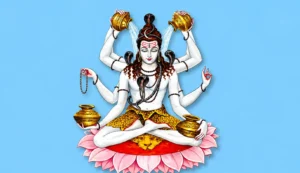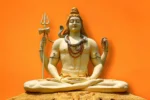

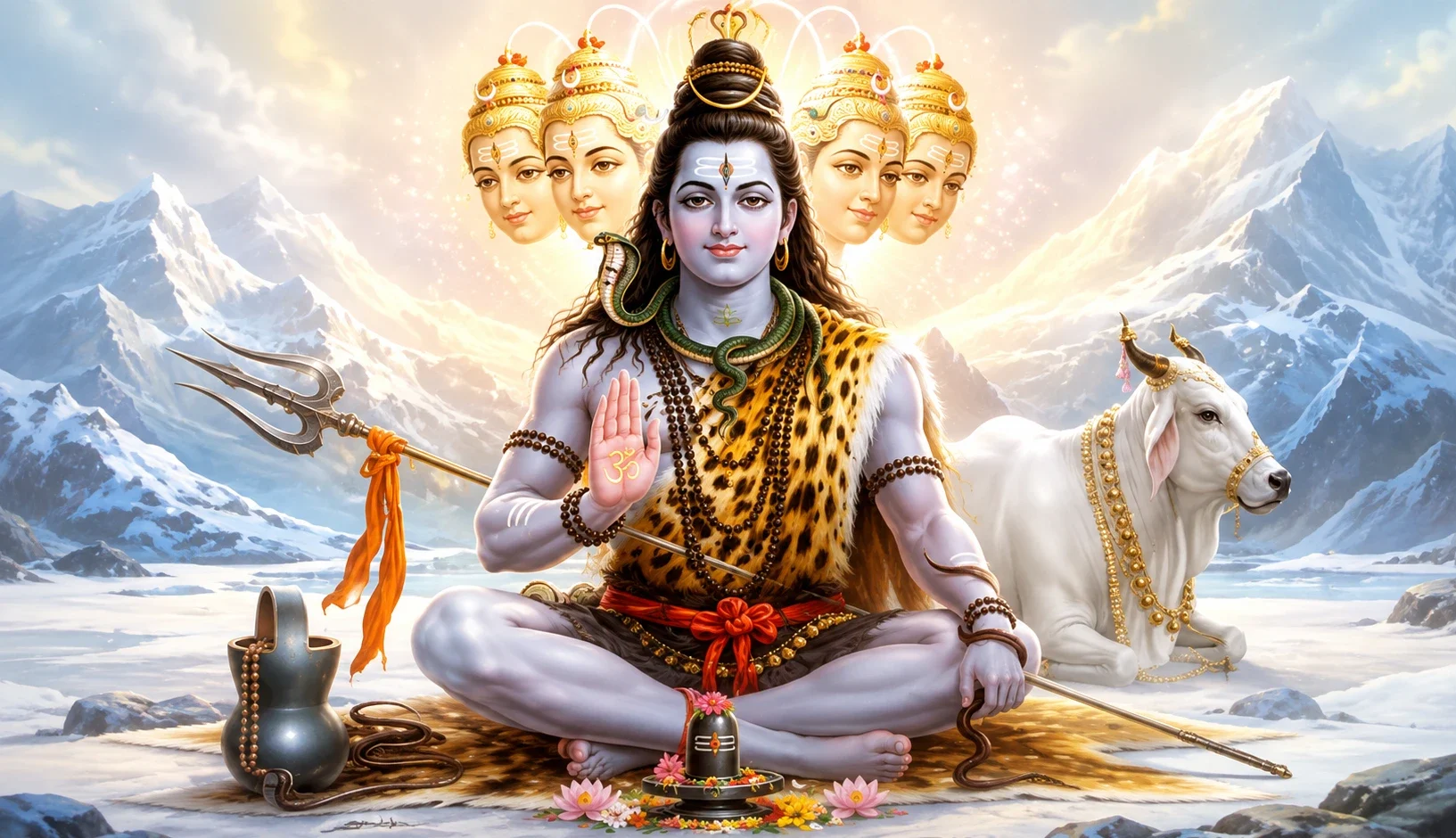
The ten most powerful Lord Shiva mantras for daily practice are Om Namah Shivaya, the Mahamrityunjaya Mantra, Lingashtakam, Bilvashtakam, Shiv Tandav Stotram, Shiva Gayatri Mantra, Rudrashtakam, the 108 Names of Shiva, Shiva Chalisa, and the Om Jai Shiv Omkara Aarti. Each serves a different purpose, from protection and peace to healing and liberation.
Many people know Om Namah Shivaya, but fewer know what it actually means, where it comes from, or why it is considered one of the most powerful mantras in Sanatan Dharma. The same is true for prayers like the Mahamrityunjaya Mantra, Lingashtakam, Rudrashtakam, and Shiv Tandav Stotram. While millions recite them every day, understanding their meaning can make your worship more mindful and meaningful.
This guide brings together 10 of the most revered Lord Shiva mantras and prayers in one place. For each one, you’ll find its origin, verified Sanskrit text where appropriate, English transliteration, simple meaning, spiritual significance, traditional benefits, and the best way to chant it.
Whether you’re looking for a mantra to begin your daily prayers, deepen your meditation, or simply learn more about Shiva worship, this guide will help you choose the right prayer and understand its purpose with confidence.
What You Will Find?
- Om Namah Shivaya (Panchakshari Mantra)
- Mahamrityunjaya Mantra
- Lingashtakam Stotram
- Bilvashtakam
- Shiv Tandav Stotram
- Shiva Gayatri Mantra
- Rudrashtakam
- Shiva Ashtottara Shatanamavali (108 Names of Shiva)
- Shiva Chalisa
- Om Jai Shiv Omkara (Shiva Aarti)
Why Chant Lord Shiva Mantras Daily?
Powerful Lord Shiva mantras work on three levels at once. On the sound level, Sanskrit syllables create specific vibrations that calm the nervous system. On the meaning level, each word directs your attention toward qualities like fearlessness, surrender, and inner stillness.
On the devotional level, consistent chanting builds a real relationship with the divine over time. Daily Shiva prayers do not require elaborate rituals. A few minutes of focused, correctly pronounced chanting brings more benefit than long sessions done carelessly.
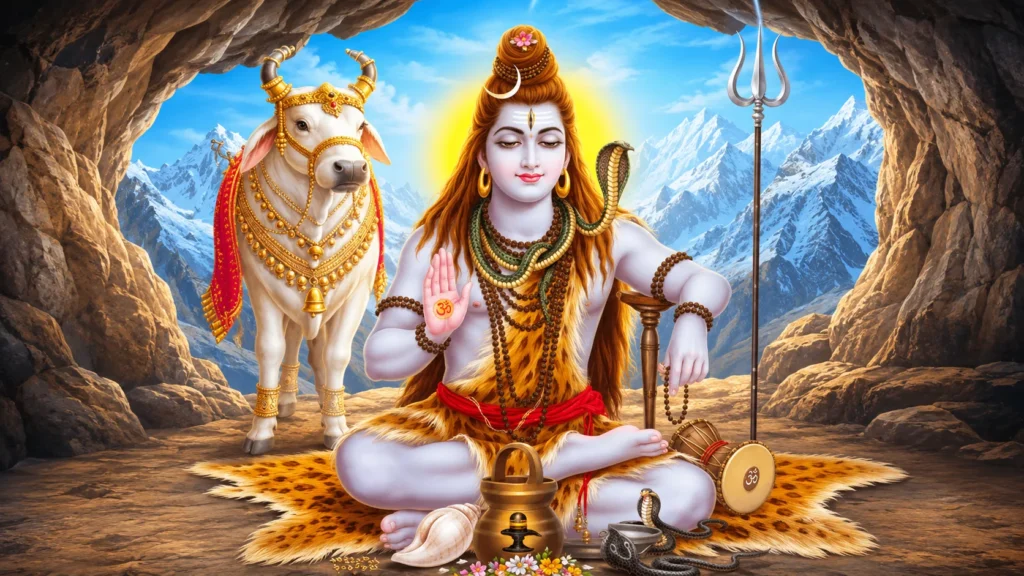
1. Om Namah Shivaya (Panchakshari Mantra)
Source: Yajur Veda, Shri RudramType: Beeja-rooted Mantra
The Om Namah Shivaya mantra is the most chanted Shiva Panchakshari Mantra in the world. It is called Panchakshari because it contains five core syllables (Na-Ma-Shi-Va-Ya), with Om added at the front as the sixth. It appears in the Yajur Veda and forms the heart of the Shri Rudram.
ॐ नमः शिवाय
Om Namah Shivaya
Complete meaning: “I bow to Shiva, the auspicious consciousness that pervades all existence.”
Word-by-Word Meaning
Om – the primordial sound of the universe, representing pure consciousness.
Namah – I bow, I surrender, I let go of ego.
Shivaya – to Shiva, the auspicious one, the inner consciousness present in all beings.
Adi Shankaracharya explained the mantra further in his Shiva Panchakshara Stotra, where each syllable corresponds to one of the five elements: Na to earth, Ma to water, Shi to fire, Va to air, and Ya to space. Chanting the mantra is believed to bring balance to all five elements within the body.
Benefits of Chanting Om Namah Shivaya
- Purifies the five elements in the body, supporting physical and emotional balance.
- Reduces stress and anxiety through the calming rhythm of repeated chanting.
- Dissolves ego and attachment, helping the mind stay grounded during difficulty.
- Open to every devotee, regardless of background, caste, or gender.
- Builds daily discipline when chanted 108 times with a Rudraksha mala.
- Deepens meditation practice by giving the mind a single point of focus.
How to chant: Sit facing east or north with a straight spine. Use a Rudraksha mala and complete one full round of 108 repetitions. Brahma Muhurta (early morning) and evenings after sunset are the most favorable times.
2. Mahamrityunjaya Mantra
Source: Rig Veda 7.59.12. Also called: Tryambakam Mantra, Rudra Mantra
The Mahamrityunjaya Mantra is one of the oldest Lord Shiva mantras in existence, found in the Rig Veda (Mandala 7, Sukta 59, Mantra 12), and repeated in the Yajur Veda and Atharva Veda. It is addressed to Tryambaka, “the three-eyed one,” an epithet of Rudra later identified with Shiva.
ॐ त्र्यम्बकं यजामहे सुगन्धिं पुष्टिवर्धनम् ।
उर्वारुकमिव बन्धनान् मृत्योर्मुक्षीय मामृतात् ॥
Om Tryambakam Yajamahe Sugandhim Pushtivardhanam
Urvarukamiva Bandhanan Mrityor Mukshiya Maamritat
Complete meaning: “We worship the three-eyed Shiva, who nourishes and enriches all beings. May He free us from the bondage of death, as easily as a ripe fruit falls from its stem, and lead us toward liberation.”
Word-by-Word Meaning
Om Tryambakam Yajamahe – We worship the three-eyed Lord (Shiva).
Sugandhim Pushtivardhanam – who is fragrant and who nourishes and strengthens all beings.
Urvarukamiva Bandhanan – like a ripe cucumber freed effortlessly from its vine.
Mrityor Mukshiya Maamritat – may we be liberated from death, for the sake of immortality, not from immortality itself.
This mantra is also known as the Mrita-Sanjivini Mantra (“reviver of the dead”) because tradition holds it was given to the sage Shukracharya as part of a life-restoring practice.
Benefits of the Mahamrityunjaya Mantra
- Supports healing during illness, surgery, or physical recovery.
- Reduces fear of death and eases anxiety around mortality.
- Promotes longevity when chanted consistently as part of daily practice.
- Removes obstacles in major life decisions and transitions.
- Calms the mind during grief, loss, or emotional crisis.
- Strengthens resilience, both physically and mentally, over time.
How to chant: Traditional practice recommends 108 repetitions daily using a Rudraksha mala. For serious health concerns, some devotees undertake a structured sankalpa of higher counts, guided by a priest.
3. Lingashtakam Stotram
Attributed to: Adi ShankaracharyaType: Ashtakam (8 verses)
The Lingashtakam, also called Brahma Murari Surarchita Lingam, is an eight-verse hymn dedicated to Shiva’s Lingam form. Each verse closes with the refrain “Tat Pranamami Sadashiva Lingam”, I bow to that eternal Shiva Lingam.
ब्रह्ममुरारिसुरार्चितलिंगं निर्मलभासितशोभित लिंगम् ।
जन्मजदुःखविनाशकलिंगं तत्प्रणमामि सदाशिवलिंगम् ॥१॥
देवमुनिप्रवरार्चितलिंगं कामदहं करुणाकरलिंगम् ।
रावणदर्पविनाशन लिंगं तत्प्रणमामि सदाशिवलिंगम् ॥२॥
सर्वसुगंधिसुलेपितलिंगं बुद्धिविवर्धनकारणलिंगम् ।
सिद्धसुरासुरवंदितलिंगं तत्प्रणमामि सदाशिवलिंगम् ॥३॥
कनकमहामणिभूषितलिंगं फणिपतिवेष्टितशोभितलिंगम् ।
दक्षसुयज्ञविनाशनलिंगं तत्प्रणमामि सदाशिवलिंगम् ॥४॥
कुंकुमचंदनलेपितलिंगं पंकजहारसुशोभितलिंगम् ।
संचितपापविनाशन लिंगं तत्प्रणमामि सदाशिवलिंगम् ॥५॥
देवगाणार्चितसेवितलिंगं भावैर्भक्तिभिरेव च लिंगम् ।
दिनकरकोटिप्रभाकरलिंगं तत्प्रणमामि सदाशिवलिंगम् ॥६॥
अष्टदलोपरिवेष्ठित लिंगं सर्वसमुद्भवकारणलिंगम् ।
अष्टदरिद्रविनाशनलिंगं तत्प्रणमामि सदाशिवलिंगम् ॥७॥
सुरगुरुसुरवरपूजितलिंगं सुरवनपुष्पसदार्चितलिंगम् ।
परात्परं परमात्मकलिंगं तत्प्रणमामि सदाशिवलिंगम् ॥८॥
लिंगाष्टकमिदं पुण्यं यः पठेच्छिवसन्निधौ ।
शिवलोकमवाप्नोति शिवेन सह मोदते ॥९॥
इति श्रीलिंगाष्टकस्तोत्रं संपूर्णम् ॥
Benefits of Lingashtakam
- Brings mental peace when recited with devotion near a Shivalinga.
- Removes obstacles tied to past karma and repeated struggles.
- Supports moksha (liberation) according to traditional belief.
- Strengthens focus during puja and meditation sessions.
- Ideal for Shivaratri and Shravan month worship rituals.
4. Bilvashtakam
Attributed to: Adi Shankaracharya. Type: Ashtakam (8 verses)
The Bilvashtakam honors the Bilva (Bel) leaf, the most sacred offering in Shiva worship. Each verse ends with the refrain “Eka Bilvam Shivarpanam”, I offer one Bilva leaf to Shiva.
त्रिदलं त्रिगुणाकारं त्रिनॆत्रं च त्रियायुधं
त्रिजन्म पापसंहारम् ऎकबिल्वं शिवार्पणं
त्रिशाखैः बिल्वपत्रैश्च अच्चिद्रैः कॊमलैः शुभैः
तवपूजां करिष्यामि ऎकबिल्वं शिवार्पणं
कॊटि कन्या महादानं तिलपर्वत कॊटयः
काञ्चनं क्षीलदानॆन ऎकबिल्वं शिवार्पणं
काशीक्षॆत्र निवासं च कालभैरव दर्शनं
प्रयागॆ माधवं दृष्ट्वा ऎकबिल्वं शिवार्पणं
इन्दुवारॆ व्रतं स्थित्वा निराहारॊ महॆश्वराः
नक्तं हौष्यामि दॆवॆश ऎकबिल्वं शिवार्पणं
रामलिङ्ग प्रतिष्ठा च वैवाहिक कृतं तधा
तटाकानिच सन्धानम् ऎकबिल्वं शिवार्पणं
अखण्ड बिल्वपत्रं च आयुतं शिवपूजनं
कृतं नाम सहस्रॆण ऎकबिल्वं शिवार्पणं
उमया सहदॆवॆश नन्दि वाहनमॆव च
भस्मलॆपन सर्वाङ्गम् ऎकबिल्वं शिवार्पणं
सालग्रामॆषु विप्राणां तटाकं दशकूपयॊः
यज्नकॊटि सहस्रस्च ऎकबिल्वं शिवार्पणं
दन्ति कॊटि सहस्रॆषु अश्वमॆध शतक्रतौ
कॊटिकन्या महादानम् ऎकबिल्वं शिवार्पणं
बिल्वाणां दर्शनं पुण्यं स्पर्शनं पापनाशनं
अघॊर पापसंहारम् ऎकबिल्वं शिवार्पणं
सहस्रवॆद पाटॆषु ब्रह्मस्तापन मुच्यतॆ
अनॆकव्रत कॊटीनाम् ऎकबिल्वं शिवार्पणं
अन्नदान सहस्रॆषु सहस्रॊप नयनं तधा
अनॆक जन्मपापानि ऎकबिल्वं शिवार्पणं
बिल्वस्तॊत्रमिदं पुण्यं यः पठॆश्शिव सन्निधौ
शिवलॊकमवाप्नॊति ऎकबिल्वं शिवार्पणं
Benefits of Bilvashtakam
- Purifies accumulated karma from past actions and past lives.
- Deepens Bilva Patra puja, one of Shiva’s most beloved offerings.
- Aligns with Maha Shivratri traditions of continuous Bilva offerings.
- Balances the three gunas within the mind and body.
- Simple yet highly rewarding, suitable for beginners in Shiva worship.
5. Shiv Tandav Stotram
Composed by: RavanaMeter: Panchachamara / Drutavilambita
According to the Shiva Purana, Ravana composed the Shiv Tandav Stotram spontaneously after being trapped beneath Mount Kailash while trying to lift it. Moved by his devotion, Shiva freed him. The hymn describes Shiva’s cosmic dance of creation, preservation, and destruction, and is prized for its rhythmic, alliterative Sanskrit.
Read complete Shiv Tandav Stotram here.
Benefits of Shiv Tandav Stotram
- Builds courage and inner strength during periods of fear or self-doubt.
- Activates focus and discipline through its fast, rhythmic Sanskrit meter.
- Encourages detachment, reflected in verses on equanimity and ego dissolution.
- Best chanted during Pradosh Kaal and especially on Maha Shivratri.
- Sharpens Sanskrit pronunciation due to its complex alliterative structure.
6. Shiva Gayatri Mantra
Source: Yajur Veda. Also called: Rudra Gayatri Mantra
The Shiva Gayatri Mantra, also called the Rudra Gayatri Mantra, follows the classic Gayatri format of meditation and invocation. It calls upon Shiva in his form as Tatpurusha, one of his five principal aspects in Shaivism.
ॐ तत्पुरुषाय विद्महे महादेवाय धीमहि ।
तन्नो रुद्रः प्रचोदयात् ॥
Om Tatpurushaya Vidmahe Mahadevaya Dhimahi
Tanno Rudrah Prachodayat
Complete meaning: “We meditate on the Supreme Being, we contemplate the Great God Mahadeva. May Rudra guide and awaken our understanding.”
Word-by-Word Meaning
Om – the primordial sound.
Tatpurushaya Vidmahe – we meditate upon the Supreme Being.
Mahadevaya Dhimahi – we contemplate the Great God, Mahadeva.
Tanno Rudrah Prachodayat – may that Rudra (Shiva) inspire and illuminate our intellect.
Benefits of Shiva Gayatri Mantra
- Sharpens intellect and clarity, especially useful before study or decision-making.
- Removes irrational fear and builds fearlessness in daily life.
- Supports self-realization through steady, focused meditation.
- Eases mental strain connected to overthinking or confusion.
- Ideal for early morning practice, when the mind is fresh and receptive.
7. Rudrashtakam
Composed by: Goswami Tulsidas. Source: Ramcharitmanas, Uttara Kanda
The Rudrashtakam appears in the Uttara Kanda of the Ramcharitmanas, composed by Tulsidas, the same saint who wrote the Hanuman Chalisa. In the text, the sage Lomasha recites this hymn to invoke Shiva’s energy.
नमामीशमीशान निर्वाणरूपं
विभुं व्यापकं ब्रह्मवेदस्वरूपम्
निजं निर्गुणं निर्विकल्पं निरीहं
चिदाकाशमाकाशवासं भजेहम्
निराकारमोङ्करमूलं तुरीयं
गिराज्ञानगोतीतमीशं गिरीशम् ।
करालं महाकालकालं कृपालं
गुणागारसंसारपारं नतोहम्
तुषाराद्रिसंकाशगौरं गभिरं
मनोभूतकोटिप्रभाश्री शरीरम् ।
स्फुरन्मौलिकल्लोलिनी चारुगङ्गा
लसद्भालबालेन्दु कण्ठे भुजङ्गा
चलत्कुण्डलं भ्रूसुनेत्रं विशालं
प्रसन्नाननं नीलकण्ठं दयालम् ।
मृगाधीशचर्माम्बरं मुण्डमालं
प्रियं शङ्करं सर्वनाथं भजामि
प्रचण्डं प्रकृष्टं प्रगल्भं परेशं
अखण्डं अजं भानुकोटिप्रकाशं ।
त्र्यःशूलनिर्मूलनं शूलपाणिं
भजेहं भवानीपतिं भावगम्यम्
कलातीतकल्याण कल्पान्तकारी
सदा सज्जनानन्ददाता पुरारी ।
चिदानन्दसंदोह मोहापहारी
प्रसीद प्रसीद प्रभो मन्मथारी
न यावद् उमानाथपादारविन्दं
भजन्तीह लोके परे वा नराणाम् ।
न तावत्सुखं शान्ति सन्तापनाशं
प्रसीद प्रभो सर्वभूताधिवासं
न जानामि योगं जपं नैव पूजां
नतोहं सदा सर्वदा शम्भुतुभ्यम् ।
जराजन्मदुःखौघ तातप्यमानं
प्रभो पाहि आपन्नमामीश शंभो
रुद्राष्टकमिदं प्रोक्तं विप्रेण हरतोषये
ये पठन्ति नरा भक्त्या तेषां शम्भुः प्रसीदति ॥
इति श्रीगोस्वामितुलसीदासकृतं श्रीरुद्राष्टकं सम्पूर्णम् ।
Benefits of Rudrashtakam
- Expresses complete surrender, ideal for devotees new to formal ritual.
- Eases fear around aging and mortality through honest, humble language.
- Connects devotion with philosophy, blending Vedanta concepts with bhakti.
- Brings emotional relief during periods of helplessness or hardship.
- Suitable for daily recitation, unlike stricter Vedic mantras with usage restrictions.
8. Shiva Ashtottara Shatanamavali (108 Names of Shiva)
Source: Shiva Purana. Type: Namavali (Name List)
The 108 Names of Shiva, or Shiva Ashtottara Shatanamavali, comes primarily from the Shiva Purana. Each name captures a different quality or form of Shiva. Devotees traditionally chant one name while offering a Bilva leaf or flower, completing the full 108 offerings during Rudrabhishek or Shivaratri worship.
Read the complete 108 Names of Shiva here.
Benefits of Chanting the 108 Names
- Reveals Shiva’s many forms, deepening understanding of his nature.
- Removes negativity when chanted with a Bilva leaf offering for each name.
- Especially powerful on Mondays, Pradosh Vrat, and Maha Shivratri.
- Builds patience and focus through sustained, structured recitation.
- Grants fulfillment of sincere wishes, according to traditional belief.
9. Shiva Chalisa
Composed by: Pandit Ayodhyadas. Type: 40-verse Chalisa
The Shiva Chalisa is a 40-verse devotional hymn written in Hindi, making it one of the most accessible Shiva devotional prayers for everyday chanting. It narrates Shiva’s compassion, his victories over demons like Tarakasura and Jalandhar, and his eternal residence in Kashi.
Read the Complete Shiva Chalisa with meaning here.
10. Om Jai Shiv Omkara (Shiva Aarti)
Composed by: Shivanand Swami. Type: Aarti (concluding prayer)
The Om Jai Shiv Omkara Aarti is sung at the close of Shiva worship while a lit lamp is circled before the deity. It is the most widely sung Shiva Aarti in Hindu households and temples, especially on Mondays and during Shravan.
ॐ जय शिव ओंकारा, स्वामी जय शिव ओंकारा।
ब्रह्मा, विष्णु, सदाशिव, अर्द्धांगी धारा॥ ॐ जय शिव…
एकानन चतुरानन पंचानन राजे,
हंसानन गरुड़ासन वृषवाहन साजे॥ ॐ जय शिव…
दो भुज चार चतुर्भुज दस भुज अति सोहे,
त्रिगुण रूप निरखते, त्रिभुवन जन मोहे॥ ॐ जय शिव…
अक्षमाला वनमाला मुण्डमाला धारी,
त्रिपुरारी कंसारी कर माला धारी॥ ॐ जय शिव…
श्वेताम्बर पीताम्बर बाघम्बर अंगे
सनकादिक गरुणादिक भूतादिक संगे॥ ॐ जय शिव…
कर के मध्य कमण्डलु चक्र त्रिशूल धर्ता,
जगकर्ता जगभर्ता जग संहारकर्ता॥ ॐ जय शिव…
ब्रह्मा विष्णु सदाशिव जानत अविवेका,
प्रणवाक्षर में शोभित यह त्रिवेद का टीका॥ ॐ जय शिव…
शिव ओंकारा शिव ओंकारा हर ऊंकारा,
ब्रह्मा विष्णु सदाशिव अर्द्धांगी धारा॥ ॐ जय शिव…
ॐ जय शिव ओंकारा, स्वामी जय शिव ओंकारा।
ब्रह्मा विष्णु सदाशिव अर्द्धांगी धारा॥ ॐ जय शिव…
Benefits of Om Jai Shiv Omkara Aarti
- Marks the completion of puja, offering light as the final act of devotion.
- Simple and singable, suitable for entire families to chant together.
- Reinforces the unity of Brahma, Vishnu, and Shiva within one consciousness.
- Widely sung on Mondays, Shravan, and Mahashivratri evenings.
- Brings a sense of closure and gratitude after any Shiva worship session.
All 10 Lord Shiva Mantras at a Glance
| Mantra / Stotram | Source | Primary Benefit |
| Om Namah Shivaya | Yajur Veda | Purification, ego dissolution |
| Mahamrityunjaya Mantra | Rig Veda 7.59.12 | Healing, protection from untimely death |
| Lingashtakam | Adi Shankaracharya | Mental peace, liberation |
| Bilvashtakam | Adi Shankaracharya | Karma purification |
| Shiv Tandav Stotram | Ravana | Courage, inner strength |
| Shiva Gayatri Mantra | Yajur Veda | Intellect, clarity |
| Rudrashtakam | Tulsidas, Ramcharitmanas | Surrender, emotional relief |
| 108 Names of Shiva | Shiva Purana | Removes negativity, fulfills wishes |
| Shiva Chalisa | Pandit Ayodhyadas | Daily protection, fearlessness |
| Om Jai Shiv Omkara | Shivanand Swami | Closing devotion, gratitude |
Continue Your Bhakti…
- संकटनाशन गणेश स्तोत्र | Sankat Nashan Ganesh Stotram: Meaning & Benefits
- महामृत्युंजय मंत्र | Mahamrityunjaya Mantra with Meaning, Benefits, & How to Chant
- श्री महालक्ष्मी मंत्र | Shri Mahalaxmi Mantra: Meaning, Origin, and Importance
- दुर्गा चालीसा | Durga Chalisa in Hindi | Meaning, Benefits, and Significance
- श्री गायत्री मंत्र | Shri Gayatri Mantra | Meaning and Origin
Frequently Asked Questions About Lord Shiva Mantras
Om Namah Shivaya, the Panchakshari Mantra, is widely considered the most powerful and accessible best Shiva mantra for daily practice. It appears in the Yajur Veda and welcomes every sincere devotee. The Mahamrityunjaya Mantra from the Rig Veda holds equal reverence, particularly for health, longevity, and protection.
Chant it 108 times using a Rudraksha mala, ideally during Brahma Muhurta or in the evening after sunset. Sit facing east or north with a straight spine, and pronounce each syllable clearly: Om-Na-Mah-Shi-Va-Ya.
Traditional practice recommends 108 repetitions daily using a Rudraksha mala. For serious health concerns or major obstacles, some devotees undertake a structured sankalpa of higher counts, guided by a priest.
The Panchakshari Mantra Om Namah Shivaya is open to all devotees, regardless of caste, gender, or background. Shaivite tradition holds that Shiva, as Bholenath, responds to sincere devotion above formal qualification. Stotrams like the Shiva Chalisa and Lingashtakam are similarly open to everyone.
Brahma Muhurta (roughly 4 AM to 6 AM) and Pradosh Kaal (the period around sunset) are the most auspicious times. Mondays, Maha Shivratri, and the month of Sawan carry special significance for Shiva mantra for peace and protection.
A mantra, such as Om Namah Shivaya, is a short Vedic formula meant for repeated chanting (japa). A stotram, such as the Lingashtakam or Rudrashtakam, is a longer devotional hymn composed by a sage or saint, recited once per sitting rather than repeated in cycles.
About this guide: Every mantra, stotram, and prayer on this page has been checked against verified Sanskrit sources, including the Rig Veda, Yajur Veda, Shiva Purana, and the works of Adi Shankaracharya and Goswami Tulsidas. Transliterations follow standard chanting conventions used across Shaivite tradition. This guide is offered as part of My Favorite Corner’s ongoing devotional content for Sanatan Dharma practitioners seeking accurate, easy-to-follow Lord Shiva mantras for daily worship.
Save or bookmark this page so you can return to it whenever you need Ganesha’s grace, at the start of something new, in a moment of difficulty, or simply as part of your daily sandhya. Follow us on Instagram and Facebook to stay connected, and share your thoughts or experience in the comments.