
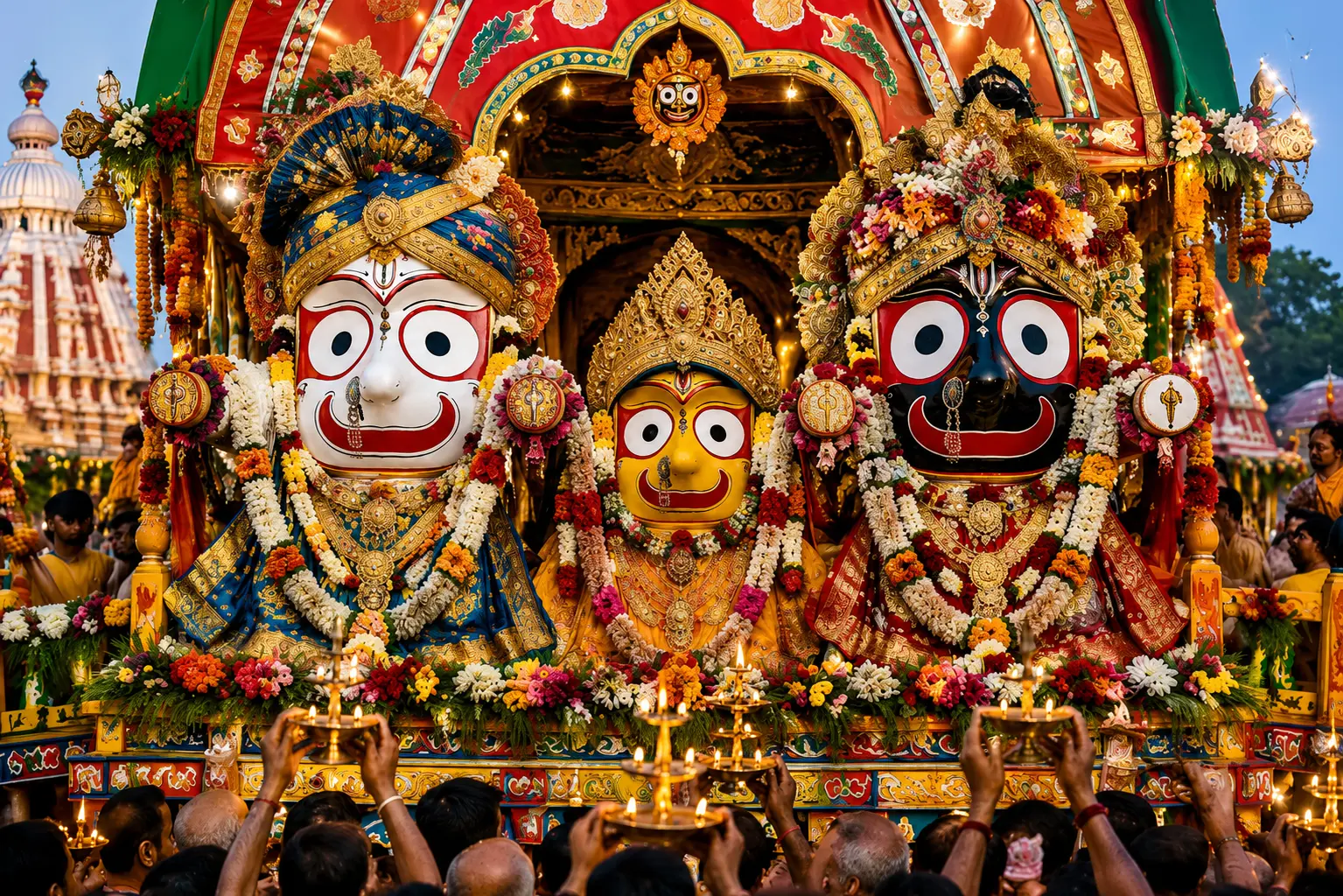
The spiritual meaning of Rath Yatra runs on three levels. First, it shows that Lord Jagannath comes out of his closed temple doors to meet every person equally, a public act of divine grace. Second, the Katha Upanishad teaches that the chariot is the human body and the soul rides inside it, the procession makes this teaching visible to millions. Third, Saint Chaitanya Mahaprabhu taught that the journey from the Jagannath Temple to the Gundicha Temple represents God moving from a formal abode to the human heart. All three levels say the same thing differently: the divine is not far away. It is trying to come closer.
It’s surprising how a wooden chariot can become one of the greatest spiritual lessons in Sanatan Dharma.
At first glance, Rath Yatra looks like a magnificent procession. But when you read what the scriptures and saints have said about it, you realize every part of the festival has a purpose. The journey, the chariot, the ropes, and even the destination all point towards something much deeper.
The meaning of Rath Yatra is not just about Lord Jagannath travelling from one temple to another. It is about God’s love reaching every devotee, the journey of the human soul, and the path of devotion itself. In this article, we’ll discover the spiritual meaning of Rath Yatra through the teachings of Hindu scriptures and revered saints.
What Does Rath Yatra Mean Literally?
“Rath” means chariot. “Yatra” means a journey or a pilgrimage. Rath Yatra meaning is simply the chariot journey. But a literal translation misses everything. In Sanatan Dharma, this is never just a vehicle moving down a road.
Every part of what you see, the chariot, the horses, the rope, the road, the deities inside, carries a deeper meaning that has been explained by saints and scriptures for over a thousand years.
Lord Jagannath Rath Yatra meaning lives at the intersection of devotion, philosophy, and lived human experience. The ancient teachers of this tradition were never satisfied with just describing what happens on Bada Danda.
They always asked: what does it mean? What is the Lord teaching us through this procession? This blog brings together the best answers they gave, from the Katha Upanishad to the Skanda Purana to the life of Chaitanya Mahaprabhu.
What Rath Yatra in Hindu Scriptures Says?
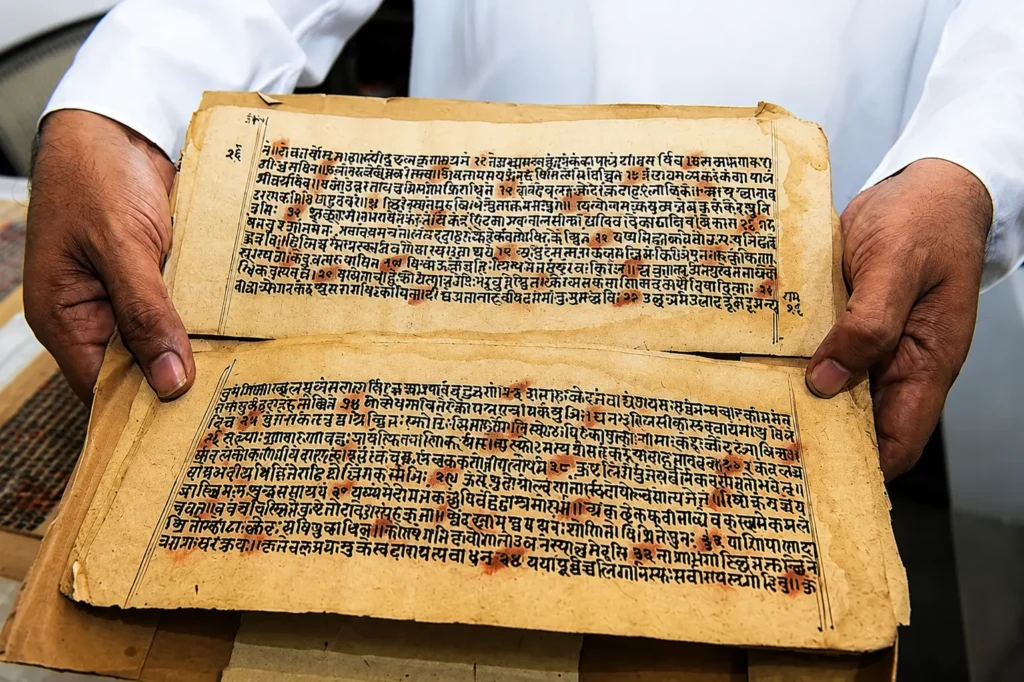
The Skanda Purana, one of the eighteen major Puranas, directly states that seeing Lord Jagannath on his chariot during Rath Yatra frees a soul from the cycle of rebirth. The Brahma Purana glorifies Puri as the eternal home of Lord Vishnu.
The Padma Purana says that a single visit to Puri during this festival carries the merit of all four Char Dham pilgrimages combined.
“Ratha tu Vamanam drustva punara janma na vidyate.”
One who beholds Lord Vishnu on his divine chariot is freed from the cycle of rebirth.
Skanda Purana, Purushottama Kshetra Mahatmya, the most cited verse about the spiritual power of witnessing Rath Yatra.
| Scripture | What it teaches about Rath Yatra? |
| Skanda Purana (Purushottama Mahatmya) | Seeing the Lord on his chariot frees the soul from rebirth. The yatra earns the devotee a place in Lord Vishnu’s eternal home. |
| Brahma Purana | Puri is the eternal abode of Lord Vishnu. The Rath Yatra is his annual public appearance for all beings. |
| Padma Purana | One who sees Lord Jagannath at Nilachala Hill attains Lord Vishnu’s abode. The merit of Rath Yatra equals all four Char Dhams. |
| Narada Purana | Describes the Rath Yatra and the spiritual merit of watching the chariot procession. |
| Katha Upanishad (Adhyaya 1, Valli 3) | The chariot = the body. The soul = the passenger. Wisdom = the charioteer. The senses = the horses. The mind = the reins. |
| Chaitanya Charitamrita (Madhya Lila, Ch. 12-13) | Documents Chaitanya Mahaprabhu’s teachings on Rath Yatra as an invitation for the Lord to enter the devotee’s heart. |
Sources: Skanda Purana, Purushottama Kshetra Mahatmya; Brahma Purana; Padma Purana; Narada Purana; Katha Upanishad (Adhyaya 1, Valli 3, verses 3-4); Chaitanya Charitamrita, Madhya Lila, Chapters 12 and 13.
The Chariot as the Human Body: The Katha Upanishad Teaching
The Katha Upanishad (Chapter 1, Valli 3, verses 3-4) uses the chariot as a direct teaching about the human being. The soul is the passenger riding inside the chariot. The body is the chariot itself. Wisdom is the charioteer. The mind is the reins. The five senses are the horses. The Rath Yatra makes this ancient teaching visible to millions of people at once.
“Atmanam rathinam viddhi, shariram rathameva tu, buddhim tu sarathim viddhi, manah pragrahameva cha.”
Know the Self as the passenger of the chariot. Know the body as the chariot itself. Know wisdom as the charioteer. Know the mind as the reins.
Katha Upanishad, Adhyaya 1, Valli 3, Verses 3-4.
When you watch the Jagannath Rath Yatra procession, you are watching the Katha Upanishad come alive. The chariot symbolism in Hinduism is not symbolic here, it is physical. The body-chariot is made of wood. The soul-passenger is Lord Jagannath. The horses are four powerful animals.
The reins are the thick ropes held by thousands of devotees. Bada Danda, the Grand Road, is the path of life itself. The road leads toward Gundicha Temple, which represents the Lord’s true home, the purified heart.
The great saints of the Vaishnava and Vedanta traditions both point to this. The chariot procession is a classroom. Every element teaches something. No textbook is needed. The teaching happens on the open street, in the monsoon heat, in front of everyone who has eyes to see.
Why Does Lord Jagannath Come Outside? The Significance of Rath Yatra
Why is Rath Yatra celebrated? Because Lord Jagannath chooses to come out. The temple normally limits who can see him. Not everyone can enter the sanctum. But the Lord himself does not want that barrier.
He steps outside once a year so that every person, regardless of birth, background, or faith, can stand on the road and receive his grace directly. This is the first and most visible significance of Lord Jagannath Rath Yatra.
Sri Gopinath Gaudiya Math records a teaching that captures this beautifully:
“The temple authorities do not allow everyone to enter the temple. Jagannath means Lord of the Universe. There are countless living beings in this universe, and He is the Lord of all. But due to the restrictions set by temple authorities, there are those who are unable to take darshan of Lord Jagannath. To remove their sorrow, He decides to come out of His temple and give His darshan to all.”
The act of the Lord stepping outside is not a routine event. It is a statement. The highest divine authority removes his own boundary. He travels down the public road. He lets every person see him, touch the rope of his chariot, and receive his blessing.
This is the most democratic act in all of Jagannath culture. No invitation is needed. No caste, no faith, no ticket. The road is open to all.
What the Rath Yatra Journey Represents?
The journey of the soul in Rath Yatra goes from the Jagannath Temple, the formal, grand, official home of the Lord, to the Gundicha Temple, which is described as a humble garden house.
Spiritually, the journey moves from the external to the internal. From grandeur to simplicity. From the public palace to the private heart. The Lord travels toward devotion, not toward power.
Think about what this journey says. The Jagannath Temple in Puri is one of the most magnificent structures in all of India. It stands 65 metres tall. It houses thousands of priests, rituals, offerings, and ceremonies.
It is the official and formal home of the Lord. And once a year, he leaves it. He does not go to a bigger or more impressive palace. He goes to a quiet garden house, 3 kilometres away.
He stays there for seven days in simplicity, on a plain platform called the Ratnavedi, accessible to far more devotees than his formal sanctum. This is the direction of the divine: not toward greater grandeur, but toward greater closeness.
Gundicha Temple Symbolism: The Human Heart
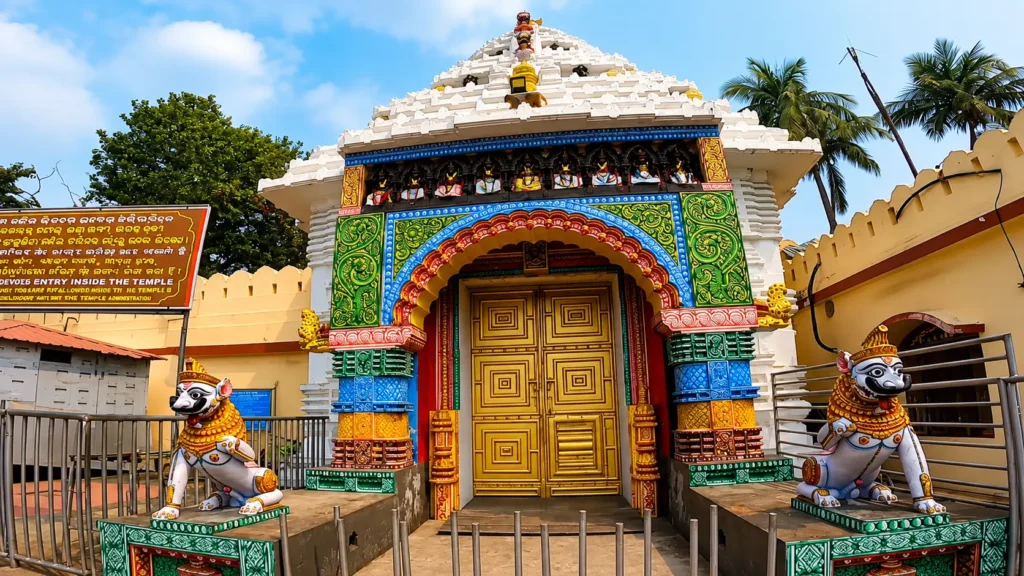
Saint Chaitanya Mahaprabhu taught that the Gundicha Temple represents the human heart. The journey of Lord Jagannath from the main temple to Gundicha represents God’s journey from outside to inside, from the world to the heart.
The day before Rath Yatra, when devotees clean the Gundicha Temple in the Gundicha Marjana ritual, they are practicing the cleaning of the heart to receive the Lord.
The Chaitanya Charitamrita, Madhya Lila, Chapter 12 records this teaching in Chaitanya Mahaprabhu’s own words. While cleaning the Gundicha Temple, he told his devotees:
“We have to clean every bit of stain. This stain represents material name, fame, and desire. If this stain is left, then the Lord will not appear in our hearts.” He examined the temple “as though it is the heart inside the body.”
He swept personally, with his own hands, until the floor was spotless. He swept again, looking for finer particles of dust others had missed. He said that a second cleaning was not unnecessary, it was essential. The heart needs to be that clean.
“Ceto-darpana-marjanam bhava-maha-davagni-nirvapanam…”
Chanting the holy name cleanses the mirror of the heart and puts out the blazing fire of material existence.
Sikshashtakam, Verse 1, composed by Chaitanya Mahaprabhu. The “cleansing of the mirror of the heart” directly mirrors the Gundicha Marjana teaching.
The connection between the outer temple and the inner heart is not a metaphor in the Vaishnava tradition. It is a lived practice. When you clean a temple, you clean your heart.
When you receive the Lord’s darshan on his chariot, your heart receives the same. The physical act and the spiritual act happen together. This is why Chaitanya Mahaprabhu did not just teach about heart purification. He picked up a broom and swept.
Sources: Chaitanya Charitamrita, Madhya Lila, Chapter 12 (Gundicha Marjana Lila); Sikshashtakam of Chaitanya Mahaprabhu, Verse 1.
Three Layers of Rath Yatra Meaning From Chaitanya Mahaprabhu
Chaitanya Mahaprabhu, who spent 18 years of his life in Puri, experienced Rath Yatra at three levels simultaneously. First: an invitation to the Lord to enter the purified heart. Second: the reunion of Lord Krishna with his devotees in Vrindavan after a long separation. Third: the deepest emotion in all of Bhakti, loving separation that finally ends in joy. The Chaitanya Charitamrita, Madhya Lila, Chapters 12 and 13 document all three.
First Layer: The Lord Enters the Heart
The most direct meaning: Rath Yatra is an invitation. The devotee cleans the Gundicha Temple (the heart). The Lord accepts the invitation and travels there. He stays seven days. Then he goes home. But the memory of his presence in the clean heart never fully leaves. The devotee carries it forward into the next year, and the year after that.
Second Layer: The Vrindavan Reunion
Chaitanya Mahaprabhu saw the Gundicha Temple as Vrindavan itself. When Lord Krishna left Vrindavan for Mathura and then Dwarka, the Gopis and all of Vrindavan’s residents were left in deep pain of separation.
Their longing for him was the purest form of Bhakti, love with no expectation, no bargain, no demand. Only longing. The Rath Yatra, in this reading, is Krishna finally coming back to them. The residents of Vrindavan carry him home in a chariot.
Third Layer: Loving Separation and Reunion
Chaitanya Mahaprabhu described the emotion he felt during the Anavasara period (when Lord Jagannath is hidden from view after the Snana Yatra bath) as the highest form of devotional feeling, the pain of separation from the Lord.
He would weep, he would go to the Alarnath shrine instead because he could not bear Puri without the darshan. And when Rath Yatra arrived, that separation ended. The joy of reunion, after the pain of separation, is what the Vaishnava tradition calls Vipralambha bhava, the most refined and powerful emotional state in devotional life.
Chaitanya Mahaprabhu danced in front of the chariots for hours, leading seven Sankirtan groups. This was not a performance. This was the purest human response to the divine returning.
What Pulling the Rath Yatra Rope Means?
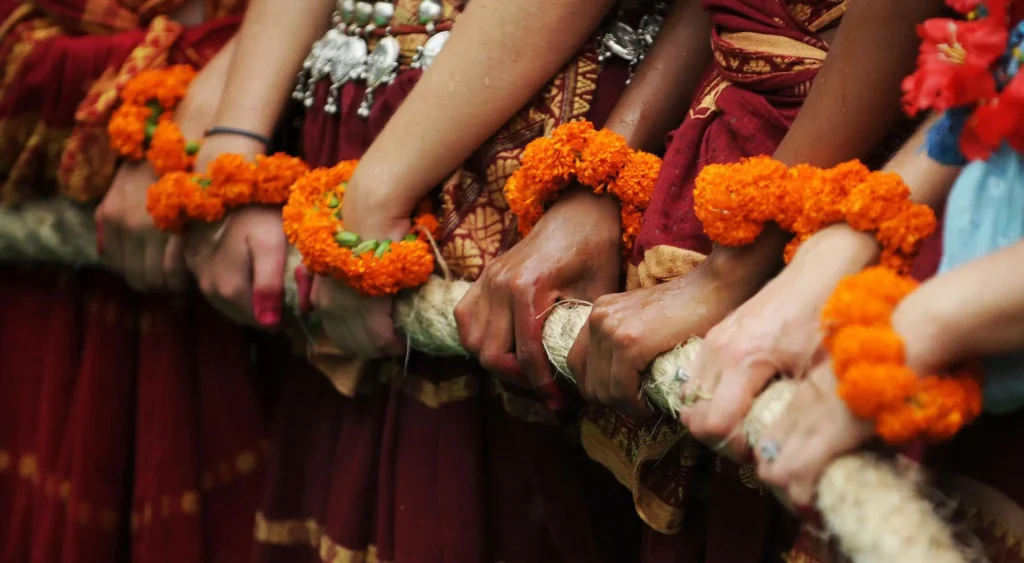
Pulling the chariot rope is the most direct physical act of Bhakti in the whole festival. The devotee does not steer the chariot. He does not plan the route. He does not control the speed. He simply holds the rope and pulls. This is the practice of Surrender, the devotee offers his strength to the Lord and lets the Lord go where he wishes. The rope connects the human hand to the divine passenger inside.
The Skanda Purana says that merely seeing Lord Jagannath on his chariot frees the soul from rebirth. Temple tradition extends this to the rope. Touching the rope, even for a moment, is believed to carry the same grace as completing all four Char Dham pilgrimages.
The Madala Panji records this as a long-standing teaching of the Puri tradition. Millions of people push forward on Bada Danda not for a good view. They push forward to grip that rope, to pull it once, to feel that they held the same cord that holds Lord Jagannath’s chariot to the road. That is the meaning of Devotion made physical.
The Story of King Prataparudra: Divine Grace During Rath Yatra
King Prataparudra was the ruler of Odisha and a great devotee. He desperately wanted to meet Chaitanya Mahaprabhu, but the saint refused to meet kings due to their attachment to power and prestige.
On the day of Rath Yatra, the king’s devotees advised him to remove his royal clothes, dress as an ordinary person, and join the crowd. He did. In simple clothes, chanting without any royal manner, he reached Chaitanya Mahaprabhu and recited a verse from the Srimad Bhagavatam. The saint embraced him with love. The crown could not earn his grace. Humility and Bhakti did.
The Legend
The Chaitanya Charitamrita, Madhya Lila, Chapter 13 describes this. King Prataparudra had been trying for a long time to meet Chaitanya Mahaprabhu. The saint consistently refused, a king in royal attire carries the consciousness of worldly power, which pulls the mind away from God. Prataparudra’s devotees finally told him: during Rath Yatra, no distinction exists. Come as a devotee, not as a king. Prataparudra left his palace robes.
He dressed simply. He came to the crowd and began reciting the verse: “tava kathamrtam tapta jivanam…” The moment Chaitanya Mahaprabhu heard a sincere devotee reciting that verse with genuine feeling, he embraced that person without seeing who it was. When he opened his eyes and saw it was the king, it made no difference. The divine grace of Rath Yatra had already done its work.
Source: Chaitanya Charitamrita, Madhya Lila, Chapter 13 (Rath Yatra Lila).
The teaching is clear: Rath Yatra significance in Hinduism includes the erasing of all ranks. The Lord’s chariot does not stop at a VIP gate. The road is the same for a king as for a beggar. The grace is the same for a scholar as for a person who cannot read. This is what Jagannath consciousness means in daily practice.
The Story of Salabega: Lord Jagannath Rath Yatra and the Grace That Knows No Boundary
Salabega was a 17th-century poet and devotee of Lord Jagannath. He was born to a Muslim father and a Hindu mother. He became deeply devoted to the Lord but was not allowed to enter the Jagannath Temple due to his mixed birth.
He composed beautiful Odia devotional songs to Jagannath from outside the temple walls. According to a beloved local tradition, the Lord himself held the Rath Yatra chariot in place one year, refusing to move it, until Salabega arrived from a long journey. The Lord waited for his devotee.
Salabega’s songs are still sung at the Puri Rath Yatra today. The story of the chariot waiting for him is a local tradition that has been passed down for centuries in Odisha. Be it history or living legend, the meaning it carries is precise: Lord Jagannath does not measure a soul by birth. He measures it by the quality of love.
Salabega could not go inside the temple. The Lord came out to the road to meet him instead. The significance of Rath Yatra is exactly this: the Lord moves toward the one who longs for him, regardless of who they are.
Source: Salabega’s historical existence and his Odia devotional poetry are documented in Odisha Sahitya Akademi records. The “chariot waiting” account belongs to the living oral tradition of Puri and Odisha.
What Different Traditions Say About Rath Yatra Significance in Hinduism?
| Tradition | How they understand the spiritual meaning |
| Vaishnava tradition | The festival is the supreme expression of Bhakti — devotional love. The Lord steps outside to bless his devotees. Pulling the rope is an act of direct service to God. The chariot procession is Leela, sacred divine play. |
| Advaita Vedanta | The chariot and the Katha Upanishad teaching show the Atman (soul) riding in the body-chariot through the road of life. The festival makes the Upanishadic philosophy a lived, visible reality. |
| Shaiva tradition | Lord Balabhadra is often linked to Shiva. The three siblings together represent the diversity within one divine unity – Shakti, Vishnu, and Shiva moving together. |
| Folk and tribal tradition | The Sabara and Savara tribal root of Jagannath worship sees Rath Yatra as the Lord of the forest leaving his seat to walk among his people. The communal food-sharing at Ananda Bazaar reflects this deepest, oldest layer. |
Final Words: The Heart of Sanatan
Rath Yatra significance in Hinduism is not limited to one community or one doctrine. Every major Hindu tradition finds its own teaching in this festival. The Upanishad student sees the chariot philosophy. The Bhakta sees the Lord coming down to meet the devotee. The Vedantin sees the Atman traveling through the body. The common person sees God coming to them on the street. One festival, one road, and every teaching of Sanatan Dharma meets on it.
This is perhaps the deepest answer to why the meaning of Rath Yatra has survived and grown for over a thousand years. It does not require any prior knowledge. It does not require any membership. It does not require any language. You stand on a road. A giant chariot comes toward you. A king sweeps its floor. Thousands pull its ropes. The Lord inside watches everything.
You can be a scholar or a child. You can have read every Purana or none. The road is the same for everyone. The grace is the same for everyone. The Lord looks at everyone with those same great, unblinking, round eyes, and sees them all equally.
That is the spiritual meaning of Rath Yatra. Not in a text. On a road. In the open. Every year. For as long as the chariot moves and the devotee holds the rope.
Frequently Asked Questions About Meaning of Rath Yatra
The spiritual meaning of Rath Yatra has three levels: the Lord coming out to bless all equally, the chariot-body-soul teaching from the Katha Upanishad, and the Lord’s journey into the human heart as taught by Chaitanya Mahaprabhu.
Rath Yatra is celebrated because Lord Jagannath chooses to step outside his closed temple and travel on a public road so that every person can receive his grace. The Skanda Purana says this sight alone frees a soul from rebirth.
The Skanda Purana, Brahma Purana, Padma Purana, and Narada Purana all describe Rath Yatra. The Skanda Purana’s verse “Ratha tu Vamanam drustva” directly says that seeing the Lord on his chariot removes the cycle of rebirth.
The Katha Upanishad (Adhyaya 1, Valli 3) teaches that the chariot = the human body, the soul = the passenger inside, wisdom = the charioteer, and the senses = the horses. Rath Yatra makes this Upanishadic teaching visible in real life.
Chaitanya Mahaprabhu taught that the Gundicha Temple represents the human heart. The journey of Lord Jagannath to Gundicha represents God moving toward the purified heart of his devotee.
Jagannath consciousness is the awareness that the Lord belongs to all and sees all equally. King and beggar, Hindu and non-Hindu, scholar and ordinary person, all stand on the same road and receive the same grace.
Pulling the rope is an act of Surrender and Devotion. The devotee does not control the chariot. He offers his strength and lets the Lord go where he will. The Madala Panji records that touching the rope carries the merit of all four Char Dham pilgrimages.
He experienced it at three levels: an invitation for the Lord to enter the heart, a reunion of Krishna with his Vrindavan devotees, and the highest emotion of Bhakti, the joy of reunion after loving separation. The Chaitanya Charitamrita, Madhya Lila, Chapters 12 and 13 record all three.
Salabega was a 17th-century devotee of Lord Jagannath born to a Muslim father. He could not enter the temple but composed devotional songs that are still sung during Rath Yatra. His story shows that the Lord’s grace recognises devotion, not birth.
In the Vaishnav tradition, Rath Yatra is the supreme festival of Bhakti. The Lord steps out to bless his devotees directly. Pulling the rope is direct service to God. The procession is Leela, sacred divine play enacted for the benefit of all souls.
Because Lord Jagannath is Patitapavana, the saviour of all, without exception. The road is the most democratic space in all of Hindu worship. The Lord himself removed his own barrier when he chose to come outside.
The journey does not end here. Follow MFC on Instagram and Facebook to explore more sacred places, festivals, and living traditions of Sanatan Dharma.