


In Sanatan Dharma, time carries spiritual meaning. Ancient scriptures describe sacred periods for reflection and devotion. Benefits of Adhik Maas hold special importance among these sacred periods.
Devotees also call this sacred month Purushottam Maas. Lord Vishnu blessed this month with spiritual significance. Scriptures praise this month for devotion, discipline, and inner purification.
This blog explains the spiritual benefits of Adhik Maas through authentic scriptural references. You will also find complete shlokas, transliterations, meanings, and traditional interpretations.
What Is Adhik Maas/Purushottam Maas?
Adhik Maas is an additional lunar month in the Hindu calendar. The calendar includes this month to balance solar and lunar cycles.
Ancient scriptures describe this month as spiritually powerful. Devotees dedicate this month to Lord Vishnu in His Purushottam form.
The adhik maas significance comes from spiritual discipline and devotion. Devotees increase prayer, charity, mantra chanting, and scriptural study during this month.
Spiritual Benefits Of Adhik Maas

1. Adhik Maas Helps in Spiritual Purification
One major benefits of adhik maas involves spiritual purification. Scriptures explain that sincere devotion cleanses accumulated karmas.
Padma Purana, Purushottam Maas Mahatmya
पुरुषोत्तममासं तु यः करोति समाहितः ।
सर्वपापविनिर्मुक्तो विष्णुलोकं स गच्छति ॥
English Transliteration:
Purushottama-māsaṁ tu yaḥ karoti samāhitaḥ ।
Sarva-pāpa-vinirmukto viṣṇu-lokaṁ sa gacchati ॥
Meaning:
A sincere observer of Purushottam Maas becomes free from sins. Such a devotee ultimately reaches the abode of Lord Vishnu.
This verse highlights the spiritual cleansing connected with Purushottam Maas. The scripture emphasizes devotion with sincerity and discipline.
2. Spiritual Benefits of Worship in Adhik Maas
Scriptures repeatedly praise the benefits of worship in adhik maas. Even small acts of devotion carry immense spiritual value during this month.
Skanda Purana, Purushottam Maas Mahatmya
अल्पेनापि कृते पुण्ये पुरुषोत्तममासके ।
कोटिगुणफलं प्राहुर्मुनयो वेदपारगाः ॥
English Transliteration:
Alpenāpi kṛte puṇye puruṣottama-māsake ।
Koṭi-guṇa-phalaṁ prāhur munayo veda-pāragāḥ ॥
Meaning: Wise sages declare multiplied spiritual results from devotional acts during Purushottam Maas.
This teaching encourages sincere worship during this sacred period. Devotees focus more on consistency than grand rituals.
3. Adhik Maas Strengthens Devotion to Lord Vishnu
Lord Vishnu remains central to Purushottam Maas observances. This month encourages surrender, remembrance, and steady devotion.
Bhagavad Gita 18.65
मन्मना भव mad्भक्तो मद्याजी मां नमस्कुरु ।
मामेवैष्यसि सत्यं ते प्रतिजाने प्रियोऽसि मे ॥
English Transliteration
Man-manā bhava mad-bhakto mad-yājī māṁ namaskuru ।
Mām evaiṣyasi satyaṁ te pratijāne priyo ’si me ॥
Meaning:
Lord Krishna asks devotees to remember, worship, and surrender to Him completely.
This verse reflects the essence of Purushottam Maas devotion. Devotees strengthen their connection with the Divine through remembrance.
4. Adhik Maas Encourages Inner Reflection
Another important spiritual benefits of Purushottam maas involves self-awareness. This month encourages devotees to reduce worldly distractions.
Bhagavad Gita 2.62
ध्यायतो विषयान्पुंसः सङ्गस्तेषूपजायते ।
सङ्गात्संजायते कामः कामात्क्रोधोऽभिजायते ॥
English Transliteration:
Dhyāyato viṣayān puṁsaḥ saṅgas teṣūpajāyate ।
Saṅgāt sañjāyate kāmaḥ kāmāt krodho ’bhijāyate ॥
Meaning:
Constant attachment to worldly objects creates desire and emotional disturbance.
Adhik Maas creates space for introspection and mental clarity. Many devotees simplify their routines during this sacred month.
5. Fasting During Adhik Maas Builds Spiritual Discipline
Fasting holds deep spiritual meaning in Sanatan Dharma. Scriptures connect fasting with discipline, restraint, and devotion.
Purushottam Maas Mahatmya traditions:
उपवासैस्तपोदानैर्जपहोमार्चनादिभिः ।
पुरुषोत्तममासे तु विष्णुः प्रीतो न संशयः ॥
English Transliteration
Upavāsais tapo-dānair japa-homārcanādibhiḥ ।
Puruṣottama-māse tu viṣṇuḥ prīto na saṁśayaḥ ॥
Meaning
Lord Vishnu becomes pleased through fasting, charity, chanting, and worship during Purushottam Maas.
The adhik maas benefits according to scriptures focus strongly on disciplined living. Devotees often adopt simpler food and lifestyle habits.
6. Naam Jap During Adhik Maas Brings Spiritual Growth

Naam jap remains one of the simplest spiritual practices during this month. Ancient scriptures repeatedly praise chanting the Divine Name.
Brihan Naradiya Purana 38.126
हरेर्नाम हरेर्नाम हरेर्नामैव केवलम् ।
कलौ नास्त्येव नास्त्येव नास्त्येव गतिरन्यता ॥
English Transliteration
Harer nāma harer nāma harer nāmaiva kevalam ।
Kalau nāsty eva nāsty eva nāsty eva gatir anyathā ॥
Meaning
Scriptures declare chanting the Divine Name as the highest spiritual path in Kali Yuga.
Many devotees increase Vishnu mantra chanting during Adhik Maas. This practice cultivates focus, devotion, and inner peace.
7. Adhik Maas Inspires Charity and Compassion
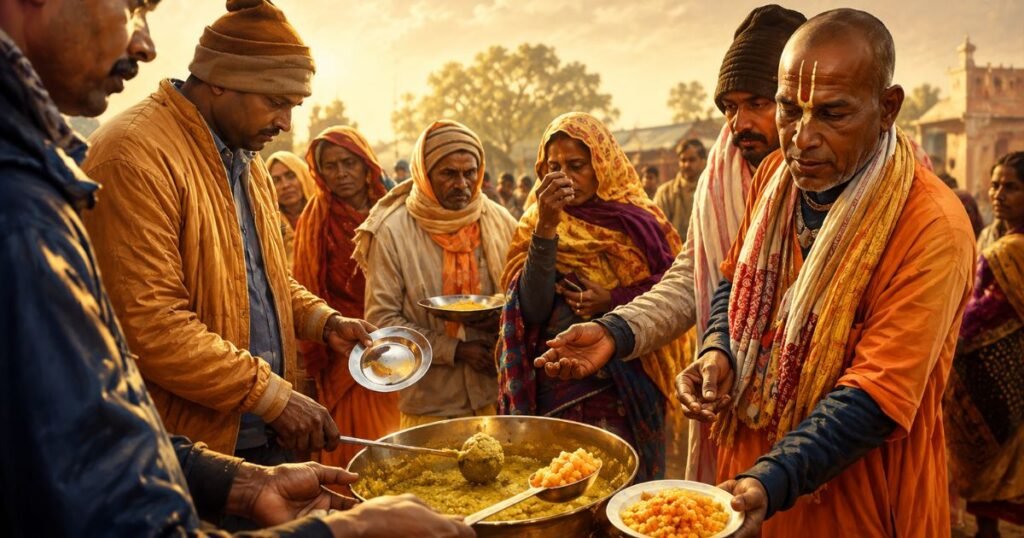
The adhik maas significance also includes charity and selfless service. Scriptures encourage compassionate actions during this sacred period.
Bhagavad Gita 17.20
दातव्यमिति यद्दानं दीयतेऽनुपकारिणे ।
देशे काले च पात्रे च तद्दानं सात्त्विकं स्मृतम् ॥
English Transliteration
Dātavyam iti yad dānaṁ dīyate ’nupakāriṇe ।
Deśe kāle ca pātre ca tad dānaṁ sāttvikaṁ smṛtam ॥
Meaning
True charity expects nothing in return and supports deserving people sincerely.
Adhik Maas encourages spiritual maturity through kindness and humility. Devotees often engage in food donation and seva activities.
Simple Spiritual Practices During Adhik Maas
- Chant Vishnu mantras daily.
- Read the Bhagavad Gita regularly.
- Practice satvik eating habits.
- Donate food and essentials.
- Meditate and practice self-reflection.
- Visit Vishnu temples regularly.
- Avoid anger, gossip, and negativity.
Conclusion
The benefits of adhik maas extend beyond rituals and ceremonies. Ancient scriptures describe this month as a period of transformation and devotion.
The spiritual benefits of adhik maas include purification, discipline, compassion, and surrender. Purushottam Maas helps devotees reconnect with spiritual awareness.
This sacred month encourages simplicity, reflection, and conscious living. Its teachings remain deeply relevant even today. In a world driven by distraction and constant movement, Adhik Maas offers something increasingly rare: a sacred pause dedicated to spiritual clarity.
Frequently Asked Questions (FAQs)
1. What are the main spiritual benefits of Adhik Maas?
Adhik Maas offers devotees an extended period for spiritual purification, deepened devotion to Lord Vishnu, inner reflection, and accumulated merit through prayer, fasting, charity, and naam jap. Ancient scriptures like the Padma Purana and Skanda Purana describe this month as exceptionally powerful for clearing karmic burdens and progressing on the spiritual path.
2. What does scripture say about the benefits of worship during Adhik Maas?
The Skanda Purana’s Purushottam Maas Mahatmya states that even small acts of devotion performed during this month yield results multiplied many times over. Sages well-versed in the Vedas confirm that sincere worship, however modest, carries immense spiritual weight during Purushottam Maas.
3. Why is Adhik Maas also called Purushottam Maas?
Lord Vishnu, in His form as Purushottam (the Supreme Being), accepted and blessed this additional lunar month with His name and grace. This blessing elevated the month’s spiritual status. Devotees dedicate all practices during this period specifically to Lord Vishnu in His Purushottam form.
4. What are the benefits of fasting during Adhik Maas?
Fasting during Adhik Maas builds spiritual discipline, reduces attachment to sensory pleasures, and pleases Lord Vishnu. The Purushottam Maas Mahatmya tradition confirms that fasting combined with charity, chanting, and worship during this month draws the Lord’s grace without doubt. Many devotees also adopt simpler, satvik eating habits throughout the month.
5. How does naam jap during Adhik Maas help spiritually?
Chanting the Divine Name during Adhik Maas cultivates inner focus, devotion, and peace. The Brihan Naradiya Purana declares naam jap as the highest spiritual path in Kali Yuga. Regular Vishnu mantra chanting during this sacred month intensifies the devotee’s connection with the Divine and accelerates spiritual growth.
6. Is charity during Adhik Maas spiritually significant?
Yes. The Bhagavad Gita (17.20) describes sattvic charity as giving without expectation, to the right person, at the right time and place. Adhik Maas is considered one such auspicious time. Devotees are encouraged to donate food, essentials, and offer seva, as compassionate action during this period deepens humility and spiritual maturity.
7. Can everyday devotees experience the benefits of Adhik Maas without elaborate rituals?
Absolutely. Scriptures emphasize sincerity and consistency over grand ceremonies. Simple daily practices, chanting Vishnu mantras, reading the Bhagavad Gita, practicing self-reflection, eating satvik food, and avoiding anger and negativity, are sufficient to draw the full spiritual benefits of Adhik Maas.
8. How does Adhik Maas support inner reflection and mental clarity?
Adhik Maas creates a dedicated space away from worldly distractions. The Bhagavad Gita (2.62) teaches that constant attachment to sensory objects leads to desire and emotional unrest. By simplifying their routines and increasing devotional focus during this month, devotees naturally experience greater mental clarity and self-awareness.
The journey does not end here. Follow MFC on Instagram and Facebook to explore more sacred places, festivals, and living traditions of Sanatan Dharma.