
What are the best Purushottam Maas mantras to chant?
The most powerful Purushottam Maas mantras are Om Namo Bhagavate Vasudevaya (12-syllable Dvadashaakshari mantra) and Om Namo Narayanaya (8-syllable Ashtaakshari mantra). Devotees also chant the Hare Krishna Mahamantra and recite the Vishnu Sahasranama daily.
The Padma Purana recommends consistent naam jap throughout Purushottam Maas for moksha, sin removal, and Lord Vishnu’s grace. Chant on a Tulsi mala, after your morning bath, every single day of the month.
Why Mantras Hold Special Power in Purushottam Maas?
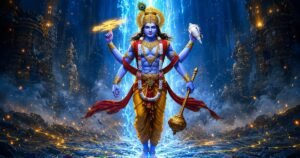
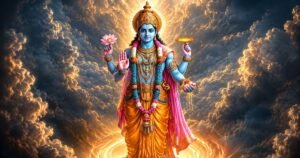
The Padma Purana calls Purushottam Maas the most sacred month for Vishnu bhakti. Lord Vishnu himself rules this sacred extra month in the Hindu calendar. He accepts it as his own and governs it directly.
This direct rulership changes everything about mantra chanting. Every mantra you offer reaches Lord Vishnu without obstruction. The Padma Purana says one round of naam jap here equals thousands of rounds in a normal month. That is the promise. The scriptures state it without ambiguity.
Mantra chanting benefits during this month includesin removal, ancestral peace, and spiritual liberation. These are not small rewards. They represent the full fruit of a lifetime of devotional chanting compressed into 30 days.
Scriptural Basis: All mantra guidance for Adhik Maas comes from the Padma Purana. Lord Vishnu instructs Narada Muni directly on how devotees must observe Purushottam Maas. Naam jap and bhakti during Adhik Maas appear as non-negotiable pillars of this month.
The Six Mantras to Chant During Purushottam/Adhik Maas
Six mantras serve as the foundation of Purushottam Maas vrat prayers. Each one addresses a different dimension of Lord Vishnu devotion. You do not need to chant all six. Choose one with full sincerity and stay with it every day.
One mantra done daily with focus carries more weight than six done carelessly.
1. Dvadashaakshari Mantra: Om Namo Bhagavate Vasudevaya
The 12-syllable mantra. The Padma Purana places it first for Purushottam Maas. Chant 108 times daily on a Tulsi mala. Grants moksha and removes accumulated sins.
2. Ashtaakshari Mantra: Om Namo Narayanaya
The 8-syllable mantra. One of the most potent best prayers for Lord Vishnu in the Vedic tradition. Chant at sunrise each morning of the month.
3. Hare Krishna Mahamantra: Hare Krishna Hare Krishna Krishna Krishna Hare Hare / Hare Rama Hare Rama Rama Rama Hare Hare
The Mahamantra of the Kali Yuga. 16 names and 32 syllables. Purifies the mind and awakens Krishna consciousness. Chant anytime, anywhere.
4. Vishnu Sahasranama: Shantakaram Bhujagashayanam Padmanabham Suresham…
Recite once daily during Purushottam month. Grants health, prosperity, and liberation. The Mahabharata confirms its supreme merit among all Vishnu prayers.
5. Tulsi Stotra: Tulasyamritajanmasi Sada Tvam Keshavapriya…
Recite before every puja during Adhik Maas. Tulsi is the most beloved plant of Lord Vishnu. Tulsi worship in this month carries immense merit for the household.
6. Shri Ram Jay Ram: Shri Ram Jay Ram Jay Jay Ram
A simple, powerful Rama naam. Repeating it 108 times daily fulfills dharmic practices with ease. Ideal for devotees new to devotional chanting.
Mantra 1: Om Namo Bhagavate Vasudevaya
| Mantra – ॐ नमो भगवते वासुदेवाय Transliteration – Oṃ Namo Bhagavate Vāsudevāya |
| Word by Word – ॐ (Oṃ) – The primordial cosmic sound नमो (Namo) – I bow / I offer salutation भगवते (Bhagavate) – To the Supreme Being, the Lord of all opulence वासुदेवाय (Vāsudevāya) – To Vasudeva, Krishna/Vishnu, who dwells in all beings |
| Overall Meaning – I bow to Lord Vasudeva, the Supreme Being who pervades all of existence and dwells within every heart. This is the mantra of complete surrender to Lord Vishnu. |
Mantra 2: Om Namo Narayanaya
| Original Sanskrit – ॐ नमो नारायणाय Transliteration – Oṃ Namo Nārāyaṇāya |
| Word by Word – ॐ (Oṃ) – The primordial cosmic sound नमो (Namo) – I bow / I offer salutation नारायणाय (Nārāyaṇāya) – To Narayana, the one who is the refuge and abode of all beings |
| Overall Meaning – I bow to Lord Narayana, the eternal sustainer of all creation, the refuge of every living being, and the source from which all existence emerges and returns. |
Mantra 3: Hare Krishna Mahamantra
| Original Sanskrit – हरे कृष्ण हरे कृष्ण कृष्ण कृष्ण हरे हरे । हरे राम हरे राम राम राम हरे हरे ।। Transliteration – Hare Kṛṣṇa Hare Kṛṣṇa Kṛṣṇa Kṛṣṇa Hare Hare / Hare Rāma Hare Rāma Rāma Rāma Hare Hare |
| Word by Word – हरे (Hare) – O Hari, the one who takes away all suffering and illusion कृष्ण (Kṛṣṇa) – The all-attractive one, the Supreme Lord राम (Rāma) – The reservoir of all pleasure; also Lord Rama |
| Overall Meaning: O Lord Hari, O Krishna, O Rama, please engage me in Your loving devotional service. Remove the illusion of material existence and awaken within me pure Krishna consciousness. |
Mantra 4: Vishnu Sahasranama
| Original Sanskrit – शान्ताकारं भुजगशयनं पद्मनाभं सुरेशं । विश्वाधारं गगनसदृशं मेघवर्णं शुभाङ्गम् ।। लक्ष्मीकान्तं कमलनयनं योगिभिर्ध्यानगम्यं । वन्दे विष्णुं भवभयहरं सर्वलोकैकनाथम् ।। Transliteration – Shāntākāraṃ Bhujagashayanam Padmanābhaṃ Suresham Vishvādhāraṃ Gaganasadṛisham Meghavarṇaṃ Shubhāṅgam Lakṣhmīkāntaṃ Kamalanayanaṃ Yogibhirdhyānagamyam Vande Viṣhṇuṃ Bhavabhayaharaṃ Sarvalokaikanātham |
| Word by Word – शान्ताकारं (Shāntākāraṃ) – One whose form radiates peace भुजगशयनं (Bhujagashayanam) – One who rests upon the serpent Shesha पद्मनाभं (Padmanābhaṃ) – One from whose navel the lotus emerges मेघवर्णं (Meghavarṇaṃ) – One whose complexion resembles a rain cloud भवभयहरं (Bhavabhayaharaṃ) – One who removes the fear of worldly existence सर्वलोकैकनाथम् (Sarvalokaikanātham) – The one Lord of all worlds and all beings |
| Overall Meaning – I bow to Lord Vishnu, who is peaceful in form, who rests upon the divine serpent, whose navel bears the lotus of creation. He is the foundation of the universe, vast as the sky, cloud-coloured, of auspicious form, the beloved of Lakshmi, lotus-eyed, and accessible to yogis in meditation. He removes all fear of worldly existence and is the one Lord of all worlds. |
Mantra 5: Tulsi Stotra
| Original Sanskrit – तुलस्यमृतजन्मासि सदा त्वं केशवप्रिया । केशवार्थे चिनोमि त्वां वरदा भव शोभने ।। Transliteration – Tulasyamṛtajanmāsi Sadā Tvaṃ Keshavapriyā / Keshavārthe Chinomi Tvāṃ Varadā Bhava Shobhane |
| Word by Word – तुलसि (Tulasi) – O Tulsi plant, the sacred basil अमृतजन्मासि (Amṛtajanmāsi) – You who are born of divine nectar केशवप्रिया (Keshavapriyā) – The beloved of Lord Keshava (Vishnu) केशवार्थे (Keshavārthe) – For the sake of Lord Keshava’s worship चिनोमि (Chinomi) – I pluck / I gather with reverence वरदा भव (Varadā Bhava) – Please bestow your blessings upon me |
| Overall Meaning – O Tulsi, you are born of nectar and you are always the beloved of Lord Keshava. I pluck you with reverence for His worship. O beautiful and auspicious one, please grant me your blessings and grace. |
Mantra 6: Shri Ram Jay Ram Jay Jay Ram
| Original Sanskrit – श्री राम जय राम जय जय राम Transliteration – Shrī Rāma Jaya Rāma Jaya Jaya Rāma |
| Word by Word – श्री (Shrī) – The auspicious one; a title of divine reverence राम (Rāma) – Lord Rama, the reservoir of all bliss जय (Jaya) – Victory; all glory to |
| Overall Meaning – All glory to the auspicious Lord Rama. Victory to Lord Rama. Victory again and again to Lord Rama, the eternal embodiment of dharma, compassion, and divine truth. |
Key Date to Remember: Ekadashi falls twice during Purushottam Maas 2026. These two days carry the highest power for Ekadashi devotion and mantra chanting. Purushottam Maas mantras chanted on Ekadashi multiply in merit many times over. Plan your deepest chanting practice for these two days.
The Right Way to Do Naam Jap
The Padma Purana does not just name the mantras. It also describes the correct method of naam jap. The method matters as much as the mantra itself. Follow these steps every day during Adhik Maas. They take less than 20 minutes. They cost nothing. They change everything.
The Daily Naam Jap Method for Purushottam Maas
Bathe first. Sit facing east or north. Keep your spine upright and your breath steady. Place a picture or idol of Lord Vishnu before you. Offer fresh Tulsi leaves to the deity. Light one ghee lamp before you begin. Hold your Tulsi mala in your right hand. Complete 108 repetitions of your chosen mantra. Sit in silence for five minutes after finishing. This is your complete daily devotional chanting practice for the entire month.
A Tulsi mala is not optional for Vishnu bhakti chanting. The Padma Purana specifies it directly. No other mala carries the same spiritual potency for Vishnu mantras.
Maintain a satvik lifestyle throughout the month. Eat simple, pure food. Avoid non-vegetarian food entirely during Purushottam month. Satvik living amplifies every round of mantra you complete.
One Minimum Commitment: If your schedule allows only one practice, choose Om Namo Bhagavate Vasudevaya. Chant it 108 times each morning on a Tulsi mala. Do this every day from May 17 to June 15. The Padma Purana says this alone fulfills the Purushottam Maas vrat prayers for a sincere devotee.
What to Do and What to Avoid During Chanting?
The Purushottam Maas bhajan and prayer tradition comes with clear guidance on both sides. Certain practices strengthen your chanting. Others weaken it. Both matter equally.
Practices That Strengthen Naam Jap:
- Chant after a morning bath every day
- Use a Tulsi mala for all Vishnu mantras
- Light a ghee lamp before each session
- Observe Ekadashi devotion with full fasting
- Chant with eyes closed and full attention
- Maintain a satvik lifestyle throughout the month
- Sit in silence for five minutes after chanting
- Chant consistently every day without a break
Practices That Weaken Naam Jap:
- Chanting with a distracted or restless mind
- Eating non-satvik food before your practice
- Using a mala other than Tulsi for Vishnu mantras
- Skipping chanting on Ekadashi or Purnima
- Rushing through the mala to finish quickly
- Chanting without offering Tulsi to the deity
- Breaking your practice mid-month without reason
- Chanting aloud in spaces meant for socialising
Conclusion
Purushottam Maas mantras are not complicated. They ask for one simple thing. Say the name. Say it every day. Say it with your full attention. Lord Vishnu rules this month directly. He receives every syllable you offer. No sincere act of divine remembrance goes unheard in this period.
Adhik Maas 2026 runs for 30 days. Thirty mornings to sit with a Tulsi mala. Thirty chances to chant one name with a steady mind. One mala. Every morning. That is enough. That is more than enough.
Jai Purushottam. Jai Srihari Vishnu.
Frequently Asked Questions (FAQs)
1. Which is the single most powerful Purushottam Maas mantra?
The Dvadashaakshari mantra “Om Namo Bhagavate Vasudevaya” holds the highest position for Purushottam Maas. The Padma Purana names it directly in the context of this month’s observance. Chant it 108 times daily on a Tulsi mala. This single practice fulfills the core Purushottam Maas vrat prayers for any sincere devotee.
2. Can a beginner chant these mantras without formal initiation?
Yes. The Hare Krishna Mahamantra, Vishnu Sahasranama, and Shri Ram Jay Ram require no formal initiation. Any devotee can begin immediately with sincerity. The Padma Purana makes no restriction based on initiation status for naam jap during Adhik Maas. Intention and consistency matter far more than formal qualification.
3. What is the best time to chant during Purushottam Maas?
Brahma Muhurta, the period just before sunrise, carries the highest potency for devotional chanting in this month. Ekadashi mornings amplify the merit of every mantra even further. If Brahma Muhurta is not possible, chant immediately after your morning bath before you eat anything.
4. Can women chant Purushottam Maas mantras during menstruation?
Yes. Naam jap and mental prayer carry no restrictions during menstruation. The Padma Purana makes no such prohibition for silent or verbal mantra chanting. Lord Vishnu devotion through prayer and chanting remains fully open. What changes during this period is direct contact with ritual items, not the act of prayer itself.
5. How many times should I chant each mantra daily?
One mala of 108 repetitions is the standard daily practice. Three malas daily during Purushottam Maas represents a complete devotional offering. If time allows only one mala, complete it without interruption. The Padma Purana values consistency above quantity. One unbroken mala daily for 30 days carries more merit than ten malas done once.
6. Does chanting the Vishnu Sahasranama count as a Purushottam Maas mantra?
Yes. The Vishnu Sahasranama holds high status among best prayers for Lord Vishnu in all months. During Purushottam Maas, its merit multiplies significantly. The Mahabharata confirms its power. Reciting it once daily during this sacred month fulfills Vishnu bhakti at the highest level available for a householder.
The journey does not end here. Follow MFC on Instagram and Facebook to explore more sacred places, festivals, and living traditions of Sanatan Dharma.