
ॐ त्र्यम्बकं यजामहे सुगन्धिं पुष्टिवर्धनम् ।
उर्वारुकमिव बन्धनान् मृत्योर्मुक्षीय माऽमृतात् ॥
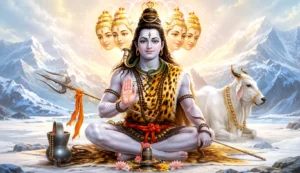
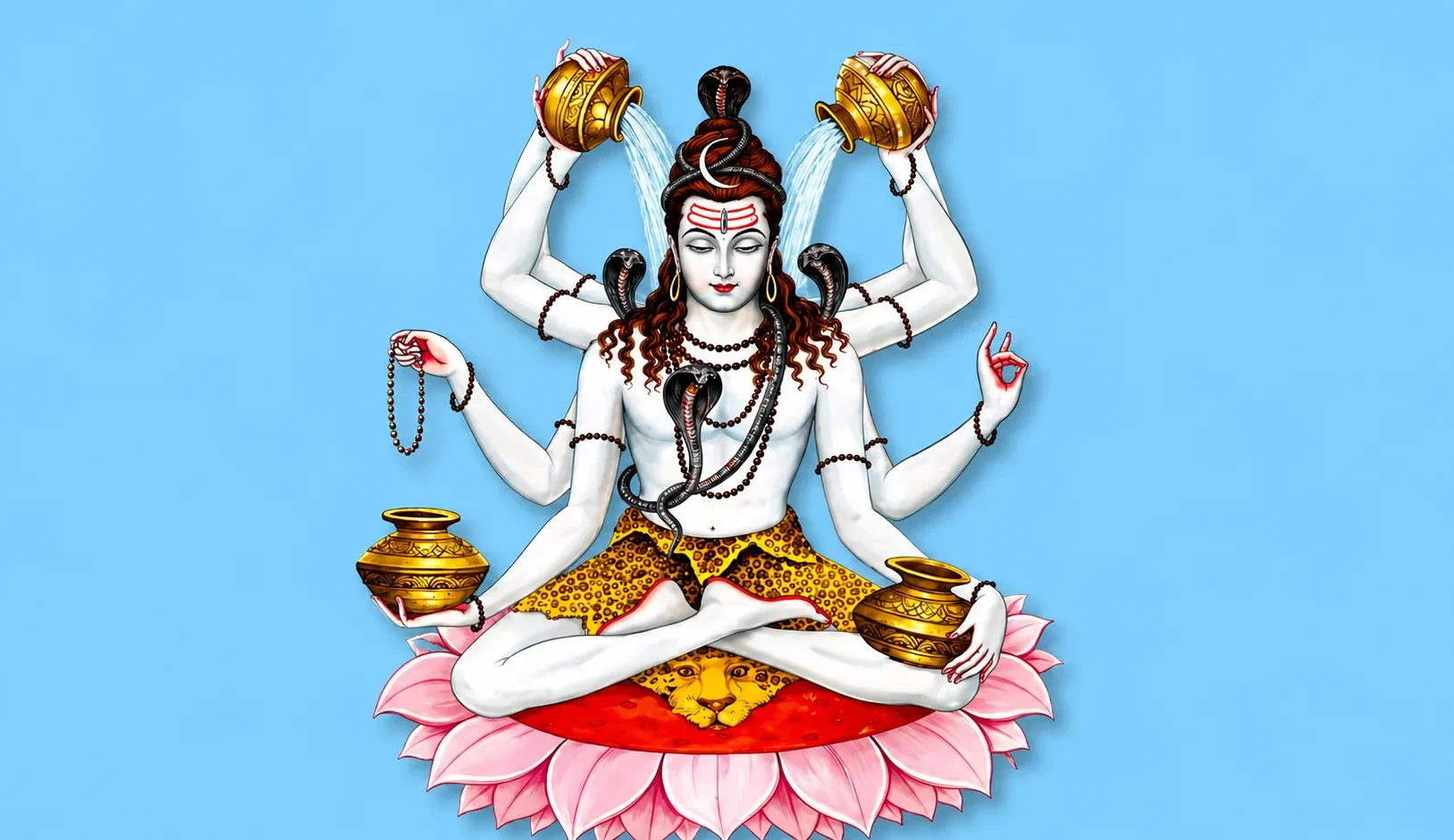
The Mahamrityunjaya Mantra – often called the “Great Death-Conquering Mantra” – is one of the most sacred and powerful verses in the entire Vedic tradition. Dedicated to Lord Shiva in his aspect as Tryambaka (the Three-Eyed One), this persuasive chant has been recited by sages, seekers, and devotees for thousands of years to invoke healing, protection, longevity, and ultimately, liberation from the cycle of birth and death.
Found in the Rig Veda (Mandala 7, Sukta 59, Verse 12), and also appearing in the Yajurveda and Atharvaveda, this 32-syllable mantra is considered equal in power and sanctity to the Gayatri Mantra. Whether you are new to mantra chanting or a seasoned practitioner, this complete guide will walk you through everything – from the mantra’s origin and profound meaning to its scientifically studied benefits and the correct way to chant it.
What is the Mahamrityunjaya Mantra?
The word Mahamrityunjaya (महामृत्युंजय) is made up of three Sanskrit roots:
- Maha (महा) – Great or Supreme
- Mrityu (मृत्यु) – Death
- Jaya (जय) – Victory or Conquest
Together, it means: ‘The Great Victory Over Death.’ This mantra is also known by several other names:
- Tryambakam Mantra – after its opening word invoking Shiva as the Three-Eyed Lord
- Rudra Mantra -as it invokes Lord Rudra, the fierce aspect of Shiva
- Mrita-Sanjivini Mantra – the ‘Life-Restoring’ mantra, reflecting its power to heal and rejuvenate
Vedic Source: Rig Veda, Mandala 7, Sukta 59, Verse 12 (RV 7.59.12) Also found in: Yajurveda (Krishna Yajurveda) and AtharvavedaDeity: Lord Shiva (Tryambaka – the Three-Eyed One)Syllable Count: 32 syllables across 4 lines of 8 syllables each
The Mantra Text Sanskrit (Devanagari Script)
Complete Mantra with English Translation:
ॐ त्र्यम्बकं यजामहे सुगन्धिं पुष्टिवर्धनम् ।
उर्वारुकमिव बन्धनान् मृत्योर्मुक्षीय माऽमृतात् ॥
Om Tryambakam Yajamahe Sugandhim Pushtivardhanam |
Urvarukamiva Bandhanan Mrityormukshiya Maamritat ||
“We worship the Three-Eyed Lord Shiva, who is fragrant and who nourishes all beings. May he liberate us from the bondage of death, just as a ripe cucumber naturally separates from the vine, and may he not keep us away from immortality.”
Word-by-Word Meaning
Each Sanskrit word of the Mahamrityunjaya Mantra carries deep metaphysical meaning. Below is a detailed breakdown:
| Sanskrit Word | Meaning & Significance |
| ॐ (Om) | The primordial sound; the cosmic vibration representing the ultimate consciousness – Brahman. |
| त्र्यम्बकम् (Tryambakam) | The Three-Eyed One – Lord Shiva, whose three eyes represent the Sun, Moon, and Fire; symbolizing omniscience of past, present, and future. |
| यजामहे (Yajamahe) | We worship / We honour with reverence. A collective, communal invocation – ‘we all together venerate.’ |
| सुगन्धिम् (Sugandhim) | Fragrant, sweet-smelling – one who is inherently auspicious and who spreads divine fragrance of knowledge and grace. |
| पुष्टिवर्धनम् (Pushtivardhanam) | One who nourishes and increases abundance – Pushti (nourishment/growth) + Vardhanam (one who enhances). He who fosters prosperity of all beings. |
| उर्वारुकमिव (Urvarukamiva) | Just as a ripe cucumber (urvaruka = a type of gourd/cucumber) – used as an analogy for effortless, natural release. |
| बन्धनात् (Bandhanan) | From the bondage – from the ties of karma, maya (illusion), ego, and worldly attachments. |
| मृत्योः (Mrityoh) | From death – from the grip of mortality and the fear associated with it. |
| मुक्षीय (Mukshiya) | May I / May we be liberated – grant us moksha, freedom, release. |
| माऽमृतात् (Maamritat) | Not from immortality – do not separate us from our immortal, divine nature. The ‘ma’ is a negation: ‘do not withhold amrita (nectar of immortality) from us.’ |
The Cucumber Metaphor: The comparison to a cucumber separating from the vine is profound. When a cucumber fully ripens, it detaches naturally and effortlessly – there is no struggle, no pain. The mantra prays that the soul departs from the body in the same manner: naturally, peacefully, and at the right time – without disease, suffering, or untimely death.
The Legend of Markandeya – Origin Story
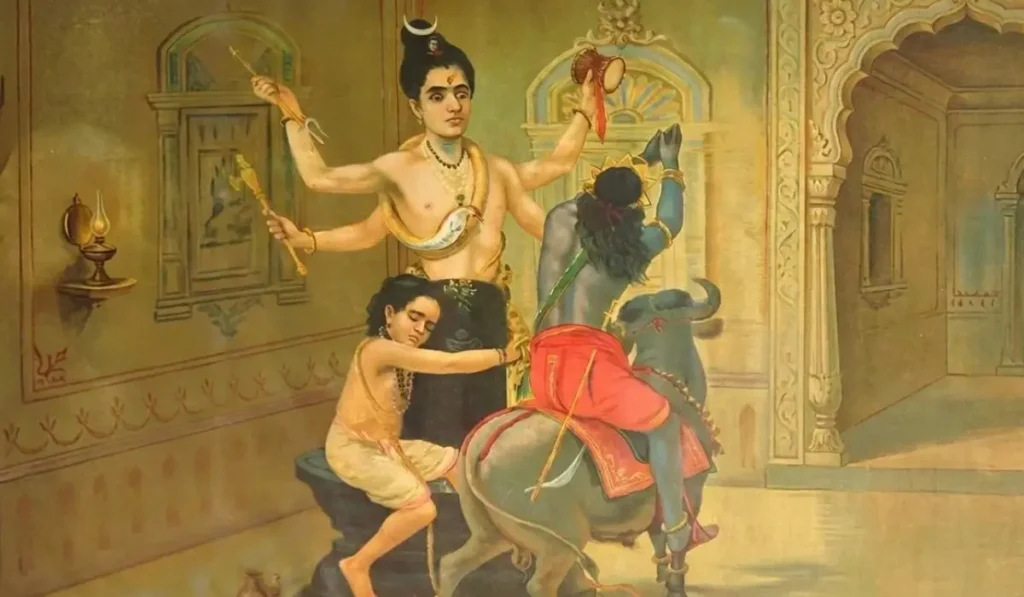
The most celebrated story associated with the Mahamrityunjaya Mantra is that of the sage Markandeya, beautifully narrated in the Shiva Purana and Markandeya Purana.
The Story of Markandeya
Sage Mrikandu and his devoted wife Marudmati were fervent devotees of Lord Shiva but were childless. After years of sincere penance, Lord Shiva appeared before them and offered them a choice: a brilliant, highly intelligent son who would live only 16 years, or a dull-witted son blessed with a long life. The couple chose wisdom over longevity and was blessed with a radiant son named Markandeya.
As the fateful day of Markandeya’s sixteenth birthday approached, he threw himself in complete surrender before a Shivalinga, chanting the Mahamrityunjaya Mantra with absolute devotion and unflinching faith. When Yama – the God of Death – arrived with his noose, Markandeya clung to the Shivalinga and continued his prayer.
Incensed by this devotee being snatched under his protection, Lord Shiva himself emerged from the Shivalinga in his fierce form, cast Yama away, and granted Markandeya the divine boon of immortality (Chiranjeevitva). Since that day, Markandeya is known as one of the Chiranjeevis – the immortal sages – and the Mahamrityunjaya Mantra became humanity’s greatest spiritual shield against death, disease, and suffering
Second Legend – Shukracharya: Another tradition holds that Lord Shiva taught this mantra to Shukracharya, the Guru of the Asuras (demons), as the ‘Mrita-Sanjivini Vidya’ – the sacred knowledge of reviving the dead. This underscores the mantra’s power as the ultimate life-restoring force.
Spiritual & Philosophical Significance
The Mahamrityunjaya Mantra is far more than a prayer for physical survival. At its deepest level, it is a teaching about the nature of reality, the immortality of the soul, and the path to moksha (liberation).
Key Spiritual Teachings:
- The Body is Mortal, the Soul is Eternal: The mantra acknowledges mortality but affirms the soul’s immortal nature. It reminds us that what we truly are – pure consciousness – was never born and can never die.
- Transcending Fear of Death: By meditating on this mantra, the practitioner dissolves the primal fear of death (Mrityu Bhaya), recognised in yogic philosophy as the deepest root of human suffering.
- Liberation over Mere Prolonging of Life: The mantra does not simply ask for a longer life, it prays for Mukti (liberation) from the entire cycle of birth, death, and rebirth (samsara)
- Surrender and Devotion (Bhakti): The legend of Markandeya teaches that complete surrender to the Divine – not just mechanical chanting – is the key that unlocks the mantra’s full power.
- The Healing Force of the Universe: The mantra is described in texts as aligning the chanter with the fundamental healing intelligence of existence – Prana Shakti – the life-force itself.
Benefits of Chanting the Mahamrityunjaya Mantra
Regular, devoted chanting of the Mahamrityunjaya Mantra is said to bestow blessings across every dimension of existence – physical, mental, emotional, and spiritual.
Physical & Health Benefits
- Protection from untimely death, serious illness, and chronic disease
- Strengthening of the immune system and restoration of vitality
- Acceleration of healing and recovery from injury or illness
- Activation of prana shakti (life-force energy) within the body
- Balancing of the seven chakras through the mantra’s vibrational frequencies
- Relief from chronic pain and reduction in stress-related ailments
Mental & Emotional Benefits
- Significant reduction in stress, anxiety, and mental fatigue
- Dissolution of the fear of death and existential anxiety
- Enhanced focus, concentration, and clarity of mind
- Release of negative emotions – anger, jealousy, greed, and ego
- Promotion of deep inner peace, calm, and emotional stability
- Improved sleep quality and relief from nightmares
Spiritual Benefits
- Purification of the mind, body, and soul
- Protection against negative energies, evil spirits, and black magic
- Rapid spiritual growth and deepening of meditation practice
- Awakening of higher consciousness and spiritual awareness
- Progress toward moksha – liberation from the cycle of rebirth
- Creation of a powerful protective aura around the practitioner
Benefits for Others
- The mantra can be chanted for the benefit of sick or suffering loved ones
- Chanting for the souls of the departed helps ensure a peaceful transition
- Group chanting creates a powerful healing field beneficial to all present
- Even listening to the mantra (without chanting) yields spiritual benefits
Scientific Perspective on the Mahamrityunjaya Mantra
Modern science has begun to study the measurable effects of mantra chanting, and the results provide compelling support for ancient wisdom.
Research Findings:
- Stress Reduction: Studies have found that chanting this mantra immediately reduces cortisol levels, lowers heart rate, and decreases blood pressure – activating the parasympathetic (rest-and-digest) nervous system.
- Brain Chemistry: Regular mantra chanting is associated with the release of serotonin and dopamine – neurotransmitters responsible for mood regulation and feelings of well-being.
- Clinical Hospital Studies: Research at Delhi’s Ram Manohar Lohia Hospital involving coma patients found meaningful improvements in outcomes when the Mahamrityunjaya Mantra was played continuously – highlighting the profound impact of sound vibration on human physiology.
- Chakra Activation: Yogic science explains that the vibrational frequencies embedded in the word ‘Tryambakam’ stimulate the solar plexus chakra (Manipura) and restore balance among all the major energy centres of the body.
- Immunity & Neurological Benefits: Scientific studies suggest that regular chanting may enhance immune function, activate the brain’s frontal cortex (associated with memory and higher reasoning), and potentially slow the progression of neurodegenerative conditions.
SCIO Study (Madrid, 2007): At the Quantum Scio Conference, researchers used a sophisticated energetic medicine system to measure participants chanting the Mahamrityunjaya Mantra 108 times. Results showed measurable positive effects on the physical body and significant mental calming – not just for chanters, but for observers present in the room as well.
How to Chant the Mahamrityunjaya Mantra
Preparation (Vidhi):
- Purification: Take a bath or wash your hands, face, and feet before sitting for chanting.
- Sacred Space: Sit in a clean, quiet space – ideally facing East or North. Light a diya (lamp) or incense if desired.
- Asana: Sit in a comfortable meditative posture – Sukhasana (cross-legged), Padmasana, or on a chair with a spine erect.
- Sankalpa (Intention): Set a conscious intention before beginning – for health, healing, protection, or spiritual growth.
- Rudraksha Mala: Use a Rudraksha (108-bead) mala to count your repetitions, which also amplifies the vibration.
Recommended Chanting Counts:
| Count | Purpose / Occasion |
| 1 time | Minimum daily invocation – sufficient for divine blessing and protection |
| 11 / 21 times | Regular daily practice – for healing, stress relief, and spiritual growth |
| 108 times (1 mala) | Full daily practice – for deep healing, longevity, and spiritual advancement |
| 1008 or 1,25,000 times | Purascharana / Anusthan – intense ritual observance for specific boons, healing crisis, or moksha |
Best Time to Chant
- Brahma Muhurta (4:00 AM – 6:00 AM) – the most powerful and sacred time, when the mind is naturally still and the cosmic energies are most conducive to spiritual practice.
- Sunrise and Sunset – also considered auspicious transition periods.
- Before Sleep – chanting at night brings protection, peaceful sleep, and positively charged dreams.
- During illness or crisis – the mantra may be chanted at any time of day or night without restriction.
Important Note: The Mahamrityunjaya Mantra has NO strict restrictions. It can be chanted by anyone – regardless of age, gender, or caste – at any time, in any physical position. Even simply listening to it with devotion bestows spiritual benefit.
Do’s and Don’ts While Chanting
Do’s
| Chant with genuine devotion, sincerity, and faith (shraddha) – the quality of intention matters more than quantity. |
| Focus on the meaning of each word to deepen the meditative experience. |
| Pronounce the Sanskrit clearly and correctly – proper pronunciation honours the mantra’s vibrational integrity. |
| Set a sankalpa (conscious intention) before beginning – for example, healing, protection, or liberation. |
| Maintain consistency – daily practice over time yields far greater results than sporadic intense sessions. |
| Chant for others – the mantra’s power extends to those you chant for, whether present or distant. |
Don’ts
| Do not chant mechanically or absent-mindedly – a sincere single repetition surpasses a thousand mechanical ones. |
| Avoid consuming non-vegetarian food, alcohol, or intoxicants on days of dedicated chanting practice. |
| Do not chant immediately after a heavy meal – wait at least 1–2 hours. |
| Avoid anger, harsh speech, or negative thoughts around the time of chanting. |
| Do not use this mantra for black magic, manipulation, or harmful intentions, it is a mantra of liberation, not coercion. |
Conclusion
The Mahamrityunjaya Mantra is not merely a chant – it is a living, breathing invocation of the highest intelligence of the universe. It is a prayer that acknowledges our mortal limitations while affirming our immortal essence. It is a call to Lord Shiva – the great healer, the destroyer of ignorance, the liberator of souls – to guide us from darkness to light, from death to immortality.
Devotees approach this mantra for many reasons – physical healing, emotional peace, spiritual awakening, or a deeper connection with the sacred. Whatever the intention, chant it with an open heart and sincerity. As the scriptures promise, and as countless generations of practitioners have witnessed:
ॐ त्र्यम्बकं यजामहे सुगन्धिं पुष्टिवर्धनम् ।
उर्वारुकमिव बन्धनान् मृत्योर्मुक्षीय माऽमृतात् ॥
This mantra is your shield, your healer, and your guide to liberation.
ॐ नमः शिवाय |
Om Namah Shivaya
Frequently Asked Questions (FAQ)
Q1: Who can chant the Mahamrityunjaya Mantra?
Anyone can chant this mantra – there are no restrictions based on age, gender, caste, or religion. It is a universal mantra of healing and liberation available to all.
Q2: Can the Mahamrityunjaya Mantra be chanted for a dying person?
Yes. This mantra is specifically recommended for the terminally ill and the dying. Chanting it near a dying person is believed to ease their passage, reduce suffering, and facilitate a peaceful transition of the soul.
Q3: What is the difference between the Mahamrityunjaya Mantra and the Gayatri Mantra?
Both are from the Rig Veda and are considered the two most important mantras in Vedic tradition. The Gayatri Mantra is dedicated to Surya (the Sun) and invokes illumination of the intellect, while the Mahamrityunjaya Mantra is dedicated to Lord Shiva and invokes healing, protection, and liberation from death. They are often practiced together as complementary pillars of spiritual practice.
Q4: How many days should I chant the Mahamrityunjaya Mantra for results?
Traditional texts recommend a 40-day Anusthan (disciplined practice) for specific results. Chanting 108 times daily for 40 consecutive days is considered a complete Sadhana. However, even a single day’s practice is considered beneficial. Regular daily practice, even just 11 repetitions – yields steady, cumulative results.
Q5: Can women chant the Mahamrityunjaya Mantra during menstruation?
Scriptural opinions vary, but many modern teachers and scholars affirm that the Mahamrityunjaya Mantra – being a universal and compassionate mantra – can be chanted by women at all times. The key is sincerity of devotion over ritual restriction.
Q6: Is the Mahamrityunjaya Mantra the same as the Tryambakam Mantra?
Yes, they are the same mantra. ‘Tryambakam Mantra’ refers to it by its opening word, ‘Om Tryambakam.’ ‘Mahamrityunjaya Mantra’ is the name given due to its supreme power to conquer death. Both names refer to the same sacred verse from the Rig Veda.
Q7: Can I chant the Mahamrityunjaya Mantra without initiation (diksha)?
Unlike some esoteric mantras that require formal initiation from a guru, the Mahamrityunjaya Mantra is a ‘siddha mantra’ – inherently potent and accessible to all. While receiving guidance from a teacher deepens understanding, it is not mandatory for personal practice.
Also Read:
- श्री हनुमान चालीसा | Shri Hanuman Chalisa Timing, Benefit & Origin
- श्री शिव तांडव स्तोत्रम् | Shiv Tandav Stotram Meaning, Origin & Benefit
- दुर्गा आरती | Durga Aarti in Hindi with Meaning and Benefits
- सरस्वती वंदना | Saraswati Vandana with Meaning and Benefits
The journey does not end here. Follow MFC on Instagram and Facebook to explore more sacred places, festivals, and living traditions of Sanatan Dharma.