
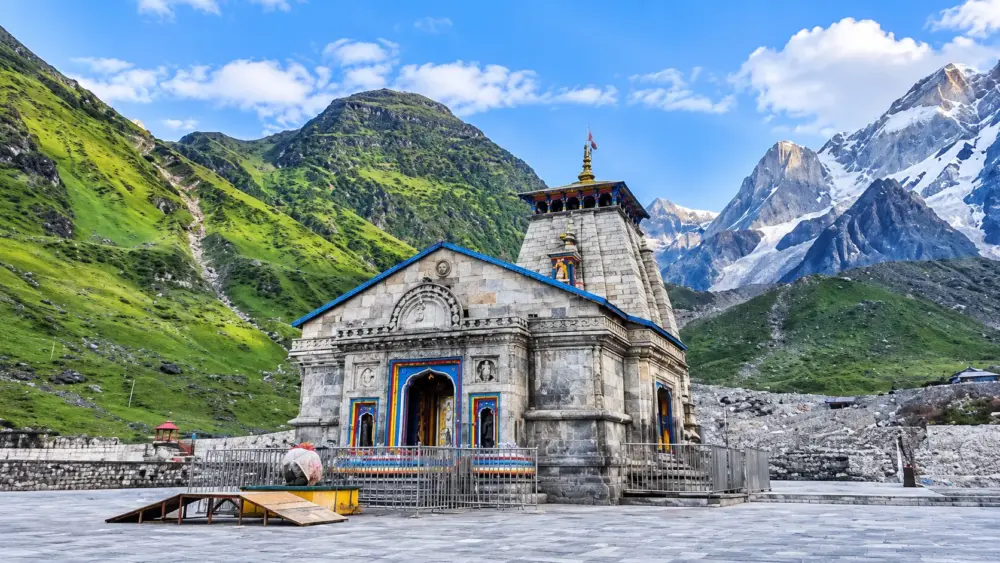
Kedarnath Temple is a Shivaling shrine at 3,584 metres in the Garhwal Himalayas of Uttarakhand. It is the highest of the twelve Jyotirlingas, the first Panch Kedar shrine, and part of the Chota Char Dham of Uttarakhand. In 2026, the temple opened on 22 April and is set to close on 11 November (Bhai Dooj). Darshan runs from 4:00 AM to 3:00 PM and again from 5:00 PM to 9:00 PM. Pilgrims reach it by a 16 to 18 km trek from Gaurikund, or by helicopter from Phata and Sersi.
Kedarnath Temple has survived for more than 1,200 years. And once again, it became a testament to its strength when the devastating floods of 2013 came. The temple stood right in the centre of the flood and still survived.
Many of you would say it was because of the temple’s remarkable architecture and sheer luck. And most of you would say that the bhakti bhav of Shiv bhakts saved the temple.
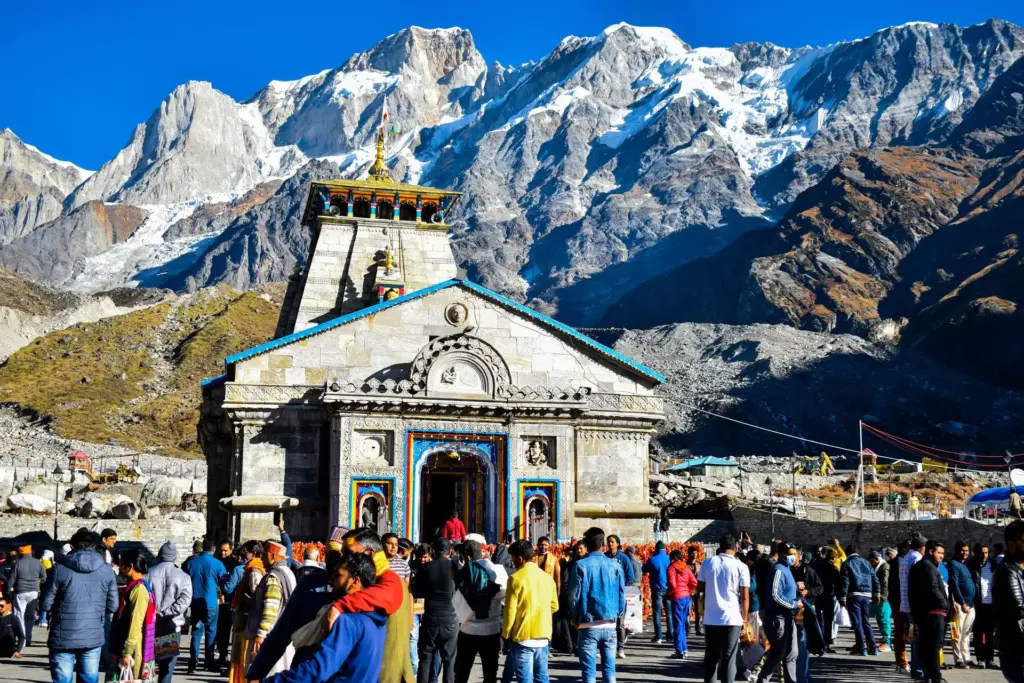
But whatever the reason, be it destiny, human architecture, or some divine intervention, Kedarnath is still the centre of devotion for countless pilgrims. Every day, more than 13,000 people walk towards this mandir for many different reasons.
But at the heart of every journey, there has always been one simple desire: to witness the divine form of Bholenath.
And believe it or not, all the walking, exhaustion, and pain of the trek feels like nothing when you finally stand before Kedarnath Dham. In that moment, you realise why you kept going. Why every step was worth it.
So, if you are also planning to visit Kedarnath Temple, or you finally got the bulawa from Bholenath, then this guide is for you.
Kedarnath Temple at a Glance
| Detail | Information |
| Deity | Bhagwan Shiva, worshipped as Sadashiva |
| Location | Rudraprayag district, Garhwal Himalayas, Uttarakhand |
| Altitude | 3,584 metres (11,755 feet) |
| River | Mandakini River |
| Rank | Highest of the 12 Jyotirlingas; first Panch Kedar shrine; part of Chota Char Dham |
| Believed builders | Pandavas (legend); rebuilt by Adi Shankaracharya, 8th century |
| Managed by | Shri Badarinath Kedarnath Temple Committee (BKTC) |
| 2026 opening | 22 April 2026 |
| 2026 closing | 11 November 2026 (Bhai Dooj) |
| Trek distance | 16 to 18 km from Gaurikund |
| Winter home of deity | Omkareshwar Temple, Ukhimath |
What is the Importance of Kedarnath Temple?
Kedarnath holds three big titles in Hindu tradition. It is a Jyotirlinga, a Panch Kedar shrine, and part of the Chota Char Dham. Each title carries its own story.
Kedarnath as One of the 12 Jyotirlingas
A Jyotirlinga is a place where Hindus believe Lord Shiva appeared as a column of light, not as a statue someone carved. Kedarnath is the highest and northernmost of these twelve sacred spots. The Skanda Purana’s Kedara Khanda names the site “Kedara” and describes sacred Ganga water flowing from Shiva’s hair here. The Shiva Purana adds that anyone who sees and worships Kedareshwar receives blessings (Shiva Purana, Koti Rudra Samhita, Adhyaya 19).
Kedarnath and the Panch Kedar
Panch Kedar means “five Kedars.” These are five Himalayan temples, each linked to a part of Shiva’s body in a well-known legend. Kedarnath holds first place among them because it holds the hump, the main part of that story.
| Panch Kedar Temple | Believed Manifestation of Shiva |
| Kedarnath | Hump |
| Tungnath | Arms |
| Rudranath | Face |
| Madhyamaheshwar | Navel and stomach |
| Kalpeshwar | Hair |
Kedarnath as Part of the Chota Char Dham
Many people mix up two different Char Dham circuits, so let’s clear this up. The original Char Dham of India covers four far-apart shrines: Badrinath, Puri, Dwarka, and Rameswaram. These sit in four different corners of the country. The Chota Char Dham, sometimes called the Uttarakhand Char Dham, is a separate, smaller circuit inside one state. It includes Yamunotri, Gangotri, Kedarnath, and Badrinath, all within the Garhwal Himalayas. When someone says “Char Dham Yatra” while talking about Kedarnath, they almost always mean this second, regional circuit.
History of Kedarnath Temple
The full Kedarnath Temple history mixes recorded facts with strong devotional belief. Historians and devotees do not always agree on every date, and this guide points out where fact ends and faith begins.
How Old Is Kedarnath Temple?
Nobody knows the exact birth year of Kedarnath Temple. The earliest written mention of the site appears in the Skanda Purana’s Kedara Khanda, a text scholars date to around the 7th or 8th century CE. Many devotees believe the temple’s roots go back much further, to the age of the Mahabharata. The temple you see today, with its current stone structure, is widely linked to Adi Shankaracharya’s work in the 8th century.
Did the Pandavas Build Kedarnath Temple?
Devotional tradition says yes. According to the Skanda Purana’s Kedara Khanda, the Pandavas built a shrine at Kedarnath after the Mahabharata war, on the very spot where Lord Shiva revealed his hump to them.
The Mahabharata’s own closing chapters, the Mahaprasthanika Parva and Svargarohanika Parva, describe the Pandavas’ final journey through this same Himalayan region. This part of the story rests on faith and old scripture rather than dated archaeological proof, and readers should treat it as sacred tradition, not confirmed history.
The Connection Between Adi Shankaracharya and Kedarnath
Adi Shankaracharya, the great Advaita philosopher, is widely credited with rebuilding the Kedarnath shrine in the 8th century CE. His own hymn, the Dwadasha Jyotirlinga Stotram, names Kedarnath directly and describes the deity who resides on the great Himalayan slopes. Local belief also holds that Shankaracharya attained Mahasamadhi, his final union with the divine, near this temple at a young age. A small shrine behind the main temple marks this spot.
What Does History and Archaeology Tell Us About Kedarnath?
Hard archaeological proof for Kedarnath’s exact founding date is limited, since few excavations have taken place at this remote, high-altitude site. What we do know comes mainly from three sources: scripture (the Skanda Purana and Shiva Purana), inscriptions on the temple steps, and centuries of continuous worship recorded by priests and travellers. Readers should treat the Pandava-era origin as devotional history, and the 8th-century Shankaracharya restoration as the better-documented part of the story.
Accurate Kedarnath Temple History Timeline at Glance
| Period / Year | Historical Event | What Happened |
| Ancient period | Pandavas and Kedarnath tradition | Hindu tradition connects Kedarnath with the Pandavas, who are believed to have sought Lord Shiva after the Mahabharata war. This tradition also forms the basis of the Panch Kedar story. |
| 8th century CE | Adi Shankaracharya tradition | Adi Shankaracharya is traditionally associated with the establishment or rebuilding of the Kedarnath shrine. The BKTC also describes the present temple as dating to this period and mentions an earlier temple associated with the Pandavas. |
| 1899 | Earlier temple management system | Under the 1899 arrangement, the Rawal had temple management responsibilities, while the Tehri Darbar had certain supervisory powers. |
| 1939 | BKTC administration established | The Shri Badrinath Kedarnath Temple Committee was constituted under the 1939 Act, bringing the management of Kedarnath under a formal administrative framework. |
| 16–17 June 2013 | Kedarnath floods | Catastrophic flooding and debris devastated much of Kedarnath town. The main temple survived, although parts of the surrounding temple complex were damaged. |
| October 2013 | ASI conservation begins | The Archaeological Survey of India began structural conservation and chemical preservation work at the temple after the floods. Debris was removed from around the temple plinth as part of the restoration. |
| May 2014 | Temple reopens after restoration work | The temple reopened for pilgrims as conservation and restoration efforts continued following the 2013 disaster. |
| October 2022 | Kedarnath ropeway foundation stone | The foundation stone was laid for the proposed Gaurikund-Kedarnath ropeway project, intended to provide an alternative way of reaching the shrine. |
| 2025 | Ropeway project progresses | Work on the proposed ropeway project continued, but it should not be described as an operational visitor facility unless an official opening has been confirmed. |
| 2026 | Kedarnath Yatra continues | Kedarnath remains an active pilgrimage destination, with the temple managed by BKTC and pilgrims required to complete the applicable yatra registration formalities. |
The Legend of Kedarnath and the Panch Kedar
Every pilgrim hears some version of this kedarnath story before they even reach Gaurikund. After the Mahabharata war, the Pandavas felt heavy guilt for killing their own relatives in battle. Sage Ved Vyasa told them to travel to Kedara Kshetra and seek Lord Shiva’s forgiveness there. Lord Shiva did not want to face them easily. He turned into a bull and hid among ordinary cattle near Guptakashi. Bhima, the strongest Pandava, spotted the unusual bull and grabbed it. The bull began sinking into the earth to escape. Only its hump stayed above ground, and that hump is what devotees worship at Kedarnath today.
Why Is the Hump of Shiva Worshipped at Kedarnath?
Tradition says the rest of the bull’s body appeared at four other Himalayan sites, each becoming its own temple. Together with Kedarnath, these five shrines form the Panch Kedar. Pilgrims who complete darshan at all five believe they receive the same merit as meeting Lord Shiva in person.
Kedarnath Temple Architecture and What Makes It Unique
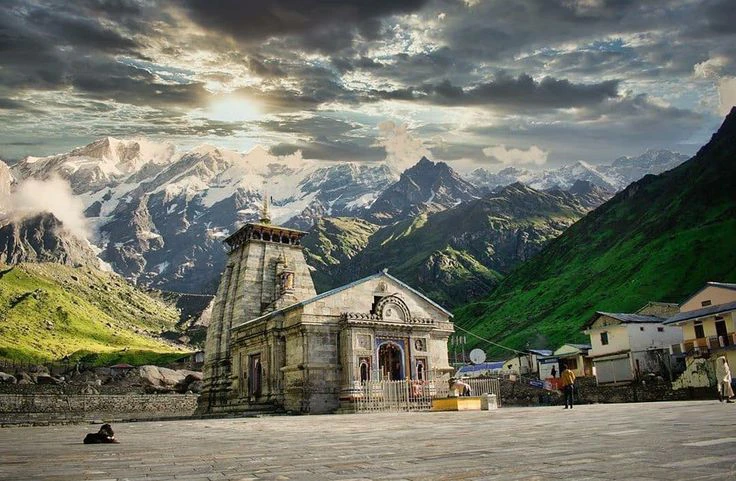
The Kedarnath Temple looks simple from outside, but its design has helped it survive over a thousand years of harsh Himalayan weather.
What Is Kedarnath Temple Made Of?
Builders used huge, heavy slabs of grey stone to make the temple. They fit these slabs together without modern cement or mortar. This method, along with the temple’s thick walls, has helped it stand strong through storms, snow, and even the 2013 floods.
The Mandapa and Garbhagriha
Like most Hindu temples, Kedarnath has two main parts. The mandapa is the open hall where pilgrims gather, carved with figures of gods and scenes from mythology. Beyond it sits the garbhagriha, the inner sanctum, where the Jyotirlinga rests. Unlike many other Shiva temples, the lingam here is not smooth and round. It has an unusual triangular, three-sided shape, and priests allow devotees to touch it directly during puja.
The Nandi Statue Outside Kedarnath Temple
A large stone statue of Nandi, the bull who serves as Lord Shiva’s vehicle, sits just outside the entrance, facing the sanctum. Nandi acts as the eternal guardian of the shrine, and many pilgrims pause here for a moment of prayer before entering.
The Inscriptions on the Temple Steps
The stone steps leading up to the temple carry faint, old inscriptions in the Pali script. Scholars point to these as one sign of the temple’s long age. Centuries of footsteps and weather have worn some of the letters down, but they remain visible in good light.
A Priestly Tradition from the South
The head priest of Kedarnath, called the Rawal, comes from the Jangama Veerashaiva lineage of Karnataka. This southern priestly tradition has conducted the temple’s core rituals for generations. It links a Himalayan shrine to Shaiva practice from peninsular India. Kedarnath’s fame also reaches South India through the Tevaram, a Tamil Shaiva canon. The temple counts among the 275 Paadal Petra Sthalams. Nayanmar saints Tirugnanasambandar, Appar, and Sundarar sang of it in their hymns.
Why Has Kedarnath Temple Survived Extreme Weather?
Three things help explain the temple’s survival. First, its heavy stone construction sits on solid rock, giving it a strong base. Second, its raised platform keeps it a little above the surrounding land. Third, during the terrible floods of 2013, a large boulder came to rest just behind the temple and split the rushing water and debris around it. Many devotees see this as divine protection, while engineers point to the temple’s foundation and the boulder’s position as the physical reason it stood while the town around it was destroyed.
Kedarnath Temple Darshan Timings
The Kedarnath Darshan timings can shift a little with the season, but the pattern below holds for most of the yatra period.
| Activity | Timing | Notes |
| Temple opens | 4:00 AM | Gates open for the day’s first darshan |
| Morning darshan | 4:00 AM – 3:00 PM | Continuous queue-based darshan |
| Abhishek puja | 4:00 AM – 6:30 AM | Pre-booked attending puja with the chief priest |
| Midday closure | 3:00 PM – 5:00 PM | Temple closed for shringar preparation |
| Evening darshan | 5:00 PM – 9:00 PM | Doors close after the last visitor |
| Evening aarti | 6:00 PM – 7:30 PM | Public aarti; timing shifts slightly by season |
Kedarnath Temple Morning Darshan Timings
Morning darshan usually runs from 4:00 AM to 3:00 PM. The temple opens early so pilgrims can view the deity right after the Abhishek puja finishes.
Kedarnath Temple Evening Darshan Timings
The temple reopens for evening darshan from 5:00 PM to 9:00 PM. Doors close for the day once the last pilgrim in the queue has had darshan.
Kedarnath Temple Aarti Timings
The main evening aarti of kedarnath temple takes place roughly between 6:00 PM and 7:30 PM. The exact time shifts a little depending on the season and the day’s rituals.
What Time Should You Reach the Temple for Darshan?
Try to reach by early morning, ideally before 8:00 AM, to avoid the longest queues. If you plan to trek from Gaurikund on the same day, leave before sunrise so you have enough daylight for both the walk and the darshan.
Can Darshan Timings Change?
Yes. Heavy rain, snow, fog, or special festival days can change the schedule. Always check with local authorities or the BKTC notice board once you reach Kedarnath, rather than relying only on a fixed timetable.
Special Pooja Timings in Kedarnath
Devotees can book Mahabhishek, Rudrabhishek, Laghu Rudra, Shiv Sahasranam Path, Shodashopachaar Pooja Most special poojas are conducted between 4:00 AM – 7:00 AM. We would recommend booking special pooja in advance during peak season.
Kedarnath Temple Pooja and Rituals
Puja at Kedarnath follows a set daily routine, built around the two main rituals below.
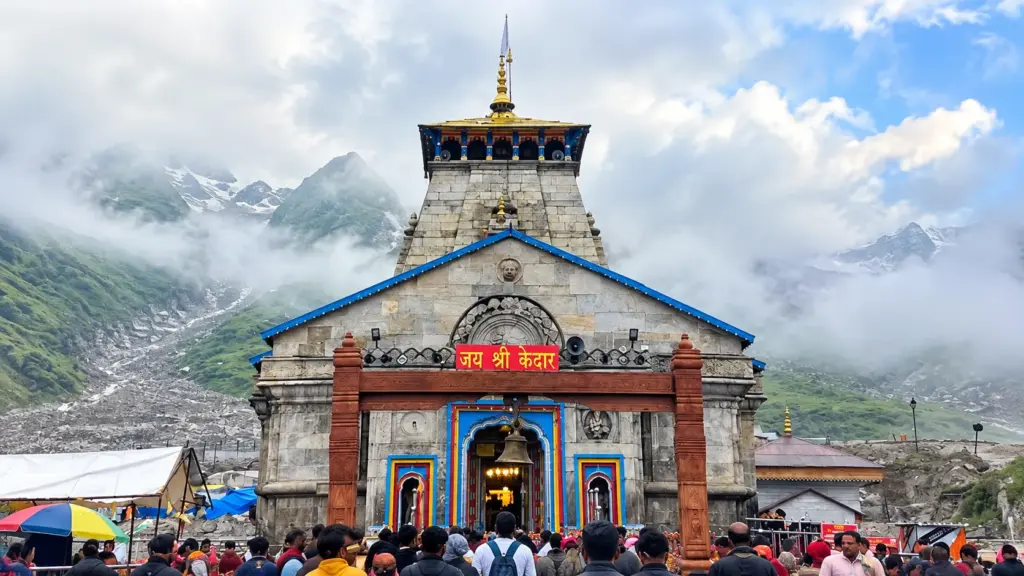
What Pujas Are Performed at Kedarnath Temple?
Priests perform a morning Abhishek puja, an evening aarti, and special pujas on festival days such as Mahashivratri. Pilgrims can book certain pujas in advance, while others happen automatically as part of the temple’s daily schedule.
Kedarnath Abhishek Puja
The Abhishek puja takes place early, roughly between 4:00 AM and 6:30 AM. Priests bathe the Jyotirlinga with water, milk, and other sacred items while chanting Vedic hymns. This puja is considered the most important ritual of the day.
Kedarnath Aarti
The evening aarti involves lamps, bells, and devotional songs offered to the deity. Pilgrims standing in the courtyard can watch and take part, even without a separate booking.
Can You Book Puja at Kedarnath Temple?
Yes. BKTC allows pilgrims to book certain pujas online in advance through its official portal. This helps you secure a spot before you even start the trek.
Attending Puja vs Non-Attending Puja
An attending puja means you are physically present at the temple while priests perform the ritual on your behalf. A non-attending puja means priests perform the puja and send you the blessed prasad, useful for devotees who cannot travel to Kedarnath in person, including many overseas Hindus.
What Details Are Required for Puja Booking?
You typically need your full name, gotra (if known), contact number, and the specific date you want. Keep a copy of your booking confirmation, since staff may ask to see it at the temple.
How Early Should You Reach for a Booked Puja?
Arrive at least 30 to 45 minutes before your booked slot. This gives you time to verify your booking, join the correct queue, and settle in before the ritual begins.
Kedarnath Temple Opening and Closing Dates 2026 and 2027
The Kedarnath Temple opening date changes every year because it follows the Hindu lunar calendar, not a fixed Gregorian date.
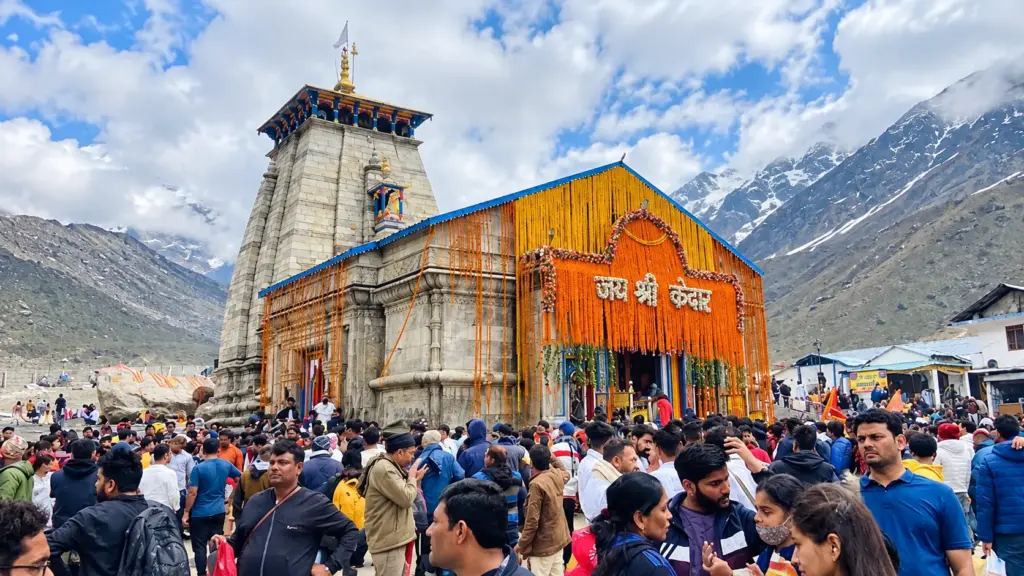
When Will Kedarnath Temple Close in 2026?
Kedarnath Temple is scheduled to close on 11 November 2026, the day of Bhai Dooj, two days after Diwali. The temple opened for darshan on 22 April 2026. As of now, BKTC has not announced exact 2027 dates. Temple committees usually declare the opening date on Mahashivratri (expected in February 2027) and the closing date closer to Vijayadashami.
Based on the yearly pattern, the 2027 opening will likely fall in late April or early May, and closing will likely fall around Bhai Dooj in late October or November 2027. Always confirm final 2027 dates on the official BKTC website closer to the season.
What Happens During the Closing Ceremony?
The Kapat-band, or closing ceremony, involves special prayers, a final aarti, and a grand procession. Priests decorate the temple with flowers, perform the last rituals of the season, and prepare the deity’s ceremonial form for its journey down to Ukhimath.
Where Is Lord Kedarnath Worshipped During Winter?
Once the doors close, priests carry the deity’s utsav vigraha in a palanquin procession to the Omkareshwar Temple in Ukhimath. Regular daily worship (पूजा) continues there for the next six months, until the Kedarnath shrine reopens again.
How to Reach Kedarnath Temple?
Reaching Kedarnath involves two stages: a road journey to Gaurikund, and then a trek or helicopter ride to the temple itself.
How to Reach Kedarnath by Road?
The nearest motorable point to Kedarnath is Gaurikund. No road goes beyond this village. Buses, shared taxis, and private cars run regularly from Rishikesh and Haridwar to Gaurikund during the yatra season.
How to Reach Kedarnath from Rishikesh?
From Rishikesh, the drive to Gaurikund covers roughly 210 km. It takes about six to eight hours by road, passing through Devprayag, Srinagar, Rudraprayag, and Guptkashi.
How to Reach Kedarnath from Haridwar?
From Haridwar, the distance to Gaurikund is close to 230 km. Most pilgrims break this journey into two days. They stop overnight in Rudraprayag or Guptkashi to rest and adjust to the altitude.
How to Reach Gaurikund?
Gaurikund sits at about 1,980 metres and serves as the base camp for the Kedarnath trek. You will find dharamshalas, small hotels, food stalls, and pony or palanquin (doli) stands here before you start walking.
Where Does the Kedarnath Trek Start?
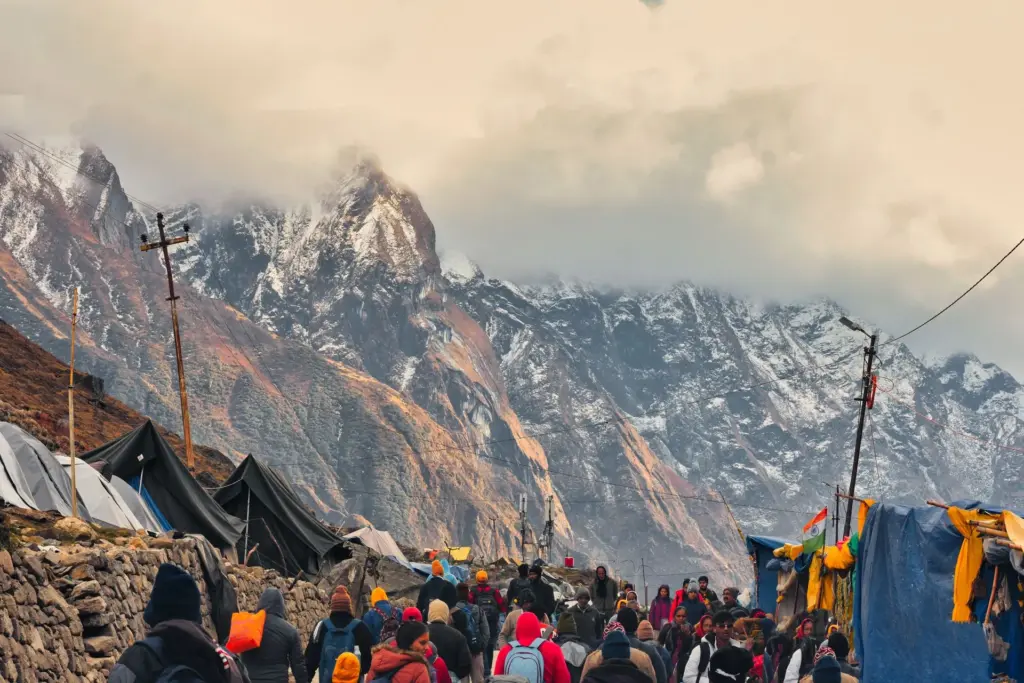
The trek officially begins at Gaurikund and covers about 16 to 18 km one way. A stone path covers most of the route. It passes through Jungle Chatti, Bheem Bali, and Linchauli before reaching the base camp near the temple.
How to Reach Kedarnath By Helicopter?
Government-approved helicopter services fly from Phata and Sersi to the Kedarnath helipad. The flight cuts travel time to under ten minutes. Pilgrims book these seats through the IRCTC HeliYatra portal, ideally two to three months ahead. Demand during peak season runs heavy.
Where to Stay?
Kedarnath village itself offers only basic dharamshalas and a GMVN rest house, allotted on a first-come basis. Most pilgrims choose to stay in Sonprayag, Sitapur, or Guptkashi instead. Private hotels and BKTC guest houses operate there through the season. Booking ahead matters most in May-June and September-October, the peak windows.
Kedarnath Yatra Registration 2026
Registration is one of the first steps every pilgrim must complete before heading to Kedarnath.
Is Kedarnath Yatra Registration Mandatory?
Yes, registration (पंजीकरण) is compulsory for every pilgrim. Authorities check your registration at multiple points along the route, and you cannot continue past Sonprayag without it.
How to Register for Kedarnath Yatra?
You can register online through Uttarakhand’s official Char Dham Yatra portal, or offline at registration counters in Haridwar, Rishikesh, and Sonprayag. Online registration is free and takes only a few minutes.
What Documents Are Required for Registration?
You will need a valid government photo ID, such as Aadhaar, PAN, voter ID, or passport. You also need to share your full name, age, gender, address, mobile number, and an emergency contact.
What Is the Yatra Registration Slip or QR Code?
After registering, you receive a QR code or printed slip. This acts as your yatra registration slip and proof that you have completed the mandatory process.
Where Is Registration Checked?
Officials most commonly check your QR code and ID at Sonprayag, the last major checkpoint before Gaurikund. Keep both a digital and a printed copy handy, since mobile networks can be weak in this area.
Food, Water, Cash and Mobile Connectivity at Kedarnath Dham Yatra
Planning ahead for daily needs makes the yatra much smoother, especially since facilities become simpler as you climb higher.
What Food Is Available on the Kedarnath Route?
Small dhabas and tea stalls sell simple food at Gaurikund, Jungle Chatti, Bheem Bali, and Linchauli. Think tea, biscuits, noodles, and basic thali meals. Options become fewer and pricier as you go higher, so carry some dry snacks as backup.
Is Drinking Water Available During the Trek?
Yes, most rest points along the trail sell bottled water, and some spots offer natural spring water. Still, carry a refillable bottle and drink often, since dehydration at altitude is a real risk. And as you go higher, packaged drinking water will become costly. Shopkeepers may ask 60 to 80 rupees for 20 rs. Water bottle.
Should You Carry Cash?
Yes, carry enough cash in small notes. Many shops, ponywallahs, and porters on the route do not accept digital payments, especially once you leave Sonprayag and Gaurikund behind.
Is ATM Facility Available Near Kedarnath?
ATMs exist in Sonprayag and Gaurikund, but not beyond that point. So, withdraw whatever cash you need before you start the final stretch of the journey.
Is Mobile Network Available in Kedarnath?
Network coverage is patchy. Some spots along the trail get a weak signal, mainly from BSNL, Jio, or Airtel. Other stretches have no signal at all. Do not count on your phone for navigation or emergency calls in every section.
Is the Internet Available During the Yatra?
Internet speed is very slow or unavailable for most of the trek. Treat this yatra as a break from constant connectivity, and inform your family about expected check-in times in advance.
Weather and Best Time to Visit Kedarnath
Weather changes a lot across the six-month yatra season, and choosing the right month makes a real difference to comfort and safety.
Kedarnath Weather During May and June
May and June bring the most pleasant daytime weather, with temperatures roughly between 10°C and 18°C. Nights stay cold, so pack warm layers even in summer. This period sees the highest pilgrim numbers of the season.
Kedarnath During Monsoon
July and August bring heavy monsoon rain, with temperatures around 10°C to 15°C. Landslides become common on hill roads during this period, and many guides suggest avoiding travel unless truly necessary. So, not the best time for Kedarnath dham yatra.
Kedarnath Weather in September and October
September offers clearer skies and fewer crowds after the rains ease. October turns colder, with daytime temperatures around 8°C to 12°C, dropping close to freezing at night. Light snow can appear in late October.
Which Month Is Best for Kedarnath Yatra?
May, June, and September generally offer the best mix of good weather and manageable crowds. Families with children or elderly members often find September the calmest choice.
When Should You Avoid the Kedarnath Trek?
Avoid the trek during heavy monsoon weeks in July and August. Also skip late November through April entirely. The temple stays closed then, and snow buries the route.
Winter Home of Lord Kedarnath: Ukhimath and Omkareshwar Temple
When the Kapat closes each November, priests do not leave the deity in the Himalayan cold. They carry the utsav vigraha, the deity’s ceremonial form, in a palanquin procession. Its destination is the Omkareshwar Temple in Ukhimath. Regular worship continues there for six months. Inside the locked Kedarnath sanctum, priests leave behind an Akhand Jyot. This continuously burning lamp symbolises the deity’s presence through the snowbound winter.
Swami Vivekananda himself once set out toward Kedarnath during his Himalayan wanderings with fellow monks. He turned back at Karnaprayag when the government closed the route due to famine. He never completed that journey, a reminder that even a realised soul once found this pilgrimage beyond reach.
In his later writings, he described the Himalayas as a place of infinite power. A person can recognise that power within (Complete Works of Swami Vivekananda, p. 214).
ताभ्यां च पूजितो नित्यं केदारेश्वरसंज्ञकः ।
भक्ताभीष्टप्रदः शम्भुर्दर्शनादर्चनादपि
“Worshipped daily by those two, Śambhu, renowned there by the name Kedāreśvara, grants the devotees’ cherished desires, even through mere darśana (sacred sight) and also through formal worship.”
Source: Shiva Purana, Shatarudra Samhita 42.25-26
Why Does Kedarnath Temple Close During Winter?
Heavy snowfall and freezing temperatures make the region unsafe and impossible to reach for about six months a year. Closing the temple protects both pilgrims and priests from extreme cold and blocked mountain paths.
Where Is Lord Kedarnath Worshipped During Winter?
Worship continues at the Omkareshwar Temple in Ukhimath, a town at a lower and safer altitude. This has been the practice for generations, allowing daily rituals to continue without a break.
The Kedarnath Deity’s Journey to Ukhimath
On the closing day, priests carry the deity’s ceremonial form (उत्सव विग्रह) down from Kedarnath in a decorated palanquin. Villagers along the route often join the procession, offering prayers as it passes.
How Does the Temple Reopen After Winter?
Before the temple reopens, the utsav vigraha makes the return journey from Ukhimath to Kedarnath in a similar procession. Priests clean and decorate the temple, and a formal opening ceremony marks the start of the new yatra season.
What are the Other Places to Visit Near Kedarnath?
Many pilgrims extend their trip to cover a few nearby sacred sites, each with its own story. So here are few places to visit near kedarnath:
- Bhairavnath Temple: This small temple sits just outside the main Kedarnath complex. It honours Bhairav, a fierce form of Lord Shiva. Devotees believe he protects the region, especially during the temple’s closed winter months.
- Gaurikund: Gaurikund is the trek’s starting point and also carries its own legend. Tradition holds that Goddess Parvati performed deep penance here to win Lord Shiva’s love before their marriage.
- Triyuginarayan Temple: About 30 km from Kedarnath, this temple marks the believed site of Shiva and Parvati’s divine wedding. A flame here, called Akhand Dhuni, has burned in front of the temple for generations. Devotees still offer wood to it today.
- Guptkashi Vishwanath Temple: Guptkashi sits along the route to Gaurikund and holds its own ancient Shiva temple. Legend says Lord Shiva hid here from the Pandavas before taking the form of a bull.
- Ukhimath: Ukhimath serves as the winter home of Lord Kedarnath and Lord Tungnath. It also makes a comfortable base for pilgrims who want to rest before or after the main trek.
- Other Panch Kedar Temples: Devoted pilgrims sometimes plan separate trips to visit Tungnath, Rudranath, Madhyamaheshwar, and Kalpeshwar, completing the full Panch Kedar circuit across multiple yatras.
Kedarnath Temple Rules for Pilgrims
Following temple rules keeps the darshan experience smooth and respectful for everyone.
What Should You Wear at Kedarnath Temple?
Wear modest, traditional clothing that covers your shoulders and legs. Warm layers matter too, since temperatures near the temple stay cold even in summer.
Are Mobile Phones Allowed?
You can carry a mobile phone near the temple complex. Many areas restrict active use though, especially calls or videos, right inside the sanctum area.
Is Photography Allowed Inside the Temple?
No. Photography inside the main sanctum is not allowed. You can take photos outside the temple and around the wider complex.
Can You Carry Bags Inside?
Large bags and bulky luggage are usually not allowed inside the temple. Cloakroom facilities near the entrance let you store belongings safely during darshan.
What Should You Avoid During Darshan?
Avoid pushing in the queue, loud talking, and rushing others. Avoid touching the lingam unless a priest specifically guides you to do so during a booked puja.
Temple Etiquette Every Pilgrim Should Follow
Remove your footwear before entering, keep noise low, and follow the priests’ instructions. Many pilgrims also walk around the shrine clockwise as a mark of respect before leaving.
Interesting and Unknown Facts about Kedarnath Temple
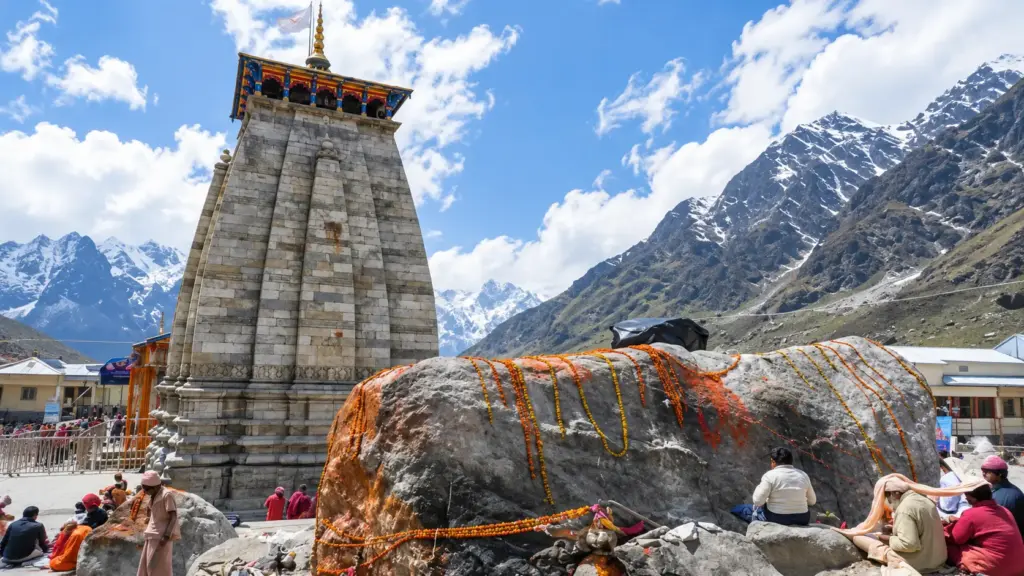
One of the Oldest Shiva Temples in India: Written references to Kedarnath appear in the Skanda Purana as early as the 7th or 8th century CE. That makes it one of the older documented Shiva shrines still in active worship.
- The Mystery of Its Location: Kedarnath sits in one of the most remote, high-altitude spots among major Hindu pilgrimage sites. Even today, you can reach it only by foot or by air.
- The Unusual Shape of the Lingam: Most Shiva temples have a smooth, rounded lingam. The Jyotirlinga at Kedarnath has an irregular, triangular shape instead, which devotees connect to the bull’s-hump legend.
- The Mysterious Connection with the Pandavas: Hindu tradition ties Kedarnath’s origin directly to the five Pandava brothers. This links a remote Himalayan shrine to one of India’s greatest epics, the Mahabharata.
- The Eternal Flame of Triyuginarayan Temple: Nearby, at Triyuginarayan, a fire called Akhand Dhuni still burns. Devotees believe it has stayed lit since the day Shiva and Parvati married there.
- The Temple’s Survival During the 2013 Floods: A huge boulder, now called Bhim Shila, came to rest just behind the temple during the 2013 floods. Many believe it split the floodwaters around the shrine, sparing it from the destruction around it.
- Architecture That Has Faced Nature for Centuries: The temple’s thick stone walls and raised platform have helped it face earthquakes, avalanches, and floods. Records show only minor damage across its long history.
- Open for Only Six Months a Year: Kedarnath Temple welcomes pilgrims for roughly six and a half months each year. It closes every winter due to heavy snow and reopens only after a formal spring ceremony.
केदारनाथ मंदिर: संक्षिप्त परिचय
केदारनाथ मंदिर उत्तराखंड के गढ़वाल हिमालय में, समुद्र तल से 3,584 मीटर की ऊँचाई पर स्थित है। यह बारह ज्योतिर्लिंगों में सबसे ऊँचा शिवधाम है। स्कंद पुराण के केदार खंड के अनुसार, पांडवों ने महाभारत युद्ध के बाद भगवान शिव से क्षमा माँगने के लिए इसी स्थान की यात्रा की थी।
- 2026 में केदारनाथ मंदिर कब खुलता है? इसका उत्तर है 22 अप्रैल 2026
- केदारनाथ मंदिर कब बंद होता है? इसका उत्तर है 11 नवंबर 2026 (भाई दूज)।
- केदारनाथ मंदिर के दर्शन का समय सुबह 4 बजे से दोपहर 3 बजे तक और शाम 5 बजे से रात 9 बजे तक रहता है।
- सुबह की केदारनाथ मंदिर पूजा (अभिषेक) करीब 4 से 6:30 बजे तक होती है, और केदारनाथ मंदिर आरती शाम 6 से 7:30 बजे के बीच होती है।
- श्रद्धालु गौरीकुंड से लगभग 16 से 18 किलोमीटर पैदल चलकर या फाटा और सेरसी से हेलीकॉप्टर द्वारा केदारनाथ धाम पहुँचते हैं।
- हर केदारनाथ यात्रा से पहले उत्तराखंड सरकार की वेबसाइट पर पंजीकरण अनिवार्य है।
Kedarnath Temple Administration & Contact
Kedarnath is managed by the Shri Badarinath Kedarnath Temple Committee (BKTC) under the Uttarakhand Government. The BKTC Act (1939) governs priests, bookings, and temple funds. Key officials (chairman, CEO etc.) are listed on the BKTC site.
- Contact/Support: The BKTC camp office is in Rishikesh (Yatra Registration Office), Uttarakhand, postal 249201.
- Pilgrim support (Mon–Sat 10 AM–5 PM) is via toll-free 0135–2710334 or 1070, or email at support-ucdb[at]uk[dot]gov[dot]in.
- Official websites: badrinath-kedarnath.gov.in and the Uttarakhand Char Dham portal (registrationandtouristcare.uk.gov.in ).
Read more About Hindus Sacred Places
- Mallikarjuna Jyotirlinga: Story, Darshan, Timings & Tips
- Somnath Temple: History, Significance, Timings & Interesting Facts
- Tirupati Balaji Temple: History, Miracles & Complete Darshan Guide
- Complete List of 52 Shakti Peeth with Locations and Significance
- Jagannath Temple Puri: History, Darshan, Timings, Rules & Visitor Guide
Conclusion
Kedarnath Temple carries centuries of faith inside a few grey stone walls. Its story links a great epic, an ancient philosopher, and generations of pilgrims who never stopped believing. Maybe you plan to trek the full 16 km yourself. Or maybe you just wanted to understand what makes this shrine so special. Either way, we hope this guide gave you a clear picture. If you make the journey in 2026, register early, dress warmly, and take your time on the trail. Har Har Mahadev.
Frequently Asked Questions About Kedarnath Yatra
The Kedarnath trek is physically demanding, mainly because of its length, steep sections, and high altitude. The route from Gaurikund to Kedarnath is roughly 16 km according to the blog, while Uttarakhand Tourism lists the traditional trek at about 15 km. First-time pilgrims should walk at a comfortable pace, take regular breaks, stay hydrated, and avoid rushing to complete the route.
Plan at least 3 to 4 days for a comfortable Kedarnath Yatra from Rishikesh or Haridwar. This allows time for the road journey to Gaurikund, the trek to Kedarnath, darshan, rest at Kedarnath, and the return journey. Adding an extra day gives you more flexibility if weather, fatigue, or road conditions delay your plans.
Yes, elderly pilgrims can visit Kedarnath, but the trek to 3,584 metres can be physically demanding. Those who cannot comfortably complete the trek on foot can consider pony, palki, or helicopter services. Elderly pilgrims and people with existing medical conditions should discuss high-altitude travel with their doctor before planning the journey.
Do not ignore symptoms such as severe headache, dizziness, unusual weakness, vomiting, breathlessness, or confusion at high altitude. Stop and rest, inform your travel companions, and seek medical assistance if symptoms are severe or do not improve. Uttarakhand’s official tourist portal lists 108 for medical emergencies and 112 for emergency assistance.
Yes. Ponies and palkis are available for pilgrims who do not want to complete the entire route on foot. Services are available around the Gaurikund-Sonprayag pilgrimage area, subject to local availability, weather and route conditions. Use authorised service providers and confirm the applicable fare before starting the journey.
Carry warm layers, a rain jacket or poncho, comfortable trekking shoes, a refillable water bottle, basic medicines, sunscreen, sunglasses, a valid ID, your yatra registration details, and enough cash. Keep your luggage as light as possible because you will be travelling through a high-altitude mountain route where unnecessary weight becomes a very personal enemy.
Yes, people without previous trekking experience do undertake the Kedarnath trek, but it should not be treated like an ordinary walk. The route involves sustained walking at high altitude, so basic preparation helps. Start walking regularly several weeks before the yatra and build up your stamina gradually rather than discovering your physical limits somewhere between Jungle Chatti and Linchauli.
For a family trip, avoid making the itinerary unnecessarily tight. Keep a rest day or buffer time, stay overnight at a lower-altitude location before the trek, start the trek early, and avoid travelling immediately after a long road journey. Families with elderly members or young children should also consider whether trekking, palki, pony or helicopter travel is most suitable for each person.
Yes. You do not have to walk the entire route if you use an authorised helicopter service. Government-approved helicopter services operate from designated helipads such as Phata and Sersi, subject to weather and operational conditions. However, helicopter travel does not remove the effects of high altitude, so visitors should still take altitude and weather seriously.
If heavy rain, snowfall, poor visibility, or another weather-related disruption develops, follow instructions from local authorities and pilgrimage officials rather than continuing because of a fixed itinerary. Mountain weather can change quickly, and roads, trekking routes and helicopter services can be affected. Uttarakhand’s official tourism system provides current pilgrimage information and emergency contacts, so check official updates during your journey.
My Favorite Corner (MFC) brings clear, scripture-sourced explanations of Hindu philosophy and practice to readers seeking authentic spiritual guidance. Explore more of our content on dharma, karma, and the paths to liberation. Follow MFC on Instagram and Facebook to explore more sacred places, festivals, and living traditions of Sanatan Dharma.