
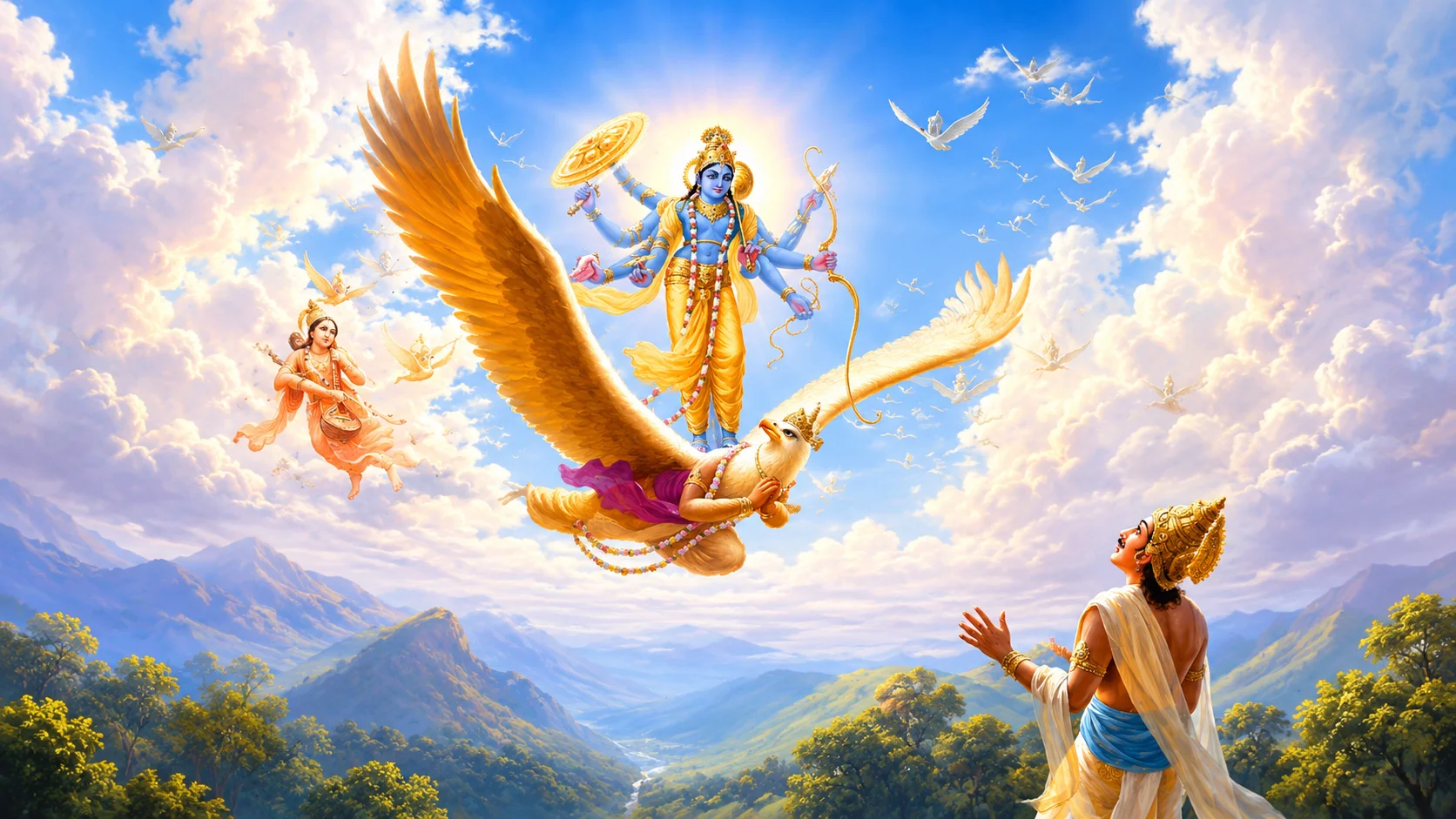
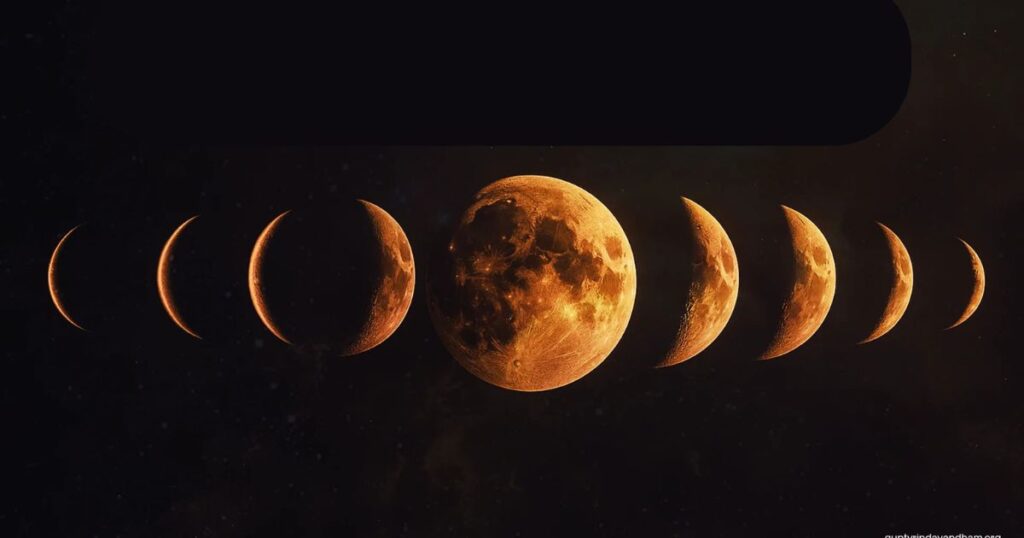
Ekadashi (Sanskrit: एकादशी, meaning “the eleventh”) is the eleventh lunar day in the Hindu calendar. It comes twice every month, once during the waxing moon (Shukla Paksha) and once during the waning moon (Krishna Paksha).
It is one of the most important fasting days in Hinduism, especially for devotees of Lord Vishnu. On this day, millions of people observe fasts, chant Vishnu mantras, read sacred scriptures, and spend time in prayer and self-discipline.
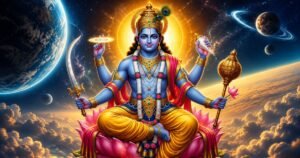
The word Ekadashi comes from two Sanskrit words: eka meaning one, and dasha meaning ten, together meaning eleven. But Ekadashi is not just about a date in the lunar calendar. According to Hindu scriptures, Ekadashi Devi was created by Lord Vishnu’s divine energy to destroy negativity and protect dharma.
Spiritually, Ekadashi is believed to help people control their eleven senses: the five senses of action, the five senses of perception, and the mind. This is why devotees see Ekadashi as a day of inner cleansing, discipline, and devotion. It is believed that fasting and prayer on Ekadashi help calm the mind, reduce worldly distractions, and bring a person closer to Lord Vishnu.
What You Need to Know About Ekadashi First
Twice a Month: Occurs on the 11th day of each lunar fortnight, making 24 observances in a standard year and 26 during a leap (Adhik Maas) year.
Dedicated to Vishnu: Every Ekadashi is an offering to Lord Vishnu or Krishna. Each has its own name, katha (story), and specific spiritual fruit.
Puranic Authority: Its glory is described in the Padma Purana, Bhagavata Purana, Skanda Purana, Vishnu Dharma, Bhavisya Purana, and the Mahabharata.
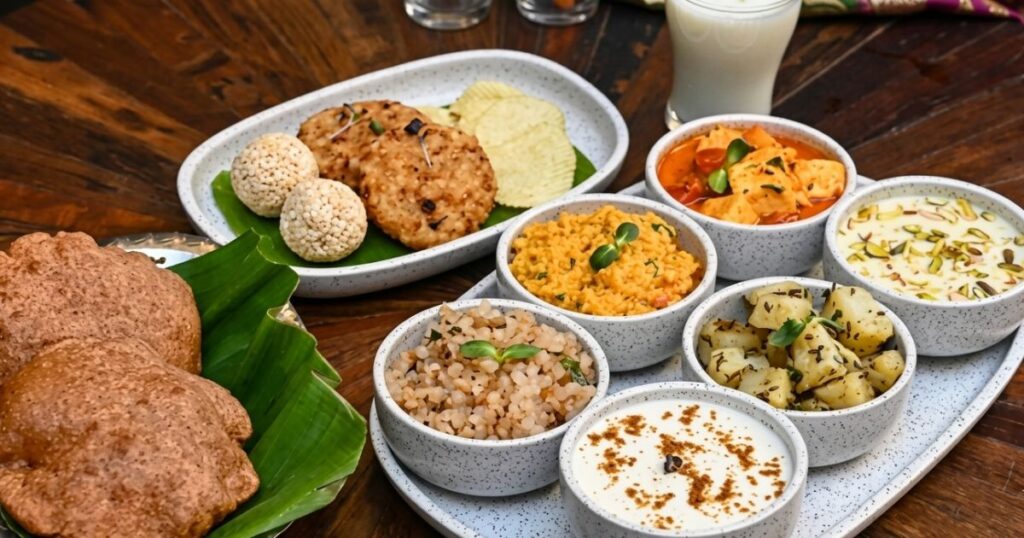
Grain-Free Fasting: The central rule: no rice, wheat, lentils, or any grain. The fast ranges from partial (phalahar) to full waterless (Nirjala), based on devotion and health.
Important Distinction: Smartha vs. Vaishnava Ekadashi:
Smartha householders observe Ekadashi on the first day of the tithi. Vaishnavas, widows, and those seeking moksha often observe it one day later. When both days coincide with the same date, that day is considered especially powerful and is observed by all. Always consult your local Panchang for the precise time for your location.
The Origin Story of Ekadashi
Every tradition has a founding moment. The origin of Ekadashi, as narrated by Srila Vyasadeva to sage Jaimini Rishi in the Padma Purana (Kriya-sagara-sara section, Chapter 14), is both cosmological and compassionate in equal measure.
“After the merciful Supreme Lord thought over what He had previously considered, He suddenly manifested from His own form the deity of the lunar day Ekadasi. Afterwards the different sinful living entities began to follow the vow of Ekadasi and were then elevated quickly to the abode of Vaikuntha.”
Padma Purana, Brahma-khanda, Chapter 14 (as narrated by Srila Vyasadeva
At the dawn of creation, Lord Vishnu visited the realm of Yamaraja (the god of death) and heard terrible cries rising from the southern direction. He descended to the hellish planets and witnessed countless souls suffering for their accumulated sins. His heart filled with such compassion that he resolved to provide them with a means of liberation.
From Lord Vishnu’s own divine form, a radiant goddess emerged. She was named Ekadashi Devi,and she became the embodiment of the eleventh lunar day itself. Vishnu declared that anyone who fasts on this day, channeling all eleven senses toward him, would be freed from the cycle of birth and death.
The Warrior Goddess Version of Ekadashi (Padma Purana, Uttara Khanda)
A parallel account in the same Purana describes how a fearsome demon named Mura (or Murdanav) had overwhelmed the gods and driven them from the heavens. Lord Vishnu fought the demon for thousands of years before retreating to a cave in Badarikashrama to rest. While he slept, Mura crept in to slay him. At that moment, a dazzling woman emerged from Vishnu’s sleeping form. She engaged Mura in battle and finally burned him to ashes with a single glance.
When Vishnu awoke and saw this extraordinary warrior goddess, He named her Ekadashi and blessed her with a boon: all who observe this day in her honor would be granted liberation. This event, the scriptures state, happened on the eleventh lunar day of the Dhanu Rashi (Sagittarius season), which is why Vaikuntha Ekadashi falls in December.
This section details King Ambarisha, the great Vishnu devotee, who observed Ekadashi with such steadfast devotion that even the sage Durvasa’s terrible curse could not touch him. Lord Vishnu Himself intervened to protect Ambarisha because of his Ekadashi vow. This story is central to understanding that sincere Ekadashi observance creates a direct divine shield around the devotee.
Bhagavata Purana, Skandha IX, Adhyaya 4
The Ekadashi Significance and Spiritual Meaning
Spiritual Significance
In the Bhavisya Purana, Lord Vishnu Himself declares: “Sacred Ekadashi destroys all sins. It is a lamp that lights the path of devotion to Lord Vishnu. It leads one to the highest goal of life.” This is not hyperbole. The Puranas speak of Ekadashi as a gateway: the day the cosmic gateways between the material and spiritual worlds thin. Fasting is the key that opens them.
- Destruction of accumulated karma
- Path to Vaikuntha (liberation)
- Purification of mind and body
- Equal to visiting all tirthas
- Protection by Lord Vishnu
- Relief from seven generations of ancestral sins
- Cultivation of self-discipline
- Merit equal to performing Ashwamedha yagna
The meaning of upavasa (fasting) is “to live nearby.” On the day of Ekadashi, one should remain aloof from all kinds of sinful activities, give up household preoccupations and sense gratification, and live near the Lord or one’s spiritual master. The fast is ultimately about proximity to the divine, not mere dietary restriction.
Padma Purana (as cited in Hari Bhakti Vilas 13/14)
Astronomical and Physiological Significance
Ekadashi falls precisely when the Moon is either 11 days into its waxing or waning cycle. This is a specific lunar position at which astronomers and Vedic scholars have long noted the Moon exerts heightened gravitational influence on Earth’s water bodies, and by extension, on the water content of the human body (roughly 70%).
Fasting at this juncture is said to reduce the burden on the digestive system, enhance cellular autophagy (the body’s self-cleansing process), and create optimal conditions for meditative clarity. The modern wellness concept of intermittent fasting twice a month aligns remarkably with what the Puranas prescribed thousands of years ago.
The Papa-Purusha and Why Grains Are Avoided
Here is a perspective that most Ekadashi articles miss entirely. The Padma Purana narrates that the embodiment of all sins, called the Papa-Purusha, approached Lord Vishnu on Ekadashi and asked where he could take shelter. Vishnu told him: “On the day of Ekadashi, you may take shelter in the form of foodstuff, specifically grains.”
This is why eating grains on Ekadashi is spiritually catastrophic. Those who consume rice, wheat, or lentils on this day are literally ingesting the shelter of collective sin. Every grain eaten on Ekadashi carries a portion of the PapaPurusha’s residence. The fast is therefore not just about austerity; it is about refusing to give the accumulated sins of the world a home in your body.
Complete Ekadashi Ritual Guide
Ekadashi is a three-day observance, not a single-day fast. The preparation begins on Dashami (the tenth day) and concludes on Dwadashi (the twelfth day) with the Parana, the ritual breaking of the fast.
Dashami (Day Before): Sanctifying the Body
Eat only one sattvic meal on the afternoon of Dashami, ensuring all food is digested before Ekadashi begins. Avoid tamasic foods (meat, onion, garlic, excessive spices, heavy grains). Take a bath in the late afternoon. This is called dashami shuddhi and is mentioned in the Skanda Purana as essential preparation.
Brahma Muhurta Wake-Up (96 Minutes Before Sunrise)
Rise in the sacred pre-dawn hour called Brahma Muhurta. This is considered the most spiritually potent time of day for prayer. Bathe with clean water. Wear clean, preferably white or yellow clothes. Apply tilak (sandalwood or Vishnu tilak) to the forehead.
Sankalpa (Sacred Intention)
Take a formal vow before Lord Vishnu: “O Pundarikaksha (Vishnu), I shall observe Ekadashi by abstaining from grains and cereals. Please accept this vow and protect me.” This Sankalpa sets the spiritual contract and is referenced in the Vishnu Dharma Purana. Without sankalpa, the fast loses much of its merit.
Puja of Lord Vishnu
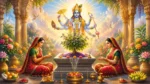
Offer Panchamrit (milk, yogurt, honey, ghee, sugar), yellow flowers (especially marigold and champa), Tulsi leaves, seasonal fruits, bananas, and sweets. Light a ghee lamp. Chant the 12-syllable mantra Om Namo Bhagavate Vasudevaya 108 times or recite the Vishnu Sahasranama (the thousand names of Vishnu). Read or listen to the specific Ekadashi Vrat Katha for that day from the Padma Purana.
Jagran (All-Night Vigil)
Staying awake through Ekadashi night in prayer, kirtan, or scripture reading is described in the Skanda Purana as yielding immense merit. Lord Shiva tells Goddess Uma: “Those who do not observe an all-night vigil on Ekadashi have their piety destroyed.” Even a partial vigil (until midnight) carries great spiritual reward. Sing bhajans, chant the Hare Krishna maha-mantra, or read Srimad Bhagavatam through the night.
Charity (Dana)
Offer food, cloth, grains, or money to brahmanas, saints, or the poor. The Padma Purana states that charity on Ekadashi multiplies in merit manifold compared to any other day. Donating sesame seeds, umbrellas, footwear, or lamps is particularly mentioned in various Ekadashi kathas.
Parana: Breaking the Fast on Dwadashi
The fast must be broken on the morning of Dwadashi (twelfth day), after sunrise, and before the Hari Vasara period (first quarter of Dwadashi) ends. Breaking the fast during Hari Vasara nullifies the merit. Begin with water, then fruits, then a full sattvic meal. The Parana time is calculated precisely in the Panchang for your location. If Dwadashi ends shortly after sunrise, you may have only a 20-30 minute window.
Who Is Not Allowed for Strict Fasting?
The Padma Purana and later commentaries clarify that pregnant women, nursing mothers, the severely ill, the very elderly, and young children should not undertake the full Nirjala (waterless) fast. They may observe a partial fast (water, milk, fruits allowed) or perform just the puja and listen to the katha. Elders and Ayurvedic texts caution: never torture the body in the name of austerity. Consult a physician if you have underlying conditions.
What to Eat and What to Avoid on Ekadashi
The Ekadashi diet is not about starvation; it is about eating in a way that keeps the body light, the mind clear, and the energy directed toward the divine rather than digestion.
Permitted on Ekadashi:
- Fruits (all varieties)
- Milk, curd, paneer, ghee
- Sabudana (tapioca pearls)
- Potatoes and sweet potatoes
- Amaranth flour (rajgira)
- Water chestnut flour (singhara)
- Kuttu (buckwheat flour)
- Sendha namak (rock salt)
- Nuts and dry fruits
- Root vegetables
- Coconut and coconut water
Strictly Prohibited:
- Rice and rice flour
- Wheat and all wheat products
- Barley, millets, jowar, bajra
- All lentils and beans (dal)
- Corn / maize
- Oats and semolina (suji)
- Meat, fish, eggs
- Onion and garlic
- Common salt (use sendha namak)
- Betel nuts (tambul)
- Mustard oil (avoid on Ekadashi)
For Nirjala Ekadashi (observed once a year in the Jyeshtha month), not even water is consumed. Sage Vyasa advised Bhima that observing this single waterless fast grants the spiritual merit of all 24 Ekadashis combined. This fast is observed from sunrise on Ekadashi to sunrise on Dwadashi, a span of approximately 24 hours without any intake.
Complete List of All 24 Ekadashis in a Year
Below is the standard sequence of all 24 Ekadashis arranged by Hindu lunar month, from Margashirsha (November/December) through Kartika (October/November). Each Ekadashi has a unique name and specific Vrat Katha sourced from the Padma Purana. In an Adhik Maas (leap) year such as 2026, two additional Ekadashis appear: Padmini and Parama.
| Ekadashi Name | Hindu Month | Paksha | Key Significance | |
| 1 | Utpanna Ekadashi | Margashirsha | Krishna | The very first Ekadashi; fasting tradition begins here |
| 2 | Mokshada Ekadashi | Margashirsha | Shukla | Grants liberation to ancestors; Vaikuntha Ekadashi in South India |
| 3 | Saphala Ekadashi | Pausha | Krishna | Makes all endeavors fruitful; Saphala means “successful” |
| 4 | Putrada Ekadashi | Pausha | Shukla | Observed for the blessing of a son; “putrada” means giver of sons |
| 5 | Shattila Ekadashi | Magha | Krishna | Sesame seeds (til) feature prominently in offerings and bathing |
| 6 | Jaya Ekadashi | Magha | Shukla | Victory over sins; Jai means victory. Frees from birth as lower beings |
| 7 | Vijaya Ekadashi | Phalguna | Krishna | Observed by Lord Rama before battle; ensures victory in all endeavors |
| 8 | Amalaki Ekadashi | Phalguna | Shukla | Worship of the amla (Indian gooseberry) tree; detoxification and longevity |
| 9 | Papamochani Ekadashi | Chaitra | Krishna | “Destroyer of sins”; especially powerful for removing accumulated karma |
| 10 | Kamada Ekadashi | Chaitra | Shukla | Fulfills all righteous desires; “kamada” means wish-fulfilling |
| 11 | Varuthini Ekadashi | Vaishakha | Krishna | Removes suffering; merit equals giving gold in charity at Kurukshetra |
| 12 | Mohini Ekadashi | Vaishakha | Shukla | Removes illusion (moha); destroys sins equal to Mt. Sumeru |
| 13 | Apara Ekadashi | Jyeshtha | Krishna | Infinite (apara) merit; removes sins of killing a brahmin or holy man |
| 14 | Nirjala Ekadashi | Jyeshtha | Shukla | Waterless fast; merit of all 24 Ekadashis. Also called Bhim Ekadashi |
| 15 | Yogini Ekadashi | Ashadha | Krishna | Cures skin diseases; the story of Hemamali and Kubera’s gardener |
| 16 | Devshayani Ekadashi | Ashadha | Shukla | Lord Vishnu goes into cosmic sleep; begins Chaturmas, the holy 4-month period |
| 17 | Kamika Ekadashi | Shravana | Krishna | Destroys all sins; Tulsi worship is especially important this day |
| 18 | Shravana Putrada Ekadashi | Shravana | Shukla | Second Putrada Ekadashi; grants sons and worldly prosperity |
| 19 | Aja Ekadashi | Bhadrapada | Krishna | Removes sins of past lives; “Aja” means unborn, pointing to liberation |
| 20 | Parivartini Ekadashi | Bhadrapada | Shukla | Lord Vishnu turns over in His cosmic sleep; also called Vamana Ekadashi |
| 21 | Indira Ekadashi | Ashwin | Krishna | Frees ancestors from Yamaloka; observed during Pitru Paksha for ancestral welfare |
| 22 | Papankusha Ekadashi | Ashwin | Shukla | “Destroyer of sins like a goad”; one of the most liberating Ekadashis |
| 23 | Rama Ekadashi | Kartika | Krishna | Removes the gravest of sins; observed in the holiest month of Kartika |
| 24 | Prabodhini (Dev Uthani) Ekadashi | Kartika | Shukla | Lord Vishnu awakes from sleep; Chaturmas ends, auspicious activities resume |
In years with an extra lunar month (Purushottam Maas / Adhik Maas), two additional Ekadashis occur: Padmini Ekadashi (Shukla Paksha of the extra month) and Parama Ekadashi (Krishna Paksha of the extra month). These are considered extremely rare and highly meritorious. The Adhik Maas itself is dedicated to Lord Vishnu in His form as Purushottama, making these Ekadashis spiritually amplified. The next such year is 2026.
The Adhik Maas Special Ekadashis
The Most Auspicious Ekadashis of the Year
While all 24 Ekadashis carry immense spiritual merit, certain ones stand out across all traditions for their extraordinary power, mythological significance, and the special rituals associated with them. These are the Ekadashis that even non-practitioners observe.
| Ekadashi | Month / Season | Why It Stands Apart | Scriptural Source | Type |
| Vaikuntha Ekadashi (Mokshada Ekadashi) | Margashirsha, December | Gates of Vaikuntha (Vishnu’s abode) are said to open on this day. Temples construct a “Vaikuntha Dwaram” (gateway to heaven) for devotees to walk through. Considered the most powerful single Ekadashi for moksha. Observing this one equals observing all Ekadashis in a year. | Padma Purana, Uttara Khanda | Moksha |
| Nirjala Ekadashi (Bhim / Pandava Ekadashi) | Jyeshtha, May/June | The only Ekadashi observed without water. Sage Vyasadeva prescribed this to Bhima, who could not fast on all 24 Ekadashis due to his enormous appetite. One waterless fast grants the accumulated merit of all 24. Messengers from Vaikuntha (not Yamadutas) receive those who complete this vrat. | Mahabharata and Padma Purana | Nirjala |
| Devshayani Ekadashi | Ashadha, June/July | Lord Vishnu enters His cosmic four-month sleep (Yoga Nidra) on this day. The four-month Chaturmas begins. Marriages, sacred thread ceremonies, and major material events pause. Spiritual austerity is amplified throughout this period. One of the most observed Ekadashis across all regions of India. | Skanda Purana, Vishnu Dharma | Chaturmas |
| Prabodhini Ekadashi (Dev Uthani Ekadashi) | Kartika, October/November | Lord Vishnu awakens from His four-month cosmic sleep. Chaturmas ends. All auspicious activities resume: weddings are held again. The Tulsi Vivah (marriage of the Tulsi plant to Lord Vishnu) is performed on this day. Considered one of the most joyful Ekadashis in the Hindu calendar. | Padma Purana, Bhavisya Purana | Awakening |
| Amalaki Ekadashi | Phalguna, February/March | Lord Vishnu is said to reside in the Amalaki (amla/Indian gooseberry) tree on this day. Devotees worship the amla tree with a lamp, pour water on its roots, and distribute its fruit. This Ekadashi links spiritual practice to nature reverence and is observed elaborately at Mathura-Vrindavan. | Brahmanda Purana | Nature |
| Kamada Ekadashi | Chaitra, March/April | Falls in the spring season after Holi. Wish-fulfilling Ekadashi. The katha describes how a celestial musician (gandharva) named Lalit was cursed to become a cannibal demon; his wife’s observance of Kamada Ekadashi released him. This day is especially popular among devotees praying for specific blessings. | Varaha Purana | Wish-Fulfilling |
| Indira Ekadashi | Ashwin, September/October | Falls during Pitru Paksha (the fortnight of ancestral remembrance). Uniquely bridges Ekadashi observance with Shraddha (ancestral rites). Fasting on this day is believed to free ancestors trapped in lower realms even if they committed great sins. One of the few Ekadashis specifically dedicated to ancestral liberation. | Brahma Purana | Ancestral |
Ekadashi in Hindu Scriptures
No other single fasting practice in Hinduism is referenced across as many scriptural texts as Ekadashi. The following is a guide to the primary sources for serious study.
| Padma Purana (Padma-khanda and Brahma-khanda) The most authoritative Ekadashi text. All 24 Ekadashi Vrat Kathas originate from this Purana, narrated by Srila Vyasadeva to Jaimini Rishi. The Kriya-sagara-sara section (Chapters 14 and 15) contains the origin story of Ekadashi Devi and the Papa Purusha narrative. Contains the specific stories, fruits, and rules for each individual Ekadashi. |
| Bhagavata Purana (Skandha IX, Adhyaya 4-5) Narrates the story of King Ambarisha, the supreme Ekadashi devotee. When the sage Durvasa cursed Ambarisha for breaking the fast incorrectly, Vishnu’s Sudarshana Chakra (discus weapon) chased Durvasa across all 14 worlds. The sage eventually returned and sought forgiveness from Ambarisha himself. This story establishes that a sincere Ekadashi devotee is under the direct protection of Vishnu’s personal weapons. |
| Skanda Purana (Vishnu Khanda and Kartika Mahatmya) Contains extensive descriptions of Ekadashi observance, the importance of the all-night vigil (jagran), and specific instructions from Lord Shiva to Goddess Parvati about Ekadashi rules. This Purana establishes Ekadashi as a universal practice, not limited only to Vaishnavas: “Whether a Vaishnava, a worshipper of Lord Shiva, or a worshipper of Surya, one should regularly observe Ekadashi.” |
| Mahabharata (Anushasana Parva and Vana Parva) Contains the conversation between Sage Vyasadeva and Yudhishthira about all the Ekadashis. The Nirjala Ekadashi section specifically records the dialogue between Vyasadeva and Bhima. The Mahabharata also mentions that Lord Rama observed the Vijaya Ekadashi fast before the battle against Ravana, which helped secure his victory. |
| Bhavisya Purana and Agni Purana (Chapter 178) The Bhavisya Purana contains Lord Vishnu’s declaration: “Sacred Ekadashi destroys all sins. It is a lamp that lights the path of devotion to Lord Vishnu.” The Agni Purana, referenced by N. Gangadharan in his 1985 translation, provides detailed ritual prescriptions for various Ekadashis and the science of Parana (breaking the fast). |
| Hari Bhakti Vilas (Compiled by Sanatana Goswami) A comprehensive Vaishnava manual that collects all Ekadashi rules from the Grihya Parisista, Katyayana Smriti, Vishnu Dharma, and Brahma Vaivarta Purana. Contains Jiva Goswami’s commentary and Bhakti Siddhanta Saraswati Goswami’s Anubhasya commentary on the proper meaning of Upavasa. The definitive practical guide for Vaishnava Ekadashi practice. |
Conclusion
Ekadashi Is Not a Rule. It Is an Invitation.
Twice every month, the cosmos slows down and offers you a door. The Padma Purana did not describe Ekadashi as a punishment for the hungry. It described her as a goddess, born directly from Lord Vishnu’s own form, compassionate enough to carry the sins of all living beings so that they did not have to. Fasting is simply the act of stepping out of her way and letting her work.
You do not need a perfect fast to begin. You need a sincere one. Skip the rice, light the lamp, and chant one name of Vishnu. That is Ekadashi. The rest follows naturally, one fortnight at a time.
| “Sri Ekadasi is the utmost pious activity and is situated as the head among all vows.” Padma Purana, Brahma-khanda, Chapter 14 |
Frequently Asked Questions FAQ’s
1. Can I drink water during Ekadashi fasting?
Yes, for the vast majority of Ekadashis, water is permitted. Only on Nirjala Ekadashi (once a year in the Jyeshtha month) is water strictly prohibited for those who can bear it. Elderly, pregnant, or ill persons may drink water even on Nirjala Ekadashi without losing the merit of the observance, as the Puranas are clear that the body must not be harmed.
2. What happens if I accidentally eat grains on Ekadashi?
The Padma Purana and Vishnu Dharma are direct on this point: eating grains on Ekadashi is considered one of the gravest sins in the Vaishnava tradition. If it happens accidentally, perform the Vishnu puja, offer sincere apology and a sankalpa (vow) to be more careful, and observe the next Ekadashi more carefully. Some teachers recommend an additional day of fasting as prayaschitta (atonement), but consult your family tradition or spiritual guide for specifics.
3. Why are two Ekadashi dates often given for the same day?
Ekadashi tithi begins and ends at different times across regions, and the Panchang calculates the tithi’s sunrise-to-sunrise span differently for Smartha householders versus Vaishnava practitioners. When the Ekadashi tithi spans two calendar days, Smarthas observe the first and Vaishnavas the second. When they coincide on one calendar day, it is called Mahadvadashi and is especially auspicious. Always check a regional Panchang for accurate timings.
4. Is Ekadashi only for Vaishnavas?
No. The Skanda Purana explicitly states: “Whether a Vaishnava, a worshipper of Lord Shiva, or a worshipper of Surya, one should regularly observe Ekadashi.” The Saura Purana makes the same declaration. Ekadashi is a universal Hindu practice, though its observance is most elaborate and most codified within the Vaishnava tradition.
5. Can children observe Ekadashi?
Young children are not required to fast. They can participate in the puja, listen to the katha, and understand the spiritual significance without undertaking the full dietary fast. As they grow older (typically from adolescence onward), they can begin partial fasting and gradually move to complete observance. The tradition values long-term sustainability over short-term strictness for the young.
6. What is the correct time to break the Ekadashi fast (Parana)?
Parana must be performed on Dwadashi (the twelfth day), after sunrise, and after the Hari Vasara period (first quarter of Dwadashi) concludes. Breaking the fast before Hari Vasara ends nullifies all the merit. On the other hand, the fast must also be broken before Dwadashi ends entirely. In some months, this window can be very short (20-30 minutes). The precise Parana time is listed in the Panchang for each location, and consulting it is essential.
7. Is Ekadashi mentioned in the Bhagavad Gita?
The Bhagavad Gita does not mention Ekadashi by name. However, the Gita was delivered on Mokshada Ekadashi, making this Ekadashi especially sacred to devotees of Lord Krishna. The Gita was spoken on the Margashirsha Shukla Paksha Ekadashi (Mokshada Ekadashi), and in Bhagavad Gita 10.35, Lord Krishna says “of months I am Margashirsha,” making that month and its Ekadashis especially dear to Him.
8. What is Adhik Maas Ekadashi and when does it occur?
When the Hindu lunisolar calendar adds an intercalary month (Adhik Maas or Purushottam Maas, roughly every 32.5 months) to realign with the solar year, two extra Ekadashis appear: Padmini Ekadashi (Shukla Paksha) and Parama Ekadashi (Krishna Paksha). This month is considered the holiest for spiritual practice and the most materially inauspicious for material activities like weddings. The year 2026 contains an Adhik Maas, making the total Ekadashi count 26 for that year.
9. Can I observe Ekadashi during menstruation?
Opinions vary across traditions and lineages. Many classical texts state that women during their menstrual cycle should not perform puja or touch sacred objects, but the Ekadashi fast itself (dietary observance and mental devotion) may still be maintained. Some teachers advise complete rest from all rituals while keeping the diet. Consult your family tradition or spiritual teacher, as regional and sampradaya-specific customs differ significantly on this topic.
The journey does not end here. Follow MFC on Instagram and Facebook to explore more sacred places, festivals, and living traditions of Sanatan Dharma.