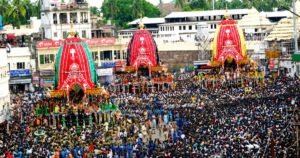

Snana Purnima 2026 falls on Monday, June 29, the day Lord Jagannath, Balabhadra, Subhadra and Sudarshana are bathed in public at the Puri temple for the first time that year.
This blog covers the exact date and timing, the older legend behind why Jagannath is worshipped in his unique form, every major ritual of the day, what happens right after, and how to mark the day even if you cannot travel to Puri.
Snana Purnima Explained in 2 Minutes
- Snana Purnima 2026, also called Devasnana Purnima or Jagannath Snana Yatra, is on Monday, June 29.
- It is treated as Lord Jagannath’s appearance day, his first public bath and darshan of the year.
- The festival traces back to a Puranic story of King Indradyumna, a Brahmin named Vidyapati, and a half-carved wooden idol made by the divine architect Vishwakarma.
- This same story explains why Jagannath, Balabhadra and Subhadra are worshipped without separately carved hands and feet.
- After the bath, the deities go through a rest period of about two weeks, away from public view, before Rath Yatra on July 16, 2026.
When Is Snana Purnima 2026?
Snana Purnima 2026 falls on Monday, June 29, the full moon day of the Hindu month of Jyeshtha. As per the Panchang, the Purnima tithi begins at 3:06 AM on June 29 and continues until 5:26 AM on June 30, so the festival is observed on June 29 since that is the day the tithi covers sunrise.
| Event (2026) | Date |
| Snana Purnima / Devasnana Purnima | Monday, June 29 |
| Rest period after the bath | Around July 1 to July 15 |
| Rath Yatra | Thursday, July 16 |
| Bahuda Yatra (return chariot journey) | Friday, July 24 |
Location: Sri Jagannath Temple, also known as the Shree Mandir, in Puri, Odisha, at the Snana Bedi, the bathing platform in the outer courtyard near Ananda Bazar.
What Is Snana Purnima?
Snana Purnima, also written Snan Purnima, and also known as Devasnana Purnima, Deva Snana Purnima or Snana Yatra, is the day Jagannath, Balabhadra, Subhadra and Sudarshana are carried out of the temple’s inner sanctum for a grand public bath. It is treated as the appearance day, or birthday, of Lord Jagannath, and the first time each year the four are seen together outside the sanctum.
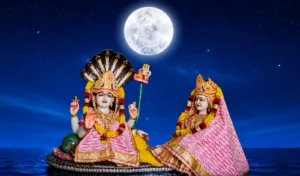
The same full moon also carries other names depending on the region. In Odisha and Bengal it overlaps with Vat Purnima or Vat Savitri, when married women pray for their husband’s long life, and in Andhra Pradesh and Telangana it lines up with Eruvaka Purnima, a farmers’ festival marking the start of the sowing season which makes this single full moon date an important entry on the wider Hindu festival calendar 2026.
The Real Story Behind Lord Jagannath’s Form
The most detailed version of this story begins with a king named Indradyumna, a devoted follower of Lord Krishna, worshipped in scripture as a Lord Vishnu avatar, who longed for his darshan. One day a visiting Brahmin told the king about a sacred place called Purushottam Kshetra, where a beautiful blue form of Krishan, known as Nilamadhava, was worshipped. Eager to see this deity, the king sent a humble and devoted Brahmin named Vidyapati to find him.
Vidyapati travelled for many days, so absorbed in his mission that he barely noticed hunger or tiredness. Eventually he met a village chief, known by names such as Viswabasu, Vishwavasu or Biswabasu in different tellings, who had just returned from his daily worship of Nilamadhava, his whole presence glowing with peace. The two got talking, and the chief invited Vidyapati home for a meal, but Vidyapati would not eat until he had seen the deity himself.
Viswabasu finally agreed, on one condition: Vidyapati had to travel there blindfolded. Vidyapati accepted, but quietly carried a handful of mustard seeds and dropped them along the way so he could trace his path back later. After a long night’s walk through hills and dense forest, they reached Nilachal Dham at dawn. The moment his blindfold came off, Vidyapati rushed forward in pure joy at the sight of Nilamadhava. Back home, Viswabasu served him an unusually rich meal, and Vidyapati learned that this food came from daily offerings made to the deity by celestial visitors.
Vidyapati returned to King Indradyumna with the news and a fragrant flower garland as proof. The excited king set out himself, with his full retinue, to see Nilamadhava. But when they reached the spot, the deity had simply vanished, leaving behind only a mound of golden sand. As the king stood in shock, a voice from the sky told him he would still receive the Lord’s darshan, only in a different form.
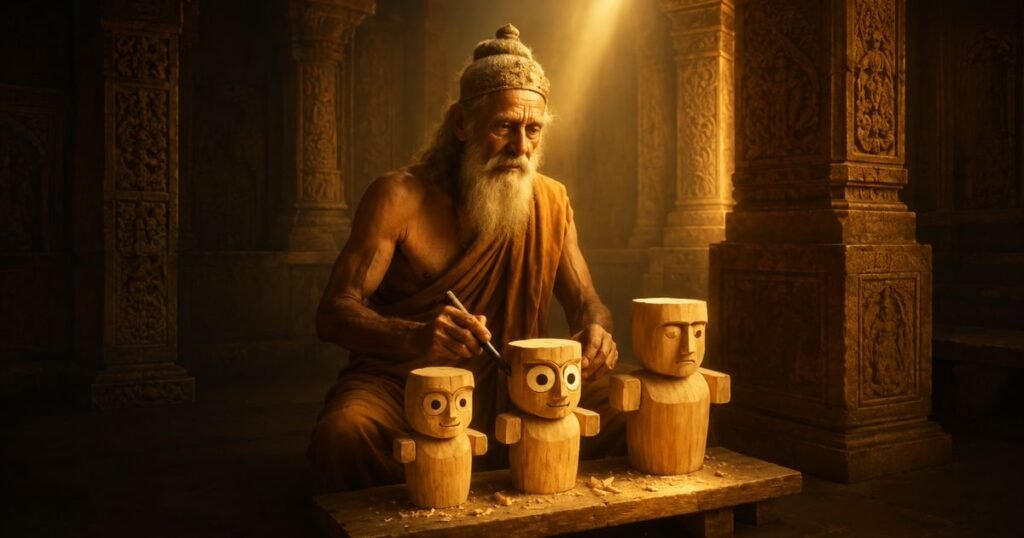
That night, Lord Vishnu appeared to Indradyumna in a dream with a clear instruction: a sacred log of wood, the daru, was floating in the sea near Puri, and it had to be carved into idols. Skilled carpenters tried and failed, their tools breaking the moment they touched the log. Just when the king felt out of options, an elderly carpenter arrived on his own. He turned out to be Vishwakarma, the divine architect of the gods, and he agreed to carve the deities within 21 days on one strict condition, that he be left alone behind a locked door, and that he would vanish, finished or not, if anyone disturbed him before he was done.
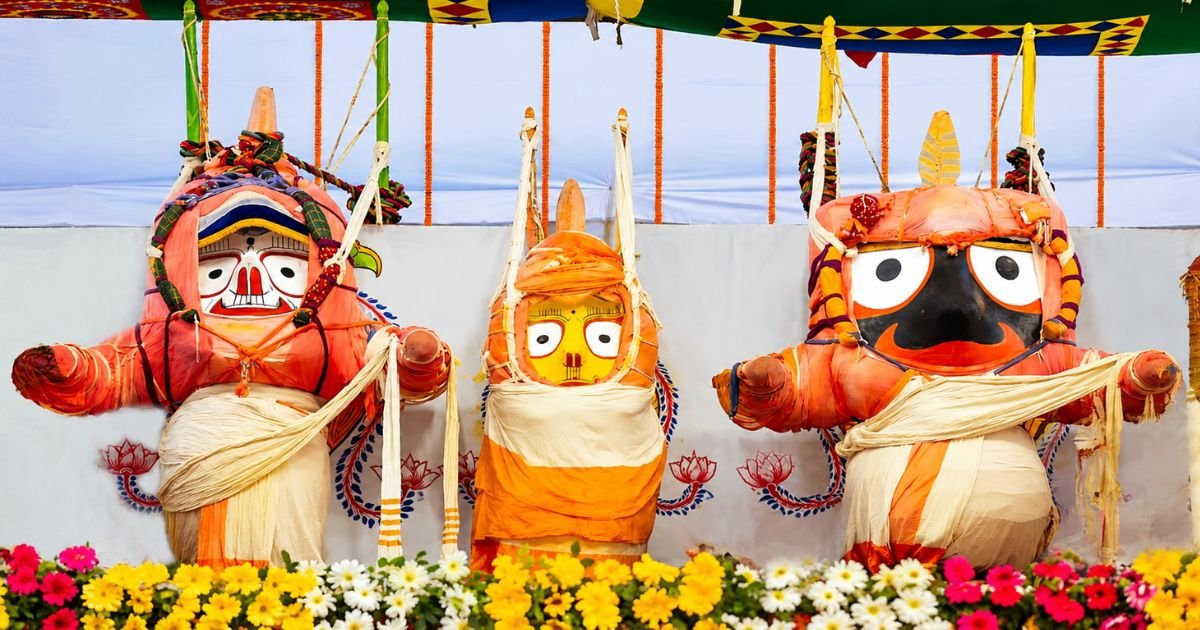
For thirteen days, the steady sound of his chisel echoed through the palace. On the fourteenth day, there was complete silence. The queen grew anxious, convinced something had gone wrong, and urged the king to check on him. The moment the door was opened, the old carpenter disappeared, leaving behind three wooden figures with rounded eyes, gentle faces, and no separately carved hands or feet.
Indradyumna was devastated, blaming himself for breaking his word too soon. It was Narada Muni who comforted him, explaining that this very form, unfinished by ordinary standards, was exactly how Lord Krishna wished to be worshipped here, as Jagannath, alongside his brother Balabhadra and sister Subhadra. That is why the deities at Puri have looked this way ever since.
Some regional versions of this legend add an extra detail, that Vidyapati married Viswabasu’s daughter, Lalita, and it was her help that finally opened the door to Nilamadhava. The smaller details shift slightly from telling to telling, but the heart of the story, a king’s longing, a devoted messenger, and a god who chooses his own form, stays the same across most Puranic and temple accounts, woven deeply into Odia culture and tradition even today.
Why Does Lord Jagannath Have No Hands or Feet?
Lord Jagannath have no hands or feet because Vishwakarma’s work was interrupted before the agreed 21 days were over. The idols of Jagannath, Balabhadra and Subhadra were left with rounded eyes and stump-like arms, without separately carved hands or feet. Rather than being seen as incomplete, this form was understood as the Lord’s own chosen appearance, guided by Narada Muni’s explanation to the king. Every set of new idols made since then, including during Nabakalebara, keeps this same distinctive form.
Rituals of Snana Yatra at Puri
1. The Pahandi Procession
On the morning of Snana Purnima, soon after the regular Mangal Aarti, the deities are carried from the sanctum to the Snana Bedi, the bathing platform in the outer courtyard near Ananda Bazar. This procession, called Pahandi, moves to the sound of conch shells, cymbals, drums and temple trumpets, with priests gently swaying the idols as they walk.
2. Mahasnan, the Bath With 108 Pots of Water
On the platform, the deities are bathed with water drawn from a well inside the temple called Suna Kua, mixed with sandalwood paste and fragrant herbs. By tradition, 108 pots of this scented water are poured over them during the abhishek, carried out by the temple’s Daitapati priests, also known locally as sevayats or servitors, whose lineage goes back to the original tribal worshippers of Nilamadhava.
3. Hati Besha, Why Jagannath Wears an Elephant Face
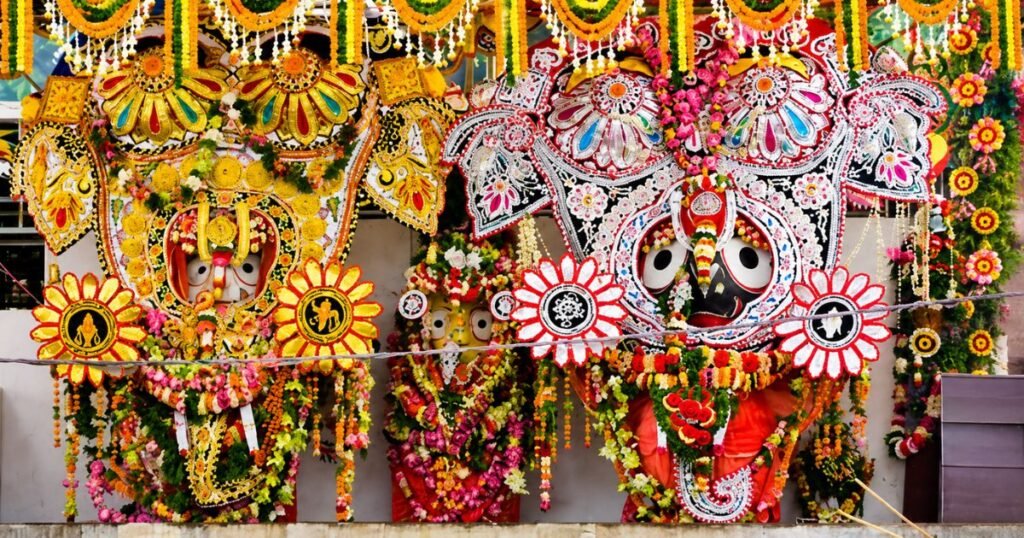
After the bath, Jagannath and Balabhadra are dressed in an elephant-faced attire known as Hati Besha or Gajanana Besha, while Subhadra is given a lotus-themed costume. According to legend, this began with a devotee named Ganapati Bhatta, a scholar devoted only to Lord Ganesha, who was reluctant to even look at Jagannath during a visit to Puri. To honour his devotion, Jagannath is believed to have appeared to him in an elephant form that day, showing that every form of the divine ultimately leads back to one source. There is also a practical reason behind the timing, the long bath often fades the natural colours on the wooden idols, and Hati Besha conveniently covers most of the body while the temple prepares for repainting in the days ahead.
4. Goti Pahandi, the Return Journey
In the evening, the deities are carried back into the temple in a style called Goti Pahandi, where each one completes the journey separately rather than moving together. Sudarshana goes first, followed by Balabhadra, then Subhadra, with Jagannath returning last. Near the Garuda Stambha, the procession pauses while priests representing Vibhishana, Ravana’s brother from the Ramayana, offer the deities lamps and flowers.
What Happens After the Bath?
Right after the ceremony, the deities are believed to fall ill from the long bath, much like a person who has spent too long in water. They are then moved to a private chamber inside the temple, away from public view, for about fifteen days. This rest period is called Anavasara or Anasara.
During this time, temple priests are believed to repaint and refresh the wooden idols. Regular worship continues at the temple in a limited form, but devotees cannot see the deities directly. Many pilgrims instead visit the nearby Alarnath temple in Brahmagiri, where a four-armed form of Vishnu stands in for Jagannath during this period.
The deities reappear just before Rath Yatra in a fresh, youthful look called Nava Yauvana Besha, marking the end of their rest and the start of the chariot festival.
Nabakalebara: When the Idols Themselves Are Renewed
While Snana Purnima happens every year, there is a much rarer event called Nabakalebara, when the wooden idols themselves are replaced with new ones carved from sacred neem logs. This only happens in a year with two Ashadha months on the calendar, a gap that has ranged from 8 to 19 years historically. The last Nabakalebara took place in 2015, and the next one is expected around 2034.
During Nabakalebara, the old idols are buried with great reverence inside the temple grounds at a spot called Koili Baikuntha, and a sacred essence believed to reside inside the deities is transferred into the new idols in complete secrecy. Even in this renewal, the new idols are carved in the same unfinished form described in the legend above, with no separately carved hands or feet, keeping the original story alive through every generation of idols.
Why Snan Purnima is So Important to Devotees?
For devotees, Snana Purnima is so important because simply having darshan of Jagannath on this day, or hearing the story behind the festival, can wash away past mistakes, much like the bath purifies the deity himself. It is also a moment of quiet humanity within the divine, the Lord “falling ill” right after his own bath, a reminder that in the Jagannath tradition, the line between the human and the divine is thin.
Since, the day falls on Jyeshtha Purnima, an auspicious full moon in the Hindu calendar and also marks the Lord’s appearance, many families choose it to start new ventures. And give to those in need, or read the Satyanarayan Katha, since Jyeshtha Purnima is considered auspicious across the wider Hindu calendar too.
More than a ritual, Snana Purnima prepares devotees for the spiritual journey of Rath Yatra. It marks the moment when anticipation turns into celebration.
How to Celebrate Snana Purnima 2026 at Home?
Not everyone can travel to Puri, and that is completely fine. Here is a simple way to mark the day at home:
- Wake up before sunrise and bathe, ideally with a few drops of Gangajal or a tulsi leaf added to the water.
- If you keep a Jagannath idol or picture at home, clean it gently and offer a simple abhishek with water mixed with milk, honey, rose water and a touch of sandalwood paste.
- Dress the deity in fresh clothes and add flowers or a small garland.
- Offer bhog of fruits, sweets or whatever is freshly cooked, since the Jagannath prasad tradition values simple, sattvic food.
- Light a lamp, do a short aarti, and read or tell the story of King Indradyumna, Vidyapati and Vishwakarma.
- If possible, give food or clothes to someone in need, since charity on Purnima days is considered especially meaningful.
Visiting Puri for Snana Purnima 2026
If you are planning your Jagannath Puri pilgrimage around Snana Purnima 2026, keep these points in mind, based largely on Puri Jagannath Temple darshan guide:
- Reach Puri by June 27 or 28 to settle in and find a good viewing spot before the crowds build up.
- Darshan passes and special seva bookings can be made through the official Shree Jagannath Temple Administration portal, using ID proof such as Aadhaar, voter ID or passport. The temple’s rituals are also still ceremonially tied to the Gajapati king of Puri, a connection that goes back centuries.
- Only Hindus are permitted inside the main sanctum, but non-Hindu visitors can still see the temple tower and outer rituals from the rooftop of the Raghunandan Library opposite the main entrance.
- Try the Mahaprasad at Ananda Bazar inside the temple complex, it is part of the full Puri experience.
- June in Puri is hot and humid, so carry water, wear light cotton clothes, and avoid standing in the midday sun while waiting for the procession.
- The temple closes to the public from around July 1 to July 15 for the rest period, so plan your trip around either Snana Purnima itself or Rath Yatra on July 16.
These crowds are part of why Snana Purnima has become such a major driver of religious tourism in Odisha every June, second only to Rath Yatra a few weeks later.
Conclusion
Snana Purnima 2026 is more than a single ritual bath on June 29, it is the opening chapter of the entire Jagannath festival season, rooted in a centuries old story of a king’s longing, a devoted messenger, and a god who chose to be worshipped in an unfinished, deeply human form. Whether you plan to stand in the Puri crowds for the Pahandi procession, watch the Lord take on his playful elephant form during Hati Besha, or simply light a lamp at home and retell the story of Indradyumna and Vishwakarma, the spirit of the day stays the same, a yearly reminder that devotion matters more than perfection. With Rath Yatra following close behind on July 16, 2026, Snana Purnima is the perfect place to begin if you are following the Jagannath calendar this year.
Frequently Asked Questions
Snana Purnima 2026 falls on Monday, June 29. The Purnima tithi begins at 3:06 AM on June 29 and lasts until 5:26 AM on June 30.
They refer to the same festival. Snana Purnima describes the day, the full moon of Jyeshtha, while Snana Yatra describes the event itself, the procession and bathing of the deities. Devasnana Purnima and Deva Snana Purnima are other names for the same celebration.
Temple tradition treats this day as the appearance, or birthday, of Lord Jagannath, since it marks the first ceremonial bath given to the deities after their original installation, following the legend of King Indradyumna.
According to the legend, the divine carpenter Vishwakarma was interrupted before finishing the idols, leaving them with rounded eyes and no separately carved hands or feet. This was later explained by Narada Muni as the exact form in which the Lord wished to be worshipped, and it has remained unchanged ever since.
This is called Hati Besha or Gajanana Besha. According to legend, Jagannath took this elephant form to satisfy a devotee named Ganapati Bhatta, who worshipped only Lord Ganesha and was reluctant to see Jagannath in his usual form.
This rest period is called Anavasara. The deities are believed to fall ill after the elaborate bath and are kept away from devotees while priests repaint and restore the wooden idols ahead of Rath Yatra.
Nabakalebara is the rare ceremony where the wooden idols themselves are replaced with new ones, carved from sacred neem logs. It is not happening in 2026, the last one was in 2015 and the next is expected around 2034.
Only Hindus are allowed inside the main temple complex and sanctum. Non-Hindu visitors can still view the temple tower and outer rituals from outside the complex, including the rooftop of the nearby Raghunandan Library.
Snana Purnima falls on June 29, 2026, about 17 days before Rath Yatra on July 16, 2026.
They fall on the same date, since both are tied to the full moon of Jyeshtha, but they are separate observances. Snana Purnima is specific to Lord Jagannath’s bathing festival, while Vat Purnima or Vat Savitri is a different vrat observed mainly by married women in parts of eastern India.
The journey does not end here. Follow MFC on Instagram and Facebook to explore more sacred places, festivals, and living traditions of Sanatan Dharma.