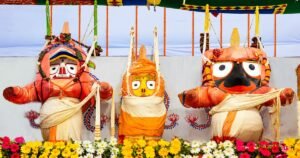

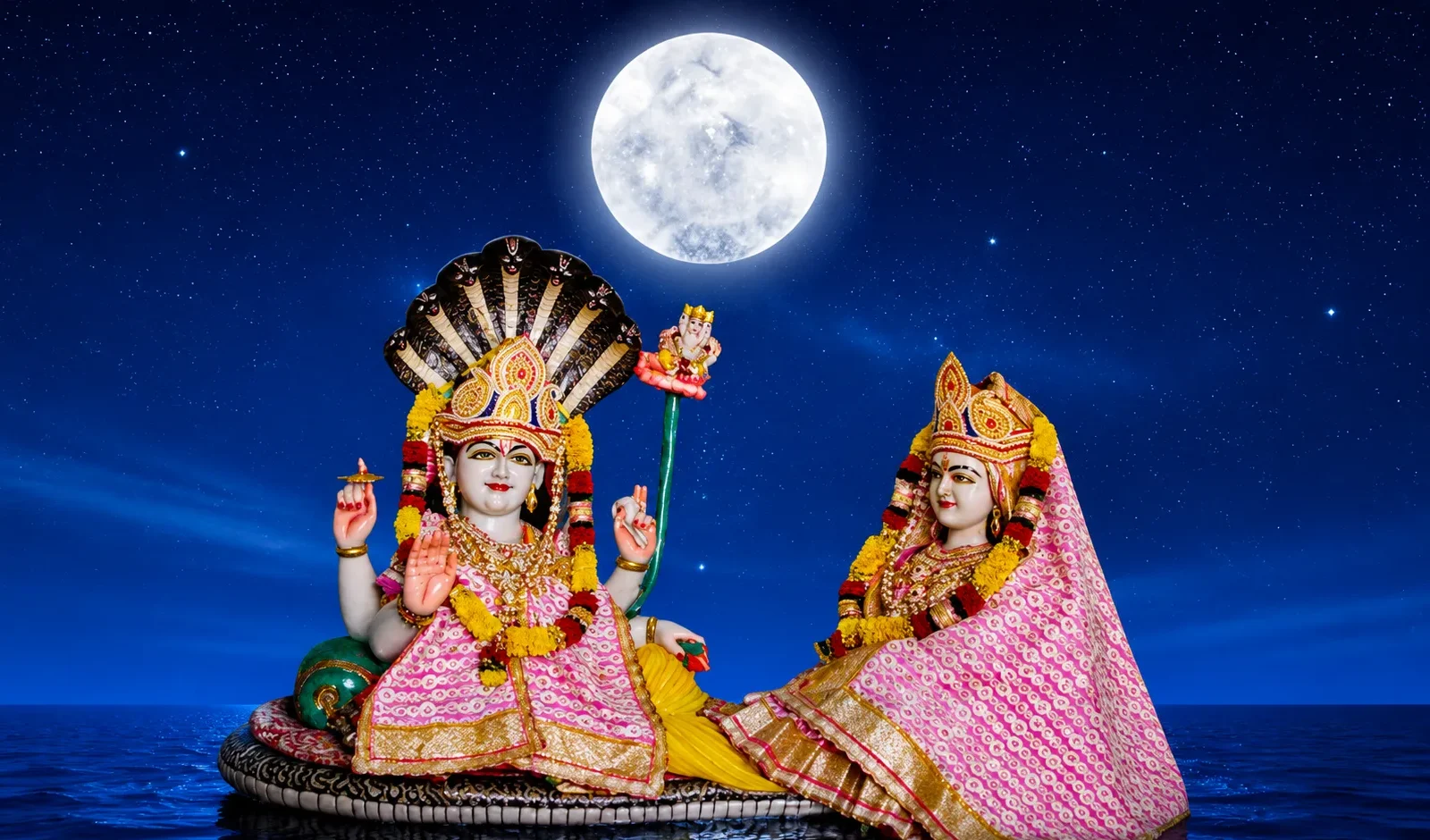
Jyeshtha Purnima 2026 falls on Monday, June 29, 2026. The Purnima Tithi begins at 03:06 AM on June 29 and ends at 05:26 AM on June 30. Moonrise is at 07:16 PM. Devotees observe fasting, perform Vishnu worship, and take holy baths. Married women observe Vat Purnima on this day. People also perform Satyanarayan Katha and offer charity. This day brings Lakshmi blessings, mental peace, and spiritual renewal.
Jyeshtha Purnima 2026 – Key Dates & Timings
- Date: Monday, June 29, 2026
- Tithi Begins: 03:06 AM, June 29, 2026
- Tithi Ends: 05:26 AM, June 30, 2026
- Moonrise (Purnima): 07:16 PM, June 29, 2026
- Hindu Month: Jyeshtha (Shukla Paksha)
- Associated Vrat: Vat Purnima / Satyanarayan Katha
- Deity: Lord Vishnu, Chandra Dev, Goddess Lakshmi
The full moon night holds a singular place in Sanatan Dharma. It is a night when the sky blazes with grace. The moon glows at its brightest, and cosmic energy flows freely. Jyeshtha Purnima falls in the month of Jyeshtha, the fifth month of the Hindu calendar.
On this day, faith meets the full moon in a beautiful way. Devotees fast, pray, and reflect deeply. The night invites every soul to look inward. It is a night of illumination, both outside and within.
What Is Jyeshtha Purnima?
Jyeshtha Purnima is the full moon day (Purnima Tithi) of the Jyeshtha lunar month. In the Hindu calendar, the lunar month ends on the full moon, not at midnight. Each month’s Purnima carries a distinct spiritual identity based on its nakshatra, ruling deity, and seasonal position. Jyeshtha Purnima falls when the moon occupies the Jyeshtha nakshatra or its surrounding zone near the end of Shukla Paksha.
Why Jyeshtha Purnima is so Important?
The Jyeshtha month aligns with the peak of the northern hemisphere’s heat cycle (Grishma Ritu). Ancient Ayurvedic texts note that Pitta dosha dominates this season. Fasting, holy bathing, and charitable acts on this Purnima were prescribed as direct antidotes to Pitta accumulation – spiritual and physiological at once.
The Importance of Purnima in Sanatan Dharma rests on a precise astronomical logic. The moon at full phase exerts its maximum gravitational pull on the earth’s water bodies. Hindu scripture holds that this same pull acts on the fluid systems of the human body and the emotional mind. Purnima is therefore treated as a day when both purification and disturbance are amplified equally. Ritual discipline on this day channels that amplification toward the former.
Jyeshtha Purnima Significance: Scriptural and Spiritual Roots
The Jyeshtha Purnima significance is documented in three main sources: the Skanda Purana, the Narada Purana, and the Dharmasindhu – a 18th-century digest of Hindu ritual law byKashiraj Pandit. Each source addresses this Purnima from a different angle.
What does the Skanda Purana Say about Jyeshtha Purnima?
The Skanda Purana prescribes snan (ritual bathing) at a sacred river or tirtha on every Purnima. It specifically names Jyeshtha Purnima as a day when charitable acts (daan) yield a hundred-fold return in punya. The text frames this not as metaphor but as a karmic transaction with quantifiable weight.
What does the Narada Purana Say about Jyeshtha Purnima?
The Narada Purana dedicates verses to the Satyanarayan Katha on Purnima. It states that Lord Vishnu, worshipped as Satyanarayan on this day, fulfills the sincere wishes of householders. The Katha was originally prescribed for Purnima – not for any other lunar phase. This makes Jyeshtha Purnima one of the most powerful days for Satyanarayan puja in the entire year.
What is the Role of Chandra Dev in Jyeshtha Purnima?
In Hinduism, the spiritual importance of the full moon is connected to Chandra Dev, the moon god. In Vedic cosmology, Chandra governs the mind (manas), emotional memory, and the nourishing quality in food and water.
The Atharva Veda includes hymns to Chandra for mental healing. Worshipping Chandra on Purnima is considered the most direct method of calming an agitated mind. On Jyeshtha Purnima, when the moon is at its most visible and itsgravitational influence greatest, this worship holds maximum efficacy.
Jyeshtha Purnima Puja Vidhi: What to Do and When
The Jyeshtha Purnima puja vidhi follows a time-sequenced structure across three phases of the day. Each phase has a specific purpose and cannot substitute for another. The sequence below is drawn from standard Dharmashastra guidelines for Purnima observance.
Phase 1: Brahma Muhurta (Before Sunrise)
Wake during Brahma Muhurta, the 48-minute window before sunrise. Take the ritual bath (Purnima Snan) adding Ganga jal, sesame seeds (til), and tulsi leaves to the water. Each ingredient carries a specific purification role: Ganga jal for spiritual cleansing, til for ancestral merit, tulsi for Vishnu’s grace. Recite the Apo Hi Shtha hymn from the Rigveda during the bath if possible. Wear clean white or yellow clothes after bathing.
Phase 2: Morning Puja (Post-Sunrise)
Set up the altar with an image or idol of Lord Vishnu and Goddess Lakshmi on a yellow cloth. Offer Panchamrit (milk, curd, honey, sugar, ghee) as abhishek to the deity. Follow with white flowers (jasmine or mogra), sandalwood paste (chandan), and a ghee diya. Recite the Vishnu Sahasranama or the Purusha Sukta from the Rigveda. This morning puja constitutes the primary act of Lord Vishnu worship on Jyeshtha Purnima.
Jyeshtha Purnima Chandra Mantra
ॐ श्रां श्रीं श्रौं सः चन्द्रमसे नमः
Om Shraam Shreem Shraum Sah Chandramasay Namah
Beej mantra of Chandra Dev from the Graha Stotras. Chant 108 times at moonrise (07:16 PM on June 29). The three beej syllables (Shraam, Shreem, Shraum) activate the three gunas of the moon: sattva, clarity, and nourishment.
Phase 3: Evening Moon Worship (07:16 PM Onward)
Stand facing the full moon after moonrise at 07:16 PM. Offer Arghya: fill a copper vessel with water, milk, white flowers, and akshat (unbroken rice). Pour the Arghya in a thin stream toward the moon while chanting the Chandra Mantra. This act is called Jyeshtha Purnima moon worship and completes the day’s ritual cycle. Break the fast only after offering Arghya and receiving the moon’s light consciously.
Items Required for Jyeshtha Purnima Puja Vidhi
- Copper vessel (for Arghya), ghee diya, incense (sandalwood)
- Panchamrit: milk, curd, honey, sugar, ghee in separate containers
- White flowers: jasmine (mogra), champa, or white hibiscus
- Tulsi leaves, Ganga jal, sesame seeds (til), akshat (unbroken rice)
- Sandalwood paste (chandan), kumkum, yellow or white cloth for altar
- Coconut, fruits, and grains for daan – prepared separately, not mixed with puja items
What are Jyeshtha Purnima Fasting Rules? The Complete Guide
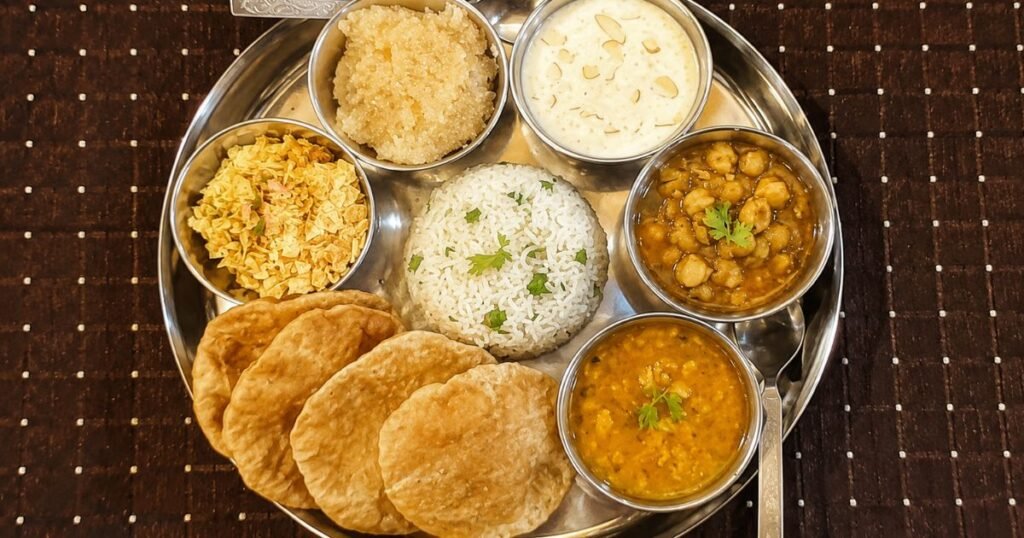
Jyeshtha Purnima fasting rules differ by tradition, regional practice, and physical capacity. The Dharmasindhu recognizes three valid forms of the Jyeshtha Purnima vrat. Each carries its own scriptural basis and breaks at a specific time.
1. Nirjala Vrat (No Food, No Water)
The strictest form. The devotee consumes nothing from sunrise until moonrise at 07:16 PM. This vrat is mentioned in the Brahma Purana as the highest-merit form of Purnima fasting. It is typically observed by seasoned practitioners and those fulfilling a specific vow (sankalpa). Breaking this fast before moonrise nullifies the vrat’s merit entirely.
2. Phalahar Vrat (Fruit and Dairy Only)
The most widely observed form across India today. Permitted items: fresh fruits, coconut water, milk, curd, rock salt (sendha namak), and nuts. Excluded items: all grains, pulses, onion, garlic, non-vegetarian food, and alcohol. The Phalahar vrat is considered complete and valid – not a compromise – by Dharmashastra standards.
3. Ekabhukta Vrat (One Sattvic Meal)
Alesser-known but valid third form: one simple sattvic meal eaten before sunset. No second meal is consumed that day. This form is prescribed for the elderly, those traveling, and those with health conditions. It fulfills the spirit of the vrat – restraint and surrender – without physical risk.
Health note:Nirjala vrat is strictly avoided during pregnancy, active illness, and for children under 16. The Dharmashastra itself states:sharira raksha is dharma – protecting the body is also a sacred duty. Choosing Phalahar or Ekabhukta is scripturally valid and equally sincere.
Vat Purnima: Why Married Women Observe This Vrat on Jyeshtha Purnima?
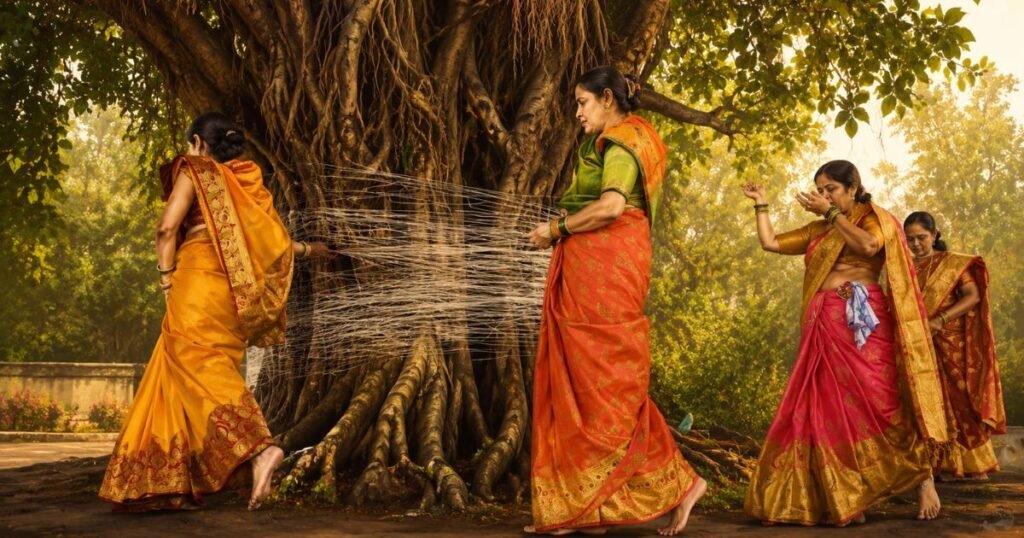
Vat Purnima significance is rooted in the Mahabharata’s Vana Parva, specifically the Savitri-Satyavan Akhyana (verses 293–299). This is not a folk story. It is an authentic episode cited by name in the Dharmasindhu as the textual basis for the Vat Purnima observance.
The Story of Savitri and Satyavan
Savitri was the daughter of King Ashwapati and chose Satyavan as her husband despite knowing he would die within a year. On the day of Satyavan’s predicted death, Yamraj came to take his soul. Savitri did not beg. She followed Yamraj and engaged him with four successive questions grounded in dharma.
Each question was so philosophically precise that Yamraj granted her a boon before the conversation ended. Her final boon: the birth of many children from Satyavan, a wish Yamraj could not grant without returning him to life. Thus, Satyavan lived.
The Vat (banyan) tree under which Satyavan rested before his death is the central sacred symbol. Married women tie red or yellow threads (sutras) around the Vat tree’s trunk.
They circle it 108 times or in multiples of seven, each circle representing a prayer for the husband’s longevity. The Vat Savitri and Jyeshtha Purnima connection makes this the most widely observed women’s vrat in Maharashtra, Gujarat, and coastal Karnataka.
Vat Purnima vs Savitri Vrat: Regional and Ritual Differences
The difference between Vat Purnima and Savitri Vrat is a common confusion. Both honor the same story. The calendar divergence is regional, not theological.
| Aspect | Vat Purnima | Savitri Vrat (Amavasya) |
| Lunar Phase | Full Moon (Purnima) | New Moon (Amavasya) |
| Primary Regions | Maharashtra, Gujarat, Karnataka | North India, West Bengal, Odisha |
| Scriptural Source | Dharmasindhu (18th century) | Skanda Purana, regional Nirnaya texts |
| Central Ritual | Threading the Vat (banyan) tree | Puja of Savitri and Satyavan idols |
| Deity Focus | Savitri, Satyavan, Vat tree | Savitri, Satyavan, Yamraj invoked |
Why the Difference Exists?
Different regional Panchang traditions interpreted the timing of Savitri’s vigil differently. Both are considered valid by their respective regional Dharmashastra authorities.
Benefits of Observing Jyeshtha Purnima: What the Scriptures Claim
The Jyeshtha Purnima benefits described in Hindu scriptures fall into three distinct categories: karmic (punya accrual), physiological (body and mind), and relational (household and community). Here is what each category actually means in practice.
1. Punya Accrual (Karmic Merit)
The Skanda Purana states daan on Jyeshtha Purnima yields a hundredfold punya return. This is the strongest daan multiplier ascribed to any single Purnima in the text.
2. Mental Stability
Chandra Dev governs manas (the emotional mind) in Vedic cosmology. Worship and fasting during peak lunar phase directly addresses Chandra’s influence on mood, anxiety, and sleep cycles.
3. Lakshmi’s Grace
Vishnu puja on Purnima invites Lakshmi’s presence by scriptural logic: where Vishnu is worshipped sincerely, Lakshmi abides. The Vishnu Purana names Purnima as Lakshmi’s preferred day of worship.
4. Pitta Balance
Ayurvedic texts prescribe cooling, sattvic food and ritual water offerings during Grishma Ritu (summer). Jyeshtha Purnima’s fasting and Arghya ritual align precisely with this seasonal prescription.
5. Marital Strength
Vat Purnima is unique among Hindu vrats in that it requires the husband’s conscious awareness of the wife’s observance. This shared intentionality strengthens the marital bond through joint spiritual effort.
6. Ancestral Merit (Pitru Punya)
Til (sesame seed) daan on Purnima is associated with Pitru Tarpan in some regional traditions. It generates merit for both the living devotee and their departed ancestors simultaneously.
Why Satyanarayan Katha is Ideal on Jyeshtha Purnima?
Satyanarayan Katha on Purnima is not a recent cultural practice. The Narada Purana records Lord Vishnu himself prescribing the Satyanarayan Vrat to the sage Narada – specifically recommending Purnima as the correct day to perform it. The Katha exists in five chapters (Panchadhyayi) within the Skanda Purana’s Revakhanda section.
The fifth chapter of the Katha is particularly significant: it narrates the consequences of abandoning the vrat midway. This serves a doctrinal purpose – the Katha teaches completion of vows (sankalpa siddhi) as its central lesson. Performing it on Jyeshtha Purnima aligns the vrat with the strongest punya day in this lunar cycle.
Vishnu Mantra for Jyeshtha Purnima
ॐ नमो भगवते वासुदेवाय
Om Namo Bhagavate Vasudevaya
The Dvadasakshari (twelve-syllable) Maha Mantra of Lord Vishnu, sourced from the Bhagavata Purana (Book 6, Chapter 8). Chant 108 times during the morning puja. Paired with the Chandra Mantra at moonrise, these two form the complete mantra cycle for Jyeshtha Purnima.
How to Observe Jyeshtha Purnima at Home? A Time-Specific Plan
How to celebrate Jyeshtha Purnima at home requires no temple visit and no priest. The home observance is fully valid by Dharmashastra standards when performed with a clear sankalpa (stated intention). This plan created by our scriptural experts uses the actual timings for June 29, 2026 in New Delhi as the reference frame.
- ~4:00 AM – Sankalpa and Snan. State your vrat intention (sankalpa) aloud: your name, gotra, the vrat name, and your wish. Take the Purnima Snan with Ganga jal and til in the water. This is the formal opening of the vrat – skipping the sankalpa makes the fast informal only.
- ~6:00 AM – Vishnu Puja. Offer Panchamrit, white flowers, chandan, and akshat to Lord Vishnu and Goddess Lakshmi. Recite the Vishnu Sahasranama or the Purusha Sukta. Light a ghee diya and let it burn through the morning.
- Morning to Afternoon – Scripture and Silence. Read one chapter of the Bhagavata Purana or recite the Satyanarayan Katha aloud. Avoid distraction, conflict, and unnecessary speech. This phase is about internal preparation, not additional ritual.
- ~5:00 PM – Satyanarayan Katha (Optional but Auspicious). Perform or listen to the five-chapter Satyanarayan Katha with family. Distribute prasad (sheera or panchamrit) to those present. This is the most merit-generating single act possible on this day.
- 07:16 PM – Arghya and Moon Darshan. Stand facing the full moon. Pour Arghya (water, milk, white flowers, akshat) toward the moon. Chant the Chandra Mantra 108 times. Receive the moonlight on your face and open palms. This is the Jyeshtha Purnima moon worship that formally completes the vrat.
- Post-Moonrise – Daan and Fast-Breaking. Donate before eating. Sesame seeds, white cloth, milk, or grain – any one will suffice. Break the fast with sattvic food: kheer, fruits, or simple rice and dal without onion or garlic. The daan precedes the meal – this sequence is specified in the Dharmashastra.
What is the Spiritual Meaning of Jyeshtha Purnima?
The Jyeshtha Purnima spiritual meaning comes from the convergence of three independent teachings that this day holds simultaneously.
Teaching 1: The Moon as Mirror
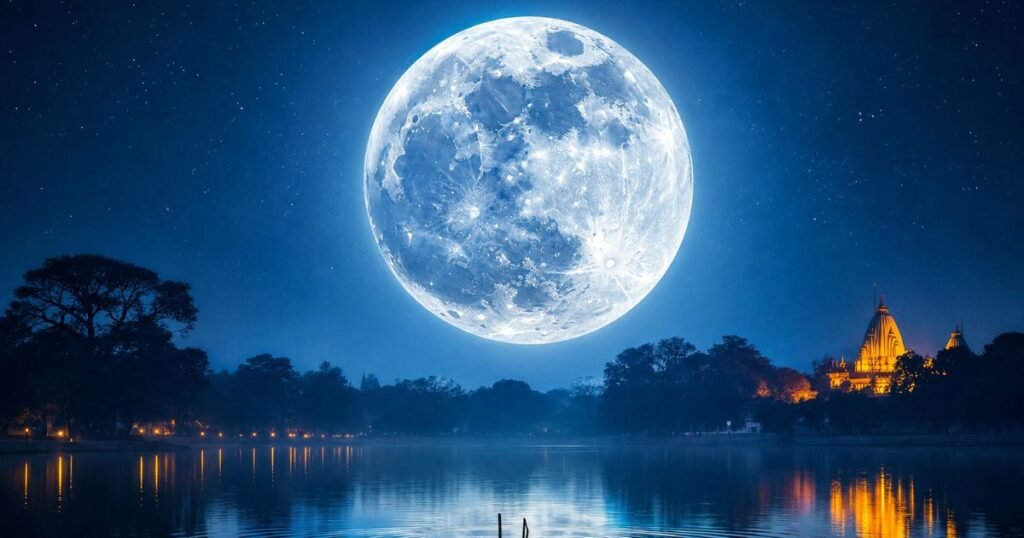
The moon generates no light of its own. It reflects the sun completely. In Advaita Vedanta, this is used as an analogy for the individual soul (jiva) in relation to Brahman (universal consciousness). The soul does not produce its own awareness – it reflects divine consciousness. On Purnima, the reflection is total. The Vedantic lesson: when the ego recedes fully, divine light shines unobstructed.
Teaching 2: The Logic of Restraint
Fasting on Purnima is not punitive. It operates on a principle from Yoga philosophy called tapas – the generation of inner heat through disciplined restraint. The Bhagavad Gita (Chapter 17, verse 14) defines bodily tapas as: cleanliness, uprightness, celibacy, and non-violence. Jyeshtha Purnima fasting enacts all four simultaneously for a defined period. The result is not merely hunger. It is a measurable shift in mental clarity and emotional steadiness.
Teaching 3: Daan as Structural Dharma
Jyeshtha Purnima daan importance goes beyond karmic arithmetic. The Dharmashastra describes daan as a structural obligation – not a generous impulse. Wealth held without redistribution accumulates what texts call adharmic samchayana – inauspicious accumulation. Purnima daan is a scheduled release of that accumulation, keeping the devotee’s relationship with prosperity clean and unobstructed.
The complete picture:Jyeshtha Purnima places three acts in sequence – restraint (fasting), offering (puja), and release (daan). These three mirror the Vedic concept of Yajna: receive, transform, and return. The festival is not a single act of devotion. It is a complete spiritual cycle compressed into one night.
May the light of Jyeshtha Purnima fill your heart and home.
On this sacred full moon night, may Lord Vishnu grant you peace and Goddess Lakshmi grant you abundance. May Chandra Dev calm your mind and illuminate your path. Observe this day with faith, and let its grace flow freely.
Frequently Asked Questions About Jyeshtha Purnima
1. Why is Jyeshtha Purnima important in Hinduism?
Jyeshtha Purnima is the full moon of the Jyeshtha month, the peak of summer in the Hindu calendar. Three major observances converge on this day: Vishnu-Lakshmi worship, the Satyanarayan Katha (prescribed by the Narada Purana for Purnima), and the Vat Purnima vrat rooted in the Mahabharata’s Savitri-Satyavan episode. The Skanda Purana prescribes charitable acts on this day as yielding the highest punya multiplier of any Purnima in the year.
2. When is Jyeshtha Purnima 2026?
Jyeshtha Purnima 2026 falls on Monday, June 29, 2026. Purnima Tithi begins at 03:06 AM on June 29 and ends at 05:26 AM on June 30. Moonrise on this Purnima is at 07:16 PM (New Delhi). This is the primary moment for Arghya offering and moon worship.
3. What are the fasting rules for Jyeshtha Purnima?
The Dharmasindhu recognizes three valid forms of the Jyeshtha Purnima vrat: Nirjala (no food or water, broken only after moonrise at 07:16 PM), Phalahar (fruits, milk, curd, coconut water, and rock salt permitted), and Ekabhukta (one sattvic meal before sunset, prescribed for the elderly and the unwell). All three are scripturally valid. Onion, garlic, grains, pulses, and non-vegetarian food are excluded in all three forms.
4. Why do married women observe Vat Purnima on this day?
Vat Purnima commemorates Savitri’s retrieval of her husband Satyavan’s life from Yamraj, as narrated in the Mahabharata’s Vana Parva (Savitri-Satyavan Akhyana, verses 293–299). Women tie sacred threads around a banyan (Vat) tree and circle it as a prayer for marital longevity. The Vat tree represents eternal life and unbreakable roots – chosen because Satyavan rested beneath it before his death. This vrat is observed on Jyeshtha Purnima in Maharashtra, Gujarat, and Karnataka.
5. What is the difference between Vat Purnima and Savitri Vrat?
Both vrats honor the same Mahabharata episode. The difference is regional and calendrical. Vat Purnima is observed on Jyeshtha Purnima (full moon) per the Dharmasindhu, followed in Maharashtra, Gujarat, and Karnataka. Savitri Vrat is observed on Jyeshtha Amavasya (new moon) per Skanda Purana and regional Nirnaya texts, followed in North India, West Bengal, and Odisha. The rituals differ slightly: Vat Purnima centers on the banyan tree; Savitri Vrat centers on idol worship of Savitri, Satyavan, and Yamraj.
6. What is the Jyeshtha Purnima vrat katha?
The primary Jyeshtha Purnima vrat katha is the Satyanarayan Katha, sourced from the Skanda Purana’s Revakhanda section in five chapters. Lord Vishnu, as Satyanarayan, narrates this story to the sage Narada and prescribes Purnima as the correct day for its recitation. The fifth chapter specifically teaches the consequences of abandoning a vow, making completion (sankalpa siddhi) the Katha’s central teaching.
7. What should I donate on Jyeshtha Purnima?
The Skanda Purana specifies sesame seeds (til), white cloth, milk, curd, and grain as the most auspicious forms of daan on Jyeshtha Purnima. Til daan carries dual benefit: it generates punya for the donor and is associated with Pitru (ancestral) merit in regional traditions. The Dharmashastra specifies that daan must precede the fast-breaking meal – not follow it – to count as a valid Purnima observance.
The journey does not end here. Follow MFC on Instagram and Facebook to explore more sacred places, festivals, and living traditions of Sanatan Dharma.
Sources & References – Festival date and timings verified from Drik Panchang (drikpanchang.com) – Jyeshtha meaning sourced from the Monier-Williams Sanskrit Dictionary and the Amarakosha – Brahma Muhurta definition from Ashtanga Hridayam, Sutrasthana Chapter 2 – Apo Hi Shtha purification hymn from the Rigveda (10.9.1-3) – Purusha Sukta from the Rigveda (10.90), used in Vishnu puja – Savitri and Satyavan story from the Mahabharata, Vana Parva, Adhyayas 293-299 – Bodily tapas (sharira tapas) defined in the Bhagavad Gita, Chapter 17, Verse 14 – Om Namo Bhagavate Vasudevaya sourced from the Bhagavata Purana, Skandha 6, Adhyaya 8 (Narayana Kavacham) – Chandra Beej Mantra from the Navagraha Graha Stotra tradition – Pitta dosha and Grishma Ritu from the Charaka Samhita, Sutrasthana Chapter 6, and the Ashtanga Hridayam, Sutrasthana Chapter 3 – Moon-as-mirror analogy in Advaita Vedanta from Vivekachudamani by Adi Shankaracharya (verses 243-249) – Satyanarayan Katha (five-chapter Panchadhyayi structure) from the Skanda Purana, Revakhanda – Panchamrit composition from the Grihyasutras and Agama texts – Sesame seed (til) daan and ancestral merit from the Yajnavalkya Smriti and regional Nibandha texts – Chandra’s governance of the mind (manas) from the Atharva Veda (7.81) and Vedic cosmology – Dharmasindhu authored by Kashinath Upadhyaya, composed in 1790 CE – Principles of daan, vrat sequencing, and sharira raksha drawn from the broader Dharmashastra tradition including the Manusmriti and the Mahabharata, Shanti Parva |