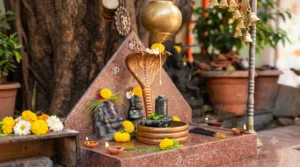

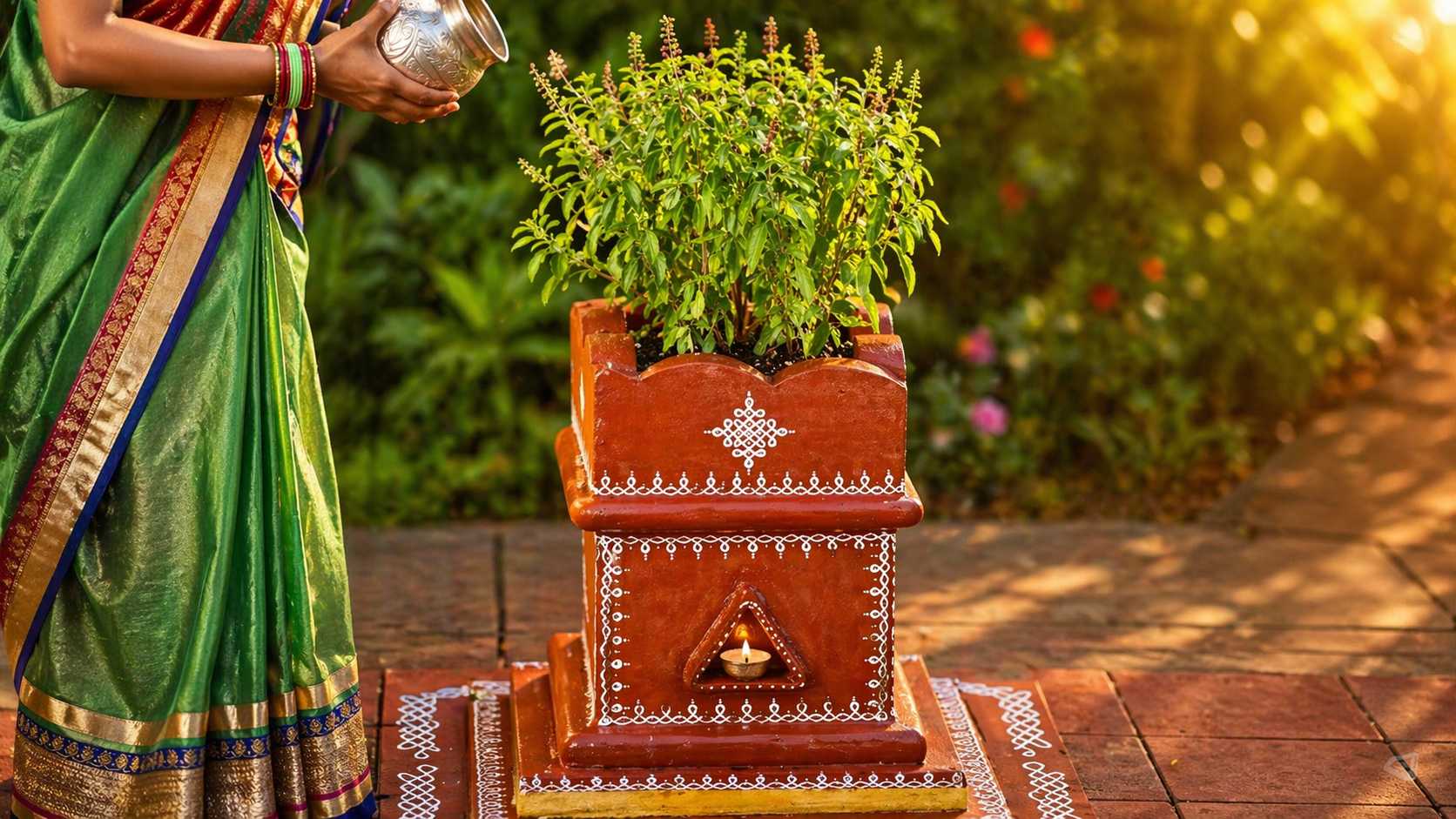
Tulsi is worshipped in Hindu homes because she is believed to be a form of Goddess Lakshmi and very dear to Lord Vishnu. People keep Tulsi at home for protection, peace, and positivity, and caring for the plant is seen as a simple daily act of devotion.
Every morning, in millions of Hindu homes, someone wakes before sunrise, steps into the courtyard, and lights a small diya. They fold their hands. They whisper a prayer. And at the center of this ritual stands not a stone murti, not a temple bell, but a simple green plant.
That plant is Tulsi. And for Hindus, she is not just a herb. She is a goddess, a healer, a protector, and a daily companion on the path to the Divine.
This blog answers every question you have ever had about the Tulsi plant in Hinduism, her story, her spiritual significance, her healing power, and the rituals that keep her sacred presence alive in every Hindu home.
Who Is Tulsi? The Goddess Behind the Plant
Tulsi is not simply worshiped as a plant. In Sanatan Dharma, she is worshipped as a manifestation of Maa Lakshmi, the divine consort of Bhagwaan Vishnu.
The Skanda Purana describes Tulsi as the most beloved of Lord Vishnu. The scripture states that wherever the Tulsi plant grows, that place becomes as sacred as a place of pilgrimage. Vishnu Himself is said to reside in every leaf.
Her name means “the incomparable one.” She is also called Vrinda, Vishnu Priya (beloved of Vishnu), and Haripriya. Each name reflects a dimension of her divine nature.
The Story of Tulsi: Vrinda and the Curse of the Gods
The origin of the Tulsi plant comes from a deeply moving story in the Devi Bhagavata Purana.
Vrinda was the devoted wife of the demon king Jalandhar. Her unwavering pativrata (devotion to her husband) made Jalandhar invincible. No god could defeat him as long as Vrinda’s dharma remained intact.
Lord Vishnu, at the request of the Devas, assumed the form of Jalandhar and broke Vrinda’s devotion through deception. When Vrinda realized the truth, she was overcome with grief and anger. She cursed Vishnu to become a stone, and that is why the Shaligram (a sacred stone) is always worshipped alongside Tulsi.
As Vrinda merged into the earth in grief, Vishnu, filled with devotion and remorse, declared that she would live forever as the Tulsi plant, eternally worshipped, eternally present in every home where He is remembered.
This is why Tulsi Vivah, the ceremonial marriage of Tulsi to Lord Vishnu, is celebrated every year on Kartik Ekadashi. It marks the moment Vrinda was united with the Divine she always belonged to.
What Do the Vedas and Scriptures Say About Tulsi?
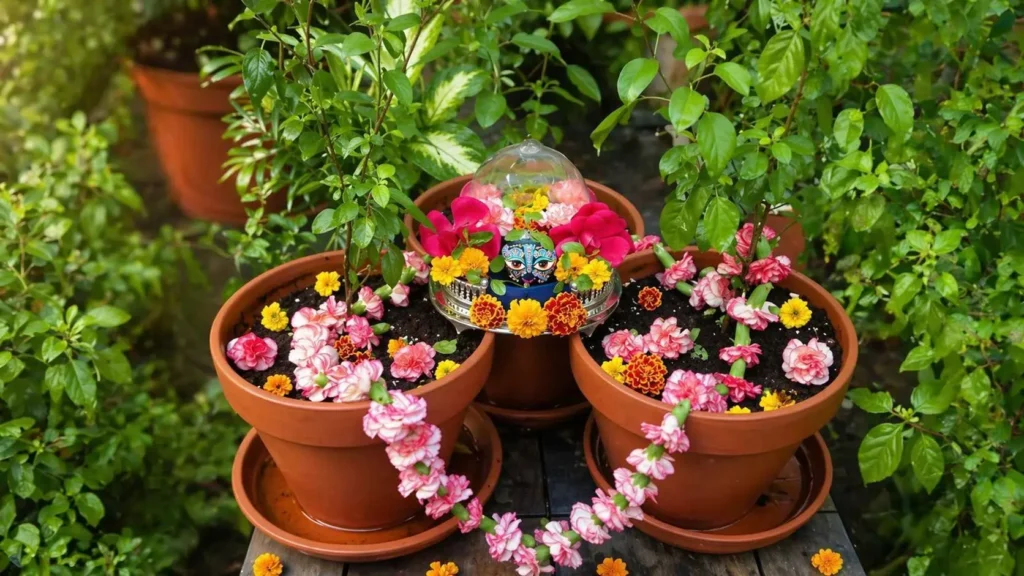
The Atharva Veda is among the earliest texts to mention Tulsi as a powerful medicinal and purifying herb. Ancient Vedic seers recognized her ability to purify the environment, the body, and the mind.
The Padma Purana contains a direct verse:
“Tulasyaa darshanam punyam, sparshanam paap naashanam”
Seeing Tulsi is meritorious; touching her destroys sin.
The Vishnu Purana declares that a person who offers even a single Tulsi leaf to Lord Vishnu attains liberation. This is also echoed in the Bhagavad Gita, Chapter 9, Verse 26, where Lord Krishna says He accepts an offering of a leaf, a flower, a fruit, or water, given with pure devotion.
पत्रं पुष्पं फलं तोयं यो मे भक्त्या प्रयच्छति।
तदहं भक्त्युपहृतम् अश्नामि प्रयतात्मनः॥
Patram pushpam phalam toyam yo me bhaktya prayacchati
Tad aham bhakty-upahritam ashnami prayatatmanah
Meaning: Lord Krishna says that He accepts even a leaf, flower, fruit, or water when offered with devotion.
Bhagavad Gita (9.26)
Why Is Tulsi Kept in Hindu Homes?
The Tulsi plant at home is not a decoration. It is a living altar. There are five core reasons Hindu families keep Tulsi:
- Spiritual protection: Tulsi drives away negative energy and creates a sattvic environment in the home.
- Divine presence: Her presence is believed to invite Lord Vishnu into the household, bringing peace and prosperity.
- Daily puja practice: Watering and offering aarti to Tulsi is considered equal to performing major religious rituals.
- Medicinal properties: Ayurveda recognizes Tulsi as an adaptogen that boosts immunity, reduces stress, and purifies the air.
- Ancestral memory: For many families, this practice is an unbroken thread connecting generations to their roots in Sanatan Dharma.
The Tulsi Vivah: The Sacred Marriage Ritual
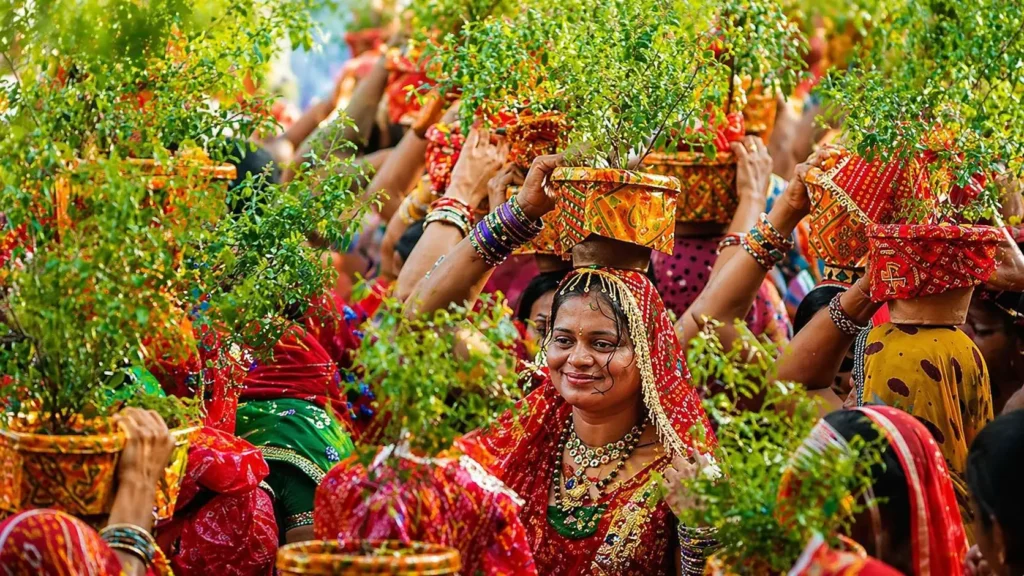
Every year, on the eleventh day of Kartik (Shukla Paksha), Hindu families celebrate Tulsi Vivah. This is the ceremonial marriage of the Tulsi plant to Lord Vishnu (often represented by a Shaligram or the idol of Lord Vishnu).
The ritual marks the end of the Chaturmas, the four-month period during which auspicious events like marriages are avoided. Once Tulsi Vivah is performed, the wedding season formally begins.
Families decorate the Tulsi plant like a bride, offer prasad, light diyas, sing bhajans, and perform a full aarti. It is one of the most joyful domestic rituals in the Hindu calendar.
Daily Tulsi Rituals: What Devotees Do and Why
The Tulsi worship ritual follows a rhythm that has remained largely unchanged for thousands of years.
Morning Ritual:
- Wake at sunrise and clean the area around the Tulsi plant.
- Water the plant, this act itself is considered a form of seva (devotional service).
- Light a diya and offer a stick of incense.
- Perform parikrama (circumambulation), walk around the Tulsi plant three or seven times.
- Chant: “Tulasi Shri Sakhi Hare, Keshav Keli Sadhane, Vandita Sharananata…”
What Not to Do:
- Do not pluck Tulsi leaves on Sundays, Ekadashi, during eclipse, or after sunset.
- Do not water the Tulsi plant at night.
- Never uproot a healthy Tulsi plant without prayer and reason.
These guidelines come from both scriptural tradition and practical wisdom. They ensure the practice remains intentional, not mechanical.
The Two Types of Tulsi: Rama Tulsi and Shyama Tulsi
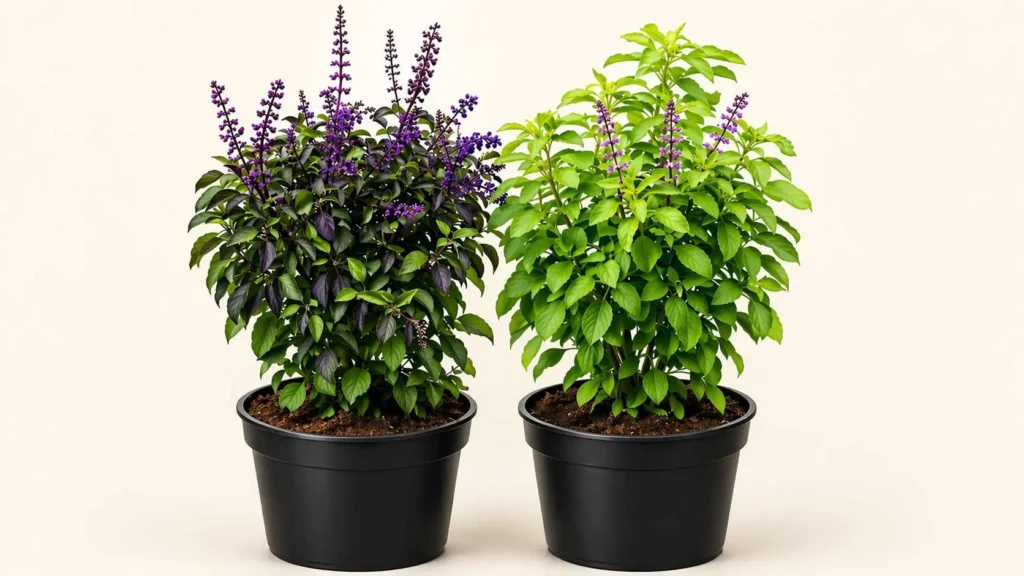
Not all Tulsi plants are the same. Hindu tradition recognizes two main varieties:
1. Rama Tulsi (Green Tulsi): Lighter green leaves, milder fragrance. Widely grown across India and considered sacred to Lord Rama.
2. Shyama Tulsi (Krishna Tulsi): Dark purple-green leaves with a stronger fragrance and more potent medicinal properties. Especially dear to Lord Krishna.
Both are equally revered. The choice often depends on regional tradition and family lineage.
Tulsi in Ayurveda: Bhakti Meets Healing
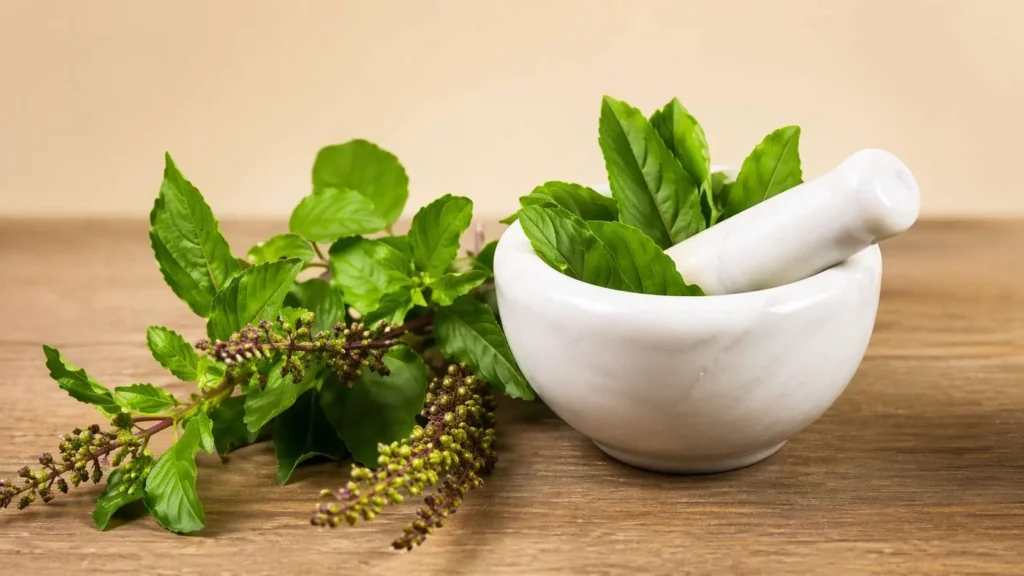
In Ayurveda, Tulsi (Ocimum sanctum) is classified as a Rasayana, a herb that promotes longevity, immunity, and vitality. Modern science backs many of these claims. Tulsi leaves contain:
- Eugenol: a natural anti-inflammatory compound
- Rosmarinic acid: an antioxidant with anti-stress properties
- Ursolic acid: linked to antimicrobial activity
Many families use Tulsi leaves in kadha (herbal decoctions) during seasonal changes. This practice of using Tulsi for immunity and respiratory health has roots going back to the Charaka Samhita.
To explore how devotion and daily living intertwine in Sanatan Dharma, read our guide on Bhakti Yoga and the Path of Devotion.
The Eternal bond Between Tulsi and Bhagwaan Vishnu
No offering to Bhagwaan Vishnu is considered complete without a Tulsi leaf. The Skanda Purana states that He does not accept any food, flower, or worship if Tulsi is absent.
During Vaishnava rituals, a Tulsi garland (Tulsi mala) is placed around the neck of the Vishnu murti. Devotees also wear Tulsi malas as a mark of devotion and protection.
The Padma Purana says: those who wear a Tulsi mala are never touched by Yama (the god of death) with fear. Their karma is purified through each bead they touch.
To learn more about karma and its deeper meaning, visit our blog on Karma and Karma Yoga Explained.
Where to Place the Tulsi Plant at Home?
Vastu Shastra recommends placing the Tulsi plant in the north, northeast, or east direction of the home. This ensures maximum sunlight for the plant and aligns with the flow of positive energy in the living space.
The plant is traditionally kept in a Tulsi Chaura, an elevated square or octagonal platform often made of clay or stone, decorated with religious symbols.
The Tulsi Chaura becomes the focal point of the home’s daily puja and aarti. It is not just functional, it is an architectural expression of faith.
Frequently Asked Questions (FAQs)
1. Why is Tulsi considered sacred in Hinduism?
Tulsi is sacred because Hindu scriptures identify her as a form of Goddess Lakshmi and dear to Lord Vishnu. The Skanda Purana states that Vishnu resides in every Tulsi leaf. This belief makes Tulsi a symbol of purity, protection, and spiritual merit in Hindu homes.
2. Can we touch Tulsi every day?
Yes, you can touch Tulsi daily as part of devotion. Watering, touching leaves, and performing parikrama are considered sacred acts. The Padma Purana states that seeing Tulsi brings merit and touching her removes sin. Avoid plucking leaves on Sundays, Ekadashi, and eclipse days.
3. What is Tulsi Vivah and when is it celebrated?
Tulsi Vivah is the symbolic marriage of Tulsi with Lord Vishnu. It is celebrated on Kartik Ekadashi, usually in October or November. This ritual marks the end of Chaturmas and the beginning of the Hindu wedding season.
4. Which direction is best for placing Tulsi at home?
The best directions for placing Tulsi are north, northeast, or east. Vastu Shastra recommends these directions for positive energy and proper sunlight. Place Tulsi on a raised platform called a Tulsi Chaura, not directly on the ground.
5. What are Tulsi’s health benefits according to Ayurveda?
Tulsi supports immunity, reduces stress, and improves respiratory health. The Charaka Samhita classifies Tulsi as a Rasayana, which promotes vitality and longevity. Tulsi contains compounds like eugenol and rosmarinic acid that support overall wellness.
The journey does not end here. Follow MFC on Instagram and Facebook to explore more sacred places, festivals, and living traditions of Sanatan Dharma.