
If you have ever searched for a complete list of 52 Shakti Peeth with locations, you already know how scattered the information is. Some sources say 51, others say 52, a few mention 64 or even 108. And when you finally find a list, it is either incomplete, missing details, skipping the Bhairava names, or not telling you why that particular Shakti Peeth matters.
This blog is different. This is the only resource you need.
Here, you will find every single Shakti Peeth: its name, location, the body part of Goddess Sati associated with it, the presiding Shakti goddess, the Bhairava guardian, the spiritual significance, who should visit it, and when is the best time to go.
Whether you are a devotee planning a Shakti Peeth yatra, a student researching Hindu history, or someone simply curious about the significance of 52 Shakti Peeths: this guide answers everything.
Let us begin from the very beginning.
What is a Shakti Peeth? (Meaning, Origin, and Spiritual Importance)
A Shakti Peeth (शक्ति पीठ) literally means “seat of power.” These are sacred temples dedicated to Maa Shakti – the supreme divine feminine energy and primordial goddess in Hinduism. And these peeths are considered the most powerful centres of her presence on Earth.
Unlike ordinary temples, each Shakti Peeth location marks a cosmic event: a specific part of Goddess Sati’s body is said to have fallen there, infusing that ground with extraordinary divine energy. Every Shakti Peeth enshrines both a form of Shakti and her eternal companion, Lord Bhairava (a fierce manifestation of Lord Shiva), who stands guard.
The Origin Story: Devi Sati, Daksha, and the Birth of the Shakti Peeths
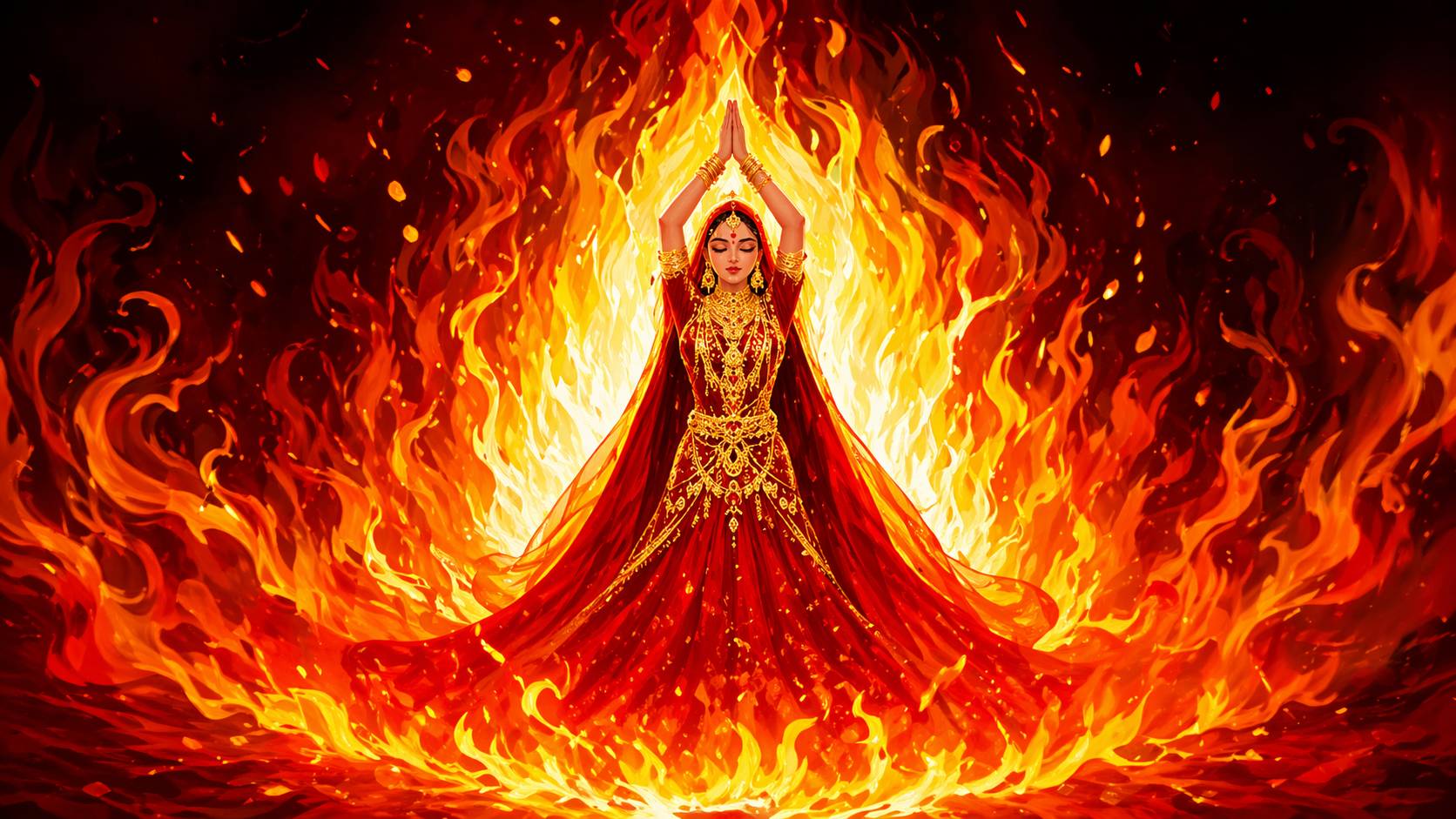
In the Satya Yuga, there was a powerful king named Daksha Prajapati, who was the son of Lord Brahma. His daughter, Devi Sati, was a fierce devotee of Lord Shiva. Despite her father’s deep disapproval, Sati married Shiva, the ascetic god, the wanderer, the destroyer.
Daksha could never accept Lord Shiva as his son-in-law. His arrogance and pride blinded him. One day, Daksha organized a grand yajna (sacred fire ritual) and invited every god, sage, and king in the universe, but deliberately excluded both Lord Shiva and Devi Sati.
Devi Sati, hurt and determined to confront her father, insisted on attending the yajna. Lord Shiva tried to stop her, knowing nothing good would come of it. But Devi Sati went.
At the yajna, Daksha publicly humiliated Lord Shiva, calling him unworthy, uncivilized, a wandering ascetic unfit for any respect. Sati could not endure the insult. In an act of supreme sacrifice, and to make a statement that could not be ignored, she immolated herself in the sacred yajna fire.
Birth of the Shakti Peeths
When Lord Shiva learned of Devi Sati’s death, his grief turned into cosmic fury. He lifted her body, placed it on his shoulder, and began Tandava, his dance of destruction. As Lord Shiva danced in devastating grief, the universe trembled. The balance of creation and destruction was on the edge of collapse.
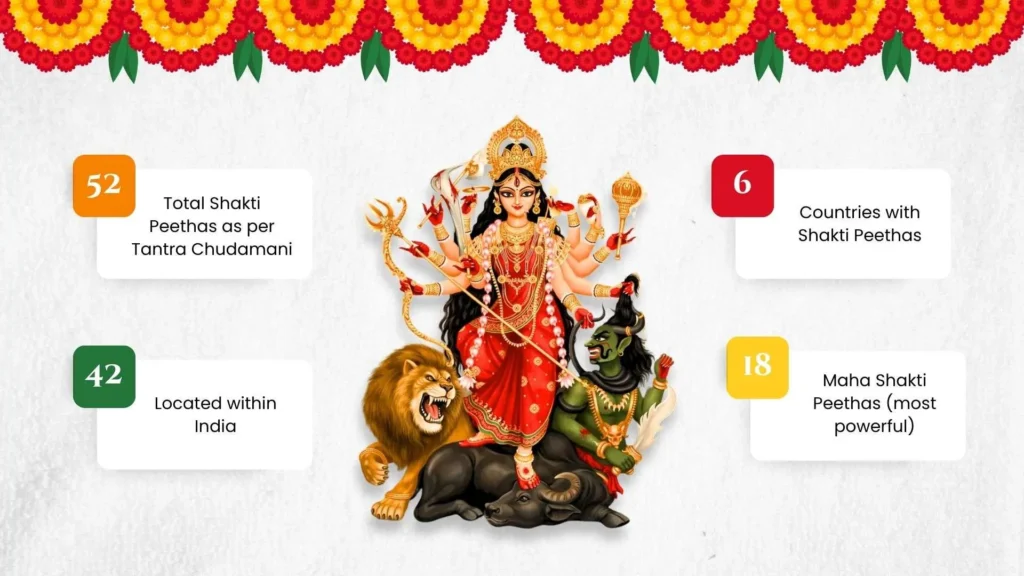
The other gods, terrified, prayed to Lord Vishnu for intervention. To calm Lord Shiva and restore cosmic order, Lord Vishnu released his Sudarshan Chakra, the divine spinning discus which cut Devi Sati’s body into 52 pieces as Lord Shiva carried her. Each piece fell to earth at a different location. Those sacred spots became the 52 Shakti Peeths.
At each Peeth, Lord Shiva manifested as Bhairava: his fierce, protective form, to guard the divine energy that had fallen there. This is why every Shakti Peeth has both a Shakti (goddess) and a Bhairava (Shiva’s manifestation) worshiped together.
Why Are the Numbers Different: 51, 52, or 108?
This is one of the most common questions: how many Shakti Peeths are there? The answer depends on the scripture:
| Scriptures | No. of Shakti Peeths |
| Devi Bhagavata Purana and Shiv Charitra | 51 Shakti Peeths |
| Tantra Chudamani and Markandeya Purana | 52 Shakti Peeths |
| Kalikapurana | 26 Shakt Peeths |
| Bhagavata (including ornaments and garments) | 108 Shakti Peeths |
The number 52 comes from Mahapithapurana (composed c. 1690–1720 CE) and is also the count referenced in Tantra Chudamani. The number 51 corresponds to the 51 letters of the Sanskrit alphabet, each body part representing a syllable of the cosmic mantra. Both counts are scripturally valid.
For this guide, we follow the 52 Shakti Peeths tradition.
The Spiritual Architecture of a Shakti Peeth
Every Shakti Peeth has a specific spiritual structure:
| Shakti | The presiding goddess at that location, always a manifestation of Maa Sati. |
| Bhairava | The presiding form of Shiva, who acts as guardian, consort, and protector of that energy |
| Body part | The specific part of Sati’s divine body that fell at that spot, determining the nature of blessings the Peeth grants |
| Unique energy | Each Peeth vibrates with a specific quality of Shakti (healing, protection, prosperity, liberation, fertility, wisdom) |
Among all the Peeths, four are considered Adi Shakti Peeths or the most sacred:
- Kamakhya (Assam)
- Vimala (Puri)
- Kalighat (Kolkata)
- Tara Tarini (Odisha)
Eighteen of the 52 are classified as Maha Shakti Peeths – the major seats of power, mentioned specifically in Adi Shankaracharya’s Ashtadasha Shakti Pitha Stotram.
Complete List of 52 Shakti Peeths: Name, Location, Body Part, Shakti & Bhairava
This is the complete 52 Shakti Peeth name and place list available, combining information from Tantra Chudamani, Devi Bhagavata Purana, and Mahapithapurana.
| Temple / Peeth Name | Location | Body Part of Sati | Presiding Shakti & Bhairava | |
| Northeast India | ||||
| 1 | Kamakhya Temple (MAHA PEETH) | Nilachal Hills, GuwahatiAssam | Yoni (Womb) | Kamakhya DeviBhairava: Umanandeshwar |
| 2 | Jayanti Durga Temple | Nartiang, Jaintia HillsMeghalaya | Left thigh | Jayanti DeviBhairava: Kramadishwar |
| East India – West Bengal (12 Peethas) | ||||
| 3 | Kalighat Kali Temple (ADI PEETH) | Kalighat, KolkataWest Bengal | Right toes | Kali DeviBhairava: Nakuleshwar |
| 4 | Attahas Temple | Labhpur, BirbhumWest Bengal | Lower lip | Phullara DeviBhairava: Vishweshwar |
| 5 | Bahula Temple | Ketugram, Purba BardhamanWest Bengal | Left arm | Bahula DeviBhairava: Bhirukeshwar |
| 6 | Bakreshwar Temple | Suri, BirbhumWest Bengal | Between the eyebrows | Mahishamardini DeviBhairava: Vakranatheshwar |
| 7 | Kankalitala Temple | Bolpur, BirbhumWest Bengal | Waist / hip bone | Devgarbha DeviBhairava: Rurunatheshwar |
| 8 | Nandikeshwari Temple | Sainthia, BirbhumWest Bengal | Necklace (throat ornament) | Nandini DeviBhairava: Nandikeshwar |
| 9 | Kiriteswari Temple | MurshidabadWest Bengal | Crown of the head | Kiriteshwari DeviBhairava: Sanvarteshwar |
| 10 | Ratnavali Temple | HooghlyWest Bengal | Right shoulder | Kumari DeviBhairava: Ghanteshwar |
| 11 | Bhramari Devi Temple | Trisrota, JalpaiguriWest Bengal | Left leg | Bhramari DeviBhairava: Ambareshwar |
| 12 | Vibhash / Bargabhima Temple | Tamluk, Purba MedinipurWest Bengal | Left ankle | Kapalini / Bargabhima DeviBhairava: Sarvanandeshwar |
| 13 | Nalhateswari Temple | Nalhati, BirbhumWest Bengal | Throat / vocal cord | Kalika DeviBhairava: Jogeshwar |
| 14 | Shrinkala Temple | Pandua, HooghlyWest Bengal | Part of the torso | Shrinkhala DeviBhairava: Srinkhala Bhairava |
| 15 | Ujaani Shakta Pitha | Ujaani, Purba BardhamanWest Bengal | Right wrist | Mangal Chandika DeviBhairava: Kapilambareshwar |
| 16 | Jogadya Temple | Khirgram, BurdwanWest Bengal | Right big toe | Jogadya DeviBhairava: Ksheerkantakeshwar |
| East India – Odisha, Jharkhand, Bihar | ||||
| 17 | Vimala Temple(ADI PEETH) | Jagannath Temple complex, PuriOdisha | Navel / feet | Vimala DeviBhairava: Jagannatheshwar |
| 18 | Tara Tarini TempleADI PEETH | Purushottampur, GanjamOdisha | Breasts | Tara Tarini DeviBhairava: Tumbeshwar |
| 19 | Biraja Temple(MAHA PEETH) | Jajpur, Jajpur DistrictOdisha | Navel / abdomen | Biraja / Viraja DeviBhairava: Varaheshwar |
| 20 | Baidyanath Dham(MAHA PEETH) | Deoghar, Santhal ParganaJharkhand | Heart | Jayadurga DeviBhairava: Vaidyanath |
| 21 | Mangla Gauri Temple | Gaya, near Bodh GayaBihar | Breasts | Sarvamangala DeviBhairava: Krodha Bhairava |
| 22 | Ugratara Asthan Temple | Saharsa, Koshi RegionBihar | Left eye | Ugratara (Goddess Tara)Bhairava: Ugra Bhairava |
| Northeast India – Tripura | ||||
| 23 | Tripura Sundari Temple (MAHA PEETH) | Udaipur, Gomati DistrictTripura | Right leg (big toe) | Tripura Sundari / Soroshi MaBhairava: Kameshwar |
| North India – Himachal Pradesh & Punjab | ||||
| 24 | Jwalamukhi Temple (MAHA PEETH) | Jwalamukhi, KangraHimachal Pradesh | Tongue | Jwalamukhi / SiddhidaBhairava: Unmatta Bhairaveshwar |
| 25 | Naina Devi Temple (MAHA PEETH) | Naina Devi Hill, BilaspurHimachal Pradesh | Right eye | Mahishamardini / Naina DeviBhairava: Krodhishwar |
| 26 | Bajreshwari Mata Temple (MAHA PEETH) | Kangra town, KangraHimachal Pradesh | Left breast | Vajreshwari DeviBhairava: Abhirunatheshwar |
| 27 | Devi Talab Mandir (Tripuramalini) | Devi Talab, JalandharPunjab | Right breast | Tripuramalini DeviBhairava: Bhishaneshwar |
| North India – Uttar Pradesh, Uttarakhand & Rajasthan | ||||
| 28 | Katyayini Shakti Pitha | Vrindavan, MathuraUttar Pradesh | Ringlets / tresses of hair | Katyayini DeviBhairava: Bhuteshwar |
| 29 | Alopi Devi Mandir | Alopi Bagh, PrayagrajUttar Pradesh | Finger (last body part “vanished”) | Alopi Devi / MadhaveshwariBhairava: Bhaveshwar |
| 30 | Vishalakshi Temple (MAHA PEETH) | Manikarnika Ghat, VaranasiUttar Pradesh | Earring (Manikarnika) | Vishalakshi DeviBhairava: Kala Bhairaveshwar |
| 31 | Devi Paatan Mandir | Tulsipur, BalrampurUttar Pradesh | Left shoulder | Patna Devi / Paatan DeviBhairava: Vanshkhand |
| 32 | Panchsagar Temple | ChampawatUttarakhand | Lower teeth | Varahi DeviBhairava: Maharudra |
| 33 | Manibandh Temple | Pushkar, AjmerRajasthan | Wrists | Gayatri DeviBhairava: Sarvanandeshwar |
| 34 | Ambika Shakti Pitha | BharatpurRajasthan | Fingers of left leg | Ambika DeviBhairava: Amritaksheshwar |
| Central India – Madhya Pradesh & Chhattisgarh | ||||
| 35 | Ramgiri / Sharda Temple | Chitrakoot, SatnaMadhya Pradesh | Right breast | Shivani / Sharada DeviBhairava: Chand Bhairav |
| 36 | Avanti / Har Siddhi Temple (MAHA PEETH) | Bhairavparvat, UjjainMadhya Pradesh | Elbow | Avanti / Mahakali DeviBhairava: Lambkarneshwar |
| 37 | Narmada Pitha | Amarkantak, AnuppurMadhya Pradesh | Right buttock / hip | Narmada DeviBhairava: Bhadraseneshwar |
| 38 | Maa Sharda Mandir (Maihar) | Maihar, SatnaMadhya Pradesh | Necklace | Sharada DeviBhairava: Chandeshwar |
| 39 | Danteshwari Temple (MAHA PEETH) | Dantewada, Bastar RegionChhattisgarh | Tooth (Dant = tooth) | Danteshwari DeviBhairava: Kapala Bhairava |
| West India – Gujarat & Maharashtra | ||||
| 40 | Arasuri Ambaji Shakta Pitha (MAHA PEETH) | Gabbar Hill, Ambaji, BanaskanthaGujarat | Heart | Amba Devi (Arasuri Amba)Bhairava: Batuka Bhairava |
| 41 | Chandrabhaga Pitha | Triveni Sangam, near Somnath, VeravalGujarat | Stomach | Chandrabhaga DeviBhairava: Vakratundeshwar |
| 42 | Mahalakshmi Temple, Kolhapur (MAHA PEETH) | KolhapurMaharashtra | Eyes | Mahalakshmi / Ambabai DeviBhairava: Chandraghanta Bhairava |
| 43 | Renuka / Ekavira Temple | Mahur, NandedMaharashtra | Left hand | Renuka DeviBhairava: Krodhish |
| 54 | Saptashrugi Temple | Vani, NashikMaharashtra | Right arm | Saptashrungi / Bhadrakali DeviBhairava: Vikritaksheshwar |
| South India – Andhra Pradesh, Telangana, Karnataka & Tamil Nadu | ||||
| 45 | Kanya Kumari Temple (MAHA PEETH) | Kanyakumari, Cape ComorinTamil Nadu | Back / spine | Kanyakumari DeviBhairava: Nimisheshwar |
| 46 | Narayani Temple(Suchindrm) | Suchindram, KanyakumariTamil Nadu | Upper teeth | Narayani DeviBhairava: Sihareshwar |
| 47 | Kamakshi Amman Temple (MAHA PEETH) | KanchipuramTamil Nadu | Navel | Kamakshi DeviBhairava: Ekambareshwar |
| 48 | Bhramaramba Temple (Srisailam) (MAHA PEETH) | Srisailam, NandyalAndhra Pradesh | Neck | Bhramarambika DeviBhairava: Mallikarjuna |
| 49 | Manikyamba Temple | Draksharamam, KakinadaAndhra Pradesh | Left cheek | Manikyamba DeviBhairava: Bheemeshwar |
| 50 | Puruhutika Temple | Pithapuram, East GodavariAndhra Pradesh | Hip / dorsal region | Puruhutika DeviBhairava: Durvaseshwar |
| 51 | Jogulamba Devi Temple (MAHA PEETH) | Alampur, Jogulamba-GadwalTelangana | Upper teeth | Jogulamba DeviBhairava: Bala Brahmeswara |
| 52 | Chamundeshw-ari Temple (MAHA PEETH) | Chamundi Hills, MysuruKarnataka | Hair | Chamundeshwari DeviBhairava: Kapaleeshwara |
Shakti Peethas Outside India
One of the most remarkable aspects of the 52 Shakti Peeth significance is that these holy sites are not confined to India alone. Approximately 10 of the 52 Shakti Peethas are located in neighbouring countries – a testament to how the divine feminine energy transcended political borders. Here are all the Shakti Peethas outside India:
| Temple/ Peeth Name | Location | Body part: | Presiding deity | |
| 1 | Hinglaj Mata Temple | Lasbela, Balochistan (Pakistan) | Brahmarandha (top of head). | Kotri (Bhairavi). |
| 2 | Sharkarre / Karveer Pitha | Near Sukkur, Sindh (Pakistan) | Eye | Mahishasurmardini |
| 3 | Sugandha Temple | Shikarpur, Barisal (Bangladesh) | Nose | Sugandha |
| 4 | Jashoreshwari Temple | Ishwaripur, Satkhira (Bangladesh) | Palms and soles | Jashoreshwari |
| 5 | Guhyeshwari Temple | Kathmandu (near Pashupatinath) (Nepal) | Both knees | Mahamaya |
| 6 | Gandaki / Tridevisthan | Muktinath, Mustang(Nepal) | Right cheek | Gandaki Chandi |
| 7 | Shankari Devi / Nagapooshani | Nainativu Island, Jaffna(Sri Lanka) | Groin / anklet | Indrakshi |
| 8 | Mahamaya Shakti Peeth | Near Mansarovar / Kailash region(Tibet) | Right palm | Mahamaya |
Significance of Shakti Peeths – Who Should Visit and Why
Every Shakti Peeth channels a specific form of divine energy. Knowing which Shakti Peeth to visit for which purpose can transform a pilgrimage from a tour into a life-changing spiritual experience.
1. Kamakhya Devi, Guwahati, Assam

Body Part: Yoni (Womb): the source of all creation
Kamakhya is the supreme Shakti Peeth, the most powerful of all. There is no idol inside the sanctum, only a natural rock formation and a spring. Once a year during Ambubachi Mela, the spring runs red, symbolizing the goddess’s menstruation. The earth itself is believed to be fertile and alive here.
Who should visit: Those seeking fertility and blessings for pregnancy. Couples struggling with conception. Anyone undergoing a major life transformation, recovery from addiction, illness, trauma, or grief.
Best time to visit: Ambubachi Mela in June (3 days) is the single most powerful window. Navratri in October is the second most auspicious. Early morning darshan between 5 AM and 8 AM is recommended.
2. Jayanti Durga Temple, Nartiang, Jaintia Hills, Meghalaya

Body Part: Left thigh of Goddess Sati
Nestled in the Jaintia Hills of Meghalaya, this Peeth is one of northeastern India’s most significant Shakti sites. Jayanti Devi, the goddess of victory, presides here. The thigh represents strength, endurance, and the power to persevere through long journeys.
Who should visit: Those seeking victory in competitive endeavours – examinations, sports, court cases, elections. Those on a long, difficult path who need the endurance to continue.
Best time to visit: Navratri is the most auspicious. Northeast India is most accessible from October to May.
3. Kalighat Kali Temple, Kalighat, Kolkata, West Bengal

Body Part: Right toes of Goddess Sati
One of the four Adi Peeths and one of India’s most visited temples – over 20,000 devotees daily. The goddess here is Maa Kali in her most fierce and direct form. The energy at Kalighat is raw, immediate, and overwhelming in the best possible way.
Who should visit: Those facing extreme fear, depression, injustice, or life-threatening danger. Those who feel persecuted or powerless. Those who have lost everything and seek divine intervention. Anyone praying for liberation (moksha) from the cycle of birth and death.
Best time to visit: Kali Puja on Diwali night is the most powerful single night of the year. Navratri is equally charged. Morning darshan between 5–9 AM offers the most peaceful atmosphere.
4. Attahas Temple, Labhpur, Birbhum, West Bengal

Body Part: Lower lip of Goddess Sati
Attahas means ‘loud laughter’ – legend says that when Sati’s lips fell here, the goddess’s joyful laughter echoed across the universe. This Peeth carries the energy of divine joy, speech, and liberation. Phullara Devi (the blossoming one) presides here.
Who should visit: Those suffering from depression, inability to feel joy, or emotional numbness. Those with speech disorders or communication difficulties. Those who feel they have forgotten how to laugh, feel light, or experience happiness. Writers, orators, and performers seeking the goddess’s gift of expression.
Best time to visit: Navratri and Kali Puja are the main seasons. West Bengal’s Durga Puja (October) makes the entire region electrically charged.
5. Bahula Temple, Ketugram, Purba Bardhaman, West Bengal
Body Part: Left arm of Goddess Sati
Bahuladevi – the goddess with many arms, symbolizing many forms of protection — is worshipped at this quiet Peeth on the banks of the Ajay River. The left arm of Sati fell here, representing the protective embrace of the mother.
Who should visit: Parents seeking protection for their children. Those who feel physically or emotionally vulnerable. Those who have been abandoned or left without support. Mothers praying for the safety of their families during difficult times.
Best time to visit: Navratri and local pujas are the main occasions. The Bardhaman region is best visited from October to March.
6. Bakreshwar Temple, Suri, Birbhum, West Bengal

Body Part: Between the eyebrows (Ajna/third eye) of Goddess Sati
The space between the eyebrows – the seat of the third eye, intuition, and higher consciousness – fell here in Birbhum. Bakreshwar is famous for its hot springs, which are considered sacred and medicinal. The energy here is associated with awakening perception, insight, and intuition.
Who should visit: Spiritual seekers working to awaken their third eye and higher consciousness. Those who have recurring prophetic dreams or psychic experiences they want to understand. Those suffering from chronic headaches or neurological conditions seeking divine healing. Meditators and yoga practitioners deepening their practice.
Best time to visit: Shiva Chaturdashi and Navratri are the most important occasions. The hot springs can be visited year-round.
7. Kankalitala Temple, Bolpur, Birbhum, West Bengal

Body Part: Waist / hip bone of Goddess Sati
Kankalitala – meaning ‘the place of the skeletal frame’ is located on the banks of the Kopai River near Tagore’s Santiniketan. Devgarbha Devi (the goddess of the cosmic womb) presides here. This Peeth carries the energy of fertility, gestation, and the creative potential of the universe.
Who should visit: Women seeking blessings for fertility, healthy pregnancy, and safe childbirth. Couples trying to conceive. Those working on creative projects that feel ‘stuck’ and need the energy of the divine womb to gestate and bring their ideas to life.
Best time to visit: Navratri and Durga Puja season (October) are most auspicious in this region.
8. Nandikeshwari Temple, Sainthia, Birbhum, West Bengal
Body Part: Necklace (throat ornament) of Goddess Sati
Nandini Devi – the bliss-giving goddess – presides at this Peeth in Sainthia, Birbhum. The necklace or throat ornament of Sati falling here connects this Peeth to voice, beauty, adornment, and the energy of joy and abundance.
Who should visit: Those seeking material prosperity and abundance. Those in business, trade, or commerce seeking the goddess’s blessing. Those with throat ailments or vocal issues. Those who want to cultivate a joyful, abundant energy in their lives.
Best time to visit: Navratri and the Birbhum region’s local goddess festivals are the most auspicious.
9. Kiriteswari Temple, Murshidabad, West Bengal
Body Part: Crown of the head of Goddess Sati
The crown of Sati, the topmost part, the symbol of sovereignty and divine authority – fell in Murshidabad. Kiriteshwari Devi (the crowned goddess) is the presiding deity. This Peeth is associated with leadership, authority, and divine sovereignty.
Who should visit: Those seeking positions of leadership and authority. Those in politics, administration, or governance who want righteous success. Those who want to reclaim their self-respect and dignity after having been humiliated or disrespected. Those seeking to establish their right to their inheritance, property, or family honour.
Best time to visit: Navratri is the main season. The Murshidabad region is accessible year-round.
10. Ratnavali Temple, Hooghly, West Bengal
Body Part: Right shoulder of Goddess Sati
Kumari Devi (the eternal young maiden goddess) presides here. The right shoulder – the arm of strength, action, and will connect this Peeth to the energy of dynamic effort, youth, and resilience.
Who should visit: Young people beginning a new chapter in education, career, marriage, or entrepreneurship. Those who feel their efforts are not being rewarded. Athletes and those in physically demanding professions. Those who need to rediscover their strength and willpower after a period of defeat or illness.
Best time to visit: Navratri and the Hooghly region’s Durga Puja season are the most auspicious.
11. Bhramari Devi Temple, Trisrota, Jalpaiguri, West Bengal
Body Part: Left leg of Goddess Sati
Bhramari Devi – the bee goddess, a form of Shakti that is both gentle and can suddenly sting with fierce power presides at this Peeth near the Teesta and Jaldhaka rivers. The energy here is of calm vigilance – peaceful until provoked, then fierce.
Who should visit: Those seeking protection from sudden threats or unexpected dangers. Those in need of calm yet alert energy – parents protecting children, leaders protecting communities. Those struggling with anxiety who need to find stillness and strength simultaneously.
Best time to visit: Navratri is the main season. The North Bengal foothills are most beautiful from October through May.
12. Vibhash / Bargabhima Temple, Tamluk, Purba Medinipur, West Bengal
Body Part: Left ankle of Goddess Sati
Kapalini Devi / Bargabhima is a fierce, powerful form of Shakti worshipped in the Midnapore region. The left ankle connects this Peeth to the energy of movement, freedom, and liberation from restrictions.
Who should visit: Those who feel trapped – in a job, a relationship, a living situation, or a mental pattern. Those seeking the freedom to pursue their true path. Those who want to move forward in life but feel held back by fear, circumstance, or others’ expectations.
Best time to visit: Navratri and local Midnapore region festivals are the main occasions.
13. Nalhateswari Temple, Nalhati, Birbhum, West Bengal

Body Part: Throat / vocal cord of Goddess Sati
Kalika Devi presides here in an intense, powerful form. Nalhati is a significant pilgrimage centre in the Birbhum region. The throat and vocal cord are associated with fire, communication, expression, and the power to transform life through the spoken word.
Who should visit: Those with digestive disorders or chronic throat and vocal ailments. Those who carry unexpressed emotions, suppressed anger, or unprocessed trauma. Those seeking personal transformation and the inner fire to change their life fundamentally.
Best time to visit: Navratri and Kali Puja are the main occasions.
14. Shrinkala Temple, Pandua, Hooghly, West Bengal
Body Part: Part of the torso of Goddess Sati
A historically significant Peeth at Pandua in Hooghly district. Shrinkhala Devi – the chained goddess who breaks all chains – is worshipped here. The temple site is located in medieval Bengal’s ancient capital Pandua, and the divine energy of this Peeth is deeply recognized by local devotees.
Who should visit: Those who feel bound by circumstances, obligations, or relationships that are draining them. Those seeking freedom from addictions of any kind. Those who want to break patterns – family patterns, karmic patterns, generational trauma.
Best time to visit: Navratri is the primary season.
15. Ujaani Shakta Pitha, Ujaani, Purba Bardhaman, West Bengal
Body Part: Right wrist of Goddess Sati
Mangal Chandika – the goddess of auspicious beginnings presides at Ujaani. The right wrist connects this Peeth to action, initiation, and the power to start. Every new beginning is blessed by this form of Shakti.
Who should visit: Those starting a new business, new relationship, new career, or new creative project. Those who have been stuck at a starting point and cannot seem to begin. Those seeking blessings before an important life decision or transition.
Best time to visit: Navratri and auspicious days like Akshaya Tritiya are ideal.
Must Read: Tirupati Balaji Temple History, Miracles & Complete Darshan Guide
16. Jogadya Temple, Khirgram, Burdwan, West Bengal

Body Part: Right big toe of Goddess Sati
Jogadya Devi (the one who gives the power of yoga) presides here. The big toe — the grounding point of the entire body in yoga – carries the energy of rootedness, stability, and the power of disciplined spiritual practice.
Who should visit: Yoga practitioners and meditators seeking to deepen their practice. Those seeking a grounded, stable life foundation. Those recovering from physical injury, especially to the feet or lower body. Those beginning a new spiritual discipline and seeking Maa’s blessing to remain steady.
Best time to visit: Navratri is the main season. The Burdwan region is accessible year-round.
17. Vimala Temple, Jagannath Temple complex, Puri, Odisha

Body Part: Navel / feet of Goddess Sati
Vimala is one of the four Adi Peeths, located inside the sacred Jagannath Temple complex. This placement makes it unique – the Shakti of Sati’s navel and feet rests within the most important Vaishnava temple in the world, symbolizing the unity of Shakti and Vishnu traditions. Offerings made to Vimala before the main Jagannath prasad are considered especially powerful.
Who should visit: Those seeking blessings for a stable, grounded life path. Those walking a spiritual journey and needing guidance on their next steps. Pilgrims who have already visited Jagannath Temple – Vimala is a must within the same complex. Those seeking protection during journeys and travel.
Best time to visit: Rath Yatra (June–July) is the most auspicious time. Navratri and Kartik Purnima are equally powerful. Note: Non-Hindus are not permitted inside the Jagannath Temple complex.
18. Tara Tarini Temple, Purushottampur, Ganjam, Odisha
Body Part: Breasts of Goddess Sati
One of the four Adi Peeths, Tara Tarini sits on a hilltop overlooking the Rushikulya River. Twin goddesses – Tara and Tarini are worshipped here, representing the duality of cosmic feminine energy. This Peeth is particularly powerful for women’s wellbeing and the maternal energy of the universe.
Who should visit: Women facing health issues, especially reproductive or breast-related concerns. Mothers seeking blessings for their children. Those seeking healing from emotional wounds related to motherhood or maternal relationships. Newly married women seeking blessings for a fruitful family life.
Best time to visit: Chaitra Mela (March–April) is the biggest annual fair here. Both Navratris are equally auspicious.
19. Biraja Temple, Jajpur, Jajpur District, Odisha
Body Part: Navel / abdomen of Goddess Sati
The Biraja Temple in Jajpur is one of the Adi Peeths (some traditions list it here) and is considered the Oddyana Peetham – the throne of Odisha’s most powerful goddess. Biraja Devi (also Viraja) is the presiding deity and the Kul Devi of the entire state of Odisha. The navel — the Manipura chakra, the centre of personal power and self-sustenance — is associated with abundance, creativity, and inner strength.
Who should visit: Those seeking inner power and self-sufficiency. Those who want to become emotionally and spiritually independent. Those feeling a lack of energy, motivation, or vitality. Odisha devotees who revere Biraja as their ancestral goddess.
Best time to visit: Nabami (ninth day of Navratri) is the most sacred day at Biraja Temple. Both Navratris are highly auspicious. Accessible year-round from Cuttack and Bhubaneswar.
20. Baidyanath Dham, Deoghar, Santhal Pargana, Jharkhand

Body Part: Heart of Goddess Sati
Deoghar is one of the twelve Jyotirlingas, and it is also a Shakti Peeth. This dual status makes it one of the most spiritually powerful destinations in India. The goddess Jayadurga is worshipped here alongside Baidyanath Shiva. The combination of Shiva’s Jyotirlinga and Sati’s heart energy creates an unparalleled cosmic convergence.
Who should visit: Those with heart disease or cardiovascular conditions seeking divine healing. Those whose emotional heart is broken – by loss, betrayal, or grief. Those who want to worship Shiva and Shakti together in one pilgrimage. Those seeking blessings for courage and strength of heart.
Best time to visit: Shravan month (July–August) is the biggest pilgrimage season – lakhs of Kanwariyas carry sacred water from the Ganga to pour on the Shivalinga. Navratri and Maha Shivratri are also highly auspicious.
21. Mangla Gauri Temple, Gaya, Bihar

Body Part: Breasts of Goddess Sati
Gaya is one of the three most sacred sites for pitru tarpan (ancestral rites) in all of Hinduism. The Mangla Gauri Shakti Peeth here makes it doubly sacred. The goddess Sarvamangala — the one who makes everything auspicious – is the presiding deity. The energy here is maternal, nurturing, and deeply compassionate.
Who should visit: Those performing pind daan (ancestral offerings) at Gaya – visiting Mangla Gauri before or after is considered essential for the complete ritual. Those seeking blessings for family well-being and prosperity. Mothers and women seeking the goddess’s protective grace over their families.
Best time to visit: Pitru Paksha (September–October) is the most sacred time at Gaya. Both Navratris are equally important for the Shakti Peeth.
22. Ugratara Asthan Temple, Saharsa, Koshi Region, Bihar
Body Part: Left eye of Goddess Sati
Ugratara – the fierce form of goddess Tara, one of the ten Mahavidyas – presides over this Peeth in the Mithila region. Tara is worshipped extensively in Tantric traditions for her direct, no-nonsense, transformative energy.
Who should visit: Those on the Tantric path seeking direct experience of the divine. Those facing overwhelming obstacles who need a fierce protectress. Those doing Tara Sadhana. Artists and creative people – Tara is also associated with sudden creative illumination.
Best time to visit: Navratri (both seasons) and Tara Jayanti are the most auspicious.
23. Tripura Sundari Temple, Udaipur, Gomati District, Tripura

Body Part: Right leg (big toe) of Goddess Sati
In the rolling hills of Tripura, the Tripura Sundari Peeth stands as one of the most sacred Shakti sites. The goddess here is Tripura Sundari – the third Mahavidya, the most beautiful form of the divine feminine, the one who encompasses all three worlds (tri = three, pura = worlds). She is also called Shodashi – the sixteen-year-old eternal goddess.
Who should visit: Those seeking beauty – outer and inner. Those seeking balance and harmony in all three aspects of existence: body, mind, and spirit. Those on the path of Sri Vidya (the sacred knowledge of Tripura Sundari, one of Hinduism’s deepest spiritual traditions). Those seeking blessings for a joyful, beautiful life.
Best time to visit: Navratri and Diwali (when Tripura Sundari is celebrated as the goddess of light) are the primary seasons. Accessible year-round from Agartala.
24. Jwalamukhi Temple, Jwalamukhi, Kangra, Himachal Pradesh
Body Part: Tongue of Goddess Sati
There is no idol at Jwalaji. The goddess is nine eternal natural flames burning from a fissure in the earth – blue, orange, and colourless – fed by natural gas vents that have never extinguished. Akbar tried to cap them with an iron dome; the flames simply reappeared elsewhere. He later came in humility and offered a golden umbrella that the goddess turned to an ordinary one – a famous legend of Jwalaji.
Who should visit: Those who have made a heartfelt vow (mannat) and seek its fulfilment. Those with speech-related problems – stammering, fear of public speaking, throat ailments. Students of Sanskrit, languages, and Vedic studies. Anyone who feels their prayers have gone unanswered for years – Jwalaji is known as the Peeth of wish fulfilment.
Best time to visit: Both Navratris (March–April and October) are the most powerful. The temple is open from 5 AM to 10 PM year-round.
25. Naina Devi Temple, Naina Devi Hill, Bilaspur, Himachal Pradesh

Body Part: Right eye of Goddess Sati
Perched on a hilltop overlooking the vast Gobind Sagar Lake, Naina Devi offers both physical beauty and divine clarity. The goddess here is the deity of divine vision – not just eyesight, but the ability to see one’s true path in life.
Who should visit: Those suffering from eye diseases or deteriorating vision. Students and professionals who need sharp focus and mental clarity. People feel confused about their life direction, relationships, or career decisions. Anyone going through an identity crisis or spiritual awakening where things feel unclear.
Best time to visit: Shravan Ashtami (August) is the biggest festival here. Navratri is equally powerful. March to June and September to November offer the most comfortable weather.
Must Read: 12 Jyotirlingas in India: Names, Locations, and Spiritual Significance
26. Bajreshwari Mata Temple, Kangra town, Kangra, Himachal Pradesh

Body Part: Left breast of Goddess Sati
The Kangra Valley’s most prominent Shakti Peeth, Bajreshwari Mata (also called Kangra Devi) has been a site of worship for thousands of years. The temple was repeatedly attacked and looted by invaders including Mahmud of Ghazni, yet it always rose again, a testament to the enduring power of this Peeth.
Who should visit: Those seeking the nurturing, motherly protection of the goddess. Parents praying for the health and safety of their children. Women seeking strength in difficult times. Those in professions involving care – doctors, nurses, teachers, and social workers.
Best time to visit: Both Navratris draw massive pilgrim crowds. The Kangra region is most accessible from October to June.
27. Devi Talab Mandir (Tripuramalini), Devi Talab, Jalandhar, Punjab

Body Part: Right breast of Goddess Sati
Tripuramalini resides in Jalandhar, on the banks of the sacred Devi Talab (lake). This Peeth is associated with divine love, the nurturing heart, and the protection of family. The goddess here is a form of Tripura Sundari, one of the ten Mahavidyas.
Who should visit: Those seeking blessings for a happy marriage and family harmony. Couples wanting the goddess’s grace before marriage. Those struggling with broken relationships, divorce, or loneliness. Those in need of maternal energy and emotional support. People of the Punjab and Doaba region revere this Peeth especially.
Best time to visit: Both Navratris are the most auspicious. The temple attracts enormous gatherings from across Punjab during these nine nights.
28. Katyayini Shakti Pitha, Vrindavan, Mathura, Uttar Pradesh

Body Part: Ringlets / tresses of hair of Goddess Sati
In the Bhagavata Purana, the gopis of Vrindavan performed the Katyayini Vrat – praying to Maa Katyayani for Lord Krishna as their husband. This tradition continues to this day. Vrindavan is already sacred as Krishna’s playground, and the presence of Katyayini’s Shakti Peeth makes it doubly powerful for devotees of both Vishnu and Shakti traditions.
Who should visit: Young women and men seeking blessings for marriage. Those who want their love union to be blessed by the divine mother. Couples whose marriage has been delayed or blocked by family opposition or circumstances. Those who have been praying for the right life partner for years.
Best time to visit: Margashirsha month (November–December) when the Katyayini Vrat is traditionally observed. Both Navratris and Janmashtami seasons are also very auspicious.
29. Alopi Devi Mandir, Alopi Bagh, Prayagraj, Uttar Pradesh
Body Part: Finger / last body part of Goddess Sati (vanished here)
At Prayagraj – the most sacred confluence of rivers in Hinduism – where the Ganga, Yamuna, and the invisible Saraswati meet, there is no idol inside the Alopi Devi temple. Worship is offered to a small wooden jhula (swing) placed on a marble platform, representing the place where Sati’s fingers disappeared (alopi = disappeared). The proximity to Triveni Sangam makes every prayer here a cosmic offering.
Who should visit: Those who have lost a loved one and seek peace for the departed soul. Those performing pitru tarpan (ancestral rites) at Sangam. Those seeking liberation and spiritual advancement. Anyone who has tried everything and needs the divine mother’s direct grace.
Best time to visit: Maha Kumbh Mela and Ardh Kumbh Mela periods are the most powerful. Magha Mela (January–February) draws millions to Prayagraj. Both Navratris are also auspicious.
30. Vishalakshi Temple, Manikarnika Ghat, Varanasi, Uttar Pradesh
Body Part: Earring (Manikarnika) of Goddess Sati
Varanasi – the city of Shiva, the city of moksha. Dying in Kashi is believed to grant liberation, and it is here that the Shakti Peeth of Vishalakshi (the wide-eyed goddess) resides. Performing any ritual for departed ancestors here carries an extraordinarily amplified spiritual merit.
Who should visit: Those wanting to perform shraddha or pitru tarpan for ancestors. Those who carry unresolved grief for a departed loved one. Anyone burdened by karmic debts from past lives. Serious spiritual seekers who have renounced worldly attachments. Those at a life turning point who seek clarity and liberation.
Best time to visit: Pitru Paksha (the fortnight of ancestors, September–October) is the supreme time for ancestral rites at Varanasi. Kartik Purnima is equally powerful. Dev Deepawali (the night of a thousand lamps on the Ganga ghats) is a profoundly beautiful and spiritually charged occasion.
31. Devi Paatan Mandir, Tulsipur, Balrampur, Uttar Pradesh
Body Part: Left shoulder of Goddess Sati
One of the most revered Shakti Peeths in the Purvanchal (eastern UP) region, Devi Paatan Mandir in Tulsipur draws millions of devotees from eastern UP, Bihar, and Nepal annually. The goddess here is Patna Devi – a form of Durga who removes suffering and grants protection.
Who should visit: Those bearing unbearable burdens – physical illness, poverty, injustice, or oppression. Those who have suffered for long without relief. Farmers and labourers seeking the goddess’s protection over their livelihoods. Devotees from eastern UP and Bihar who consider Devi Paatan their Kul Devi (ancestral goddess).
Best time to visit: Navratri (both Chaitra and Shardiya) sees the biggest gatherings. Navratri in October is particularly massive here.
32. Panchsagar Temple, Champawat, Uttarakhand
Body Part: Lower teeth of Goddess Sati
This Peeth is in the Kumaon hills of Uttarakhand. Varahi Devi – a fierce form of Shakti associated with the boar avatar – presides here. Varahi is one of the seven Matrikas (mother goddesses) and is particularly powerful for destroying evil and breaking negative cycles.
Who should visit: Those who feel trapped in repeated negative patterns – failed relationships, repeated financial losses, or bad luck that seems cyclical. Those dealing with enemies or legal matters. Those seeking to break the cycle of karmic debt from past lives.
Best time to visit: Navratri (October) is the primary season. The Kumaon hills are most accessible between April–June and September–November.
33. Manibandh Temple, Pushkar, Ajmer, Rajasthan
Body Part: Wrists of Goddess Sati
Pushkar is already one of India’s most sacred towns – home to the world’s only Brahma temple and the holy Pushkar Lake. Within this sacred geography sits Manibandh Shakti Peeth, where the wrists of Sati fell. The goddess here is Gayatri – the mother of all Vedas and the divine principle behind all knowledge.
Who should visit: Those seeking the blessings of knowledge, learning, and divine wisdom. Students, scholars, and spiritual seekers. Those practising Gayatri Mantra sadhana – this Peeth amplifies the power of the mantra immeasurably. Artists and writers seeking creative inspiration.
Best time to visit: Kartik Purnima (the Pushkar Mela, November) is the grandest time. Navratri and Basant Panchami are also highly auspicious.
34. Ambika Shakti Pitha, Bharatpur, Rajasthan
Body Part: Fingers of left leg of Goddess Sati
A quieter, lesser-known Peeth in eastern Rajasthan. Ambika here is a nurturing form of the goddess – grounding, stabilizing, and protective of the everyday devotee.
Who should visit: Those seeking protection for their family and home. Those in need of stability in life – financially, emotionally, or spiritually. Devotees making a regional pilgrimage through Rajasthan and Uttar Pradesh.
Best time to visit: Navratri (both seasons) and local fair seasons are the most auspicious.
35. Ramgiri / Sharda Temple, Chitrakoot, Satna, Madhya Pradesh
Body Part: Right breast of Goddess Sati
Chitrakoot is where Lord Ram, Sita, and Lakshmana spent much of their forest exile. In this divine forest landscape, the Shakti Peeth of Shivani / Sharada is particularly associated with healing grief and finding inner peace. This Peeth holds the energy of a mother’s comfort.
Who should visit: Those healing from deep grief – loss of a parent, child, partner, or friend. Those feeling spiritually homeless or displaced. Devotees of Lord Ram who wish to complete the Shakti circuit at Chitrakoot during their pilgrimage. Seekers of inner calm in times of outer chaos.
Best time to visit: Ram Navami (March-April) is the most sacred time at Chitrakoot. Both Navratris are equally auspicious. The monsoon season (July–September) makes Chitrakoot’s forests and waterfalls especially beautiful.
Must Read: Char Dham Yatra Explained: History, Route, and Why It Matters in Sanatan Dharma
36. Avanti / Har Siddhi Temple, Bhairavparvat, Ujjain, Madhya Pradesh
Body Part: Elbow of Goddess Sati
Ujjain is one of India’s seven sacred cities and one of the four Kumbh Mela sites. The Avanti Shakti Peeth (within or near the Har Siddhi temple on Bhairavparvat) makes this city doubly sacred – it holds both a Jyotirlinga (Mahakaleshwar) and a Shakti Peeth. Maa Avanti / Mahakali here is considered one of the most powerful annihilating forms of Shakti.
Who should visit: Those seeking siddhis (spiritual powers) and mastery over their practice. Tantriks and advanced spiritual practitioners. Those seeking victory over enemies and negative forces. Businesspeople and professionals seeking extraordinary success. Those performing Simhastha Kumbh Mela pilgrimage.
Best time to visit: Simhastha Kumbh Mela (every 12 years in Ujjain) is the supreme occasion. Navratri, Maha Shivratri, and Kartik Purnima are regularly observed as major occasions.
37. Narmada Pitha, Amarkantak, Anuppur, Madhya Pradesh
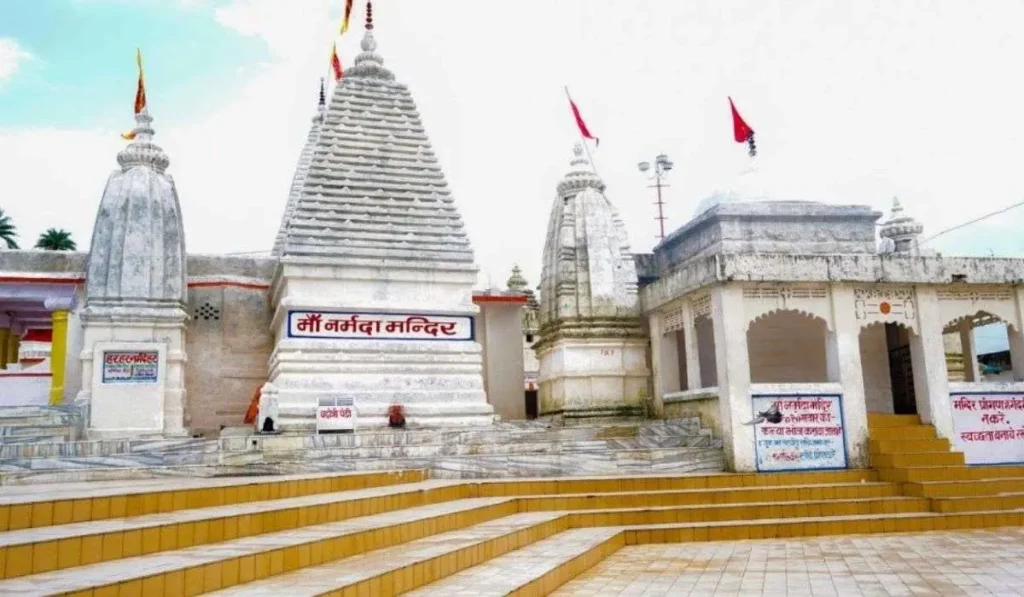
Body Part: Right buttock / hip of Goddess Sati
Amarkantak is a unique pilgrimage – it is the source of three rivers (Narmada, Son, and Johila) and home to a Shakti Peeth. Narmada Devi herself is worshipped here as Shakti, and the river that originates here is considered so sacred that merely seeing it is said to be as meritorious as bathing in the Ganga.
Who should visit: Those seeking purification from sin and negative karma. Those with chronic illness who seek healing through the divine feminine principle. Nature lovers and environmental protectors who seek blessings for the earth. Those performing Narmada Parikrama (the circumambulation of the entire Narmada River).
Best time to visit: Narmada Jayanti (Magh Shukla Saptami, January–February) is the most auspicious occasion. Navratri is equally significant. The monsoon season is spectacularly beautiful here but roads can be difficult.
38. Maa Sharda Mandir, Maihar, Satna, Madhya Pradesh
Body Part: Necklace of Goddess Sati
Maihar’s Sharda Devi is one of central India’s most beloved goddesses. The temple sits 1,063 steps above the town on a forested hill. The legendary musician Alha is said to have been Sharda Devi’s greatest devotee, and the sound of music is believed to still drift from the hill at night. Sharda is the goddess of knowledge, arts, and learning.
Who should visit: Students preparing for competitive examinations. Musicians, artists, writers, and performers seeking creative mastery. Teachers and scholars seeking deeper wisdom. Those who want to awaken their intellect and talent. Anyone seeking blessings for a new educational or creative journey.
Best time to visit: Navratri (October) is the biggest season. Basant Panchami (January–February), the festival of Saraswati, is also deeply auspicious here. The climb of 1,063 steps at dawn is considered a powerful spiritual practice in itself.
39. Danteshwari Temple, Dantewada, Bastar Region, Chhattisgarh
Body Part: Tooth of Goddess Sati
Maa Danteshwari is the most revered goddess of the Bastar region – the tribal heartland of Chhattisgarh. Worshipped for centuries by the indigenous communities and royalty of Bastar alike, Danteshwari is fierce, protective, and deeply rooted in the earth. She is considered the Kul Devi (ancestral goddess) of the Bastar royal family.
Who should visit: Those with dental health issues seeking divine healing. Those who feel their voice or opinions are being suppressed. Those seeking the protection of a fierce mother goddess. Devotees from the Bastar and Chhattisgarh region who consider Danteshwari their ancestral goddess.
Best time to visit: Dussehra in Bastar is unlike anywhere else in India, a unique 75-day celebration. Navratri is also central to worship here.
40. Arasuri Ambaji Shakta Pitha, Gabbar Hill, Ambaji, Banaskantha, Gujarat

Body Part: Heart of Goddess Sati
The heart of Sati fell in Gujarat. Ambaji, situated at Gabbar Hill near the Rajasthan–Gujarat border, is one of western India’s most beloved Shakti Peeths. The goddess here is Maa Amba – pure, benevolent, and fiercely loving. There is no idol in the original garbha griha; only a Shri Yantra (sacred geometric diagram) is worshipped.
Who should visit: Couples praying for children. Young men and women seeking a loving, compatible life partner. Families healing from internal conflict or estrangement. Anyone whose heart carries grief, loss, or longing. Businesspeople from Gujarat traditionally seek Ambaji’s blessings before new ventures.
Best time to visit: Bhadra Purnima (full moon in August–September) sees lakhs of pilgrims walking barefoot to Ambaji. Both Navratris are equally important. The Ambaji fair during Navratri is one of the biggest in India.
41. Chandrabhaga Pitha, Triveni Sangam, near Somnath, Veraval, Gujarat
Body Part: Stomach of Goddess Sati
Located near the sacred Somnath Jyotirlinga, this Peeth is at the Triveni Sangam where three rivers meet the Arabian Sea. This combination of Jyotirlinga + Shakti Peeth + Triveni Sangam makes Somnath one of the most spiritually layered destinations in all of India.
Who should visit: Those with digestive ailments, stomach disorders, or chronic health issues related to the abdomen. Those seeking healing from inner emotional turmoil – anxiety, rumination, overthinking. Those who wish to worship both Shiva and Shakti in one sacred journey.
Best time to visit: Kartik Purnima (November) is the most auspicious time at Somnath. Maha Shivratri is equally significant given the Jyotirlinga. Both Navratris are powerful.
42. Mahalakshmi Temple, Kolhapur, Maharashtra
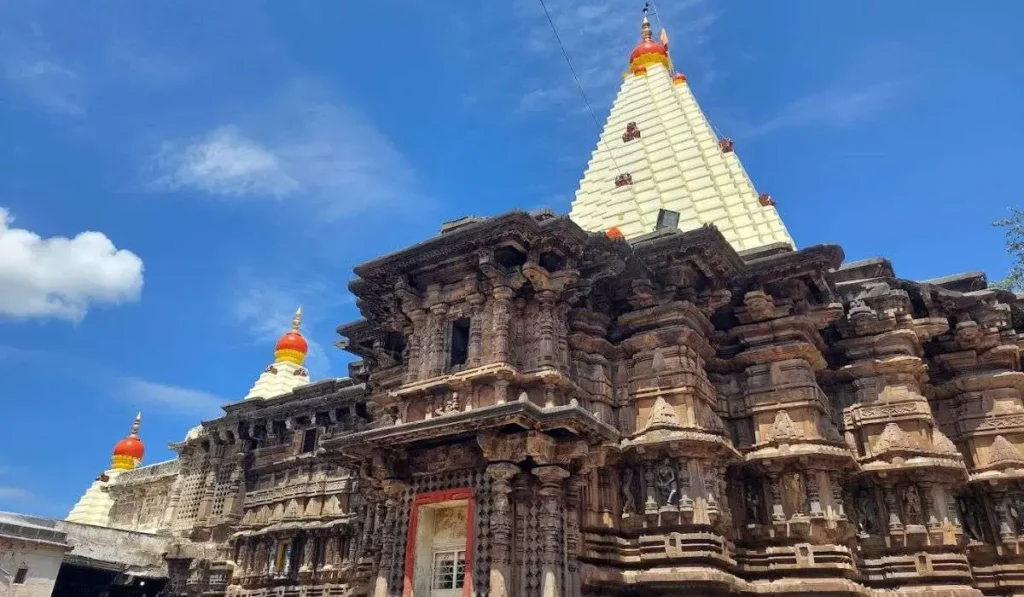
Body Part: Eyes of Goddess Sati
Kolhapur’s Mahalakshmi (Ambabai) is one of Maharashtra’s most beloved goddesses and one of the three and a half Shakti Peethas (Sade Teen Shakti Peeths) of Maharashtra. The goddess Mahalakshmi – resplendent, sovereign, and fiercely compassionate – is worshipped here in her most magnificent form. The eye that fell here represents divine vision, perception, and omniscience.
Who should visit: Those seeking wealth, prosperity, and material abundance. Those with eye ailments or vision problems. Business owners and entrepreneurs – Kolhapur’s Mahalakshmi is considered extremely powerful for commercial success. Those who want the goddess’s discerning eye to reveal the truth in difficult situations.
Best time to visit: Kiranotsava – the three evenings each year (in January, March, and October–November) when the setting sun’s rays directly fall on Mahalakshmi’s face, illuminating her naturally – is a uniquely awe-inspiring phenomenon. Navratri is the biggest devotional season.
43. Renuka / Ekavira Temple, Mahur, Nanded, Maharashtra
Body Part: Left hand of Goddess Sati
Mahur is one of the Sade Teen Shakti Peeths of Maharashtra and the janam sthan (birthplace) of Saint Dattatreya. Renuka / Ekavira Devi is a fierce, warrior goddess – she is also the mother of Parashurama (the sixth avatar of Vishnu). The left hand represents the receptive, feminine aspect of power.
Who should visit: Those seeking ancestral blessings and healing from lineage karma. Those who feel their family history carries heavy burdens. Those seeking protection for the family line. Devotees of Lord Dattatreya who perform the Datta-kshetra pilgrimage.
Best time to visit: Navratri and Margashirsha Purnima (Datta Jayanti) are the most auspicious. Mahur is most comfortably visited from October to February.
44. Saptashrungi Temple, Vani, Nashik, Maharashtra
Body Part: Right arm of Goddess Sati
One of the three and a half (Sade Teen) Shakti Peeths of Maharashtra, Saptashrungi – the goddess of seven peaks – is the guardian deity of the state. The climb of 472 steps to reach the temple is itself considered a form of devotional offering. Bhadrakali Saptashrungi holds all 18 hands, each bearing a weapon, representing the goddess in her most fully armed and supremely protective form.
Who should visit: Those seeking the comprehensive, all-round protection of the goddess. Soldiers and police officers. Families seeking protection from danger. Those who have made enemies or feel threatened. Parents seeking the goddess’s guard over their children. Those beginning a new venture and wanting divine armour.
Best time to visit: Navratri (October) sees hundreds of thousands of devotees climbing the 472 steps. The view from the summit over the Nashik Sahyadris is breathtaking. October to February is the best season for the climb.
45. Kanya Kumari Temple, Kanyakumari, Tamil Nadu
Body Part: Back / spine of Goddess Sati
At the southernmost tip of India, where the Arabian Sea, Bay of Bengal, and Indian Ocean converge in a visually breathtaking spectacle, the virgin goddess Kanyakumari stands eternal – Sati in her form as an ever-young, unmarried, supremely powerful Kumari. The spine fell here: the axis of the entire body, the Sushumna channel of kundalini energy.
Who should visit: Those seeking the awakening of their Kundalini (spiritual energy along the spine). Those who wish to see their entire life from a higher perspective, like standing at the tip of the land and seeing three oceans. Those who have been waiting for a life partner and seek blessings. Those who want to offer their prayers at the confluence of three seas – one of the most cosmically powerful geographic points on earth.
Best time to visit: Makar Sankranti (January 14–15) – the sunrise and moonset are simultaneously visible over the water, creating a phenomenon unlike anywhere else in the world. Both Navratris are equally powerful.
Must Read: महिषासुर मर्दिनी स्तोत्रम् | Mahishasur Mardini Stotram with Meaning
46. Narayani Temple (Suchindram), Suchindram, Kanyakumari, Tamil Nadu
Body Part: Upper teeth of Goddess Sati
Suchindram is a rare temple where Brahma, Vishnu, and Shiva are all worshipped together in one Shivalinga (called Sthanumalayanperumal). The Shakti Peeth of Narayani Devi here adds the divine feminine dimension to this trinity. This Peeth is particularly associated with speech, articulation, and the power of the spoken word.
Who should visit: Those seeking eloquence, command of language, and the power of persuasion. Lawyers, teachers, public speakers, and storytellers. Those with speech-related health issues. Those who want to use their voice for a higher purpose.
Best time to visit: Both Navratris. The temple is accessible year-round in the pleasant Kanyakumari District climate.
47. Kamakshi Amman Temple, Kanchipuram, Tamil Nadu
Body Part: Navel of Goddess Sati
Kanchipuram is one of India’s seven sacred cities. The true Shakti Peeth here is the Adi Peetheswari or Adi Kamakshi temple – a smaller, older shrine behind the magnificent Kamakshi Amman Temple. Adi Shankaracharya himself installed the Sri Chakra here and composed his Soundarya Lahari in this goddess’s honour. The navel – the Manipura chakra, the seat of personal power, will, and self-identity – connects this Peeth to confidence and inner authority.
Who should visit: Students preparing for major examinations. Those walking a serious spiritual or devotional path who want Adi Shankaracharya’s blessings. Musicians, dancers, and performing artists – the goddess of Kanchipuram has deep connections to the arts. Those who feel they lack confidence or a strong sense of self.
Best time to visit: Navratri and Brahmotsavam (the annual temple festival, usually February–March) are the most important seasons. Early morning darshan is particularly powerful.
48. Bhramaramba Temple, Srisailam, Nandyal, Andhra Pradesh
Body Part: Neck of Goddess Sati
Srisailam is the second of the twelve Jyotirlingas, and home to Bhramarambika, the goddess of bees and buzzing life. As with Baidyanath and Ujjain, the combination of Jyotirlinga + Shakti Peeth makes Srisailam extraordinarily spiritually powerful. The neck represents expression,
communication, and the bridge between mind and heart.
Who should visit: Those seeking the combined blessings of Shiva and Shakti. Those with throat ailments or communication blocks. Those seeking to align their thoughts (mind) with their feelings (heart) – the neck is the bridge between the two. Tantric practitioners who revere Bhramarambika.
Best time to visit: Maha Shivratri is the most powerful occasion at Srisailam. Both Navratris are equally auspicious. The forest setting makes this a spiritually immersive destination.
49. Manikyamba Temple, Draksharamam, Kakinada, Andhra Pradesh
Body Part: Left cheek of Goddess Sati
Draksharamam (also called Bhimeswara Temple area, Kakinada region) is one of the Pancharama Kshetras (five sacred Shiva sites) of Andhra Pradesh. Manikyamba Devi – the jewel-like goddess – presides here with her companion Bhimeswara Shiva. The left cheek connects this Peeth to beauty, grace, and artistic expression.
Who should visit: Those seeking physical beauty and grace in appearance and manner. Artists, designers, and fashion professionals. Those who want to cultivate elegance and refinement. Those performing Pancharama Kshetra pilgrimage.
Best time to visit: Maha Shivratri and Navratri are the main occasions. Accessible year-round in coastal Andhra Pradesh.
50. Puruhutika Temple, Pithapuram, East Godavari, Andhra Pradesh

Body Part: Hip / dorsal region of Goddess Sati
Pithapuram is considered one of the Shakti Peethas in multiple Puranic traditions. The name Pithapuram itself (Peeth + Puram = city of the sacred seat) indicates its ancient significance. Puruhutika Devi presides here with Durvaseshwar Bhairava.
Who should visit: Those seeking stability and groundedness in their lower life – financial security, shelter, and basic needs. Those recovering from surgery or illness related to the lower body. Those seeking resolution of long-pending land or property disputes.
Best time to visit: Navratri and Maha Shivratri are the primary occasions.
51. Jogulamba Devi Temple, Alampur, Jogulamba-Gadwal, Telangana
Body Part: Upper teeth of Goddess Sati
Jogulamba Devi is one of the 18 Maha Shakti Peeths and one of the most powerful in the Deccan region. The temple sits at the confluence of the Tungabhadra and Krishna rivers – an extremely sacred geographical point. Jogulamba (the Yoga-giving mother) is a fierce Kali form and is one of the eight Ashta Devi shrines.
Who should visit: Serious yoga and spiritual practitioners seeking divine grace to deepen their practice. Those seeking liberation (moksha) as a primary spiritual goal. Those dealing with fear of death or existential anxiety. Advanced Tantric practitioners.
Best time to visit: Navratri is the most important season. The river confluence makes the full moon (Purnima) particularly auspicious for bathing and puja.
52. Chamundeshwari Temple, Chamundi Hills, Mysuru, Karnataka

Body Part: Hair of Goddess Sati
Perched on Chamundi Hill 1,000 meters above Mysore city, Chamundeshwari is the guardian goddess of the Mysore royal family and the entire city. The goddess Chamunda – who slew the demons Chanda and Munda – presides here. Mysore’s world-famous Dasara festival is celebrated in her honour, making it one of the grandest royal Navratri celebrations in India.
Who should visit: Those seeking victory over inner demons – anger, addiction, ego, fear, or self-doubt. Those in leadership positions who need divine courage and protection. Those who want to participate in one of India’s most magnificent Navratri celebrations. Devotees from Karnataka who consider Chamundeshwari their state goddess.
Best time to visit: Navratri / Dasara in October is absolutely the most spectacular time – the Mysore Palace is illuminated with 100,000 lights and the goddess’s procession is one of India’s most iconic sights. Worth planning an entire trip around.
Must Read: दुर्गा चालीसा | Durga Chalisa in Hindi | Meaning, Benefits, and Significance
Conclusion: Maa Sati’s Promise to All Devotees
The 52 Shakti Peeths are not ruins or museums. They are living, breathing, continuously worshipped centers of the divine feminine, places that have received the prayers of millions for thousands of unbroken years.
When Sati’s body was carried by a grief-devastated Shiva across the universe and was gradually cut away piece by piece, those pieces did not disappear. They became the earth itself. They became mountains, riverbeds, hilltops, and forests. They became the places where, millennia later, a widow in tears, a young man with a broken career, a mother praying for her child, and a spiritual seeker longing for liberation, all find the same answer: Maa is here. Come.
The 52 Shakti Peeths are Sati’s final gift to the world she loved. They are her promise: I will never be absent from this earth. Wherever you are in the Indian subcontinent, from Kanyakumari to Kailash, from Kamakhya to Hinglaj, there is a Peeth nearby. There is a form of Maa waiting.
That is what these 52 Peeths truly are. Maa Sati’s eternal presence, scattered with love across the world.
Jai Mata Di.
Primary Sources and Scriptural References
The information in this guide is drawn from the following primary scriptural sources:
- Tantra Chudamani: Lists 52 Shakti Peeths with detailed Shakti and Bhairava names
- Devi Bhagavata Purana: Lists 51 Shakti Peeths; primary Puranic source for the origin narrative
- Mahapithapurana (composed c. 1690–1720 CE): Confirms the 52 Peeth tradition; primary source for geographic details
- Markandeya Purana: Secondary scriptural reference confirming 52 Peethas
- Kalikapurana: Lists 26 Shakti Peeths; primary source for the Kamakhya tradition
- Adi Shankaracharya’s Ashtadasha Shakti Pitha Stotram: Identifies the 18 Maha Shakti Peethas
At My Favorite Corner, we write from within the tradition, with reverence for the scriptures and love for the path. If this piece spoke to you, share it with someone on their spiritual journey. For more such reflections, follow us on Instagram and Facebook, and stay connected to the path of bhakti.