
Some Ekadashi fasts are remembered for their rituals. Aja Ekadashi is remembered for a man who refused to break his word, even when it cost him everything.
The story of King Harishchandra lies at the heart of this observance. He lost his kingdom, his wealth, his family, and eventually his freedom, yet remained committed to truth through every hardship. According to tradition, observing Aja Ekadashi became the turning point that restored what he had lost.
That is what gives this Ekadashi its meaning beyond fasting rules and puja rituals. It is a day associated with truth, self-control, faith, and the belief that sincere devotion can help a person overcome even the consequences of past actions.
Here is everything you need to know about its date, vrat katha, significance, puja vidhi, fasting rules, food, mantras, parana time, and daan.
The Story Behind Aja Ekadashi
Long before this became a date on a calendar, it was the answer Sage Gautama gave to a broken king in a cremation ground. Krishna narrated this account to Yudhishthira, and it’s recorded in the Brahma-Vaivarta Purana as one of the older, more human stories in the Ekadashi tradition.
King Harishchandra ruled with a reputation nobody could dent: he simply did not lie, ever, whatever it cost him. Sage Vishwamitra decided to test exactly how far that would hold and asked the king, in a dream, to hand over his entire kingdom as a gift. Harishchandra didn’t hesitate. He gave it all away.
Vishwamitra then asked for Dakshina on top of the gift, a customary offering, and set the amount high enough that a kingless king had no way to pay it. Harishchandra sold what he had left: his wife Taramati, his son Rohitashwa, and finally himself, into the service of a Chandala who managed the cremation grounds of Kashi.
His job, from then on, was collecting the fee owed for every cremation performed there. He did it without complaint, still refusing to lie or cut corners, even as his own life fell apart around him.
Then, one evening, a grieving woman brought her dead son’s body to the cremation ground for the rites. She had no money. Harishchandra, bound by his duty, could not let the cremation proceed without payment, and the woman was his own wife, Taramati, carrying the body of their son.
Even here, at what should have been the end of any reasonable person’s patience, Harishchandra did not break his post. He asked for the fee, exactly as he would from a stranger. It was this moment, more than any other in the story, that later tellings point to as the true weight of his vow.
Sometime after this, Sage Gautama came across the king and heard his story. Moved by it, he told Harishchandra about an Ekadashi that falls in the dark fortnight of Bhadrapada, one capable of dissolving even sins carried across lifetimes. He told him to observe it properly and to stay awake through the night. Harishchandra did exactly that.
By the merit of the fast, his son was restored to life, his wife and kingdom were returned to him, and the gods themselves are said to have acknowledged what his honesty had cost and what it had ultimately earned him. This is why the Ekadashi of Bhadrapada Krishna Paksha carries the name it does, and why, even today, reading or hearing this story is treated as part of observing the fast itself, not just background reading.
Aja Ekadashi Vrat Katha in Hindi (अजा एकादशी व्रत कथा)
एक बार धर्मराज युधिष्ठिर ने भगवान श्रीकृष्ण से पूछा, “हे प्रभु! भाद्रपद मास के कृष्ण पक्ष में आने वाली एकादशी का क्या नाम है? कृपया उसके व्रत की विधि और महत्व के बारे में विस्तार से बताइए।”
भगवान श्रीकृष्ण ने कहा, “हे राजन! इस एकादशी को अजा एकादशी कहा जाता है। यह व्रत पापों से मुक्ति दिलाने वाला माना गया है। इस दिन भगवान ऋषिकेश, अर्थात भगवान विष्णु की श्रद्धापूर्वक पूजा करने का विशेष महत्व है। अब मैं तुम्हें इस एकादशी से जुड़ी कथा सुनाता हूँ।”
बहुत समय पहले हरिश्चंद्र नाम के एक प्रतापी और सत्यनिष्ठ राजा थे। परिस्थितियों और अपने कर्मों के प्रभाव से उन्हें ऐसा कठिन समय देखना पड़ा कि उनका पूरा राज्य और धन उनसे छिन गया। हालात यहाँ तक पहुँच गए कि उन्हें अपनी पत्नी, पुत्र और स्वयं को भी बेच देना पड़ा।
राजा हरिश्चंद्र एक चांडाल के यहाँ सेवा करने लगे। उनका जीवन पूरी तरह बदल चुका था, लेकिन एक बात नहीं बदली थी, सत्य के प्रति उनकी निष्ठा। कितनी भी कठिन परिस्थितियाँ आईं, उन्होंने सत्य का मार्ग नहीं छोड़ा।
समय बीतता गया और राजा अनेक दुखों से घिरे रहे। कई बार वे गहरी चिंता में डूब जाते और सोचते कि इस अंतहीन कष्ट से बाहर निकलने का कोई मार्ग है भी या नहीं। एक दिन जब वे इसी चिंता में बैठे थे, तभी वहाँ महर्षि गौतम आए।
राजा ने श्रद्धा से उनका स्वागत किया, प्रणाम किया और अपने जीवन में आए दुखों की पूरी कहानी उन्हें सुनाई। राजा की बात सुनकर महर्षि गौतम ने कहा, “हे राजन! सात दिन बाद भाद्रपद मास के कृष्ण पक्ष की अजा एकादशी आने वाली है। तुम पूरी श्रद्धा और विधि के साथ इस व्रत का पालन करना।”
उन्होंने बताया कि इस व्रत के पुण्य से व्यक्ति अपने पापों से मुक्ति पा सकता है। इतना कहकर महर्षि गौतम वहाँ से चले गए।
राजा हरिश्चंद्र ने महर्षि की बात को पूरे विश्वास के साथ स्वीकार किया। जब अजा एकादशी आई, तो उन्होंने विधिपूर्वक व्रत रखा और रात्रि में जागरण भी किया। मान्यता है कि इस व्रत के पुण्य प्रभाव से उनके जीवन का कठिन दौर समाप्त होने लगा।
कथा के अनुसार, तभी स्वर्ग से मंगल ध्वनियाँ सुनाई देने लगीं और पुष्पों की वर्षा होने लगी। राजा ने अपने पुत्र को पुनः जीवित देखा। उनकी पत्नी भी उनके पास लौटीं और उन्हें उनका खोया हुआ सम्मान तथा वैभव फिर से प्राप्त हुआ। अंततः राजा हरिश्चंद्र को अपना राज्य भी वापस मिल गया।
भगवान श्रीकृष्ण ने युधिष्ठिर से कहा कि यह सब अजा एकादशी के व्रत और उसके पुण्य प्रभाव से संभव हुआ। इसलिए जो व्यक्ति श्रद्धा और नियम के साथ इस व्रत का पालन करता है और रात्रि जागरण करता है, उसे पापों से मुक्ति प्राप्त होने की मान्यता है।
यह भी कहा जाता है कि अजा एकादशी की कथा को श्रद्धापूर्वक सुनने से अश्वमेध यज्ञ के समान पुण्य फल प्राप्त होता है।
What Does “Aja” Actually Mean?
Aja is one of Lord Vishnu’s older names, and it translates roughly to “the unborn” or “the one without beginning.” It’s a philosophical name more than a descriptive one: it points to Vishnu as existing outside the cycle of birth and death that everyone else is bound to.
Given that the katha of this Ekadashi is entirely about a man trying to undo the damage of past-life karma, the name fits the story better than most Ekadashi names fit their own kathas.
In parts of India, particularly in the south, the same fasting day goes by Annada Ekadashi or Ananda Ekadashi instead. The tithi, the ritual, and the katha stay the same; only the regional name changes. If you’re searching for puja vidhi under either name, or looking up Aja Ekadashi पूजा विधि in Hindi, you’re looking at the same observance.
When Is Aja Ekadashi in 2026?
Aja Ekadashi date 2026 is Monday, September 7. The tithi begins at 7:29 PM on September 6 and ends at 5:03 PM on September 7, which is why September 7 and not September 6 is the correct fasting day under the standard sunrise rule.
Because 2026 places this Ekadashi on a Monday, some devotees treat the day as doubly significant, since Monday belongs to Lord Shiva and Ekadashi belongs to Lord Vishnu. It’s not a rule written anywhere that this combination changes the ritual itself, but it’s common enough for households to add a little extra devotion on years when the two overlap.
| Fasting day | Monday, September 7, 2026 |
| Hindu month | Bhadrapada, Krishna Paksha |
| Tithi begins | 7:29 PM, September 6 |
| Tithi ends | 5:03 PM, September 7 |
| Parana window | 6:02 AM to 8:33 AM, September 8 |
| Also called | Annada Ekadashi, Ananda Ekadashi |
| Deity worshipped | Lord Vishnu (as Hrishikesha) |
Aja Ekadashi Presiding Deity
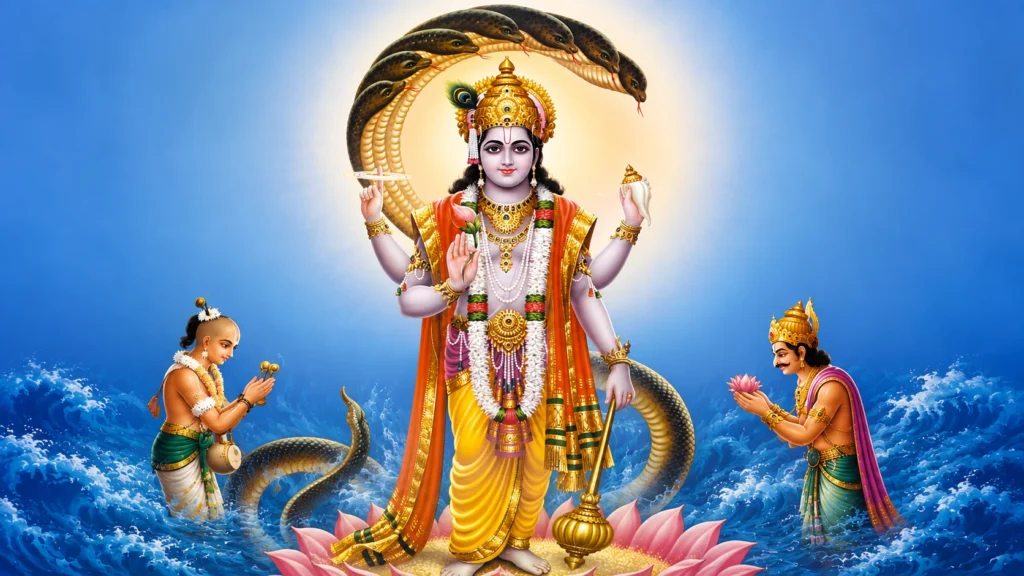
Like every Ekadashi, this day belongs to Lord Vishnu. On this particular occasion, he is worshipped specifically as Hrishikesha, “the lord of the senses,” a form associated with mastery over impulse, appetite, and emotion. It is one of the 108 names of Lord Vishnu. The entire katha is about a man who kept every sense, and every reaction, under control while losing everything he owned, so the form of Vishnu invoked on this day matches the lesson the story is trying to teach.
Goddess Lakshmi is usually worshipped alongside Vishnu, as she is on most Ekadashis, since the two are rarely separated in household puja. Many families also keep a small idol or image of Krishna on the altar, since he is the one narrating the story to Yudhishthira in the original text, effectively making him both the narrator of the katha and a form of the deity being worshipped that day.
Aja Ekadashi Vrat Vidhi (Fasting Procedure)
The Vrat Vidhi is about how the fast itself is kept, separate from the worship that goes alongside it. This is the part people usually mean when they ask how to observe Aja Ekadashi vrat.
1. The evening before (Dashami)
Eat a light, grain-free meal before sunset on Dashami. Avoid onion, garlic, and heavy or oily food. Some families use this evening to read the Harishchandra katha together as a warm-up to the fast itself.
2. Sunrise, Ekadashi morning
Bathe, wear clean clothes, and take a formal Sankalp, a spoken vow to observe the fast, ideally including a vow to speak only the truth through the day, in the spirit of the katha.
3. Choose your fasting level
A strict Nirjala fast, without food or water, is traditional for those in good health. Most devotees instead keep a Phalahar fast on fruit, milk, and nuts. Both are valid; sincerity matters more than severity.
4. Through the day
Keep speech honest and avoid anger or criticism, even in small everyday moments. This isn’t decorative advice, it’s the entire point of the day.
5. The night
Stay awake if you can manage it, chanting or simply sitting in quiet remembrance of Vishnu. The katha specifically credits Harishchandra’s night-long vigil as part of what made his fast complete.
6. The next morning (Dwadashi)
Break the fast within the parana window, after offering food or a donation to someone in need, keeping the spirit of Harishchandra’s own generosity in mind.
Aja Ekadashi Puja Vidhi (Worship Procedure)
The Puja Vidhi is the worship itself, the part carried out at the altar rather than through what you eat or avoid.
1. Set up the altar
A kalash decorated with mango leaves is traditional for this Ekadashi. Place an idol or image of Vishnu, and Krishna if you have one, on a clean cloth.
2. Offer Panchamrit and flowers
Bathe the deity with Panchamrit, a mix of milk, curd, ghee, honey, and sugar, then offer Tulsi leaves, fresh flowers, and a garland if available.
3. Light the diya and offer rice
Light incense and a ghee diya. Offer a small quantity of rice grains at the deity’s feet, a small detail specific to this Ekadashi’s puja tradition, despite rice being avoided in the fast itself.
4. Chant and read the katha
Chant the mantras below, then read or listen to the story of King Harishchandra. Hearing the katha with attention is treated as carrying its own merit, separate from the fast itself.
5. Perform aarti
Close the day’s puja with a simple aarti, morning and evening if possible, before moving into the night vigil described in the Vrat Vidhi above.
Aja Ekadashi Puja & Vrat Mantras
Two mantras are commonly chanted through the day, one addressed to Vishnu directly, and one a more meditative invocation used during the puja itself.
| Mantra | Use |
| ॐ नमो भगवते वासुदेवाय Om Namo Bhagavate Vasudevaya | The twelve-syllable Vasudeva mantra, chanted through the day and especially during the night vigil. It means “I bow to Lord Vasudeva,” a name of Krishna and Vishnu together. |
| ॐ नारायणाय विद्महे वासुदेवाय धीमहि तन्नो विष्णुः प्रचोदयात्Om Narayanaya Vidmahe Vasudevaya Dhimahi Tanno Vishnuh Prachodayat | The Vishnu Gayatri, typically chanted during the main puja. It asks Vishnu to guide and awaken the devotee’s understanding. |
Repeating the Vasudeva mantra using a Tulsi mala, in rounds of one or more malas, is common practice through the day. There’s no fixed count that scripture insists on; what matters more, across every source that discusses this, is steady attention rather than a specific number.
Food Rules during Aja Ekadashi
People searching for this Ekadashi usually have a handful of very practical questions about what to eat during ekadashi. So here they are, answered directly instead of buried in a general list.
Can we eat rice on Aja Ekadashi?
No. Rice, along with all other grains, cereals, and lentils, is avoided on every Ekadashi, and this one is no exception. If someone in your family follows the older custom strictly, they’ll also skip rice on the following Dwadashi morning, since old textual advice specifically discourages it at that meal too.
What should we eat during the fast?
Fruits, milk, curd, and nuts are the standard choices for a Phalahar-style fast. Some devotees also permit sabudana, singhare ka atta, or kuttu ka atta, though these are technically pseudo-grains and stricter observers skip them.
What should absolutely not be eaten?
Grains and lentils of any kind, onion, garlic, and, per tradition, brinjal specifically on the Dwadashi morning after the fast. Alcohol and non-vegetarian food are avoided from Dashami evening onward, not just on the fasting day itself.
Breaking the Fast: Aja Ekadashi Parana Time 2026
The Aja Ekadashi parana time in 2026 is 6:02 AM to 8:33 AM on Tuesday, September 8. Dwadashi tithi itself runs until 2:42 PM that day, but the fast should still be broken within the morning window rather than waiting until the last possible hour.
How to break Aja Ekadashi fast correctly comes down to three things: wait until after sunrise on Dwadashi, avoid the restricted Hari Vasara period at the very start of the tithi, and don’t push the meal past midday if you can help it. Most households offer food to a Brahmin or to someone in need first, then eat something simple themselves, echoing the exact gesture that runs through Harishchandra’s own story.
Aja Ekadashi Daan (Donation)
Charity is not an optional add-on to this particular Ekadashi, it’s arguably the point. Harishchandra’s entire ordeal began with giving everything away, and the tradition holds that Dwadashi morning, right after parana, is the best time to give something of your own. What follows is a practical breakdown by category, so you’re not left guessing what actually counts.
- Food Items
Feeding someone is considered one of the most direct forms of merit on this day. Grains, pulses, ghee, and fresh fruit are commonly donated, and a cooked meal offered to someone who genuinely needs one is valued even more than raw ingredients.
- Clothing
New or clean, gently used clothing given to someone without means is a traditional Dwadashi gesture. As Bhadrapada sits at the tail end of the monsoon, plain, practical clothing tends to matter more here than festive wear.
- Donating Money
A cash donation to a temple, a Brahmin, or directly to someone in need is considered acceptable and meritorious, particularly given that Harishchandra’s own suffering began with an inability to pay a debt. Giving what you reasonably can, rather than a fixed amount, is the guiding principle.
- Religious Items
Tulsi plants, small idols, diyas, incense, or copies of scripture are commonly given to a temple or to a priest. Some devotees choose to donate items connected to Vishnu specifically, given the deity of the day.
- Shelter and Support
Where possible, contributing toward someone’s rent, medical costs, or another pressing need is treated as charity of a higher order than routine donations, since it addresses a specific hardship rather than a general gesture.
- Cows and Animal Care
Feeding cows, or donating toward their care, is a long-standing Ekadashi custom across nearly every version of this fast. Some households extend this to feeding stray animals more broadly on Dwadashi morning.
Important Note: None of this needs to be elaborate. A single sincere act, sized to what you can actually afford, is what the tradition asks for, not a checklist completed in full.
A Few Special Situations
Not everyone fits the standard “healthy adult, full Nirjala fast” mold, and that’s fine. Ekadashi observance has always had room for that.
Can pregnant women keep Aja Ekadashi fast?
Generally, yes, but not in the strict Nirjala form. A gentle Phalahar fast, fruits, milk, and light food, is the version most commonly recommended, and even that should take a back seat to a doctor’s advice if there’s any medical concern. The spiritual merit of the day comes from sincerity, not from how little you eat.
Can Ekadashi vrat be kept without fasting completely?
Yes. This is a genuinely common question, and the honest answer is that Ekadashi observance was never meant to be all-or-nothing. Someone managing diabetes, recovering from illness, or simply unable to fast for other reasons can still observe the day through worship, the vrat katha, charitable giving, and a single grain-free meal instead of a full fast. Tradition treats sincerity as the real currency here, not physical hardship for its own sake.
Conclusion
Most Ekadashi kathas involve kings, sages, and divine intervention in some form, but very few of them hinge on a single, almost unbearable human choice the way this one does. That’s probably why Aja Ekadashi has stayed relevant well beyond its ritual calendar slot.
It’s cited for people trying to recover lost wealth or status, for families going through separation, and for anyone carrying guilt over past mistakes, real or perceived. The tradition holds that the fast carries merit equal to performing an Ashwamedha Yajna, one of the most demanding Vedic rites, and that it destroys sins that would otherwise follow a person across lifetimes.
Whether or not one reads the katha literally, the underlying idea travels well: that integrity held under real pressure, not just when it’s easy, is what eventually gets rewarded. That’s a fairly rare thing for a fasting day to be built around.
Continue Reading more…
Ganesh Chaturthi 2026: Date, Muhurat, Significance & Celebrations
Sankat Nashan Ganesh Stotram: Meaning & Benefits
Teej 2026: Dates, History, Hariyali, Kajari & Hartalika Teej
Why Are Cows Sacred in Hinduism? The Story of Gau Mata
What is Advaita Vedanta? The Core Meaning of Non-Duality
Frequently Asked Questions About Aja Ekadashi 2026
Yes. There is no requirement that a person must have observed Ekadashi fasts previously to begin keeping Aja Ekadashi vrat. A first-time devotee can observe the day according to their physical ability, family tradition and level of religious practice. Those unable to keep a strict fast may still participate through Vishnu worship, mantra chanting, reading the vrat katha and acts of charity.
The basic observance remains the same, but fasting practices and regional customs can differ between families and communities. In some regions, the same Ekadashi is also known as Annada Ekadashi or Ananda Ekadashi. Food rules, puja items and the style of observance may therefore vary according to local tradition.
This depends on the fasting tradition you follow. A strict vrat may avoid tea and coffee, while some people following a lighter Phalahar fast may consume tea with milk. If you are following a family or temple tradition, it is best to follow its established rules rather than assuming there is one universal Ekadashi diet.
Many Hindu households avoid plucking Tulsi leaves on Ekadashi and instead collect the leaves beforehand or use Tulsi already available for worship. Customs regarding Tulsi can vary by region and sampradaya, so devotees should follow their family’s established practice where applicable.
Accidentally eating grains does not prevent a person from continuing the rest of the day’s spiritual observance. They can continue with prayer, mantra chanting, worship and other aspects of the vrat. In devotional practice, intention and sincerity are generally considered more important than treating an honest mistake as a reason to abandon the entire observance.
Yes. Married couples can observe Aja Ekadashi together. Both may keep the same type of fast or follow different levels of fasting according to their health and ability. They can also perform Vishnu puja, listen to the vrat katha and participate in charity together.
No. Visiting a temple is not necessary to observe Aja Ekadashi. Devotees can perform a simple puja at home using an image or idol of Lord Vishnu. Temple visits are a personal devotional choice rather than a compulsory requirement of the vrat.
A person who cannot fast can still observe Aja Ekadashi through prayer, Vishnu puja, mantra chanting, reading or listening to the vrat katha and charitable acts. People with health concerns should not attempt a strict fast merely for religious reasons if doing so could put their wellbeing at risk.
Traditionally, an Ekadashi fast is broken on Dwadashi during the appropriate parana period rather than at any convenient time. However, someone who becomes unwell or experiences a health-related problem should prioritise their wellbeing. Religious observance should not require someone to ignore a genuine medical need.
No. Aja Ekadashi observance varies according to family traditions, regional customs and religious sampradayas. Some devotees keep a Nirjala fast, others follow Phalahar, while some may observe the day without a complete fast. There is no single household practice followed identically by every Hindu community.
Children can participate in the religious aspects of Aja Ekadashi, such as listening to the vrat katha, praying or helping with puja. A strict fast is generally unnecessary for children, especially when it could affect their normal nutrition and wellbeing. Families may instead involve them through simple devotional practices.
A simple home observance can include bathing in the morning, making a sankalp, worshipping Lord Vishnu, offering Tulsi and flowers, chanting Vishnu mantras, listening to or reading the Aja Ekadashi vrat katha and observing an appropriate fast. The day can be completed with prayer, charity and parana on Dwadashi.
Yes. Knowing every ritual detail is not necessary to participate in Aja Ekadashi. A devotee can offer a simple prayer to Lord Vishnu, chant a mantra such as “Om Namo Bhagavate Vasudevaya,” and spend the day in sincere remembrance. The observance can be simple without losing its devotional purpose.
My Favorite Corner (MFC) brings clear, scripture-sourced explanations of Hindu philosophy and practice to readers seeking authentic spiritual guidance. Explore more of our content on dharma, karma, and the paths to liberation. Follow MFC on Instagram and Facebook to explore more sacred places, festivals, and living traditions of Sanatan Dharma.