
देवशयनी एकादशी 2026 की सही तिथि, पारण का समय, व्रत कथा, संपूर्ण पूजा विधि और भगवान विष्णु के चार महीने तक योग निद्रा में जाने का कारण, आसान भाषा में जानें।
Devshayani Ekadashi 2026 falls on Saturday, July 25, 2026. This is the Ekadashi of Ashadha Shukla Paksha, the day Lord Vishnu enters Yoga Nidra in the Ksheer Sagar and Chaturmas begins. The Ekadashi tithi starts at 9:12 AM on July 24 and ends at 11:34 AM on July 25. The Devshayani Ekadashi parana time is the next morning, July 26, between 6:10 AM and 8:47 AM. It is also called Hari Shayani Ekadashi, Padma Ekadashi, and Ashadhi Ekadashi.
Devshayani Ekadashi Date 2026 and Tithi Timings
Devshayani Ekadashi date in 2026 is Saturday, July 25. The Ekadashi tithi begins at 9:12 AM on July 24 and ends at 11:34 AM on July 25. Since Ekadashi tithi is active at sunrise on July 25, that is the correct fasting day under the Udaya Tithi rule followed by both Smarta and Vaishnava traditions. Here are the Devshayani Ekadashi Date & Tithi Timings:
| Event | 2026 Timing |
| Ekadashi Tithi begins | 9:12 AM, July 24 |
| Devshayani Ekadashi fasting day | Saturday, July 25 |
| Ekadashi Tithi ends | 11:34 AM, July 25 |
| Parana (fast-breaking) window | 6:10 AM to 8:47 AM, July 26 |
| Chaturmas begins | July 25, 2026 |
| Chaturmas ends | Prabodhini Ekadashi, Kartik month (Nov 2026) |
Important Note: Timings follow the Hindu Panchang calculated for New Delhi (IST). Sunrise-based tithi timings shift slightly by city, so confirm the parana window against a local Panchang closer to the date.
Why Does Lord Vishnu Sleep on Devshayani Ekadashi?
Hindu tradition holds that Lord Vishnu enters Yoga Nidra, a state of divine meditative sleep, on Devshayani Ekadashi. This is not described as an ordinary pause. It is a symbolic withdrawal that mirrors the monsoon season, a time when nature turns inward and outward activity slows down across the land.
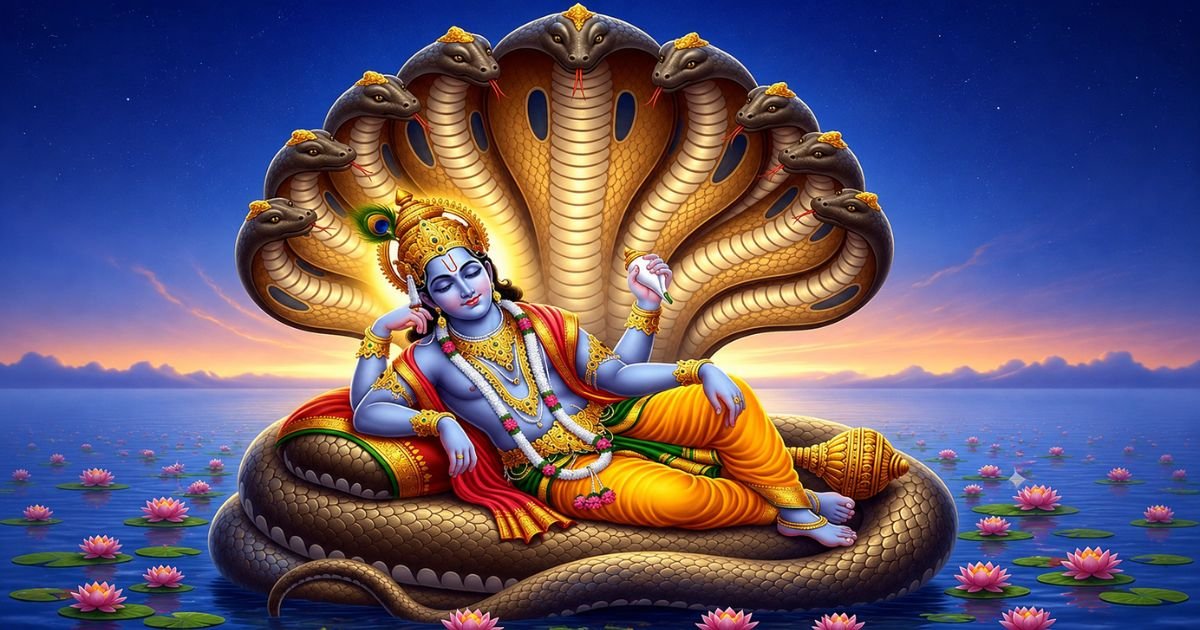
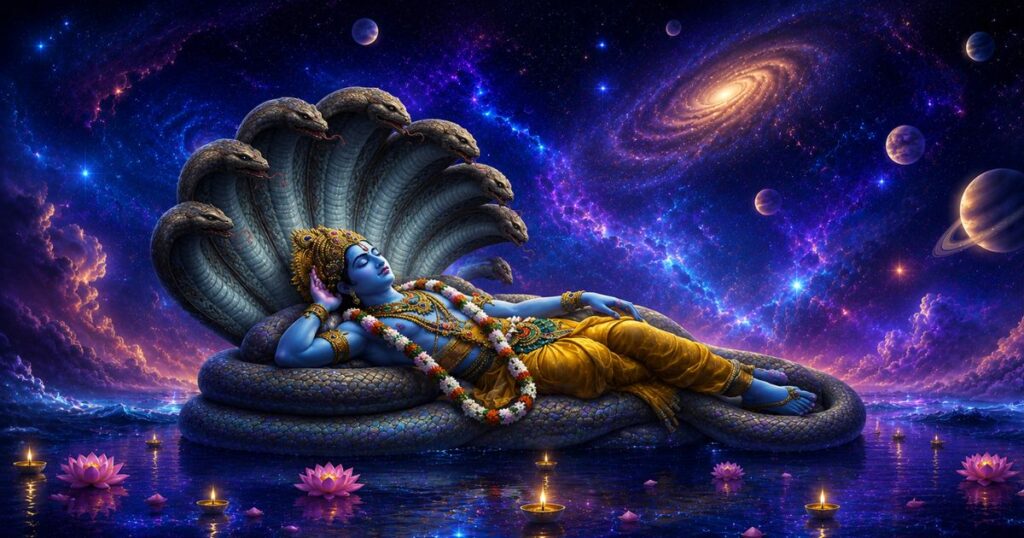
Scriptures describe Lord Vishnu resting on the many-hooded serpent Shesha, floating on the cosmic ocean, for four months until he wakes on Prabodhini Ekadashi in the month of Kartik. Some Puranic accounts connect this rest to Vishnu’s earlier victory over the demon Shankhasura, who had stolen the Vedas.
Other tellings link it to the story of King Bali, where Lord Vishnu, in his Vamana form, chose to reside near Bali in the netherworld for four months of the year. Regardless of which version a family follows, the underlying idea stays the same.
Vishnu’s rest is not absence. It is a quiet, protective presence that asks devotees to slow down and turn toward reflection instead of expansion.
When Does Lord Vishnu Wake Up After Yoga Nidra?
Lord Vishnu awakens from his four-month Yoga Nidra on Dev Uthani Ekadashi, also known as Prabodhini Ekadashi, which falls in the Shukla Paksha of the Kartik month. This sacred day marks the end of Chaturmas and the resumption of many auspicious ceremonies.
Devshayani Ekadashi Vrat Katha: The Story of King Mandhata
The Devshayani Ekadashi vrat katha tells the story of King Mandhata of the Ikshvaku dynasty, whose kingdom suffered a three-year drought. On the advice of Sage Angira, the king observed the Devshayani Ekadashi fast along with his subjects. Rain returned soon after, ending the famine and restoring prosperity to the land.
| The Story: King Yudhishthira once asked Lord Krishna about the fast observed on Ashadha Shukla Ekadashi. Krishna replied that Lord Brahma had once explained this same fast to the sage Narada, calling it the most excellent of all Ekadashi vrats, one capable of erasing every sin. He then shared the story behind it. In the Suryavanshi line of the Ikshvaku dynasty ruled King Mandhata, a truthful and disciplined king who protected his people like his own children. His kingdom knew no hunger and no disaster, until one year, without warning, the rains stopped completely. The drought lasted three long years. Crops failed, wells dried up, and the people grew weak with hunger. Women wept, children suffered, and even the yajnas performed in the kingdom came to a halt. Mandhata could not understand the cause. He ruled according to dharma, yet his subjects suffered as though from his own sins. Unable to bear their pain, the king set out into the forest with a small group of companions. He visited the hermitages of many sages, searching for an answer, until he reached the ashram of Rishi Angira, the mind-born son of Brahma. The king bowed before the sage and explained his suffering. Angira listened, then told him about a fast that could remove even deep-rooted calamity: the Devshayani Ekadashi vrat of Ashadha Shukla Paksha. He instructed Mandhata to observe it with full devotion, along with his entire kingdom. Mandhata returned home and did exactly as advised. He and his people fasted together, worshipped Lord Vishnu with sincerity, and kept faith through the ritual. Soon after, heavy rains fell across the kingdom. The land turned green again, wells filled, and the famine that had gripped the people for three years came to an end. |
Shri Krishna concludes the story by telling Yudhishthira that this fast, also known as Padma Ekadashi, pleases Lord Vishnu so deeply that sincere devotees are freed from suffering in this life and move closer to Vishnu Lok after death. This is also the Ekadashi from which the Devshayani Ekadashi vrat and the Chaturmasya vow both begin.
देवशयनी एकादशी व्रत कथा हिंदी में
| धर्मराज युधिष्ठिर ने भगवान श्रीकृष्ण से पूछा, “हे केशव! आषाढ़ शुक्ल पक्ष की एकादशी को किस नाम से जाना जाता है? इस व्रत का महत्व क्या है, इसकी विधि क्या है और इस दिन किस देवता की पूजा की जाती है?” भगवान श्रीकृष्ण ने उत्तर दिया, “हे युधिष्ठिर! यही प्रश्न एक समय देवर्षि नारद ने ब्रह्माजी से भी किया था। अब मैं तुम्हें वही पवित्र कथा सुनाता हूँ।” भगवान श्रीकृष्ण ने बताया कि एक बार देवर्षि नारद ने ब्रह्माजी से आषाढ़ शुक्ल पक्ष की इस एकादशी का महत्व जानने की इच्छा प्रकट की। तब ब्रह्माजी ने उन्हें बताया कि सतयुग में मांधाता नाम के एक धर्मनिष्ठ, सत्यवादी और चक्रवर्ती सम्राट राज्य करते थे। उनकी प्रजा सुखी, समृद्ध और संतुष्ट थी। पूरे राज्य में शांति और धर्म का पालन होता था। लेकिन भविष्य में क्या होने वाला है, यह कोई नहीं जानता। समय के साथ उनके राज्य पर एक भयंकर संकट आ पड़ा। लगातार तीन वर्षों तक वर्षा न होने के कारण पूरे राज्य में भीषण अकाल फैल गया। खेत सूख गए, नदियाँ और तालाब सूखने लगे, अन्न का संकट गहराता गया और चारों ओर हाहाकार मच गया। जब जीवन ही संकट में हो, तो धार्मिक कार्य भी प्रभावित होने लगते हैं। यज्ञ, हवन, पिंडदान, कथा, व्रत और अन्य वैदिक अनुष्ठान धीरे-धीरे बंद होने लगे। भूख और कठिनाइयों से पीड़ित प्रजा अंततः राजा मांधाता के पास पहुँची और उनसे इस संकट से मुक्ति दिलाने की प्रार्थना करने लगी। राजा पहले से ही अपनी प्रजा की पीड़ा देखकर अत्यंत व्यथित थे। वे मन ही मन विचार करने लगे, “मैंने सदैव धर्म के अनुसार शासन किया है, फिर ऐसा कौन-सा कर्म मुझसे हो गया जिसके कारण मेरे राज्य को इतना बड़ा कष्ट सहना पड़ रहा है?” इस प्रश्न का उत्तर खोजने और समाधान प्राप्त करने के उद्देश्य से वे अपनी सेना के साथ वन की ओर निकल पड़े। वन में अनेक आश्रमों और ऋषियों का दर्शन करते हुए एक दिन वे ब्रह्माजी के मानस पुत्र महर्षि अंगिरा के आश्रम पहुँचे। राजा ने उन्हें साष्टांग प्रणाम किया। महर्षि ने उनका आदरपूर्वक स्वागत किया, आशीर्वाद दिया और उनके वन में आने का कारण पूछा। तब राजा मांधाता ने विनम्रतापूर्वक कहा, “हे महात्मन्! मैं यथाशक्ति धर्म का पालन करता हूँ, फिर भी मेरे राज्य में इतना भयंकर दुर्भिक्ष क्यों पड़ा है? कृपया इस संकट का कारण बताइए और ऐसा उपाय बताइए जिससे मेरी प्रजा का दुःख दूर हो सके।” राजा की बात सुनकर महर्षि अंगिरा बोले, “हे राजन! यह सतयुग है, जो सभी युगों में श्रेष्ठ माना गया है। इस युग में धर्म अपने चारों चरणों पर स्थापित रहता है और छोटे से अधर्म का भी गंभीर परिणाम देखने को मिलता है। ब्राह्मणों के अतिरिक्त किसी अन्य वर्ण को तपस्या करने का अधिकार नहीं है, जबकि आपके राज्य में एक शूद्र तप कर रहा है। उसी के प्रभाव से वर्षा रुक गई है और यह अकाल पड़ा है। जब तक उसका अंत नहीं होगा, तब तक यह संकट समाप्त नहीं होगा।” महर्षि की बात सुनकर भी राजा मांधाता का हृदय किसी निर्दोष तपस्वी की हत्या करने के लिए तैयार नहीं हुआ। उन्होंने हाथ जोड़कर कहा, “हे देव! मैं किसी निरपराध व्यक्ति का वध नहीं कर सकता। धर्म की रक्षा के लिए अधर्म का मार्ग अपनाना मुझे उचित नहीं लगता। कृपया ऐसा कोई दूसरा उपाय बताइए, जिससे राज्य का यह संकट भी समाप्त हो जाए और किसी निर्दोष को कष्ट भी न पहुँचे।” राजा की धर्मनिष्ठा और करुणा देखकर महर्षि अंगिरा प्रसन्न हुए। उन्होंने कहा, “यदि आप आषाढ़ शुक्ल पक्ष की देवशयनी (पद्मा) एकादशी का विधिपूर्वक व्रत करें और अपनी पूरी प्रजा को भी श्रद्धापूर्वक यह व्रत करने के लिए प्रेरित करें, तो भगवान विष्णु की कृपा से आपके राज्य में अवश्य वर्षा होगी और यह अकाल समाप्त हो जाएगा।” महर्षि की आज्ञा प्राप्त कर राजा मांधाता अपने राज्य लौट आए। उन्होंने ब्राह्मण, क्षत्रिय, वैश्य और शूद्र सहित चारों वर्णों के लोगों के साथ पूर्ण श्रद्धा और विधि-विधान से देवशयनी (पद्मा) एकादशी व्रत का पालन किया। भगवान विष्णु की कृपा से शीघ्र ही आकाश में बादल छा गए और मूसलाधार वर्षा होने लगी। सूखी धरती फिर से हरी-भरी हो गई, खेतों में अन्न लहलहाने लगा और पूरा राज्य धन-धान्य से समृद्ध हो गया। भगवान श्रीकृष्ण ने युधिष्ठिर से कहा कि यह देवशयनी एकादशी, जिसे पद्मा एकादशी भी कहा जाता है, भगवान विष्णु को अत्यंत प्रिय है। श्रद्धा और नियमपूर्वक इस व्रत का पालन करने वाले भक्तों के पाप नष्ट होते हैं, उनकी मनोकामनाएँ पूर्ण होती हैं और उन्हें भगवान विष्णु की विशेष कृपा प्राप्त होती है। ब्रह्मवैवर्त पुराण में भी देवशयनी एकादशी के माहात्म्य का विस्तार से वर्णन मिलता है। इसमें कहा गया है कि जो श्रद्धापूर्वक इस व्रत का पालन करता है, उसकी समस्त मनोकामनाएँ पूर्ण होती हैं और उसे पुण्य तथा आध्यात्मिक उन्नति की प्राप्ति होती है। |
Which Scriptures Mention Devshayani Ekadashi?
Devshayani Ekadashi is described across several Puranas. The Padma Purana carries the vrat katha of King Mandhata and states that the fast destroys sins and grants salvation. The Brahmavaivarta Purana describes it as a wish-fulfilling fast. The Bhavishyottara Purana states that observing it with devotion carries merit equal to performing an Ashwamedha Yajna.
Each text adds a different layer to the same day, which is one reason this Ekadashi carries so much weight in the Vaishnav tradition:
- Padma Purana: Narrates the King Mandhata vrat katha and states that fasting on this day destroys sins committed knowingly or unknowingly, leading the devotee toward Vaikuntha.
- Brahmavaivarta Purana: States that this fast fulfils the sincere wishes of the person who observes it with devotion.
- Bhavishyottara Purana: States that the merit of this vrat equals the merit of performing an Ashwamedha Yajna, one of the most demanding Vedic rites, and that it frees the devotee from accumulated sin.
- Bhagavata Purana: Describes the broader idea of Lord Vishnu entering meditative rest and waking four months later on Prabodhini Ekadashi, the framework behind Chaturmas itself.
The Bhagavad Gita does not name Devshayani Ekadashi directly, but its emphasis on disciplined living, balanced routine, and steady devotion, what Krishna calls Yukta Ahara Vihara, mirrors exactly the restraint devotees are asked to practice through this fast and the Chaturmas period that follows it.
Step-by-Step Devshayani Ekadashi Puja Vidhi
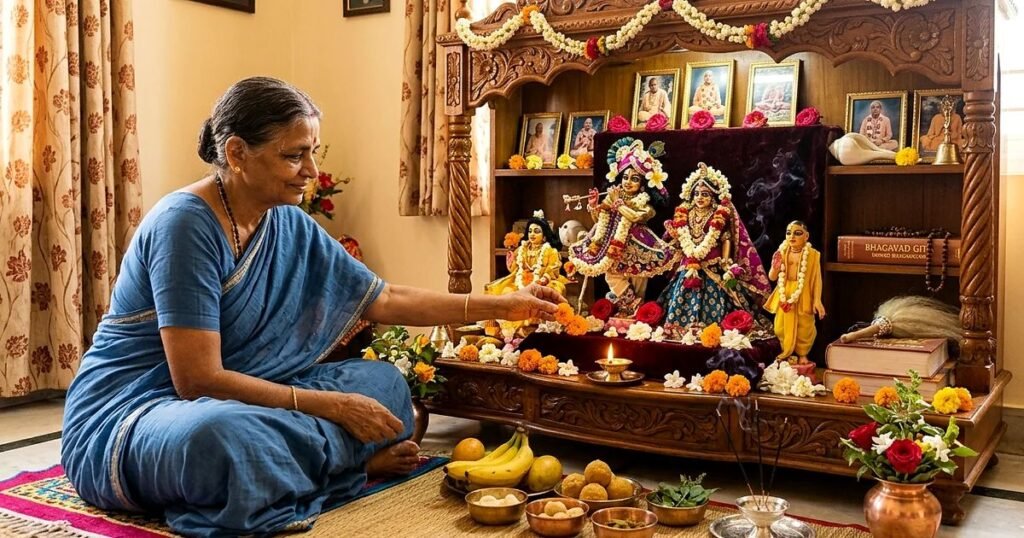
Direct answer: Devshayani Ekadashi puja vidhi begins with an early bath and a vow, followed by worship of Lord Vishnu with yellow flowers, Tulsi, and Panchamrit. The ritual includes a symbolic Sayana ceremony, where the Lord is put to rest on a small bed, and closes the next day with parana at the correct time.
1. Prepare the Night Before (Dashami)
On Dashami evening, eat a light, grain-free meal before sunset and avoid tamasic food. Many devotees also avoid salt this night as preparation for the fast ahead.
2. Wake During Brahma Muhurta and Bathe
Rise before sunrise, bathe, and wear clean, sattvic clothing. Clean the puja space and sprinkle it with holy water to purify the area of worship.
3. Take the Sankalp
Sit facing Lord Vishnu and take a Sankalp, a firm vow, to observe the Devshayani Ekadashi vrat through the day and night with full devotion and discipline.
4. Install the Idol and Offer Worship
Place an idol or picture of Lord Vishnu on a yellow cloth. Offer yellow flowers, Tulsi leaves, sandalwood paste, incense, a diya, fruits, and Panchamrit made of milk, curd, ghee, honey, and sugar.
5. Chant the Mantra and Recite the Vishnu Sahasranama
Chant “Om Namo Bhagavate Vasudevaya” and recite the Vishnu Sahasranama. Devotees may also chant “Suptte Tvayi Jagannathe Jagat Suptam Bhavedidam,” meaning, O Lord, when you sleep, the whole world sleeps with you.
6. Perform the Sayana Ritual
Prepare a small symbolic bed with soft white cloth and flowers. Gently place the idol on it to represent Lord Vishnu entering his four months of rest, one of the most distinctive rituals of this particular Ekadashi.
7. Listen to the Vrat Katha and Perform Aarti
Read or listen to the Devshayani Ekadashi vrat katha, perform Vishnu’s aarti in the evening, and distribute prasad among family members.
8. Break the Fast at Parana Time
Complete the vrat the next morning within the correct Dwadashi parana window. Offer Tulsi leaves with water first, then eat light sattvic food, and donate to those in need according to your means.
Devshayani Ekadashi Fasting Rules
Devshayani Ekadashi fasting rules ask devotees to avoid grains, beans, onion, and garlic for the full day. Fasting can be Nirjala, Phalahar, or Ksheerbhoji, depending on personal strength. Devotees are also asked to avoid anger, harsh speech, and Tamasic behavior, keeping the mind fixed on prayer instead.
- Avoid all grains, cereals, and beans, including rice, wheat, and lentils.
- Skip onion, garlic, and heavily spiced or oily food through the fasting day.
- Choose a fasting level suited to your health: Nirjala (no water), Phalahar (fruits), or Ksheerbhoji (milk-based food).
- Avoid Tamasic food and negative emotions such as anger, greed, or harsh speech.
- Do not lie, argue, or waste the day in idle talk.
- Stay awake through the night where possible, singing bhajans in praise of Vishnu.
- Complete the Ekadashi vrat only after breaking the fast at the correct parana time the next morning.
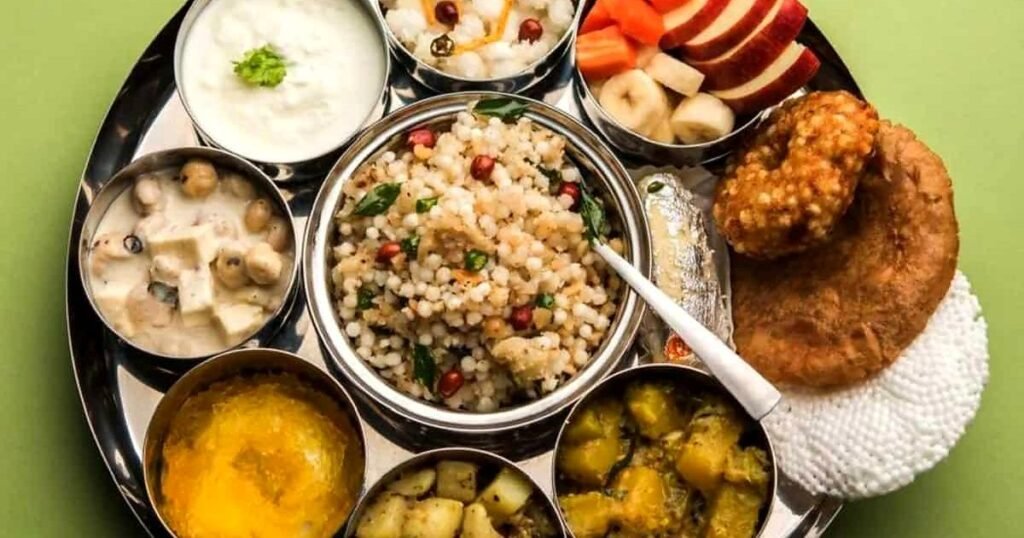
What Food Is Allowed During Devshayani Ekadashi Fast?
Devotees may eat fruits, milk, curd, nuts, and root vegetables like sweet potato or arbi, depending on the type of fast chosen. Grains, rice, lentils, onion, and garlic are strictly avoided. Some devotees follow a fully Nirjala fast and consume nothing at all, not even water, until parana the next day.
Hindu texts describe four broad ways to observe an Ekadashi vrat, and devotees can pick the one that matches their health and willpower:
- Nirjala: No food or water through the full day and night, taken up only by those in strong health.
- Jalahar: Fasting with only water through the day.
- Ksheerbhoji: Fasting on milk and milk-based food, such as curd or paneer.
- Phalahari: Fasting on high-quality fruits like mango, banana, grapes, along with almonds and pistachios, while avoiding leafy vegetables.
Whichever style is chosen, the meal used to break the fast the next day should remain simple and satvik food, typically Tulsi leaves with water, followed by fruits, milk, or a light khichdi made without excess spice.
- lf is never restricted, only new beginnings are.
Can We Marry After Devshayani Ekadashi?
No. Hindu tradition generally pauses weddings and other Shubh Muhurat ceremonies from Devshayani Ekadashi until Prabodhini Ekadashi in November. Marriages resume once Lord Vishnu is believed to wake from Yoga Nidra and Chaturmas comes to a close.
This pause is not treated as a strict prohibition everywhere. Some families, guided by their own Panchang or regional custom, may proceed with a wedding during Chaturmas if the couple’s horoscope and local tradition allow it.
However, the widely followed practice across most Vaishnav households is to wait, since auspicious activity is believed to carry fuller blessings once Vishnu returns to an active, waking state.
Why Devshayani Ekadashi is Called Hari Shayani Ekadashi?
Devshayani Ekadashi is called Hari Shayani Ekadashi because “Hari” is another name for Lord Vishnu, and “Shayani” means sleeping. The name simply describes the day Hari, or Vishnu, begins his sleep. The same day is also known as Padma Ekadashi, Ashadhi Ekadashi, Maha Ekadashi, and Toli Ekadashi in different regions.
Regional naming reflects regional custom more than any real difference in ritual. In Maharashtra, it is widely known as Ashadhi Ekadashi, tied to the massive Pandharpur Wari pilgrimage. In Telugu-speaking regions, it is called Toli Ekadashi, meaning the first Ekadashi of the sacred season. The name Padma Ekadashi comes directly from the Padma Purana, the scripture that carries its vrat katha.
Difference Between Devshayani and Dev Uthani Ekadashi
Devshayani Ekadashi marks the day Lord Vishnu goes to sleep and Chaturmas begins. Dev Uthani Ekadashi, also called Prabodhini Ekadashi, marks the day he wakes up, four months later, in the Hindu month of Kartik. Together, these two Ekadashis form the opening and closing bookends of Chaturmas.
| Point | Devshayani Ekadashi | Dev Uthani Ekadashi |
| Meaning | God enters sleep | God wakes up |
| Month | Ashadha (Shukla Paksha) | Kartik (Shukla Paksha) |
| 2026 date | July 25 | November 2026 |
| Marks | Start of Chaturmas | End of Chaturmas |
| Weddings | Paused from this day | Resume from this day |
Is Devshayani Ekadashi the Same as Ashadhi Ekadashi?
Yes. Devshayani Ekadashi and Ashadhi Ekadashi refer to the exact same fasting day. The name Ashadhi Ekadashi simply comes from the Hindu month of Ashadha, in which this Ekadashi falls, and is the name most commonly used across Maharashtra and among Varkari devotees of Lord Vitthal.
Devshayani Ekadashi Importance and Benefits
The Devshayani Ekadashi importance comes from its position as the most significant Ekadashi in the Vaishnav calendar. It is believed to remove accumulated sin, fulfil sincere wishes, and mark the start of the most spiritually intense season of the Hindu year.
- Sin removal: The Padma Purana states that observing this fast with sincerity clears sins committed knowingly or unknowingly.
- Wish fulfilment: The Brahmavaivarta Purana describes it as a vrat that fulfils the genuine wishes of the devotee.
- Exceptional merit: The Bhavishyottara Purana equates its merit with performing an Ashwamedha Yajna, one of the highest Vedic rites.
- Relief from hardship: The vrat katha of King Mandhata shows its power to end even a prolonged famine when observed with collective devotion.
- Gateway to Chaturmas: It opens the four-month season most associated with disciplined living, charity, and spiritual growth.
What is Devshayani Ekadashi Parana Time and Rules?
The Devshayani Ekadashi parana time for 2026 is 6:10 AM to 8:47 AM on Sunday, July 26. Parana should always happen after sunrise on Dwadashi, never during Ekadashi itself, and should be completed before Hari Vasara, the fourth quarter of the Dwadashi tithi, begins.
Getting the Dwadashi parana timing right is treated as seriously as the fast itself. Breaking the fast too early, while Ekadashi tithi is still active, is considered incomplete observance.
Breaking it too late, after Dwadashi tithi has ended or during Hari Vasara, is also discouraged and is known as Parana Dosh. The safest practice is to break the fast within the morning Pratahkal window on Dwadashi, using Tulsi leaves and water first, followed by simple sattvic food.
Conclusion
Devshayani Ekadashi marks the beginning of one of the most spiritually significant periods in the Hindu calendar. It is the day Lord Vishnu enters Yoga Nidra, initiating Chaturmas, a four-month period dedicated to devotion, self-discipline, and inner reflection.
If you choose to observe the vrat, perform the puja, or simply understand the deeper meaning behind this sacred Ekadashi, the day serves as a reminder to pause, strengthen your spiritual practice, and reconnect with dharma.
May Lord Vishnu bless you with peace, wisdom, and prosperity throughout Chaturmas.
Frequently Asked Questions About Devshayani Ekadashi 2026
Devshayani Ekadashi 2026 falls on Saturday, July 25, 2026. According to the Hindu Panchang, the Ekadashi Tithi begins at 9:12 AM on July 24 and ends at 11:34 AM on July 25 (IST). Since the Ekadashi Tithi prevails at sunrise on July 25, devotees following both Smarta and Vaishnava traditions will observe the fast on Saturday, July 25, 2026.
The Devshayani Ekadashi parana time in 2026 is between 6:10 AM and 8:47 AM on Sunday, July 26 (IST). According to Hindu tradition, the fast should be broken after sunrise during the Dwadashi Tithi and within the prescribed parana window. Since parana timings vary slightly by location, devotees should also verify the timing using a reliable local Panchang before breaking their fast.
Hindu scriptures state that listening to or reading the Devshayani Ekadashi vrat katha with faith is itself a meritorious act. However, traditional texts such as the Padma Purana place the highest spiritual importance on observing the Ekadashi vrat along with devotion, prayer, and worship of Lord Vishnu. If someone is unable to fast due to health, age, or other genuine reasons, listening to the vrat katha and remembering Lord Vishnu is still considered a meaningful form of devotion.
The Devshayani Ekadashi vrat is observed in the same way by both men and women. The fasting rules, puja vidhi, and spiritual significance remain the same for everyone. In many households, however, women may perform additional family traditions such as decorating the puja space, conducting the Sayana ceremony, offering Tulsi leaves, or performing the evening Vishnu Aarti. These customs vary by region and family tradition rather than scriptural requirement.
According to Hindu tradition, Chaturmas begins on Devshayani Ekadashi, when Lord Vishnu enters Yoga Nidra, and ends on Dev Uthani (Prabodhini) Ekadashi, when He awakens. Because Lord Vishnu is regarded as the preserver of the universe, many Hindu traditions believe that auspicious ceremonies such as marriages, Griha Pravesh, and Upanayana should be postponed until He awakens. During these four months, the emphasis shifts from new beginnings to fasting, charity, self-discipline, and spiritual practice.
Yogini Ekadashi is observed immediately before Devshayani Ekadashi. In 2026, Yogini Ekadashi falls on Friday, July 10, while Devshayani Ekadashi is observed on Saturday, July 25. Yogini Ekadashi is associated with spiritual purification and the removal of past sins, whereas Devshayani Ekadashi marks the beginning of Chaturmas and the four-month Yoga Nidra of Lord Vishnu.
The journey does not end here. Follow MFC on Instagram and Facebook to explore more sacred places, festivals, and living traditions of Sanatan Dharma.