




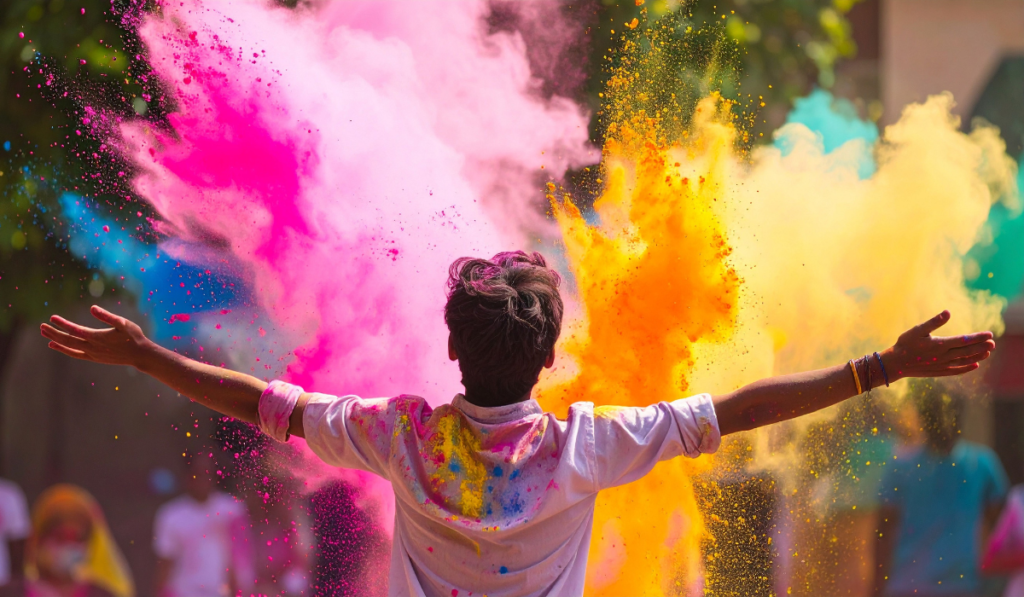
There is something deeply sacred about the festival of colours. It is not just gulal being thrown into the air. It is joy that is pure, uncontained, devotional joy, rising like an offering to the Divine.
Holi arrives every year at the end of winter, when the earth is warming, flowers are blooming, and the soul feels ready to begin again. It is one of the oldest and most beloved festivals in the Hindu calendar, celebrated across India and by millions around the world.
In 2026, Holi falls on March 4, with Holika Dahan on the evening of March 3. Whether you are preparing your puja thali, choosing organic Holi colours, or planning how to celebrate with family, this blog guides you through everything you need to know, spiritually and practically.
Key Highlights Before You Begin
- Festival Name: Holi, the Festival of Colours
- Holika Dahan 2026 Date: March 3, 2026 (Monday)
- Holi 2026 Date: March 4, 2026 (Tuesday)
- Tithi: Purnima (Full Moon) of Phalgun month
- Holika Dahan Muhurat: Evening of March 3, 2026. Check your local panchangam for exact timing
- Primary Deity: Bhagwaan Vishnu (in his form as Narasimha); also associated with Bhagwan Krishna.
- Celebrated In: India and worldwide among Hindu communities
What Is Holi? True Meaning of the Festival of Colors
| Holi is a Hindu spring festival celebrated on the full moon (Purnima) of the Phalgun month. It commemorates the victory of devotion over evil, the divine love of Radha and Krishna, and the eternal triumph of good over darkness. It is celebrated with bonfires, colour, music, and prayer. |
The festival of colors in India is not a single event, it is a two-day sacred experience that begins with Holika Dahan (the bonfire night) and culminates in Rangwali Holi (the day of colours and celebration).
Holi 2026: Dates, Tithi & Muhurat
| Event | Date | Day | Tithi |
| Holika Dahan | March 3, 2026 | Monday | Purnima begins at sunset |
| Rangwali Holi | March 4, 2026 | Tuesday | Purnima / Pratipada |
Holi Puja Timing 2026
The Holika Dahan muhurat is determined by the Pradosh Kaal. It is the period after sunset when the Purnima tithi is active. In most regions of India, this falls between 6:30 PM and 9:00 PM on March 3, 2026.
However, timing varies by city and regional panchangam. Always confirm with your local temple or priest for the most auspicious muhurat in your area.The morning of March 4 is for Rangwali Holi. Celebrations typically begin at sunrise and continue through the late morning. By tradition, the colours are played before noon.
The Spiritual Significance of Holi
Why Do We Celebrate the Hindu Festival Holi?
Holi is rooted in three beautiful stories from our scriptures, each carrying a message for daily life.
1. The Victory of Prahlad: Devotion Over Evil
The most central story of Holi is that of Prahlad, a young devotee of Bhagwaan Vishnu, and his wicked aunt Holika. Holika, who had a boon that fire could not harm her, carried Prahlad into a bonfire to destroy him. But Prahlad’s unwavering devotion protected him, and it was Holika who burned. This is why we light the Holika Dahan bonfire to remember that bhakti (devotion) is the greatest protection.
2. The Love of Radha and Krishna
In Braj, Mathura, and Vrindavan, the land of Bhagwaan Krishna, Holi is a celebration of divine love. The young Krishna, known to be dark-skinned, once asked his mother Yashoda why Radha was so fair. In playful response, Yashoda suggested he colour Radha’s face with whatever colour he wished. This story of sacred playfulness is why Holi celebration in India is filled with laughter, music, and the joyful throwing of colour.
3. The Arrival of Spring: Renewal of Life
Holi also marks the transition from winter to spring. In the agricultural tradition, it is a time to give thanks for the harvest and to welcome new beginnings. The burning of Holika symbolises the destruction of the old fears, grudges, and ego, to make way for fresh growth.
Holika Dahan: The Sacred Bonfire Ritual
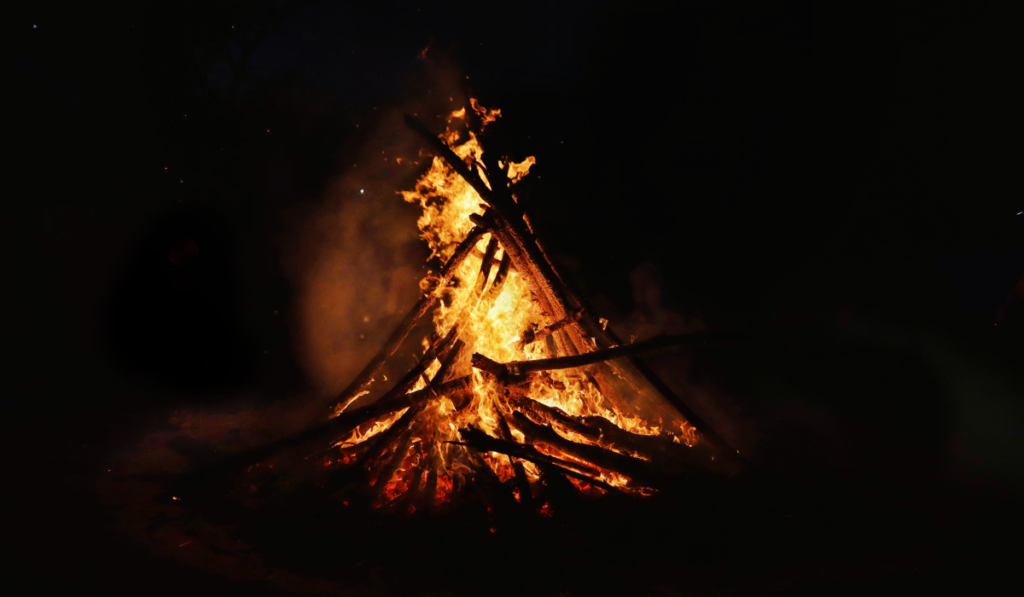
Holika Dahan is the eve of Holi. It is observed with reverence and community spirit.
How Holika Dahan Is Performed?
- A large bonfire is built in a central open space using wood, dried leaves, and cow dung cakes
- An effigy of Holika is placed at the centre, with a figure of Prahlad at her side
- Devotees perform a parikrama (circumambulation) of the fire, chanting mantras and prayers
- Offerings of raw coconut, wheat stalks (new harvest), and flowers are made into the fire
- Families bring prasad such as sweets, fruits, and coconut to be blessed by the warmth of the sacred flame
- After the puja, elders bless children and prasad is distributed
The fire is not merely symbolic, it is a yagna, a sacred offering. What we throw into the fire, we release from our lives.
Rangwali Holi: The Festival of Colours
The morning of Holi, festival celebration begins with the playing of colours like gulal, abir, and colour powder, among family, friends, and neighbours. Sweets like gujiya, thandai, and malpua are prepared and shared.
In many homes, the day begins with a small puja to bhagwaan Vishnu or Krishna before stepping out to play. This grounds the celebration in devotion, not just festivity.
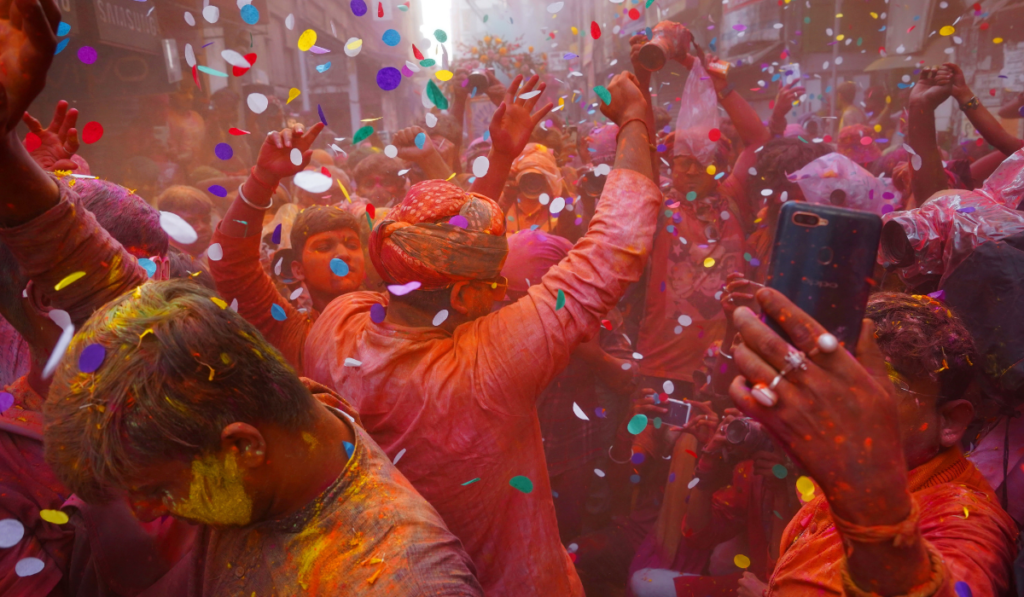
How Is Holi Celebrated in India, Region by Region?
- Braj Holi (Mathura, Vrindavan, Barsana): The most spiritually vibrant. Begins days before the main festival. Features Lathmar Holi where women playfully use sticks, and the famous Phoolon ki Holi with flower petals.
- Lathmar Holi (Barsana): Celebrated a week before Holi at the birthplace of Radha. Draws devotees from across the world.
- Shigmo (Goa): The Konkan coast celebrates a spring festival closely linked to Holi with folk processions and music.
- Dol Yatra (West Bengal): Bhagwaan Krishna’s idol is placed on a decorated swing (dol) and carried in procession while devotees play with colours and sing bhajans.
- Manjal Kuli (Kerala): A temple-based Holi celebrated at select Shiva and Vishnu temples with turmeric water.
Each region brings its own cultural texture to the holi Indian festival of colors, but the spirit is the same, joy rooted in devotion.
Choosing the Right Colours: Why Organic Holi Colours Matter
The tradition of playing with colour originally used flowers, turmeric, neem, and natural herbs. These colours held healing properties, they were good for the skin and the environment. Today, we encourage a return to that original wisdom.
Benefits of Organic Holi Colours
- Skin-safe: Free from synthetic dyes, lead, and heavy metals that cause irritation and allergic reactions
- Environment-friendly: Holi organic colours do not pollute water bodies or harm plants and animals
- Spiritually aligned: Natural colours connect us to the earth and to the original intent of the festival
- Safe for children and elders: Gentle enough for sensitive skin
What to Look for in Holi Color Powder?
When choosing Holi color powder, look for products that are clearly labelled:
- Made from flowers (palash, marigold, rose), turmeric, or herbal extracts
- Free from synthetic fragrance and chemical binders
- Tested for skin safety
- Produced sustainably without bleaches or brighteners
Palash (flame of the forest) flowers were historically used to make the signature saffron-red of Holi. This is perhaps the most spiritually significant colour of the festival. At My Favorite Corner, we believe that celebrating with organic Holi colours is not just a healthy choice, it is a correct and devotional one.
The Spiritual Meaning of Colours in Holi
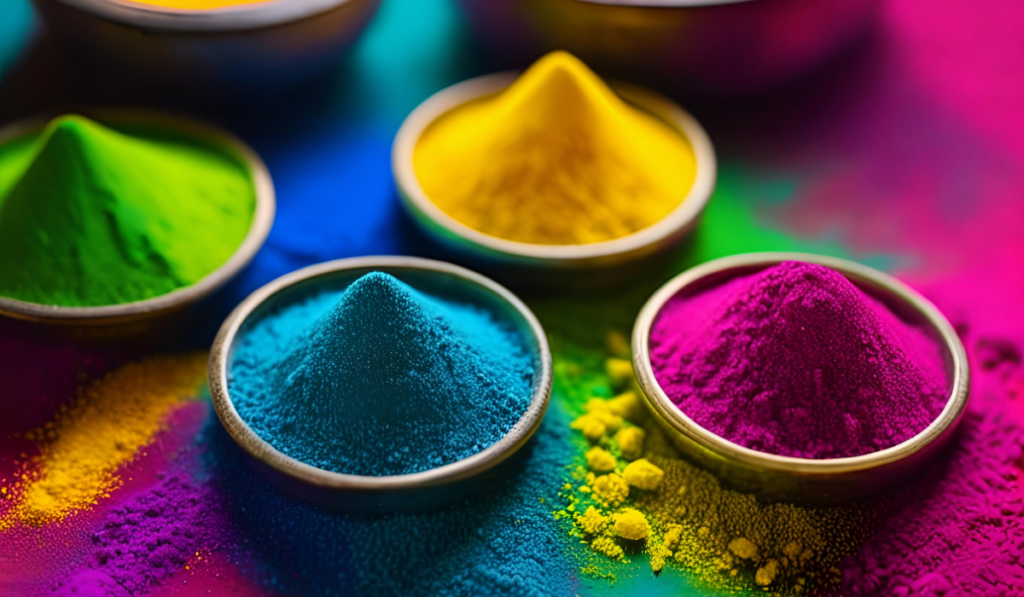
Each colour in Holi carries its own sacred significance:
- Red (Gulal): Love, fertility, and the divine feminine. Associated with the goddess Durga and the union of Radha-Krishna.
- Yellow (Turmeric/Haldi): Auspiciousness, healing, and prosperity. A colour of the sun and the sacred.
- Green: New beginnings, nature, and Bhagwaan Vishnu’s regenerative energy.
- Blue: The divine colour of Bhagwaan Krishna, depth, infinity, and cosmic grace.
- Pink/Saffron (Kesariya): Spiritual renunciation and the flame of devotion.
When you throw colour on another, you are not just playing, you are sharing a blessing.
A Few Gentle Reminders From Holi
- Begin the day with a short prayer or mantra before stepping out to play
- Choose organic Holi colours that are safe for you, your family, and the earth
- Respect those who do not wish to play with colours
- Share sweets and prasad with neighbours, especially the elderly and less fortunate
- After the celebration, visit a nearby temple to offer gratitude
Conclusion: The Colour That Never Fades
Holi lasts a morning. The gulal washes away. The bonfire turns to ash. But the joy it carries, the memory of laughter, of togetherness, of colour-stained hands reaching toward the sky, that lingers. It is the kind of joy that the festival of colours teaches us to carry beyond the festival: the practice of seeing the Divine in everyone you meet, of approaching life with colour and warmth and an open heart.
This Holi, may every colour you touch be a prayer. May every face you bless with gulal be an act of love. Holi Hai. Jai Shri Krishna.
Frequently Asked Questions (FAQ)
1. When is Holi 2026?
Holi 2026 falls on Tuesday, March 4, 2026. Holika Dahan will be observed on the evening of Monday, March 3, 2026.
2. What is the significance of Holika Dahan?
Holika Dahan commemorates the destruction of the demoness Holika and the survival of Prahlad, the young devotee of Lord Vishnu. It symbolises the victory of faith and goodness over evil. The sacred bonfire is lit during the auspicious Pradosh Kaal on Purnima evening.
3. What is the best time to perform Holi puja in 2026?
The Holi puja timing for Holika Dahan in 2026 is in the evening of March 3, during the Pradosh Kaal, when Purnima tithi is active. The specific muhurat varies by city. Consult your local panchangam or temple for the exact timing in your region.
4. Are synthetic Holi colours harmful?
Yes. Many commercially available Holi color powders contain synthetic dyes, heavy metals, mica, and chemical pigments that can cause skin irritation, eye damage, and allergic reactions. Switching to organic Holi colours made from flowers, herbs, and natural pigments is strongly recommended for safe and spiritually conscious celebration.
5. Why is Holi called the festival of colours?
Holi is called the festival of colours because colour is its primary ritual and symbol. Drawing from the story of Krishna colouring Radha’s face, the throwing of gulal and colour powder represents the joy of divine love, the breaking of social barriers, and the celebration of life in all its vibrant, varied forms.
6. Can non-Hindus participate in Holi celebrations?
Yes. Holi is a celebration of life, light, and love. While it is rooted in Hindu devotion and mythology, its joy is universal. Many Holi festival celebrations across India and the world warmly welcome people of all backgrounds to participate in the colour festivities.
Explore more devotional guides, festival calendars, and sacred living inspiration at Instagram and Facebook.