



श्री शिव तांडव स्तोत्रम्
1
जटाटवीगलज्जल प्रवाहपावितस्थले
गलेऽवलम्ब्य लम्बितां भुजङ्गतुङ्गमालिकाम्।
डमड्डमड्डमड्डमन्निनादवड्डमर्वयं
चकार चण्डताण्डवं तनोतु नः शिवः शिवम्॥
2
जटाकटाहसंभ्रम भ्रमन्निलिम्पनिर्झरी
विलोलवीचिवल्लरी विराजमानमूर्धनि।
धगद्धगद्धगज्ज्वलल्ललाटपट्टपावके
किशोरचन्द्रशेखरे रतिः प्रतिक्षणं मम॥
3
धराधरेन्द्रनन्दिनी विलासबन्धुबन्धुर
स्फुरद्दिगन्तसन्तति प्रमोदमानमानसे।
कृपाकटाक्षधोरणी निरुद्धदुर्धरापदि
क्वचिद्दिगम्बरे मनो विनोदमेतु वस्तुनि॥
4
जटाभुजङ्गपिङ्गल स्फुरत्फणामणिप्रभा
कदम्बकुङ्कुमद्रवप्रलिप्तदिग्वधूमुखे।
मदान्धसिन्धुरस्फुरत्त्वगुत्तरीयमेदुरे
मनो विनोदमद्भुतं बिभर्तु भूतभर्तरि॥
5
सहस्रलोचनप्रभृत्यशेषलेखशेखर
प्रसूनधूलिधोरणी विधूसराङ्घ्रिपीठभूः।
भुजङ्गराजमालया निबद्धजाटजूटकः
श्रियै चिराय जायतां चकोरबन्धुशेखरः॥
6
ललाटचत्वरज्वलद्धनञ्जयस्फुलिङ्गभा
निपीतपञ्चसायकं नमन्निलिम्पनायकम्।
सुधामयूखलेखया विराजमानशेखरं
महाकपालिसम्पदे शिरोजटालमस्तु नः॥
7
करालभालपट्टिकाधगद्धगद्धगज्ज्वल
द्धनञ्जयाहुतीकृत प्रचण्डपञ्चसायके।
धराधरेन्द्रनन्दिनी कुचाग्रचित्रपत्रक
प्रकल्पनैकशिल्पिनी त्रिलोचने रतिर्मम॥
8
नवीनमेघमण्डली निरुद्धदुर्धरस्फुरत्
कुहूनिशीथिनीतमः प्रबन्धबद्धकन्धरः।
निलिम्पनिर्झरीधरस्तनोतु कृत्तिसिन्धुरः
कलानिधानबन्धुरः श्रियं जगद्धुरन्धरः॥
9
प्रफुल्लनीलपङ्कज प्रपञ्चकालिमप्रभा
वलम्बिकण्ठकन्दली रुचिप्रबद्धकन्धरम्।
स्मरच्छिदं पुरच्छिदं भवच्छिदं मखच्छिदं
गजच्छिदान्धकच्छिदं तमन्तकच्छिदं भजे॥
10
अखर्वसर्वमङ्गला कलाकदम्बमञ्जरी
रसप्रवाहमाधुरी विजृम्भणामधुव्रतम्।
स्मरान्तकं पुरान्तकं भवान्तकं मखान्तकं
गजान्तकान्धकान्तकं तमन्तकान्तकं भजे॥
11
जयत्वदभ्रविभ्रमभ्रमद्भुजङ्गमस्फुर-
धिग्धिग्धि निर्गमत्कराल भाल हव्यवाट्।
धिमिद्धिमिद्धिमिद्ध्वनन्मृदङ्गतुङ्गमङ्गल-
ध्वनिक्रमप्रवर्तित प्रचण्डताण्डवः शिवः॥
12
दृषद्विचित्रतल्पयोर्भुजङ्गमौक्तिकस्रजोर्
गरिष्ठरत्नलोष्ठयोः सुहृद्विपक्षपक्षयोः।
तृणारविन्दचक्षुषोः प्रजामहीमहेन्द्रयोः
समं प्रवर्तयन्मनः कदा सदाशिवं भजे॥
13
कदा निलिम्पनिर्झरी निकुञ्जकोटरे वसन्
विमुक्तदुर्मतिः सदा शिरःस्थमञ्जलिं वहन्।
विलोललोचलो ललामभाललग्नकः
शिवेति मन्त्रमुच्चरन् कदा सुखी भवाम्यहम्॥
14
इमं हि नित्यं एव मुक्तमुक्तमोत्तमं स्तवं
पठन्स्मरन् ब्रुवन्नरो विशुद्धिमेतिसंततम्।
हरे गुरौ सुभक्तिमाशु याति नान्यथा गतिं
विमोहनं हि देहिनां सुशङ्करस्य चिन्तनम्॥
15
पूजावसानसमये दशवक्त्रगीतं यः
शम्भुपूजनपरं पठति प्रदोषे ।
तस्य स्थिरां रथगजेन्द्रतुरङ्गयुक्तां
लक्ष्मीं सदैव सुमुखीं प्रददाति शम्भुः॥
Shiv Tandav Stotram with Meaning
1
Jatāṭavī-gala-jjala-pravāha-pāvita-sthale
Gale’valambya lambitāṃ bhujanga-tuṅga-mālikām।
Ḍamaḍ ḍamaḍ ḍamaḍ ḍama-nnināda-vaḍḍa-marvayaṃ
Chakāra chaṇḍa-tāṇḍavaṃ tanotu naḥ Śivaḥ śivam॥
Meaning:
With his neck sanctified by the flow of the sacred Ganga from his matted hair,
With a mighty serpent hanging like a garland,
As the Damaru resounds ḍamaḍ ḍamaḍ,
Shiv performs the fierce Tandav, may He bless us with auspiciousness!
2
Jatā-kaṭāha-sambhrama-bhraman-nilimpa-nirjharī
Vilola-vīchi-vallari-virājamāna-mūrdhani।
Dhagad-dhagad-dhagaj-jvalal-lalāṭa-paṭṭa-pāvake
Kishora-chandra-śekhare ratiḥ pratikṣaṇaṃ mama॥
Meaning:
I am ever devoted to Shiv,
Whose head shines with the dancing waves of the divine Ganga,
Whose forehead burns with brilliant fire,
And who wears the crescent moon as an ornament.
3
Dharādhara-indra-nandinī-vilāsa-bandhu-bandhura
Sphurat-diganta-santati-pramoda-māna-mānase।
Kṛpā-kaṭākṣa-dhoraṇī-niruddha-durdharāpadi
Kvacid-digambare mano vinodam-etu vastuni॥
Meaning:
May my mind rejoice in the supreme Digambara (clothed with space),
Whose blissful thoughts delight in Parvati,
Who through his compassionate glance controls all difficulties,
And who is adored by all creation.
4
Jatā-bhujanga-piṅgala-sphurat-phaṇā-maṇi-prabhā
Kadamba-kuṅkuma-drava-pralipta-dig-vadhū-mukhe।
Madāndha-sindhu-rasphurat-tvag-uttarīya-medure
Mano vinodam-adbhutaṃ bibhartu bhūta-bhartari॥
Meaning:
May my mind rejoice in the wondrous Shiv,
Whose body is wrapped with the skin of a wild elephant,
Whose snakes glow with gem-lit hoods,
And whose presence adds beauty to the directions stained with sandal-paste.
5
Sahasra-lochana-prabhṛtya-śeṣa-lekha-śekhara
Prasūna-dhūli-dhoraṇī-vidhūsarāṅghri-pīṭha-bhūḥ।
Bhujanga-rāja-mālayā nibaddha-jāta-jūṭakaḥ
Śriyai chirāya jāyatāṃ chakora-bandhu-śekharaḥ॥
Meaning:
May Shiv – whose matted hair is adorned with a red snake,
Whose feet are dusted by the flowers from the heads of gods like Vishnu and Brahma,
And who wears the moon – ever grant us prosperity.
6
Lalāṭa-chatvara-jvalad-dhanañjaya-sphuliṅga-bhā
Nipīta-pañca-sāyakaṃ naman-nilimpa-nāyakam।
Sudhā-mayūkha-lekhayā virājamāna-śekharaṃ
Mahā-kapāli-sampade śiro-jaṭālam-astu naḥ॥
Meaning:
May Shiv’s matted locks bring us Siddhi and success,
He who burned Kamadev with a spark from his forehead,
Is bowed to by celestial beings,
And wears the moon on his crown.
7
Karāla-bhāla-paṭṭikā-dhagaddha-gaddha-gajjvala
Dhanañjaya-āhutīkṛta prachaṇḍa-pañcha-sāyake।
Dharādhara-indra-nandinī-kuchāgra-chitra-patraka
Prakalpanaika-śilpinī trilochane ratir mama॥
Meaning:
I delight in the three-eyed Lord Shiv,
Whose fierce forehead consumed Kamadev,
And who artistically decorates Parvati’s body with divine love.
8
Navīna-megha-maṇḍalī-niruddha-durdhara-sphurat
Kuhū-niśīthini-tamaḥ prabandha-baddha-kandharaḥ।
Nilimpa-nirjharī-dharaḥ stanotu kṛtti-sindhuraḥ
Kalā-nidhāna-bandhuraḥ śriyaṃ jagad-dhurandharaḥ॥
Meaning:
May Shiv, the bearer of Ganga, cloaked in elephant hide,
Whose neck is dark like rain clouds at night,
And who supports the whole world, bless us with wealth and wisdom.
9
Praphulla-nīla-paṅkaja prapañcha-kālima-prabhā
Valambi-kaṇṭha-kandalī-ruchi-prabaddha-kandharam।
Smarachchhidaṃ purachchhidaṃ bhavachchhidaṃ makhachchhidaṃ
Gajachchidāndhaka-chchhidaṃ tam-antaka-chchhidaṃ bhaje॥
Meaning:
I worship the destroyer of Kamadev, Tripura, worldly bondage, sacrifices,
And of Gajasur, Andhak, and even death itself, Lord Shiv,
Whose radiant blue throat shines like a blossomed lotus.
10
Akharva-sarva-maṅgalā-kalā-kadamba-mañjarī
Rasa-pravāha-mādhurī-vijṛmbhaṇā-madhuvratam।
Smarāntakaṃ purāntakaṃ bhavāntakaṃ makhāntakaṃ
Gajāntakāndhaka-kāntakaṃ tam-antaka-kāntakaṃ bhaje॥
Meaning:
I worship Shiv,
Who is the destroyer of lust, pride, illusion, sacrifices, and death,
Who is surrounded by buzzing bees drawn to the sweetness of divine nectar
From the blossoming bouquet of all auspicious arts.
11
Jayatv-ad-abhravibhrama-bhramad-bhujanga-maśvasan
Dhigdhigdhi nirgamat-karāla-bhāla-havyavāṭ।
Dhimid-dhimid-dhimid-dhvanan-mṛdaṅga-tuṅga-maṅgala
Dhvanikrama-pravartita-prachaṇḍa-tāṇḍavaḥ Śivaḥ॥
Meaning:
May victorious Shiv bless us with auspiciousness,
Whose Tandav is accompanied by the hissing of serpents swirling in the sky,
Whose loud drumbeats echo through the directions,
Adorning the faces of celestial goddesses.
12
Dṛṣad-vichitra-talpayor-bhujanga-mauktika-srajor
Gariṣṭha-ratna-loṣṭhayoḥ suhṛd-vipakṣa-pakṣayoḥ।
Tṛṇāravinda-chakṣuṣoḥ prajā-mahī-mahendra-yoḥ
Samaṃ pravartayan-manaḥ kadā sadāśivaṃ bhaje॥
Meaning:
When will I adore Sadāshiv with a mind that sees no difference
Between luxurious beds or stone floors,
Rich jewels or clods of earth, friend or enemy,
A blade of grass or a lotus, kings or commoners?
13
Kadā nilimpa-nirjharī-nikuñja-koṭare vasanh
Vimukta-dur-matiḥ sadā śiraḥ-stham-añjaliṃ vahan।
Vilola-lochano lalāma-bhāla-lagnakaḥ
Śiveti mantram-uccharan kadā sukhī bhavāmy-aham॥
Meaning:
When will I live in a forest cave beside the celestial Ganga,
With purified thoughts and folded hands over my head,
Eyes filled with divine longing, a flame on my forehead,
Uttering “Shiv, Shiv” and be truly happy?
14
Imaṃ hi nityaṃ eva mukta-muktam-ottamaṃ stavam
Paṭhan-smaran bruvan-naro viśuddhim-eti santatam।
Hare gurau subhaktim-āśu yāti nānyathā gatiṃ
Vimohanaṃ hi dehināṃ suśaṅkarasya chintanam॥
Meaning:
One who recites or remembers this supreme stotra daily
Is purified and quickly attains deep devotion to Lord Shiv and the Guru.
There is no other path
For just thinking of Shankar removes all delusions of embodied beings.
15
Pūjāvasānasamaye daśavaktra-gītaṁ yaḥ
Śambhupūjanaparaṁ paṭhati pradoṣe ।
Tasya sthirāṁ rathagajendraturaṅgayuktāṁ
Lakṣmīṁ sadaiva sumukhīṁ pradatāti Śambhuḥ॥
Meaning:
At the end of worship, whoever recites this hymn composed by Dashavaktra (Ravana),
and chants it with devotion to Lord Shiva during the evening time,
Lord Shiva grants that devotee stability, strength, and steady progress in life,
and blesses them with lasting prosperity and well-being, always accompanied by grace.
Origin of Shiv Tandav Stotram
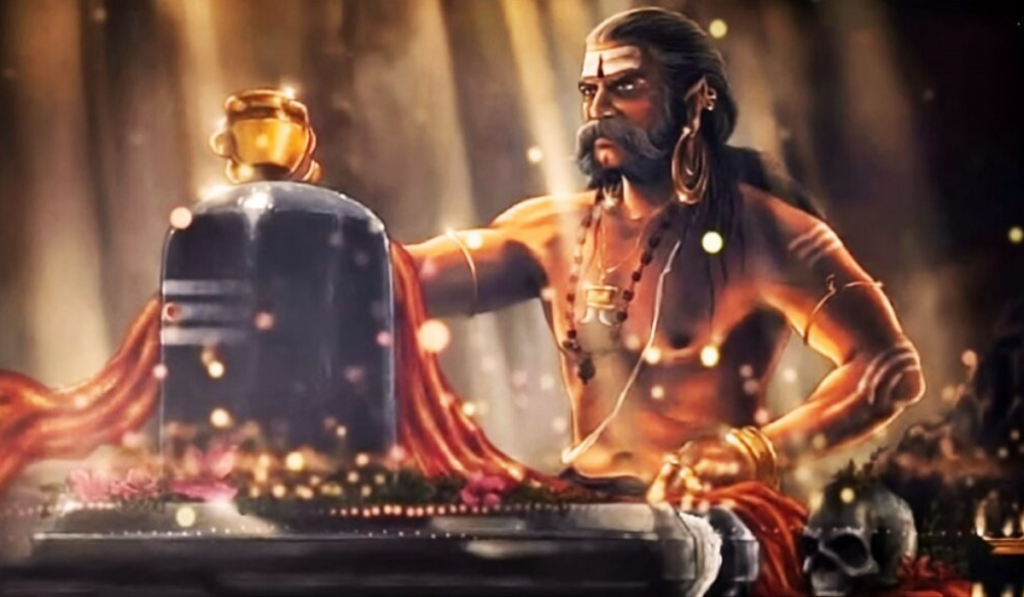
The Shiv Tandav Stotram is traditionally attributed to Ravana, the king of Lanka and a great devotee of Lord Shiva. This stotram is not mentioned as a casual hymn but appears in Shaiva traditions preserved through Puranic narration and oral upanyas.
According to the story, Ravana attempted to lift Mount Kailasa in his pride. Lord Shiva pressed the mountain down with his toe, trapping Ravana beneath it. In pain and surrender, Ravana composed and sang the Shiv Tandav Stotram in praise of Shiva’s power, beauty, and cosmic form.
Moved by Ravana’s devotion and mastery of sound, rhythm, and bhakti, Lord Shiva released him and granted divine grace. Because of this origin, the stotram is seen as born from surrender, not ritual.
This makes the Shiv Tandav Stotram unique. It comes not from a peaceful meditation, but from a direct encounter with Mahadev’s cosmic authority.
Religious and Spiritual Significance
In Hinduism, Tandav is not a dance for celebration. It is the cosmic rhythm of creation, preservation, and destruction. The Shiv Tandav Stotram describes Shiva in this exact role.
- Describes Shiva as Mahakala, beyond time
- Reveals Shiva as both fierce and compassionate
- Honors the balance of destruction and grace
Unlike many stotras that focus on peace alone, the Shiv Tandav Stotram openly praises Shiva’s raw, untamed energy. Upanyas often state that chanting this stotram helps a devotee accept change, loss, and transformation as divine processes. Spiritually, it trains the mind to stand steady in intensity, not escape it.
Best Time to Chant Shiv Tandav Stotram
The best time to chant Shiv Strotam is on Pradosha, the time just after sunset. This is when Shiva is believed to be most accessible to devotees. The Shiv Tandav Stotram is especially associated with:
- Pradosha time
- Mondays
- Maha Shivratri
Upanyas explain that this timing aligns with Shiva’s role as the Lord of thresholds, the space between light and darkness, movement and stillness. Chanting during these times is believed to deepen focus and connect the devotee to Shiva’s dynamic nature.
How to Chant Shiv Tandav Stotram?
The Shiv Tandav Stotram is traditionally chanted aloud, not silently. Sound is central to its power. Classical Shaiva teachings advise:
- Sit in a steady posture
- Chant with rhythm, not speed
- Maintain awareness of pronunciation
This stotram is not meant for casual background chanting. Upanyas repeatedly stresses that it demands attention and presence, because it reflects Shiva’s intense and alert nature. Even one complete shloka recitation is considered sufficient when done with focus.
Benefits of Practicing Shiv Tandav Stotram
Hindu tradition does not describe the benefits of Shiv Tandav Stotram in material terms alone.
- Builds fearlessness in the face of change
- Strengthens mental discipline and willpower
- Reduces attachment to ego and control
- Helps the devotee accept destruction as part of divine order
Because Ravana himself was a master of intellect and power, the stotram is said to humble pride and sharpen awareness rather than promise comfort. This is why it is often recommended in times of inner conflict, instability, or transformation.
Final Thought
The Shiv Tandav Stotram is not a gentle prayer. It is a confrontation with Shiva as cosmic force, destroyer of illusion, and keeper of balance.
Rooted in ittihas, carried through Puranas, and preserved by tradition, this stotram teaches that devotion does not mean softness. It means standing strong before truth, even when it shakes everything familiar.
Those who chant the Shiv Tandav Stotram do not ask Shiva to remove change. They ask for the strength to endure it.
That is its real power.
Save or bookmark this page so you can return to it whenever you seek calm, clarity, or devotion. Follow us on Instagram and Facebook to stay connected, and share your thoughts or suggestions in the comments.
This corner is meant to be returned to, not just read once.