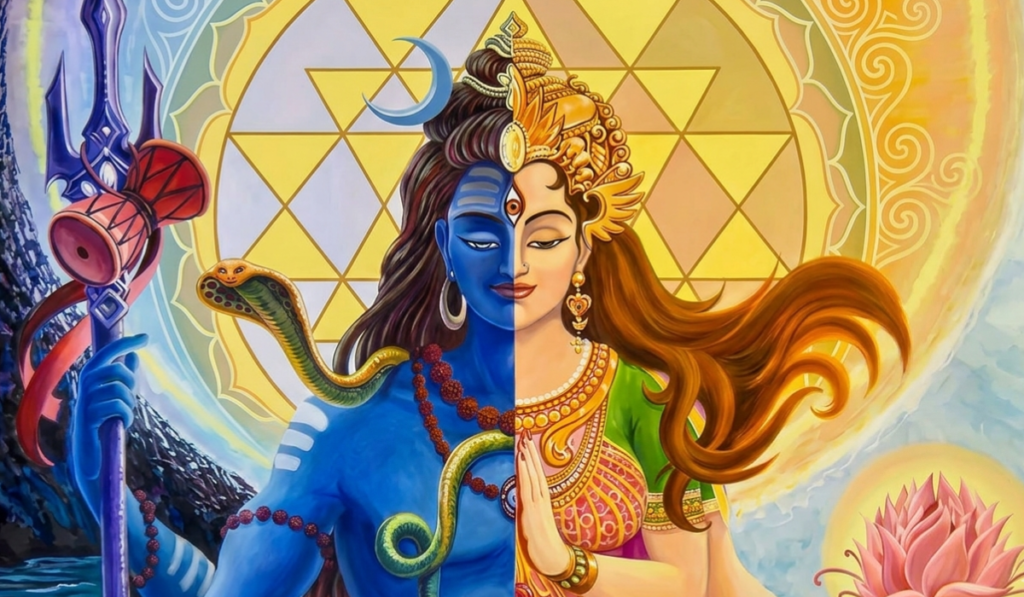



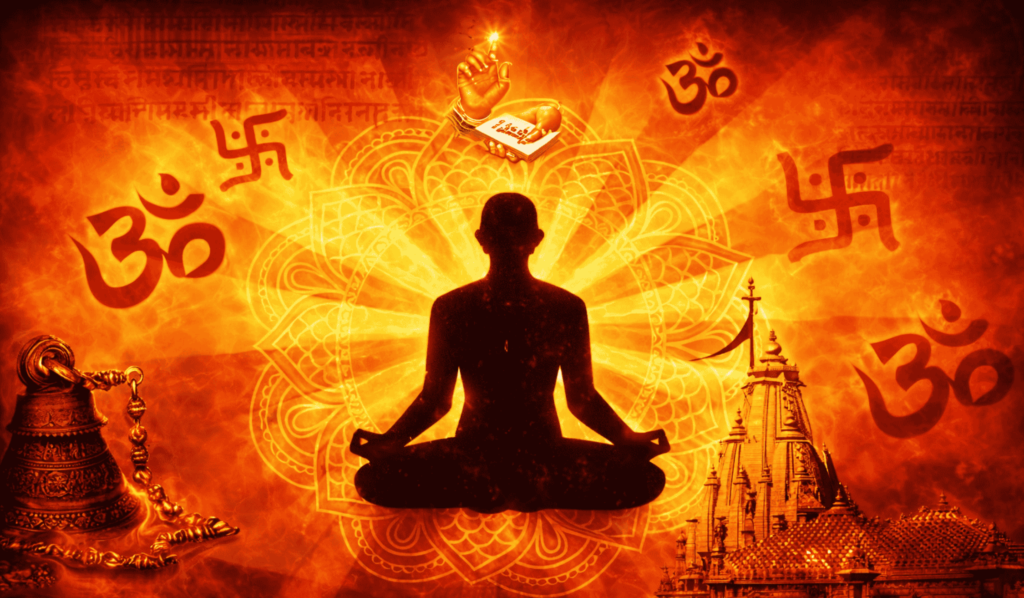
| Sanatan Dharma is the original Sanskrit name for the tradition, meaning the eternal path of righteousness. Hinduism is the name given by Persian and Greek travellers based on the Indus River. Both refer to the same living tradition. Sanatan Dharma describes the eternal philosophy; Hinduism describes the lived religion and culture. |
Two names. One ancient tradition. And yet, the difference between Sanatan Dharma vs Hinduism runs deeper than most people realise.
For millions, these terms feel interchangeable. You may use them that way yourself without a second thought. But ask a Vedic scholar or a devoted practitioner, and you will quickly find that they see a huge meaningful difference.
One name is timeless. The other was given by strangers.
Understanding the difference between Sanatan Dharma and Hinduism is not just an academic exercise. It shapes how you understand this tradition. It shapes how you practise it. And it shapes the story you tell about it.
Let us explore both, carefully and with respect for the wisdom they carry.
What Is Sanatan Dharma?
| Sanatan Dharma is the original name for the spiritual tradition known today as Hinduism. In Sanskrit, Sanatan means eternal or beginningless, and Dharma means cosmic law or righteous duty. Together, Sanatan Dharma means the eternal path of truth, righteousness, and cosmic order. It has no single founder, no fixed start date, and no single creed. |
The Sanatan Dharma meaning in Vedas is rooted in the Sanskrit root “sanā”, meaning perpetual or ancient. Vedic scholars define Sanatan as that which exists in all three times: past, present, and future.
Sanatan Dharma is the original name for the spiritual tradition most people today call Hinduism.
The word Sanatan (सनातन) comes from Sanskrit. It means eternal, beginningless, everlasting. Dharma means righteous duty, cosmic law, the way of being that sustains all life.
Together, Sanatan Dharma means the eternal path. The timeless principles that govern existence. The unchanging truths that hold the cosmos in order. It has no single founder. No fixed start date. No single scripture or creed.
It is a living tradition rooted in direct experience of the Divine, passed down through the Vedas, Upanishads, Bhagavad Gita, and countless other sacred texts.
Sanatan Dharma Meaning in the Vedas and Gita
The Bhagavad Gita uses the word Sanatan directly to describe the eternal nature of the soul:
ममैवांशो जीवलोके जीवभूतः सनातनः ।
mamaivāṁśo jīvaloke jīvabhūtaḥ sanātanaḥ
“The living being in this world is My eternal (sanātana) fragment.”
The verse uses sanatanah to describe the eternal soul. This is the metaphysical foundation of Sanatan Dharma: a system built on eternal truths about existence, not on time-bound rules. The Gita also describes the Divine as the protector of eternal dharma:
त्वमव्ययः शाश्वतधर्मगोप्ता सनातनस्त्वं पुरुषो मतो मे ।।
tvam avyayaḥ śāśvata-dharma-goptrā sanātanas tvaṃ puruṣo mato me
“You are the protector of the eternal dharma, the Sanatana Purusha.”
Here the Gita directly links Sanatan with shashvata dharma, eternal dharma. This is why the tradition calls itself Sanatan Dharma. Not a claim. A description.
What Is Hinduism?
| Hinduism is the name given by Persian and Greek travellers to the people living near the Indus River (Sindhu in Sanskrit). It became a formal religious label during British colonial rule. Today it is the world’s third-largest religion and an umbrella term for diverse beliefs, sects, and practices rooted in the Vedic tradition. |
No ancient Vedic scripture uses the word “Hinduism.” The term entered scholarly and legal use primarily through 19th-century British colonial administration. Scholars including Wendy Doniger and Romila Thapar have documented this naming history extensively.
Hinduism is the name the world knows. It is used in textbooks, census records, government documents, and everyday conversation around the globe.
But it did not come from within the tradition. The word Hinduism derives from Hindu, used by Persian and Greek travellers to describe the people living near and beyond the Indus (Sindhu) River. It was a geographic label, not a spiritual one.
Over centuries, especially through British colonial rule, the term was formalised into a religious category. The British needed a word to organise the diverse spiritual practices of the Indian subcontinent. Hinduism became that word.
Today it is an umbrella term for an enormous range of beliefs, rituals, sects, and philosophies. It includes Shaivism, Vaishnavism, Shaktism, Advaita Vedanta, Dvaita, and hundreds of regional traditions. It is one of the world’s oldest and most complex living religions.
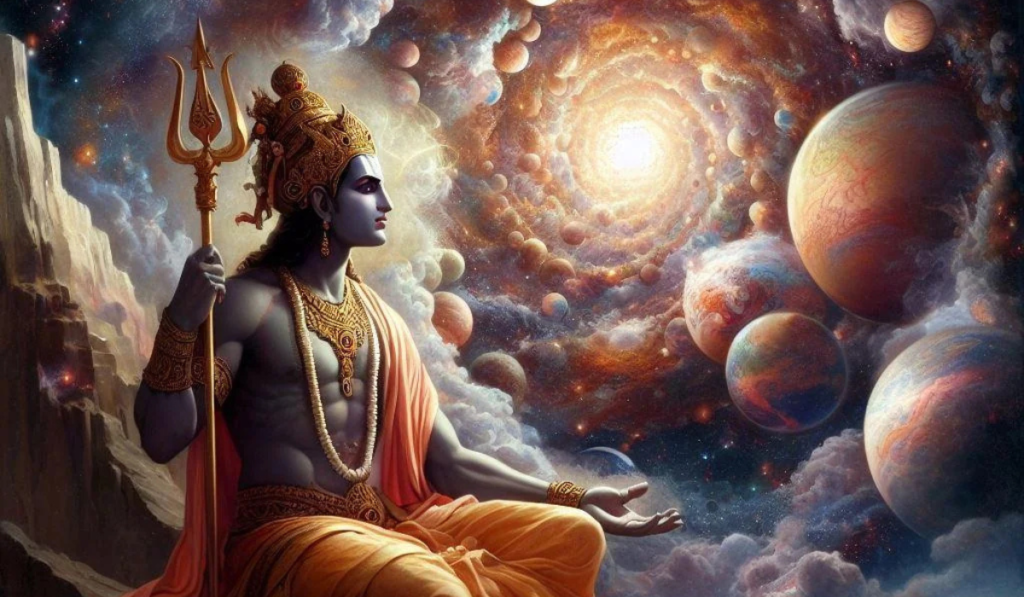
The Difference Between Sanatan Dharma vs Hinduism
Is Sanatan Dharma the same as Hinduism?
Yes, in practice they refer to the same living tradition. Sanatan Dharma is the philosophical name rooted in Sanskrit scripture. Hinduism is the cultural and religious name given by outsiders. The difference between Sanatan Dharm vs Hinduism is one of perspective: Sanatan Dharma is what the tradition calls itself; Hinduism is what the world calls it.
| Aspect | Sanatan Dharm | Hinduism |
|---|---|---|
| Origin of Name | Sanskrit. Self-given. Eternal in meaning. | Persian/Greek. Given by outsiders. Geographic in origin. |
| Meaning | Eternal Dharma. The timeless path of righteousness. | People of the Indus. A regional, cultural identity. |
| Scriptural Basis | Vedas, Upanishads, and Gita use the word Sanatan directly. | Not found in any ancient Vedic scripture. |
| Scope | Universal. Applies to all beings and all times. | Often viewed as the religion of a specific people. |
| Focus | Cosmic order, dharma, moksha, and eternal truth. | Practices, rituals, festivals, and living traditions. |
| Flexibility | Embraces many paths. No single founder or creed. | Umbrella term for diverse sects and traditions. |
| Modern Use | Preferred by traditionalists, Vedic scholars, and practitioners. | Used in textbooks, law, census, and popular culture. |
What Sanatan Dharma Is Not?
There is a great deal of confusion about what Sanatan Dharma actually means. Let us clear some of it:
- Sanatan Dharma is not a political ideology. In recent years, the term has been drawn into political discourse in India and abroad. But the tradition itself predates politics by millennia. Using it as a tool for exclusion contradicts its very essence.
- Sanatan Dharma is not Brahminism. It is not restricted to any caste or community. The Vedic teaching is universal. Dharma belongs to all beings.
- Sanatan Dharma is not opposed to other faiths. It does not demand rejection of other paths. Its foundational principle is Vasudhaiva Kutumbakam: the world is one family.
The Manusmriti captures the ethical core of this tradition in plain terms:
सत्यं ब्रूयात् प्रियं ब्रूयान्न ब्रूयात् सत्यमप्रियम् ।
satyam brūyāt priyam brūyān na brūyāt satyam apriyam
“Speak the truth, speak pleasantly. Do not speak unpleasant truth. This is the eternal dharma.”
Manusmriti 4.138, dharmah sanātanaḥ
This is dharma in its purest form. Truthful. Kind. Universal. Not bound by religion or geography.
Why Sanatan Dharma and Hinduism Are Considered the Same?
They are considered the same because the identification of Sanatan Dharma with Hinduism is not a modern invention. It is reflected in centuries of commentary by Adi Shankaracharya, Ramanujacharya, Swami Vivekananda, and contemporary scholars of Vedic philosophy.
So, if they are different, why does everyone treat them as one and the same?
The simple answer is: because they point to the same living tradition. Hinduism describes the people, the culture, the practices, and the history. Sanatan Dharma describes the inner philosophy, the eternal principles, and the metaphysical foundation beneath all of it.
Think of it this way. Hinduism is the body. Sanatan Dharma is the soul.
Sanatan belongs to no one group. It is universal. And yet it lives most visibly in the Hindu way of life. This is why Sanatan Dharma and Hinduism have merged in popular use. For most practitioners, there is no contradiction. They are one path seen from two vantage points.
Which Is Correct: Sanatan Dharma or Hinduism?
Both terms are correct. The choice depends on context and intention.
Hinduism is called Sanatan Dharma because the tradition’s own scriptures describe dharma as sanatan, meaning eternal and universal. The Bhagavad Gita, Manusmriti, and Mahabharata all use the phrase ‘dharma sanatanahta’ to describe the timeless principles at the heart of the tradition. Hinduism adopted this self-description to reclaim its original philosophical identity.
If you are speaking about eternal spiritual philosophy, the Vedic metaphysics, the path of dharma and moksha rooted in scripture, then Sanatan Dharma is the more precise term. It is how the tradition has always referred to itself.
If you are speaking about the lived religion, the festivals, the community, the cultural practices that over a billion people follow, then Hinduism is perfectly appropriate. It connects to the modern world.
Neither is wrong. But if you want to honour the depth and universality of this tradition, Sanatan Dharma carries more weight. It says: this path is not merely Indian, and not merely ancient. It is eternal.
Conclusion
The difference between Sanatan Dharma vs Hinduism is not a reason to argue. It is an invitation to understand more deeply. Sanatan Dharma is the name this tradition gave itself. Eternal. Beginningless. Rooted in the unchanging truths of dharma and the soul’s journey toward the Divine.
Hinduism is the name the world gave it. Rich, diverse, vast, and alive. Both are true. Both are sacred. And if you have been asking yourself whether Sanatan Dharma is the same as Hinduism, now you know: they are two names for one ancient flame.
Carry that flame with reverence.
Frequently Asked Questions
1. Is Sanatan Dharma the same as Hinduism?
Yes. Both refer to the same living tradition. Sanatan Dharma is the original Sanskrit name meaning the eternal path. Hinduism is the name given by outsiders based on the Indus River. Most practitioners use both interchangeably, though traditionalists and Vedic scholars prefer Sanatan Dharma for its philosophical precision.
2. What does Sanatan Dharma mean in the Vedas?
In the Vedas and classical texts, Sanatan Dharma means the eternal cosmic law that sustains all life. The Bhagavad Gita uses the word sanatanahta to describe the eternal soul (15.7) and the Divine as protector of eternal dharma (11.18). The Manusmriti and Mahabharata also use the exact phrase dharma sanatanahta.
3. Why is Hinduism called Sanatan Dharma?
Because the tradition’s own scriptures describe its core principles as sanatan: eternal and universal. Practitioners have long called their path Sanatan Dharma to distinguish it from the outsider label of Hinduism and to reclaim the tradition’s self-description rooted in Vedic philosophy.
4. What is Sanatan Dharma not?
Sanatan Dharma is not a political ideology, not a caste-based system, and not in opposition to other faiths. It is a universal spiritual philosophy that sees all life as sacred and all genuine paths as valid expressions of the same eternal truth.
5. Which term should I use: Sanatan Dharma or Hinduism?
Both are acceptable. Use Sanatan Dharma when discussing the eternal philosophical tradition and its Vedic foundations. Use Hinduism when referring to the religion as practised by its community, its culture, and its living traditions.
6. What is the Sanatan Dharma meaning in the Vedas?
The Vedas describe dharma as the cosmic order that sustains the universe. The Sanskrit word Sanatan means eternal, beginningless, and existing in all times. Together, Sanatan Dharma in Vedic context means the timeless principles of righteous living that apply to all beings across all ages.