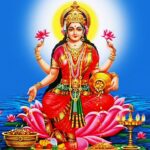

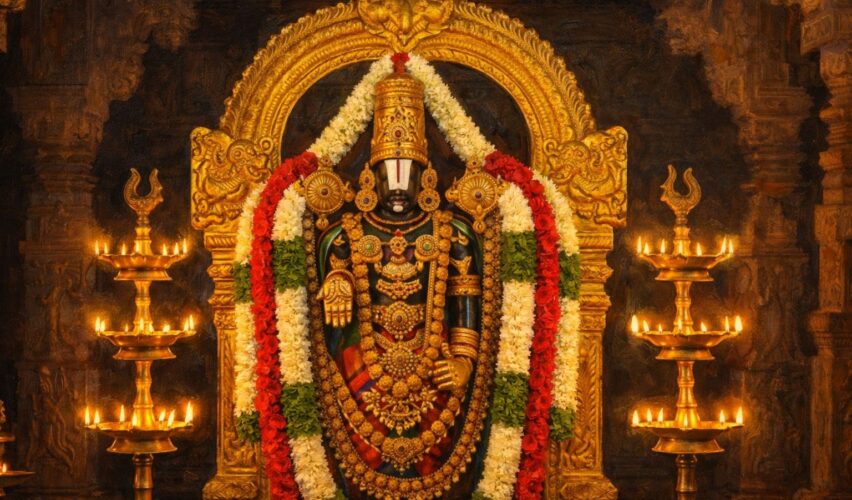
“Govinda Govinda Govinda!”
These three words carry the weight of centuries. Thousands of voices chant them together before dawn breaks over the Tirumala hills. Pilgrims who have travelled through the night stand shoulder to shoulder. Some are barefoot. Some wear silk. Many already have tears in their eyes, and they have not even seen the deity yet.
That is what Tirupati Balaji does to you. It reaches you before you reach it.
The temple of Sri Venkateswara Swamy, seated atop the seven sacred hills of Tirumala in Andhra Pradesh, is one of the most visited and most revered pilgrimage sites in the world. More than 50,000 devotees arrive here every single day. For a Hindu, a visit to Tirupati is not just a trip. It is a turning point.
This guide covers everything you need to know: the Tirupati Balaji temple history, the sacred Sri Venkateswara Swamy idol (murti) history, a step-by-step Tirupati temple darshan guide, the miracles of Lord Venkateswara that live in the hearts of devotees, the best time to visit Tirupati, sacred rituals, the iconic Laddu prasadam, and everything practical you need for your darshan.
What You Will Find in This Guide:
- Temple history and Puranic origins.
- Architecture and the seven sacred hills. TTD (Tirumala Tirupati Devasthanams) and how it operates.
- Darshan types, booking steps, and dress code.
- Best months to visit.
- Miracles and devotee accounts.
- Sevas, rituals, Laddu prasadam.
- Travel, stay, and nearby temples.
- Frequently Asked Questions About Tirupati Balaji Temple
Sri Venkateswara Swamy Temple History
The Story of Tirupati Balaji Temple
The Tirupati Balaji temple’s history does not begin with bricks or craftsmen. It begins with a divine decision. According to theBhavishyottara Purana, the Varaha Purana, and the Venkatachala Mahatmya, Bhagwaan Vishnu chose the Tirumala hills as his earthly home during the Kaliyuga, the present age of spiritual struggle.
In this age, Bhagwaan Vishnu saw that human beings would lose their way. He came not to a heavenly realm beyond reach, but to a mountain that any devoted person could climb on their own two feet, on the eternal path of sanatan dharm. That intention, to be accessible to all, remains the living spirit of Tirupati Balaji to this day.
What does Puranas Narrate?
The Puranas narrate a celestial episode that set these events in motion. Following a dispute in Vaikuntha, Bhagwaan Vishnu descended to earth and began penance on the Venkatachala hills. Maa Lakshmi, in her earthly form as Padmavathi, took birth in the household of King Akasharaja in the region now known as Tiruchanur. Bhagwaan Vishnu, wishing to marry Padmavathi, borrowed a vast sum of gold from Kubera, the god of wealth, to meet the wedding expenses.
This cosmic loan, according to tradition, remains unpaid to this day. When devotees place money in the hundi at the temple, they participate in this ancient divine story. They do not give a donation. They help repay a debt that even God took upon himself out of love.
The deity at the sanctum, Sri Venkateswara Swamy, is Swayambhu. He was not sculpted or installed by human hands. He emerged on his own, a direct manifestation of the divine in physical form. This makes Tirumala unlike almost any other sacred site in India.
Historical Timeline of the Temple:
| Period | Key Milestone |
| 300 CE onwards | Tamil Sangam literature and Alvar hymns first mention the sacred site at Tirumala |
| 7th to 9th century CE | Pallava kings offer royal patronage; the temple gains recognition across South India |
| 10th to 13th century CE | Chola rulers donate land grants and gold; temple expands significantly |
| 14th to 16th century CE | Vijayanagara Empire contributes the most major structural additions, including the Ananda Nilayam gopuram |
| 1617 CE | Govinda Dikshitar, minister of the Thanjavur court, funds extensive temple renovations |
| 1843 CE | British administration transfers temple management to a local committee |
| 1933 CE | Tirumala Tirupati Devasthanams (TTD) is formally constituted under the Madras Act |
| Present day | TTD administers one of the wealthiest and most-visited religious institutions in the world |
The 12 Alvars, the Tamil Vaishnava poet-saints, composed devotional hymns in praise of Sri Venkateswara Swamy. Their verses placed this temple at the very centre of the Vaishnava tradition. Tirumala is counted among the 108 Divya Desams, the holiest Vishnu shrines in all of India, the holiest sacred sites. When you stand on that hill, you stand on ground that saints have sung about for over 1,500 years.
Architecture and the Sacred Seven Hills
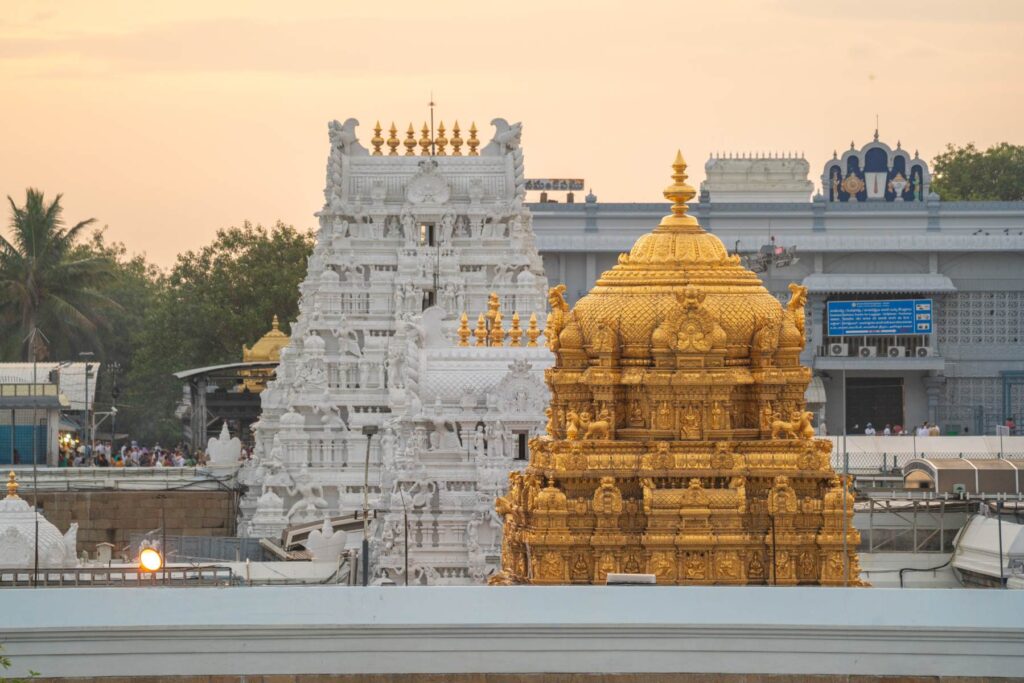
The Sri Venkateswara Swamy temple sits atop Venkatadri, the seventh and highest of the Tirumala hills. In Hindu tradition, these seven hills are not just geography. They represent the seven coils of Adisesha, the cosmic serpent on whose body Bhagwaan Vishnu eternally rests. Pilgrims walk toward the summit knowing they walk across something sacred.
The Seven Hills and Their Meaning
| Hill Name | Meaning in Sanskrit |
| Seshadri | The hill of Sesha, the cosmic serpent |
| Neeladri | The blue hill |
| Garudadri | The hill of Garuda, Vishnu’s divine eagle |
| Anjnadri | The hill of Anjana |
| Vrushabhadri | The hill of Vrushabha |
| Narayanadri | The hill of Narayana |
| Venkatadri | The main temple hill, home of Sri Venkateswara |
The Ananda Nilayam
The main sanctum tower, where Sri Venkateswara Swamy Idol resides, the Ananda Nilayam, stands as a triumph of Dravidian architecture. Priests and kings through the centuries have sheathed it in gold. That gold does not belong to any one ruler. It belongs to generations of devotees who gave what they had out of love.
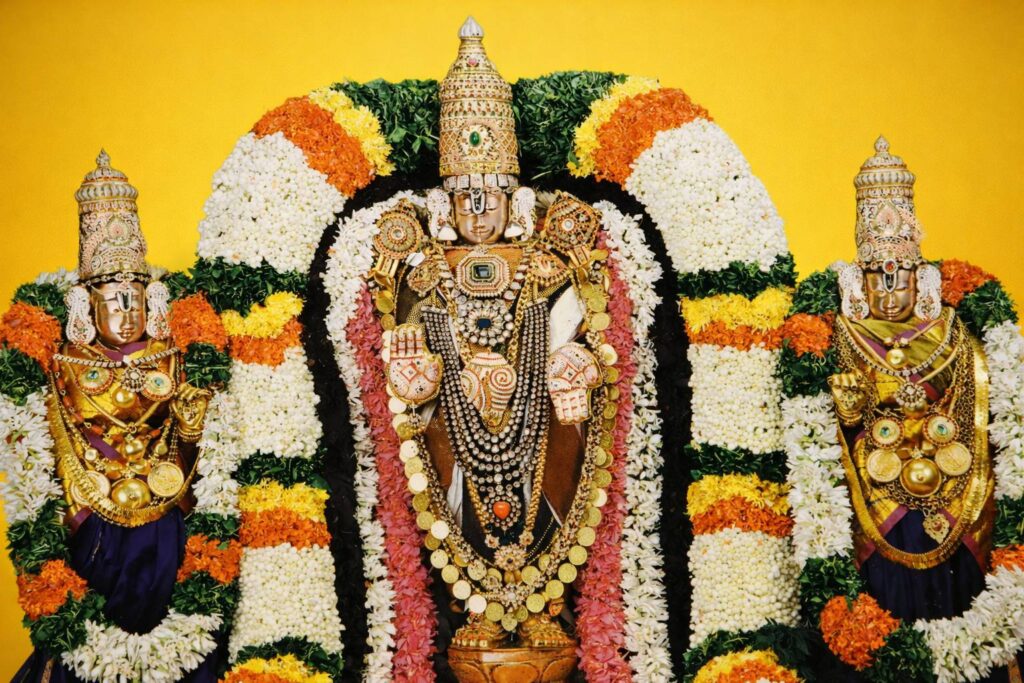
Sri Venkateswara Swamy stands eight feet tall inside the sanctum. He wears elaborate ornaments, a floral crown, and precious stones gifted by kings across the ages. His presence in that chamber, adorned and still, has moved every pilgrim who has ever stood before him.
The Swami Pushkarini, the sacred tank at the foot of the hill, holds a place of deep reverence. According to tradition, Bhagwaan Vishnu himself brought this tank from Vaikuntha when he descended to earth. Pilgrims take a ritual dip in its waters before proceeding for darshan.
Stone inscriptions on the temple walls, many from the Vijayanagara period, record land grants, gold offerings, and royal dedications. These inscriptions give historians a nearly unbroken record of devotion spanning close to a thousand years. Every ruler who could reach Tirumala wanted to leave something behind.
Tirumala Tirupati Devasthanams (TTD)
Tirumala Tirupati Devasthanams, known everywhere simply as TTD, is the statutory trust that administers the temple. It manages the daily operations, the pilgrimage infrastructure, the charitable institutions, and the sacred traditions that keep this ancient place running in the modern world.
The government formally constituted TTD in 1933 under the Madras Hindu Religious and Charitable Endowments Act. Today, TTD manages what scholars and financial analysts widely consider the single wealthiest religious institution in the world by annual revenue.
That revenue does not sit idle. TTD runs hospitals, schools, colleges, Sanskrit learning centres, and free feeding programmes. The wealth of Tirupati Balaji flows back into the lives of ordinary people. This has been the spirit of the temple for centuries.
TTD Explained in Numbers
| What | How Much |
| Daily pilgrims on a regular day | 50,000 to 80,000 |
| Daily pilgrims during peak festivals | Up to 1,00,000 and above |
| Laddus prepared and distributed each day | 70,000 to 75,000 |
| Total TTD employees | Approximately 16,000 across all departments |
| Educational institutions run by TTD | More than 100 schools and colleges |
| Charitable hospitals | Multiple facilities including free treatment units |
What is the Role of TTD (Tirumala Tirupati Devasthanams)
TTD controls every part of the pilgrimage experience. It manages the queues, the accommodation, the prasadam production, the transport network, and the performance of daily sevas. Every devotee planning a visit to Tirupati Balaji must understand TTD, because all official darshan bookings happen through the TTD portal at tirupatibalaji.ap.gov.in .
Complete Tirupati Temple Darshan Guide
Planning your Tirupati temple darshan for the first time can feel like an enormous task. The queues are long, the rules are strict, and the logistics are unfamiliar. But every detail exists for a reason. This section walks you through the entire process clearly, so you arrive at Tirumala prepared and peaceful.
Types of Darshan Available at Tirupati Balaji Temple:
| Darshan Type | Cost | Typical Wait | Best For |
| Sarva Darshan | Free | 8 to 20 plus hours | Pilgrims with full faith and flexible time |
| Special Entry Darshan (SED) | Rs. 300 per person | 2 to 3 hours | Most devotees; requires advance booking |
| Divya Darshan | Free (Tuesday and Wednesday, early morning only) | 3 to 5 hours | Devotees who can arrive very early |
| Slotted Sarva Darshan | Free | Depends on slot | Pilgrims who plan ahead and prefer free darshan |
| Arjita Seva / VIP | Rs. 10,000 and above | Very short | Devotees who wish to participate in a seva |
How to Book Your Tirupati Darshan Ticket Online?
Booking online in advance is the most important thing you can do. Walk-in queues for Sarva Darshan regularly stretch beyond 20 hours during peak season. Advance booking changes the entire experience.
- Visit the official TTD portal at tirupatibalaji.ap.gov.in
- Register or log in using your mobile number and Aadhaar-linked details.
- Select Book Darshan Tickets and choose your preferred visit date.
- Choose Special Entry Darshan at Rs. 300 per person for the most accessible paid option.
- Complete payment online and download your QR-code ticket.
- Print a copy and carry your original photo ID on the day of your visit.
| Important to Know: TTD releases SED tickets in batches, usually 30 to 60 days before the visit date. Set a reminder and book the moment the window opens for your chosen date. Slots fill within hours. |
What are the Dress Code and Entry Rules for Tirupati Balaji Temple Darshan?
- Men must wear a dhoti, veshti, or full-length trousers with a shirt. Lungis are not allowed inside the temple complex.
- Women must wear a saree, salwar kameez, or half-saree. Jeans, shorts, and sleeveless tops are not permitted.
- All pilgrims must leave footwear at the free deposit counters outside the complex before entering.
- Mobile phones, cameras, and all electronic devices are prohibited inside the darshan queue.
- Non-Hindu visitors must sign a declaration at the entrance affirming faith in the deity before they enter.
What Happens During Sri Venkateswara Swamy Darshan?
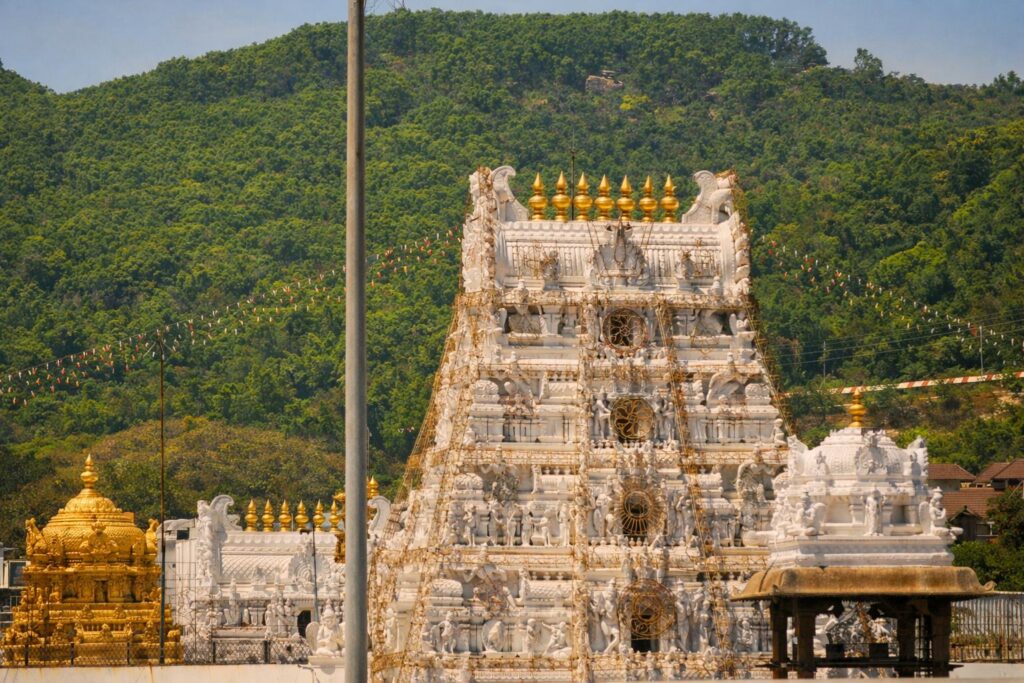
The queue takes hours. The darshan itself takes 10 to 20 seconds. And yet, for almost every devotee who has stood in that sanctum, those seconds hold more meaning than many hours of their life.
You enter the Sanctum Sanctorum, the Garbha Griha. The air carries incense, camphor, and the fragrance of fresh jasmine. The sound of conches and bells fills the chamber. And then you see Him.
Sri Venkateswara Swamy stands eight feet tall, dressed in silk, crowned with the jewelled Kiritam, and beside his consorts Sridevi and Bhudevi, representing different aspect of prosperity. His eyes rest in a partial gaze, serene and knowing at the same time. A sacred white Namam marks his forehead. Devotees who have stood before him often say the same thing: that He looks back at you. Not in the crowd. At you.
You bow. You whisper your prayer. The gentle movement of the crowd carries you forward. You walk out into the open air and something inside you has shifted. You cannot always name it but you can feel it.
Best Time to Visit Tirupati Balaji Temple
Choosing the best time to visit Tirupati Balaji Temple depends on what you are searching for. A grand festival experience, a quieter communion with the deity, pleasant walking weather for the footpath, or simply the shortest queue. This section helps you decide.
Month-by-Month Visitor Guide
| Month | Weather | Crowd Level | What to Expect |
| January to February | Cool, 15 to 25 degrees C | Moderate | Pleasant weather and manageable queues. One of the best windows. |
| March to April | Warm, 25 to 35 degrees C | Moderate to High | Good time to visit. Avoid the last week of April due to school holidays. |
| May to June | Hot, 35 to 40 degrees C | High | Summer school holidays bring large crowds. Carry water and plan queue time carefully. |
| July to August | Monsoon, 20 to 30 degrees C | Low to Moderate | The hills turn green and beautiful. Fewer crowds make this a hidden gem for pilgrims. |
| September to October | Pleasant, 22 to 32 degrees C | Very High | Brahmotsavam and Navratri season. Magnificent but extremely crowded. |
| November to December | Cool, 15 to 25 degrees C | High | Vaikunta Ekadasi falls in December or January. Sacred and spiritually charged, but expect long queues. |
In Around What Festival to Visit Tirupati Balaji Temple?
Some visits to Tirupati Balaji are more than a pilgrimage. They are an immersion in the grandest expressions of Hindu devotion. These are the festivals that define the year at Tirumala.
- Brahmotsavam: This nine-day annual festival, usually held in September or October, brings hundreds of thousands of devotees to Tirumala. Each day, the deity travels in procession on a different divine vahana. Witnessing this is a once-in-a-lifetime experience for most Hindus.
- Vaikunta Ekadasi: On this sacred day, priests open the Vaikunta Dwaram, the golden gateway to heaven. Receiving darshan through this gateway on Ekadasi is considered the most auspicious spiritual act a devotee can perform at Tirumala.
- Ugadi (Telugu New Year): Celebrated in March or April, Ugadi brings a festive and spiritually charged atmosphere to the entire Tirupati region.
- Kalyanotsavam: This daily celestial wedding ceremony of Srinivasa (Lord Venkateswara) and Padmavathi is available for private booking any day of the year through the Arjita Seva system.
| Important Tip: If you want a quieter, more personal experience, visit on a Tuesday or Wednesday in July or August. The hills are green, the queues are shorter, and the darshan feels more intimate. Many regular devotees call this the best-kept secret of Tirupati. |
Miracles and Mysteries of Lord Venkateswara
No account of Tirupati Balaji is complete without the stories that devotees carry in their hearts. These are not tales from distant centuries alone. They live in the present, and travel with pilgrims on their buses and trains back home. They pass from parents to children at the dinner table.
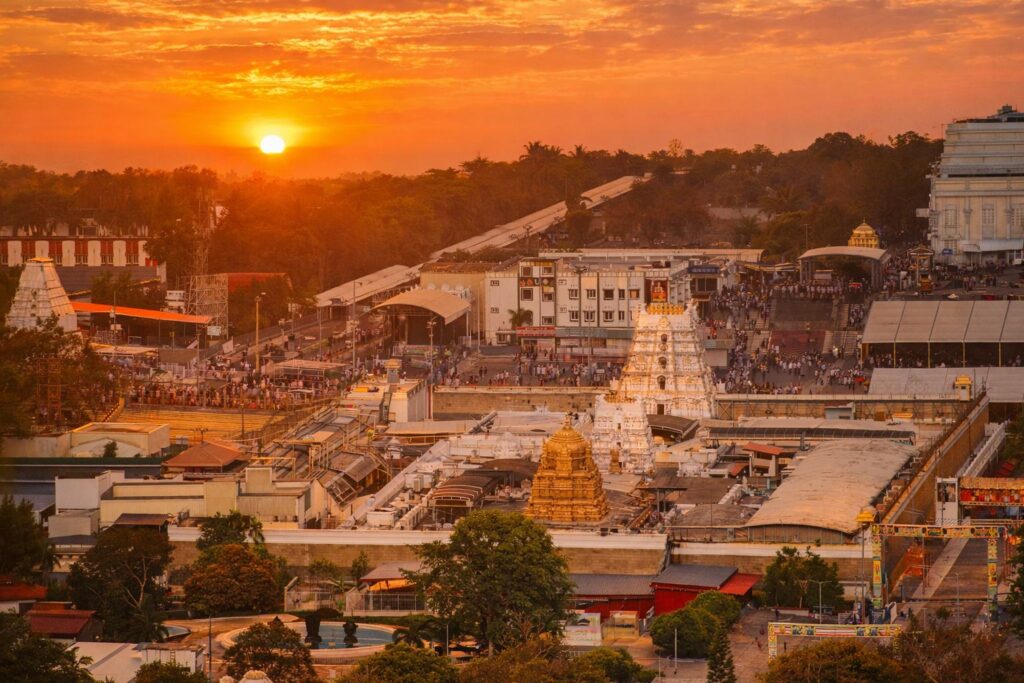
The miracles of Lord Venkateswara hold three distinct layers: what the scriptures record, what history documents, and what devotees experience today.
Layer 1: The Miracle of the Swayambhu
The first and greatest Tirupati Balaji miracle is the deity himself. Sri Venkateswara Swamy is Swayambhu, self-manifested. Human hands did not sculpt or install him. He emerged from the earth as a direct, physical presence of the divine in this world.
The Varaha Purana records that a king named Tondaman hunted on the Tirumala hills and discovered the form of Vishnu standing within an anthill, partially visible. A dream commanded him to build a shrine around this form. He did not carve a god. He uncovered one.
Priests who serve the deity report that the idol sweats. They wipe it regularly with soft cloth. The back of the deity carries marks in the shape of a conch and a discus, the divine symbols of Bhagwaan Vishnu. These marks, according to the priests, were not made. They appeared.
Layer 2: What History and Temple Records Preserve
The temple archives and inscriptions on stone walls carry accounts that historians accept as genuine records, even when the miracles they describe remain matters of faith.
- A Vijayanagara king prayed at Tirumala before a war he expected to lose. He won. He returned and donated enormous wealth to the temple. The inscription recording this gift still exists.
- Multiple stone inscriptions record pilgrims who vowed offerings in exchange for healing from illness. They returned to fulfil those vows, which means, by their own account, the healing came.
- The hair offering tradition at Tirumala, known as Mokkubadi, carries its own miraculous origin. According to tradition, a portion of the deity’s hair was accidentally injured. A devoted shepherdess offered her own hair to cover the wound. Pleased with her bhakti, the Lord accepted her hair as his own and blessed her. Since then, devotees have offered their hair as an act of total surrender.
Layer 3: What Devotees Experience Today
Every day at Tirumala, people arrive carrying the weight of things they could not solve alone. A sick child. A failing business. A marriage in crisis. An illness with no medical answer. And every day, some of those same people return to fulfil the vows they made when they had nothing left except faith.
Devotees speak of seeing a light in the sanctum at the moment of darshan that they cannot account for. Of a stillness that settled years of anxiety in a matter of seconds. Of praying for something specific and receiving it through paths they had never imagined.
Among the Tirupati Balaji miracles that devotees recount most often are the dreams. Countless pilgrims describe dreaming of Lord Venkateswara before they had ever planned a visit. They felt called. They came. And they say something was waiting for them when they arrived.
| A Devotee’s Account: “I came to Tirupati carrying something I had held for years. I cannot tell you exactly what happened when I stood before Him. I can only tell you that when I walked out, I was no longer carrying it.” A pilgrim from Chennai, as shared in a temple visitor record. |
Rituals, Sevas, and Sacred Offerings in Tirupati Balaji Temple
The Sri Venkateswara Swamy temple follows a daily schedule of rituals that has continued largely unchanged for centuries. Each seva has a time, a purpose, and a spiritual meaning. For devotees who wish to move beyond darshan and enter the living rhythm of the temple, the Arjita Seva system offers exactly that.
Daily Ritual Schedule at Tirumala
| Seva or Ritual | Time | What It Means |
| Thiruvanandal (Suprabhatam) | 3:00 AM | Priests sing the morning awakening hymns to rouse the deity from rest. This is the first voice the Lord hears each day. |
| Thomala Seva | 4:30 AM | Priests adorn the deity with fresh flowers, layering fragrance and colour as an offering of beauty. |
| Archana | 5:30 AM | Priests chant the 1,000 sacred names of Vishnu Ji, each name a complete act of devotion in itself. |
| Kalyanotsavam | 10:00 AM | The daily celestial wedding of Srinivasa and Padmavathi, recreated each morning with ceremony and song. |
| Arjita Brahmotsavam | 11:00 AM | The deity travels in procession on a divine vahana, visible to waiting pilgrims outside the sanctum. |
| Sahasra Deepalankara Seva | Evening | A thousand lamps illuminate the deity. The chamber fills with golden light. For many devotees, this is the most moving seva of the day. |
| Ekanta Seva | Late night | The final ritual of the day. Priests put the Lord to rest with prayers, silk, and a symbolic farewell until morning. |
How to Book an Arjita Seva
Arjita Sevas are personal rituals where the priest performs worship with your name, your family’s name, and your gotram (ancestral lineage). You are not a witness but become part of the offering.
You can book Arjita Sevas online through the TTD portal or at the Arjita Seva counters in Tirupati or Tirumala. Sevas like Kalyanotsavam and Abhishekam are in very high demand. Book at least 30 days in advance. Fees range from Rs. 500 to Rs. 10,000 and above depending on the seva.
The Tirupati Laddu and Its Sacred Story
Every pilgrim who leaves Tirupati Balaji carries the Laddu home. It sits wrapped in its red cloth, placed carefully among belongings, treated not as food but as a blessing. Children wait for it. Elders receive it with folded hands. It is prasadam in the truest sense: something received from the Lord’s own hands.
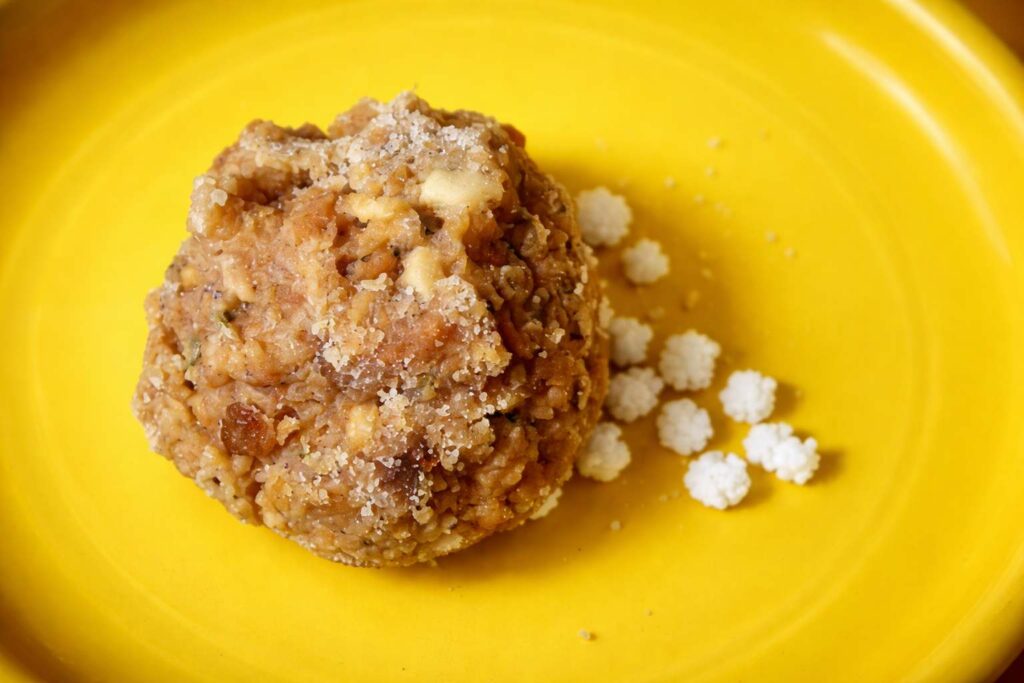
A Recipe That Has Not Changed in 300 Years
The Tirupati Laddu is made from chickpea flour (Besan), sugar, dry fruits, cardamom, and ghee. The recipe has remained essentially unchanged for over three centuries. Trained cooks prepare it only inside the temple complex, in the Potu, the sacred kitchen, under strict ritualistic conditions.
No machine replaced these cooks. No industrial shortcut entered the Potu. The Laddu that reaches your hands today is the same Laddu that reached pilgrims generations before you.
In 2009, the Tirupati Laddu became the first religious offering in India to receive a Geographical Indication (GI) tag.No other institution may produce and sell a laddu as the Tirupati Laddu.
This GI tag was India’s formal recognition of an unbroken sacred tradition. The temple prepares approximately 70,000 to 75,000 laddus each day. On major festival days, that number crosses one lakh. Each one receives the same care, the same recipe, the same intention.
How to Receive the Laddu of Tirupati Balaji Temple?
- Every pilgrim receives one free Laddu of 300 grams with their darshan ticket.
- Additional laddus are available for purchase at the Laddu counters. The 300-gram laddu costs approximately Rs. 50 and the 175-gram laddu costs approximately Rs. 25.
- TTD maintains authorised Laddu collection centres in Tirupati town for pilgrims who cannot travel up to Tirumala.
- The TTD portal offers online ordering with delivery to select cities across India.
| Did You Know? The Tirupati Laddu contains no artificial preservatives, yet it remains fresh for several days at room temperature. Devotees attribute this quality to the divine grace embedded in the prasadam itself. |
Practical Must-Know Pilgrimage Information
How to Reach Tirupati Balaji Temple?
| Mode of Travel | What You Need to Know |
| By Air | Tirupati Airport (TIR) receives flights from Bangalore, Chennai, Hyderabad, and Delhi. A cab from the airport to Tirumala takes approximately 1.5 hours. |
| By Train | Tirupati Railway Station (TPTY) sits on the Southern Railway network and connects to Chennai, Bangalore, Hyderabad, Mumbai, and Delhi. |
| By Road | Tirupati is approximately 150 km from Chennai and 280 km from Bangalore. Andhra Pradesh State Road Transport Corporation buses run frequent services from major cities. |
Getting from Tirupati Town to Tirumala
- TTD operates dedicated AC buses from Tirupati to Tirumala every few minutes throughout the day. Ticket cost is approximately Rs. 60 to 70. This is the most convenient and commonly used option.
- Private taxis and autos are available but cost more.
- The Alipiri footpath stretches about 11.5 km and takes 4 to 5 hours to climb. Tradition considers it a sacred route. Many pilgrims walk it barefoot as an act of penance and surrender.
- The Srivari Mettu path is a shorter, steeper alternative of about 4.5 km, beginning from Chandragiri. Devotees choose it for its more intense climb.
Where to Stay While Tirupati Darshan?
- TTD operates Srivari Paadalu Guest Houses with subsidised room rates. Book them through the TTD portal. Demand is very high; book at least 30 to 60 days in advance.
- Tirupati town offers a wide range of private hotels at every price point, from budget to premium.
- Rooms in Tirumala itself are available through TTD but fill up extremely quickly during festivals and weekends.
What to Carry While Tirupati Balaji Darshan?
- Original government photo ID such as Aadhaar, passport, or voter card
- Printed darshan ticket with QR code
- A cloth or jute bag for footwear storage during the darshan walk
- Traditional clothing that meets the dress code
- Sufficient cash for prasadam purchases, hundi offerings, and transport, as some counters do not accept digital payments
- A water bottle and light snacks for the queue, especially during summer
Nearby Temples and the Sacred Circuit
A pilgrimage to Tirupati Balaji opens the door to one of the richest sacred circuits in South India. Most devoted pilgrims extend their visit to at least one or two nearby shrines. Each one adds a different dimension to the journey.
| Temple | Location | Why Devotees Visit |
| Sri Padmavathi Ammavari Temple | Tiruchanur, 5 km from Tirupati | Goddess Padmavathi is the consort of Sri Venkateswara. Visiting both shrines together is considered complete darshan of the divine couple. |
| Srikalahasti Temple | 36 km from Tirupati | One of the Pancha Bhuta Stalas representing the air element. Famous for the Rahu-Ketu pooja that devotees seek for relief from planetary afflictions. |
| Kapileswara Swamy Temple | Inside the Tirumala complex | An ancient Shiva shrine within the Tirumala hills. Rarely visited but considered deeply sacred by those who know it. |
| Govinda Raja Swamy Temple | Tirupati town | One of the largest Vishnu temples in Tirupati town. Many pilgrims visit here before or after their Tirumala darshan. |
| Chandragiri Fort | 15 km from Tirupati | A historical Vijayanagara fort that holds a museum with artefacts connected directly to the temple’s royal patrons across centuries. |
Pilgrims who combine Tirumala, Tiruchanur, and Srikalahasti in a single trip cover the most essential sacred sites of the region. Most devotees complete this circuit over two to three days. TTD-operated buses connect the majority of these sites.
Frequently Asked Questions About Tirupati Balaji Temple
These are the questions that pilgrims and first-time visitors search for most often. Each answer is written to give you exactly what you need to know.
1. How many days in advance should I book Tirupati darshan tickets?
TTD typically releases Special Entry Darshan tickets 30 to 60 days before the visit date through the official portal. Book at least 30 days in advance. For weekends, public holidays, and festival periods, book as early as the window allows.
2. What is the difference between Sarva Darshan and Special Entry Darshan?
Sarva Darshan is free and available to all pilgrims, but the queue regularly extends from 8 to 20 hours or more. Special Entry Darshan costs Rs. 300 per person and typically carries a wait of 2 to 3 hours. Both lead to the same sanctum and the same divine presence.
3. Can non-Hindus visit Tirupati Balaji temple?
Non-Hindus may enter the temple. TTD requires them to sign a declaration at the entrance affirming their belief in the deity and in the tenets of Hinduism. This policy reflects the sacred nature of the shrine and has been in place for many decades.
4. What is the significance of the hair offering at Tirupati?
The hair offering, known as Mokkubadi, is an act of complete surrender. Devotees offer their hair to the deity as a symbol of releasing the ego and placing themselves entirely in the Lord’s hands. TTD employs hundreds of barbers daily to perform this ritual. The temple auctions the collected hair internationally, and the proceeds support TTD’s charitable programmes.
5. What are the miracles of Lord Venkateswara?
The miracles of Lord Venkateswara begin with the Swayambhu nature of the deity himself, self-manifested and not carved by human hands. They include the perspiring idol that priests wipe daily, the origin story of the hair offering, inscriptions of royal victories attributed to divine grace, and thousands of testimonials from modern devotees of prayers answered, illnesses healed, and lives changed. Section 6 of this guide covers all three layers in detail.
6. How long does Tirupati darshan take from start to finish?
The queue for Tirupati temple darshan takes between 2 hours for Special Entry Darshan and 20 or more hours for Sarva Darshan. The darshan inside the sanctum lasts 10 to 20 seconds. Those seconds stay with most devotees for the rest of their lives.
7. What is the best time to visit Tirupati to avoid crowds?
The best time to visit Tirupati for fewer crowds is July and August during the monsoon season, particularly on weekdays. January and February also offer pleasant weather and manageable queues. Avoid weekends, school holidays, and major festival periods such as Brahmotsavam and Vaikunta Ekadasi if crowd avoidance is your priority.
8. Is the Tirupati Laddu available to buy online?
Yes. TTD offers online ordering of the Tirupati Laddu through its official portal with delivery to select cities in India. However, most devotees believe receiving the Laddu in person, directly after darshan at Tirumala, carries a meaning that no delivery can replicate.
9. Who administers the Tirupati Balaji temple?
Tirumala Tirupati Devasthanams, commonly known as TTD, administers the temple. TTD is a statutory trust constituted in 1933 under the Madras Hindu Religious and Charitable Endowments Act. It operates under the Andhra Pradesh government and manages all aspects of temple administration, pilgrimage infrastructure, and charitable activities.
Conclusion of Guide
Tirumala is not a place you visit and check off a list. It is a place that stays inside you after you leave.
The Tirupati Balaji temple’s history stretches across millennia, but every pilgrim who climbs those hills brings their own moment to it. Their prayer, their own need, and their own wonder. The deity has received all of it, unchanged and unhurried, through every century.
For a Hindu, Tirupati is deeply personal. It is the place where you arrive with everything you are carrying and discover, often unexpectedly, that you do not have to carry it alone.
The chant of Govinda is not just a greeting. It is a reminder that you are known here.
Whether you arrive as a first-time pilgrim, a returning devotee, or someone who has long felt the pull of this sacred mountain, the hills of Tirumala receive you. Go with an open heart. Speak your truth before the Lord. And trust that what you came looking for was already waiting for you at the summit.
Jai Govinda. Jai Sri Venkateswara.
The journey does not end here. Follow MFC on Instagram and Facebook to explore more sacred places, festivals, and living traditions of Sanatan Dharma.