



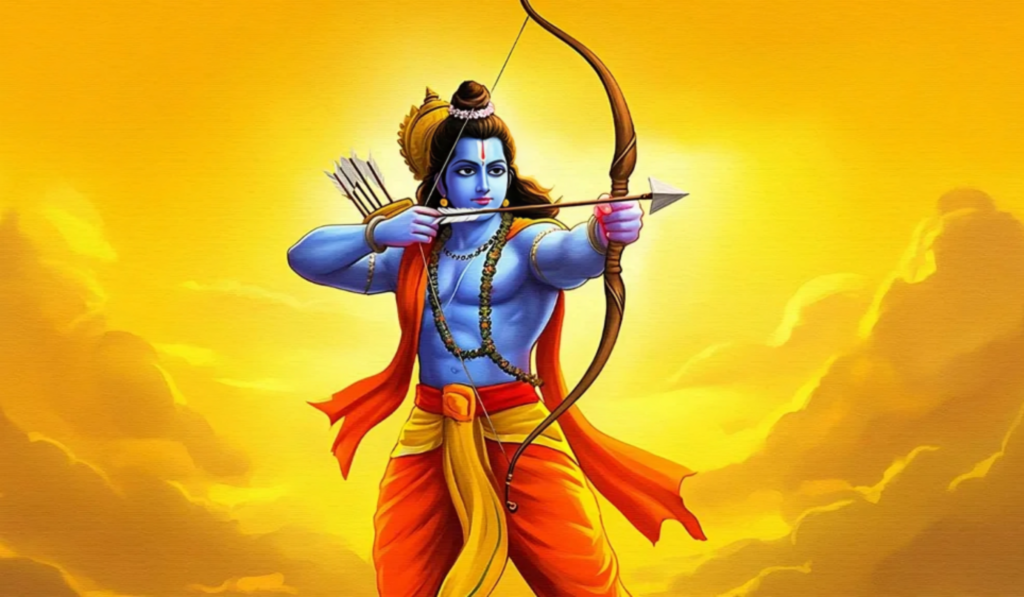
Ram Navami 2026 falls on Thursday, March 26. For millions of Hindus, this is not just a festival. It is the birthday of Lord Ram, the seventh avatar of Bhagwan Vishnu, someone they have grown up loving, praying to, and turning to when life gets hard.
There is a moment every Ram Navami when the temple bells begin and everything else goes quiet. You know the day has arrived. The air feels different. Your grandmother is already awake. The mangoes are fresh on the altar. Someone is reading the Ramayana in the next room. And somewhere, deep in your chest, something old and steady stirs.
That feeling is not coincidence. It is memory. It is recognition. This year, as every year, Ram Navami brings us back to the story of a man whose life still speaks. Lord Ram. Maryada Purushottam Ram. The one who showed us what it looks like to be fully human, and chosen by the Divine, at the same time.
Ram Navami 2026 Date, Muhurat, and Puja Timings
For anyone planning their worship, travel to a temple, or simply wanting to observe the right moment at home, here are the complete Ram Navami 2026 Timing details.
| Detail | Start / Date | End / Note |
| Navami Tithi begins | March 26, 2026 at 11:48 AM | March 27, 2026 at 10:06 AM |
| Madhyahna Muhurat (Most auspicious) | 11:13 AM | 1:41 PM |
| Ram Janma Kshanam (birth moment) | 12:27 PM | Noon |
| Chaitra Navratri ends | March 26, 2026 | Navami, 9th day |
| Calendar system | Chaitra Shukla Paksha | Gregorian: March 26, 2026 |
According to the Hindu lunar calendar, Ram Navami falls on the Navami tithi of Shukla Paksha in the month of Chaitra. On the Gregorian calendar, this corresponds to Thursday, March 26, 2026.
The Madhyahna Muhurat, the midday window between 11:13 AM and 1:41 PM, carries the deepest significance. This is when Lord Ram is believed to have taken birth. Devotees plan their aarti, abhishek, and the rocking of Ram Lalla’s cradle around this sacred window. The precise Janma Kshanam, the exact birth moment, is observed at 12:27 PM.
Thursday holds special reverence in the Vaishnava tradition, as it is associated with Lord Vishnu and the planet Jupiter. For Ram Navami to fall on a Thursday makes this year’s observance particularly blessed.
What Is Ram Navami?
Ram Navami is the Hindu festival celebrating the birth of Lord Ram, the seventh avatar of Bhagwan Vishnu. It marks the final day of Chaitra Navratri. Devotees observe the day with fasting, Ramayana recitation, bhajans, kirtan, and prayers centred around the midday birth hour.
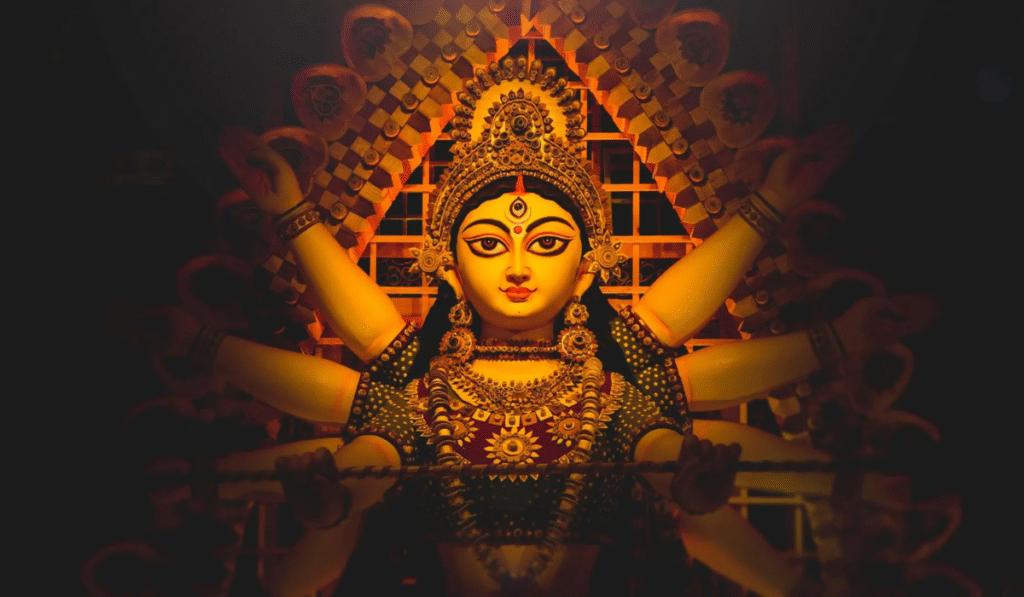
Ram Navami sits at the close of Chaitra Navratri, the nine-day celebration of the Divine Feminine. After nine days of honouring Maa Durga in her nine forms, the tenth day brings the birth of her devotee, her protector in human form.
That arrival is not incidental. Lord Ram did not come into the world at a random moment. He came when He was needed. When the weight of adharma had grown so heavy that even the gods asked Bhagwan Vishnu to descend and protect Dharma. And He did.
The Birth of Lord Ram: The Prayer of King Dasharatha
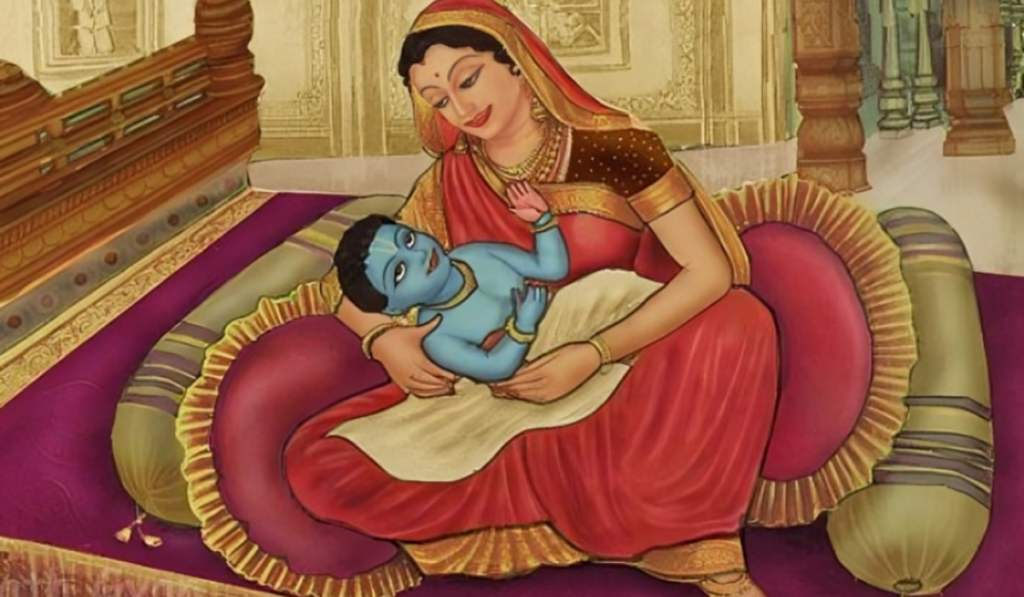
King Dasharatha had everything a ruler could want. Power, wealth, three devoted queens, a kingdom that his people loved him for. But he carried a quiet sorrow. He had no son. No heir. No one to carry forward the Ikshvaku lineage.
He turned to the sages. On the counsel of Maharishi Vashishtha, Dasharatha performed the Putra Kameshti Yajna, a sacred fire ritual led by the great rishi Rishyashringa. It was not just a ceremony. It was a father’s surrender, complete and unconditional.
The fire accepted it.
From the sacred flame emerged a divine being carrying a golden vessel of payasam. Dasharatha offered it to his queens: Kaushalya received half, Kaikeyi the next portion, and Sumitra the rest.
Months passed. And on the ninth day of Chaitra, under the Punarvasu nakshatra, when five planets held their exaltation positions and the sun blazed at its highest, Queen Kaushalya gave birth to a son.
The Valmiki Ramayana describes what arrived in that moment:
रामो विग्रहवान् धर्मः साधुः सत्यपराक्रमः ।
राजा सर्वस्य लोकस्य देवानाम् इव वासवः ॥
“Ramo vigrahavan dharmah sadhu satya-parakramah.”
Lord Ram is dharma in human form. The embodiment of truth and righteous courage.
Valmiki Ramayana, Aranya Kanda,
Kaikeyi gave birth to Bharat. Sumitra to Lakshman and Shatrughna. But it was the eldest son, Lord Ram, whose arrival the universe had been waiting for.
This is the birth of Lord Ram we remember on Ram Navami. Not only the arrival of a prince, but the answer to the oldest human question: how do we live well?
Why Is Lord Ram Called Maryada Purushottam?
Maryada means the code of righteous conduct, the understanding that every role we hold carries a responsibility. Purushottam means the finest among men. Together, the title names someone who upheld every role completely, without compromise, without excuse. As a son, husband, king, and warrior, Lord Ram never stopped being Himself.
When Dasharatha’s word sent Lord Ram into fourteen years of exile, He did not argue. He did not remind His father that the promise had been extracted unfairly. He simply went. Because His maryada as a son was clear.
A son has a maryada toward his parents. A king has a maryada toward his people. A husband has a maryada toward his wife. Lord Ram never used one role as an excuse to abandon another. He held them all, at the same time, without flinching.
The Qualities of Lord Ram That Still Hold
What makes Lord Ram’s life enduring is not mythology alone. It is the texture of how He lived, the choices He made when there was no easy answer.
- He kept His word when it hurt. Lord Ram accepted fourteen years in the forest because His father gave a promise. Not because it was fair. Because His word, and His father’s word, meant something that no throne could outweigh.
- He saw no hierarchy in devotion and Bhakti. Shabari, the old woman who had waited years in the forest for Lord Ram’s arrival, offered Him berries she had already tasted, checking each one for sweetness. Most kings would have refused. Lord Ram ate them all. He understood that love is the offering, not the form it takes.
- He led by showing up, not by commanding. At the shore of the ocean, before the crossing to Lanka, Lord Ram sat with His army of vanars and prayed alongside them. He built the bridge the same way they did. That is the kind of leadership that earns loyalty rather than demanding it.
- He held grief without breaking. When Mata Sita was taken, Lord Ram wept. He asked the trees, the river, the animals if they had seen Her. He was not above pain. But pain did not make Him stop. He built an army, crossed an ocean, and fought a war. The grief moved with Him, not ahead of Him.
- He put His people before Himself. As king of Ayodhya, Lord Ram faced the hardest personal choices entirely in public. Every decision He made carried the weight of an entire kingdom watching. He chose them. Every time.
How Ram Navami Is Celebrated In Different Parts Of India?
Devotees wake before sunrise, bathe, and visit temples for the Abhishek of Ram Lalla. Homes display a small decorated cradle marking the birth. Bhajans and kirtan continue through the morning. The Ramayana or Ramcharitmanas is recited in families and community gatherings. Fasting is common, broken only after the midday worship. In Ayodhya, Bhadrachalam, and Rameswaram, the celebrations draw thousands of pilgrims.
In Ayodhya
This Ram Navami carries particular weight. The Ram Mandir at the sacred janmabhoomi hosts the celebration at the very spot where Lord Ram took birth. Pilgrims travel from across the country to be present in that moment.
In Bhadrachalam and Telangana
The Sitarama Kalyanam, the sacred wedding of Lord Ram and Mata Sita, is performed with royal grandeur. In Tamil Nadu, the festival merges with Panguni Uttiram. In Maharashtra, chariot processions carry Lord Ram through the streets.
At home, the celebrations are quieter but no less complete. A small cradle. Flowers offered with clean hands. The smell of incense and a prayer said honestly. That is Ram Navami too.
The Deeper Meaning and Significance of Ram Navami
Ram Navami is not just the celebration of a birth. It is an annual invitation to ask ourselves what we are doing with ours.
Lord Ram’s life was not without pain, confusion, or impossible choices. But with intention. With the understanding that every role we hold matters. The way we honour our parents, lead those who depend on us, and keep our word when no one is watching: that is our dharma. And dharma, when lived, is not a burden. It is a direction.
Lord Ram did not become Maryada Purushottam in one moment. He became it across thousands of ordinary choices, made with extraordinary consistency. That is what we remember today. Not only a divine birth, but a way of living that still works.
Conclusion
As the bells ring at noon and the cradle sways in the temple, take a moment beyond the ritual. Ask yourself what your maryada looks like today. In your home, your work, your relationships. In the promises you have made and the ones you are still deciding whether to keep.
Lord Ram’s birth was a gift. His life was the instruction.
Jai Shri Ram.
Frequently Asked Questions (FAQs)
1. When is Ram Navami in 2026?
Ram Navami 2026 falls on Thursday, March 26. The Navami tithi begins at 11:48 AM and closes at 10:06 AM on March 27. The Madhyahna Muhurat, the most auspicious window for puja, runs from 11:13 AM to 1:41 PM, with the Janma Kshanam observed at 12:27 PM.
2. What is Ram Navami and why is it celebrated?
Ram Navami celebrates the birth of Lord Ram, the seventh avatar of Bhagwan Vishnu, on the ninth day of Chaitra Shukla Paksha. It marks the final day of Chaitra Navratri. Hindus observe it to honour Lord Ram’s life and the ideals He embodied: truth, duty, compassion, and righteous leadership.
3. Why is Lord Ram called Maryada Purushottam?
Lord Ram earned the title Maryada Purushottam because He upheld the code of righteous conduct across every role in His life without exception. As a son, He honoured His father’s word over His own crown. And as a husband, He crossed the ocean for Mata Sita. As a king, He placed His people above His personal happiness.
4. What is the significance of Ram Navami in Sanatan Dharma?
Ram Navami marks the descent of dharma into human form. Lord Ram’s life demonstrated that righteousness is not an abstract ideal but a living practice. In Sanatan Dharma, His story is the clearest answer to how we should carry each role we are given, with full sincerity, regardless of the personal cost.
5. How is Ram Navami celebrated at home?
At home, Ram Navami begins with an early bath and a clean altar. Devotees offer flowers, tulsi, and fruit to Lord Ram. Many observe a fast through the day and break it after the midday prayer. Families read from the Ramcharitmanas or the Valmiki Ramayana. A small cradle decorated with flowers marks Lord Ram’s birth at the centre of the home observance.
6. What are the key qualities of Lord Ram?
Lord Ram lived with unwavering truthfulness, compassion that crossed every social boundary, and responsibility to everyone who depended on Him. He led by example rather than authority. And felt grief fully and never let it stop Him. He honoured every relationship with complete sincerity. These are not ancient virtues. They are the ones we still try to raise our children with.
The journey does not end here. Follow MFC on Instagram and Facebook to explore more sacred places, festivals, and living traditions of Sanatan Dharma.