




Once Bhagwaan Shiva said that everything in this world is maya (illusion), even the food we eat. When Maa Parvati heard him, she was enraged. This is when the whole world saw what a destructive famine feels like. But why did it happen? Why did Bhagwaan Shiv say it?
Let’s understand the story behind the advent of Maa Annapurna and why she is revered as the goddess of food and nourishment.
Who is Maa Annapurna?
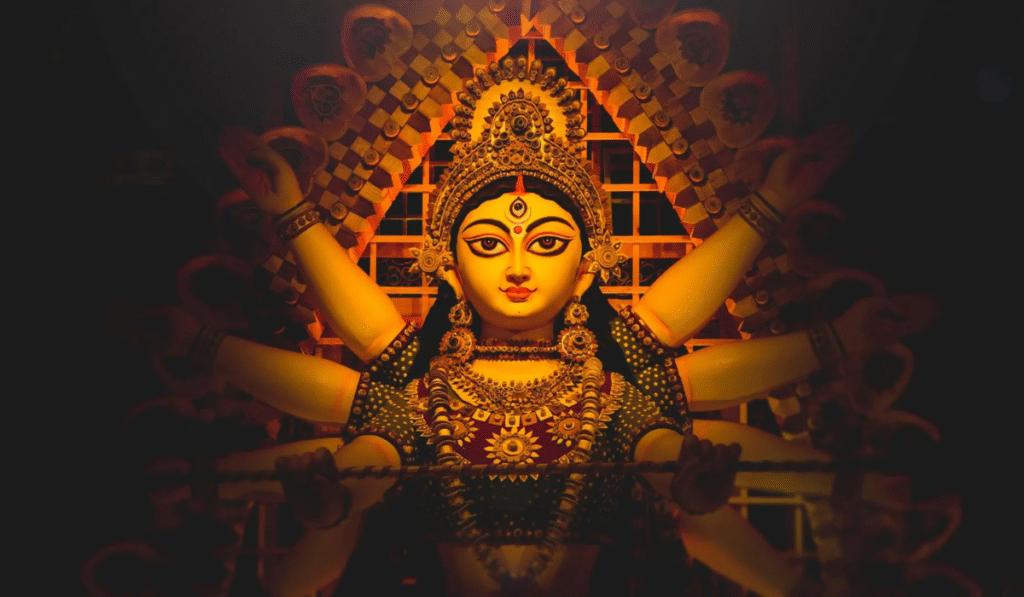
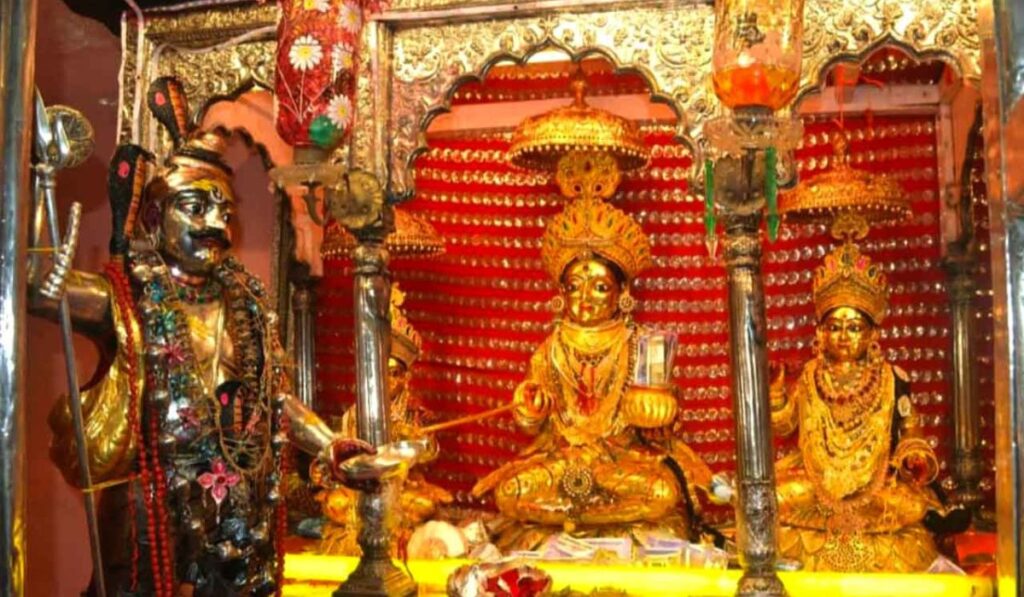
Maa Annapurna is the goddess of food and nourishment. She is actually another divine form of Maa Parvati, who took this compassionate avatar when the world needed. The mother who makes sure no one goes hungry. Her very name says it all: “Anna” means food, and “purna” means filled or complete. She is that comforting presence who reminds us that every meal is a blessing, not just something placed on a plate.
In her murti, she holds a kalash of food in one hand and a ladle in the other. Always ready to serve, always ready to give. Many depictions also show Bhagwaan Shiva standing before her with deep humility, receiving food from her hands. It’s a gentle reminder that nourishment is sacred for everyone, no matter how divine or powerful.
When you look at her, you feel that simple assurance that “As long as you respect food, my blessings will never leave your home.”
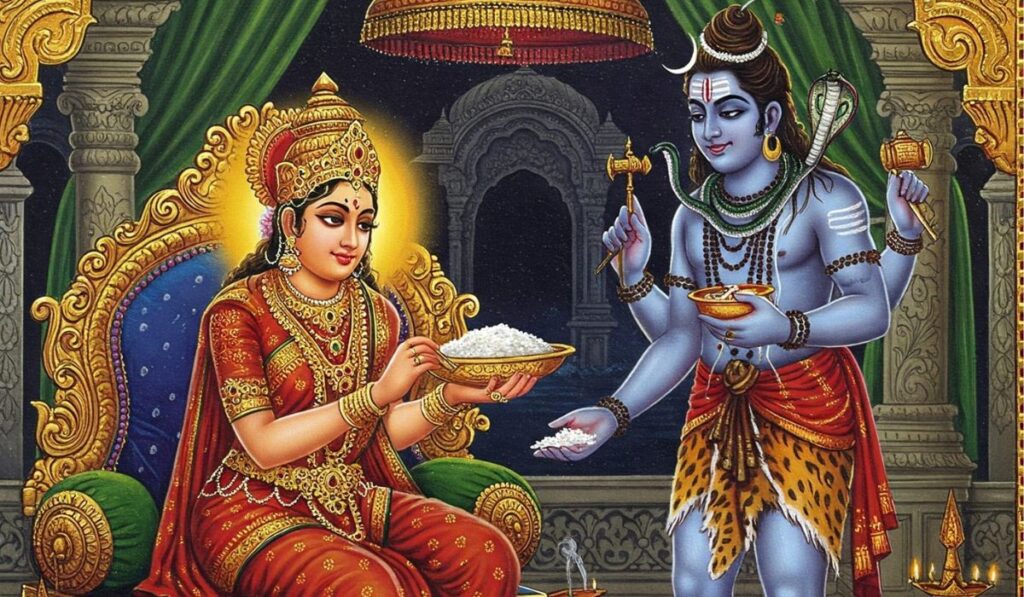
Image Courtesy: Kashi Yatra
The Story of Maa Annapurna
The story begins with a moment of spiritual debate. Bhagwaan Shiva, immersed in deep ascetic wisdom, declared that everything in the material world is maya, an illusion, including food. To him, the body and its needs were temporary, while the soul alone was eternal.
But Maa Parvati, the Mother of creation, saw this differently. Food is not just material. It is prasad, it is nourishment, it is the bridge that allows the soul to inhabit the body and experience life. So when Shiva dismissed food as unreal, Maa Parvati felt this as a denial of life’s very sustenance.
So, in response, she removed all food from the world.
Suddenly, the illusion Shiva spoke of became painfully real. Hunger spread. Crops failed. People cried for a grain of rice. Even devas felt the absence. And eventually, even Bhagwaan Shiv himself felt the ache of hunger.
Bhagwaan Shiv then understood that nourishment is not an illusion. It is divine grace.
This is when Maa Parvati took the compassionate form of Maa Annapurna, the goddess of food and nourishment. She manifested in Kashi (Varanasi) and began to distribute food to all freely, lovingly, without discrimination.
It’s mentioned in texts like the Skanda Purana and Annapurna Upanishad, where food is declared to be Brahman itself, a sacred essence of existence. The scriptures even say:
“Without Anna, life cannot be sustained. Therefore, Anna is sacred.”
In many retellings, Shiva himself approaches Annapurna with a begging bowl as a symbol of humility, acknowledging that even the divine depends on nourishment.
And so the lesson was passed into memory that food is not an illusion. Food is divine.
Maa Annapurna, as an avatar of Maa Parvati, embodies the truth that eating is not a mundane act. It is a moment of receiving blessings and love.
What is Annapurna Jayanti, and why is it celebrated?
Annapurna Jayanti is celebrated to honor Maa Annapurna for blessing us with food and to remember the moment she restored nourishment to the world. It falls on the full-moon day (Purnima) of the Margashirsha month, when the moon shines like a gentle reminder of abundance.
On this day, we pause and acknowledge that every meal we receive is a gift, not something to be taken for granted. Families cook fresh food, offer it to Maa Annapurna with sincerity, and then share it as prasad. Many practice anna daan, giving meals to those who need it, because feeding another soul is one of the purest offerings in her name.
This is not a day of strict rituals. It’s a day of softened hearts. A day to sit before a plate of food and genuinely feel: “Thank you, Maa, for this nourishment.” Annapurna Jayanti turns a normal meal into a prayer and our kitchen into a temple of gratitude.
What rituals Do We Follow on Annapurna Jayanti?
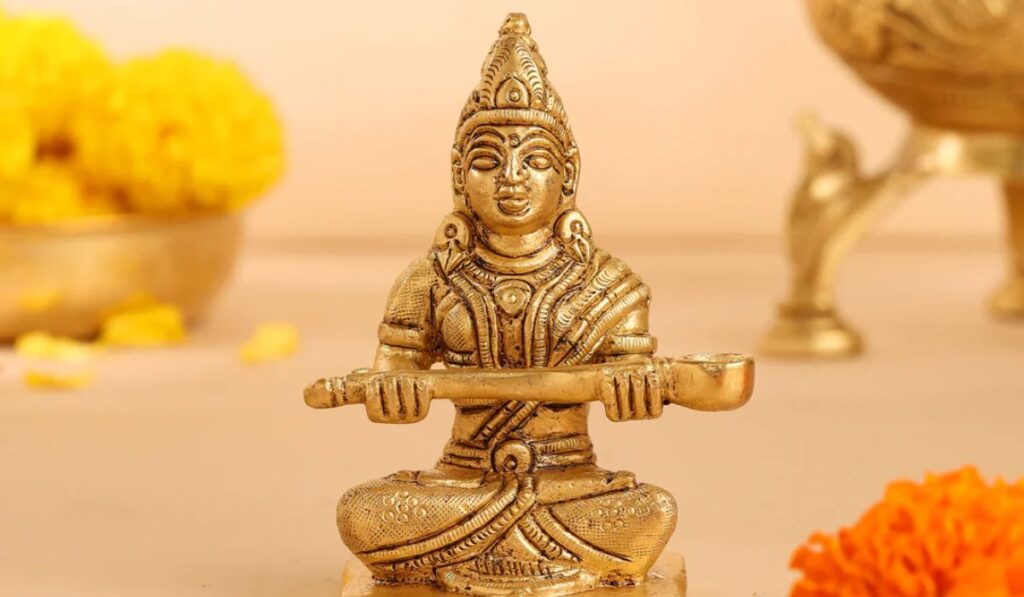
Image Courtesy: Vedansh Craft
On Annapurna Jayanti, we follow rituals like offering food to Maa Annapurna, practicing anna daan, and doing a simple prayer or puja at home. These rituals are not complicated or rigid. They’re gentle expressions of gratitude.
Many families begin by cooking fresh, sattvic food such as rice, kheer, or simple home-cooked meals and offering it to the Goddess. A small diya is lit, a short prayer is said, and the food becomes prasad.
One of the most meaningful practices on this day is anna daan. It means feeding someone who cannot repay you. It could be a needy person, a neighbor, a delivery worker, or even feeding birds and animals. The intention matters more than the gesture.
Some also chant the Annapurna mantra or simply express gratitude before meals. In this way, the rituals of Annapurna Jayanti soften the heart, honor the food we receive, and create a sense of connectedness with others through nourishing them. When done with love, even the simplest offering becomes worship.
Mantra To Worship Maa Annapurna
Here is one of the most well-known and beautiful mantras of Maa Annapurna:
ॐ अन्नपूर्णे सदापूर्णे शंकरप्राणवल्लभे।
ज्ञानवैराग्यसिद्ध्यर्थं भिक्षां देहि च पार्वति॥
Meaning: O Annapurna, who is always complete with nourishment, beloved of Shiva. Bless us with food, wisdom, and contentment.
If someone prefers English, here’s a soft prayer you can say at home:
Maa Annapurna, thank you for this food.
May every plate in the world be filled,
And may we always remember to share what we receive.
Conclusion
We should remember Maa Annapurna every day because she blesses us with food and reminds us to treat every meal as a gift, not something to waste. Because sometimes we leave food unfinished or complain that it doesn’t taste good, while somewhere, someone is praying just to eat once. Remembering her helps us stay grateful instead of careless.
Maa Annapurna teaches us that eating is also a spiritual act. So as soon as your plate is served, before the first bite, just pause for a moment and say from your heart: Thank you, Maa, for this food.
That tiny prayer turns food into prasad and our home into a place where her blessings never stop. May no plate go empty, and may every meal carry her grace.
Let’s stay connected! Come say hi on Instagram or follow us on Facebook for more interesting knowledge.