

Most Hindu sunrise rituals begin at dawn not because sunrise is vaguely auspicious, but because classical Hindu texts treated sunrise as the natural beginning of the day. Time was measured by light, not by clocks. Rituals followed the body’s alignment with the sun, not convenience.
What modern life calls religion was once a practical system built around physiology, environment, and mental discipline. The rituals did not become outdated. The context around them changed.
Why Hindu Rituals Start at Sunrise According to Texts?
In Vedic literature, the day begins with Udaya, the rising of the sun. Surya is described as Pratyaksha Devata, the visible regulator of time, seasons, and life processes. So, references to Surya in the Rigveda consistently correlate him with order, also known as rita, movement, and vitality.
This is why daily activities, including worship and study, were structured around sunrise rather than midnight. Timekeeping was solar, not numerical. Hindu sunrise rituals emerged from this cosmic framework. They were designed for a world where human activity rose and rested with the sun.
Why Hindu Sunrise Rituals Followed Exact Time Windows?
Hindu sunrise rituals were not placed in the early morning loosely. They followed measured periods.
Brahma Muhurta, defined in classical Ayurvedic texts such as the Charaka Samhita and Sushruta Samhita, refers to the period roughly 96 minutes before sunrise. These texts recommend this time for learning, meditation, and mental discipline because the mind is calm and sensory disturbance is minimal.
Similarly, Sandhya, the transition between night and day, is described in Vedic ritual manuals and Smriti literature, including the Grihya Sutras. Sandhya Vandana was prescribed not simply as a prayer, but as a practice of awareness during a physiological and environmental shift of the day.
These timings show precision. They were not symbolic choices. They were functional.
Why Sound, Water, and Fire was Central to the Sunrise Ritual?
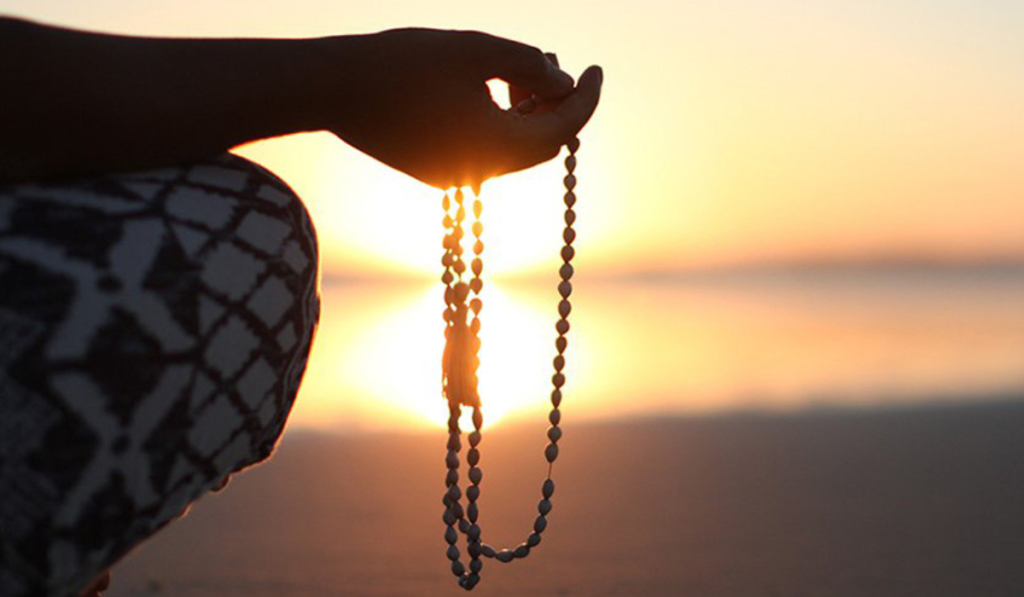
Hindu sunrise rituals were designed to engage the body and mind together. This was intentional, not symbolic.
- Mantra chanting, drawn from Vedic recitation practices such as those in the Rigveda, uses steady rhythm and repetition to slow breathing and steady attention. This helps the mind settle before the day begins.
- Morning bathing, described in Ayurvedic dinacharya, uses water to wake the body. Cool or fresh water increases alertness and pulls the mind out of sleep without overstimulation.
- Fire rituals, like lighting a diya or performing Agnihotra, introduce focused light and stillness. The flame becomes a fixed point for attention at a time when the mind is most receptive.
Together, sound, breath, water, posture, and light created a clear reset at sunrise. Instead of jumping straight into activity, the body and mind were prepared first. That preparation was the real purpose of the ritual.
What Modern Science Later Confirmed?
Modern science now backs many principles behind Hindu sunrise rituals, even if it arrived there much later.
Research on circadian rhythm shows that morning light plays a key role in setting the body’s internal clock. When the eyes receive natural light early in the day, sleep timing improves, hormones stabilise, and mental alertness increases. This is why people feel more focused and balanced when their day starts with sunlight instead of screens.
Studies also show that consistent morning routines help regulate emotions and reduce mental fatigue. When the brain knows what comes first each day, it spends less energy reacting and more energy functioning.
What science calls findings, Hindu sunrise rituals are treated as a daily discipline. The goal was never theory. It was a sense of stability, clarity, and readiness for the day ahead.
How Modern Life Disrupted the Sunrise Rhythm?
The breakdown occurred not because rituals failed, but because living conditions changed.
Artificial lighting reduced dependence on sunrise. Screen exposure replaced natural light. Work schedules prioritised clocks over biology. Nights extended unnaturally, and mornings lost their significance.
Hindu sunrise rituals require a world that respects morning. Modern life largely ignores it.
Why Simply Waking Up Early No Longer Works?
Many people try waking early today and find no benefit. This happens because:
- Indoor lighting does not replicate sunrise light
- Phone screens hijack attention immediately
- Silence and stillness are replaced with stimulation
The ritual depended on environmental conditions that no longer exist by default.
Can Hindu Sunrise Rituals Still Be Practised Today?
Yes, if principles are preserved.
What must remain:
- Exposure to natural light
- Silence before stimulation
- Intentional beginning of the day
What can adapt:
- Duration
- Language
- Format
Adaptation is not dilution. It is continuity.
Conclusion
Hindu sunrise rituals were not superstition disguised as tradition. They were time-based systems rooted in Vedic literature, Ayurvedic practice, and disciplined observation of human nature.
When time was aligned with the sun, life had rhythm. When time became mechanical, rituals lost their place. The solution is not nostalgia, but understanding what was actually being preserved.
Let’s stay connected! Come say hi on Instagram or follow us on Facebook for more interesting knowledge.