
Every year, on Vaishakh Shukla Tritiya, Sanatan Dharma remembers a warrior who carried an axe but never lost his soul. Born a Brahmin, trained like a Kshatriya, and devoted like a rishi, He is Shri Parashurama, the sixth avatar of Bhagwaan Vishnu. His Jayanti calls every devotee to one truth: dharma must be protected, even when it demands everything.
In 2026, Parashurama Jayanti falls on Sunday, 19 April 2026, coinciding with Akshaya Tritiya. This alignment makes the day even more powerful for prayer, fasting, and new beginnings.
Parashurama Jayanti 2026: Date and Muhurat
Parshuram Jayanti date in 2026 is Sunday, 19 April, falling on the Tritiya of Shukla Paksha in the month of Vaishakh (according to the hindu calendar).
Key Timings:
- Tritiya Tithi begins: 10:51 AM, 19 April 2026
- Tritiya Tithi ends: 07:29 AM, 20 April 2026
- Pradosh Kaal puja window: 06:49 PM to 10:57 PM
- Madhyahna puja window: 07:29 AM to 12:20 PM
Since Shri Parashurama is believed to have been born during Pradosh Kaal, the evening puja window is considered the most auspicious.
The word Akshaya means “never diminishing.” Any spiritual practice, seva, or charity performed on this day carries limitless benefits, according to the Puranas.
Who Is Shri Parashurama?
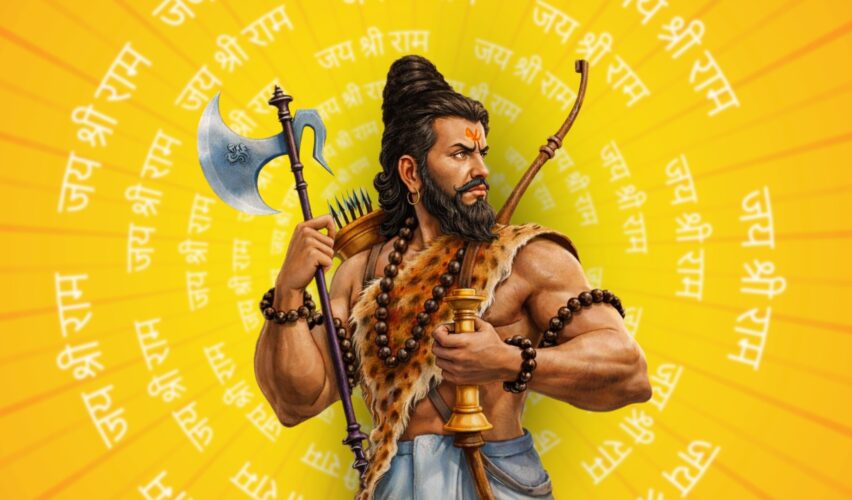
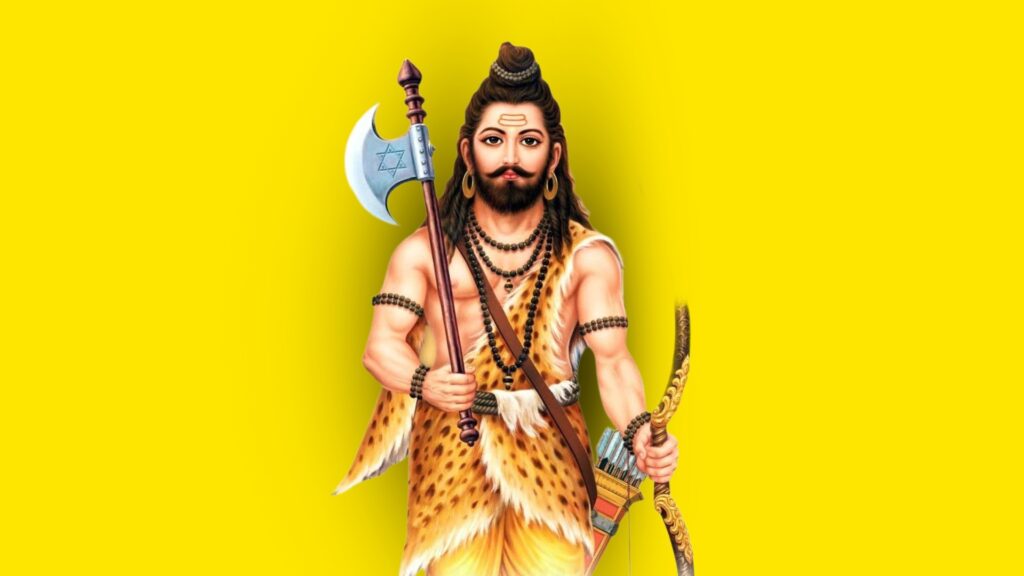
Shri Parashurama is the sixth avatar of Lord Vishnu among the Dashavatara. His name means “Rama with the axe”. He carries a divine Parashu gifted by Bhagwaan Shiva, both as weapon and as symbol of unwavering resolve.
He is the only avatar known as a Brahmakshatriya: born into a Brahmin family but carrying the warrior spirit of a Kshatriya. The Vishnu Purana, Bhagavata Purana, Mahabharata, and Valmiki Ramayana all describe His extraordinary life and divine mission.
Unlike Rama or Krishna, Parashurama is a Chiranjivi, one of the seven immortals of Sanatan Dharma. He still lives on earth, residing at Mahendra Parvata. He is prophesied to serve as the guru of Kalki, the tenth and final avatar of Lord Vishnu, making Him a divine bridge across multiple yugas.
परशुरामः शिवशिष्यः भार्गवो राम उच्यते।
Parashuramah Shiva-shishyah Bhargavo Rama-uchyate
He who is the student of Shiva and of Bhrigu’s lineage is called Parashurama.
(Vishnu Purana, referenced in Mahabharata, Vana Parva)
The Story of Parashurama
1. The Divine Birth
Lord Parashurama was born to Rishi Jamadagni and Mata Renuka on Akshaya Tritiya during Treta Yuga. The Skanda Purana and Bhavishya Purana describe His birth as Lord Vishnu’s response to the suffering of Bhumi Devi, the earth goddess, who endured the tyranny of corrupt Kshatriya kings.
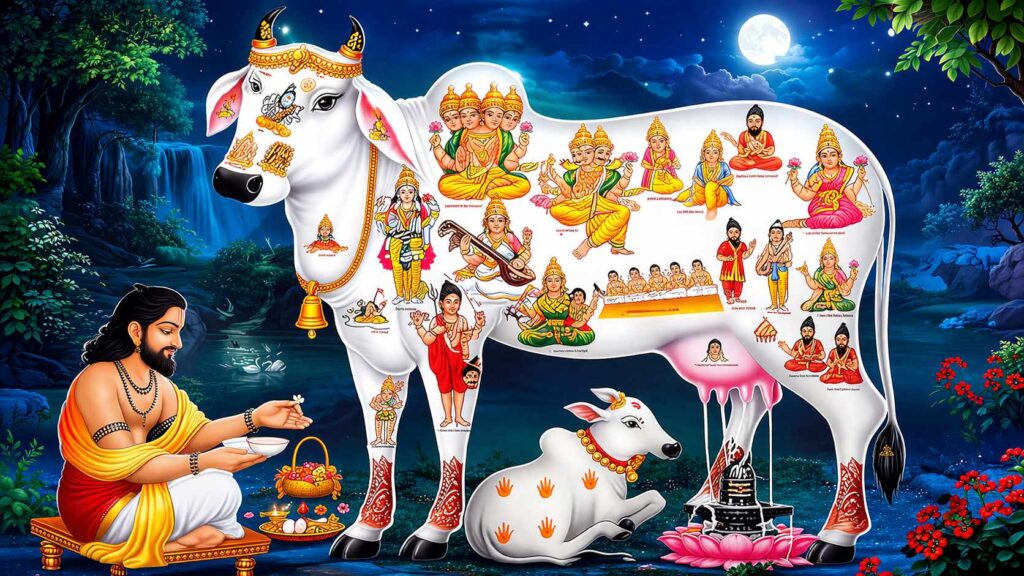
The Brahmanda Purana describes Bhumi Devi appealing to Lord Vishnu in the form of a cow, asking Him to protect the righteous and restore dharma. Lord Vishnu descended as Parashurama: a Brahmin by birth, a warrior by destiny.
2. The Axe, the Vow, and 21 Rounds
From childhood, Parashurama devoted Himself to Bhagwaan Shiva. Pleased by His tapasya, Bhagwaan Shiva gifted Him the divine Parashu and trained Him in the arts of war, making Parashurama the first warrior-sage of Sanatan tradition.
Rishi Jamadagni possessed the divine cow Kamadhenu. The Haihaya king Kartavirya Arjuna came to the ashram, demanded the cow by force, and killed the sage when refused. Shri Parashurama took an immediate vow to rid the earth of every adharmic ruler. He completed 21 rounds of the earth, defeating corrupt kings in every region. The number 21 reflects the completeness of His commitment to dharma.
3. The Trial of Obedience
Rishi Jamadagni once commanded Shri Parashurama to behead Mata Renuka as a test of absolute surrender. Without hesitation, Parashurama obeyed. Moved by this act of unconditional obedience, his father granted a boon, and Parashurama immediately used it to restore his mother to life.
This episode does not glorify violence. It teaches one of Sanatan Dharma’s deepest truths: true surrender to the guru requires the complete release of personal ego and attachment.
4. Teacher of the Greatest Warriors
Shri Parashurama was a revered guru to Bhishma Pitamah, Dronacharya, and Karna, imparting the highest levels of archery and warfare. His disciples shaped the Mahabharata itself. He upheld one principle above all: knowledge belongs to those who seek it with sincere devotion.
Meaning and Significance of Parashurama Jayanti
- Dharma over adharma: His Jayanti reminds devotees that upholding righteousness sometimes demands great personal cost.
- Akshaya Tritiya alignment: Puja, charity, and spiritual practice on this day carry multiplied and eternal merit.
- The Chiranjivi blessing: Because Parashurama still lives, His divine presence is accessible to every sincere devotee.
- Guru-shishya tradition: As the teacher of Bhishma, Drona, and Karna, He embodies the sacred bond between guru and student.
- Brahmin-Kshatriya unity: His identity as a Brahmakshatriya shows that knowledge and courage belong together, not in opposition.
Parashurama Jayanti Puja Vidhi and Fast
Morning Preparation
- Wake up before sunrise and take a sacred bath.
- Wear clean puja vastra and purify the puja space.
- Set up a murti or image of Lord Parashurama, or Lord Vishnu as His avatar.
Puja Offerings
- Offer flowers, tulsi leaves, kumkum, chandan, incense sticks, and sweets as prasad.
- Light a ghee diya with devotion.
- Perform the aarti with a lamp, circling it seven times before the murti.
Fasting
Fasting on Parashurama Jayanti 2026 is highly auspicious. Devotees may observe a nirjala vrat (no water) or a phalahar vrat (fruits and milk only). The vrat is ideally broken after the evening puja during Pradosh Kaal.
Donating food to Brahmins, feeding the poor, or distributing prasad in a temple is especially great since this day aligns with Akshaya Tritiya.
Parashurama Mantra for Jayanti Puja
Mantra
ॐ परशुरामाय नमः।
Om Parashuramaaya Namah
Meaning: I bow to Lord Parashurama, the axe-wielder who restores righteousness.
Dhyana Shloka
नमामि भार्गवश्रेष्ठं क्षत्रियान्तकरं प्रभुम्।
यः चकार पृथिवीं निष्क्षत्रियां तस्मै परशुधराय नमः॥
“Namami Bhargava-shrestham, Kshatriyantakaram Prabhum,
Yashchakre Prithivim Nihsya, Tasmai Parashave Namah.”
Meaning: I bow to the greatest of the Bhrigu lineage, the lord who purified the earth. I bow to the one who wields the Parashu.
Bhagwaan Parashurama and the 7 Chiranjivis
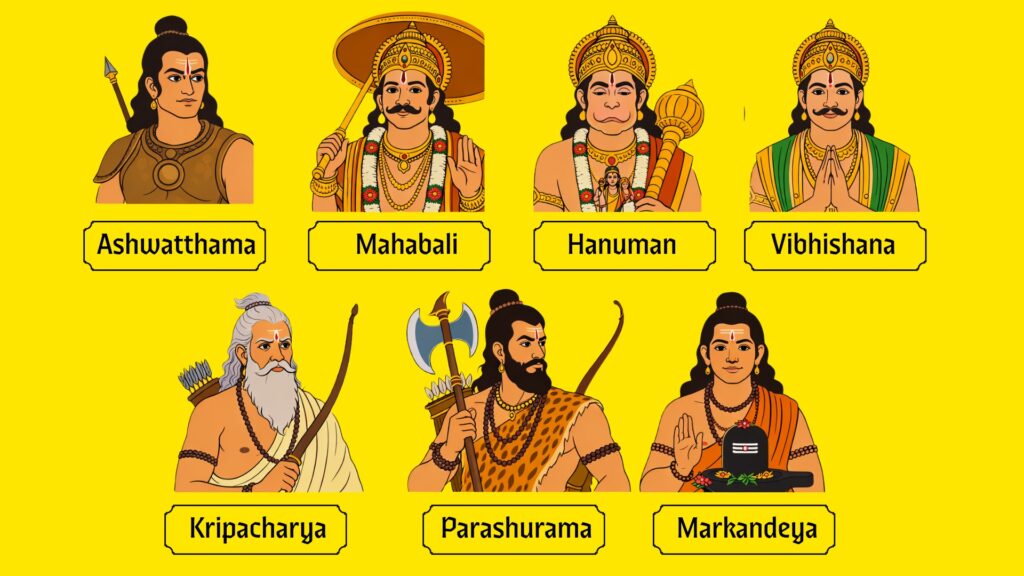
Shri Parashurama is one of the 7 Chiranjivis of Sanatan Dharma: immortal beings who exist across all ages. The seven are Ashwatthama, Bali Maharaja, Vedavyasa, Hanuman, Vibhishana, Kripacharya, and Parashurama.
अश्वत्थामा बलिर्व्यासो हनुमांश्च विभीषणः।
कृपः परशुरामश्च सप्तैते चिरंजीविनः॥
Ashwatthama Balir Vyaso Hanumanashcha Vibhishanah |
Kripah Parashuramascha Saptaite Chiranjeevinah ||
Meaning: Ashwatthama, Bali, Vyasa, Hanuman, Vibhishana, Kripa, and Parashurama, these seven are the Chiranjivis (immortal beings).
He currently resides in deep meditation at Mahendra Parvata, identified with the Mahendragiri hills of Odisha and Andhra Pradesh. He awaits Lord Kalki and will emerge as His guru, making Him the only avatar who serves across two separate cosmic cycles.
How Parashurama Jayanti Is Celebrated?
Devotees across India observe this day through fasting, temple visits, puja, and acts of charity. The Parshuram Mandir at Mokama in Bihar holds a grand Kalash Yatra every year, now recognised as a state festival by the Bihar Government.
The western coastal regions of India, including Goa, Maharashtra, Karnataka, and Kerala, hold a special reverence for Bhagwaan Parashurama. Tradition holds that He reclaimed this entire coastal belt from the sea by throwing His divine axe. Temples like the Thiruvallam Sree Parasuramaswamy Temple in Trivandrum observe elaborate pujas on this day.
Across all traditions, the day ends with a shared devotional truth: dharma is not a festival. It is a daily practice.
Frequently Asked Questions About Parashurama Jayanti 2026
1. When is Parashurama Jayanti in 2026?
Parashurama Jayanti 2026 falls on Sunday, 19 April 2026. The Tritiya Tithi begins at 10:51 AM and the most auspicious puja window is Pradosh Kaal: 06:49 PM to 10:57 PM.
2. Why does Parashurama Jayanti fall on Akshaya Tritiya?
Lord Parashurama was born on Vaishakh Shukla Tritiya, the same tithi celebrated as Akshaya Tritiya. The Puranas confirm He was born during Pradosh Kaal on this day, making His Jayanti one of the most auspicious observances in the Vaishnava calendar.
3. Is Parashurama still alive?
Yes. He is one of the 7 Chiranjivis, immortal beings of Sanatan Dharma. According to scripture, He resides in meditation at Mahendra Parvata and will emerge as the guru of Lord Kalki at the end of Kali Yuga.
4. Why did Parashurama fight Kshatriyas 21 times?
After Kartavirya Arjuna stole Kamadhenu and killed Sage Jamadagni, Lord Parashurama vowed to remove every adharmic ruler from the earth. He completed 21 rounds of the earth in total, defeating corrupt kings each time. The number 21 reflects the completeness of His commitment to dharma.
5. How can a devotee observe this day at home?
Wake before sunrise, take a sacred bath, set up a puja with a Vishnu or Parashurama murti, offer tulsi, chandan, and prasad, chant Om Parashuramaaya Namah, and perform the aarti during Pradosh Kaal. Donating food or performing any seva on this day is considered especially auspicious.
Final Words
The significance of Parashurama in Sanatan Dharma is timeless. He did not come to accumulate power. He came to restore it to the righteous. On this Parashurama Jayanti 2026, may every devotee remember that dharma is not passive. It asks for courage, sacrifice, and devotion.
Observe the vrat with sincerity. Offer your aarti with love. Chant the Parashurama mantra with a still heart. The sixth avatar of Bhagwaan Vishnu still walks this earth, watching over all who uphold righteousness.
Jai Parashurama. Jai Shri Hari.
Explore More on My Favorite Corner
- Hanuman Jayanti 2026: Date, Meaning, Significance, Puja Vidhi: Another Chiranjivi of Treta Yuga, whose Jayanti falls just weeks before Parashurama’s.
- Ram Navami 2026: Celebration, Story, and Significance: The Jayanti of Lord Rama, the avatar Parashurama acknowledged as supreme.
- Karma and the Bhagavad Gita: What Krishna Teaches Us: Parashurama’s mission was pure karma yoga: righteous action with no personal attachment.
- Navadha Bhakti: Nine Paths of Devotion in Sanatan Dharma: Lord Parashurama exemplified smarana and padasevana through His penance at Mahendra Parvata.
At My Favorite Corner, we write from within the tradition, with reverence for the scriptures and love for the path. If this piece spoke to you, share it with someone on their spiritual journey. For more such reflections, follow us on Instagram and Facebook, and stay connected to the path of bhakti.