
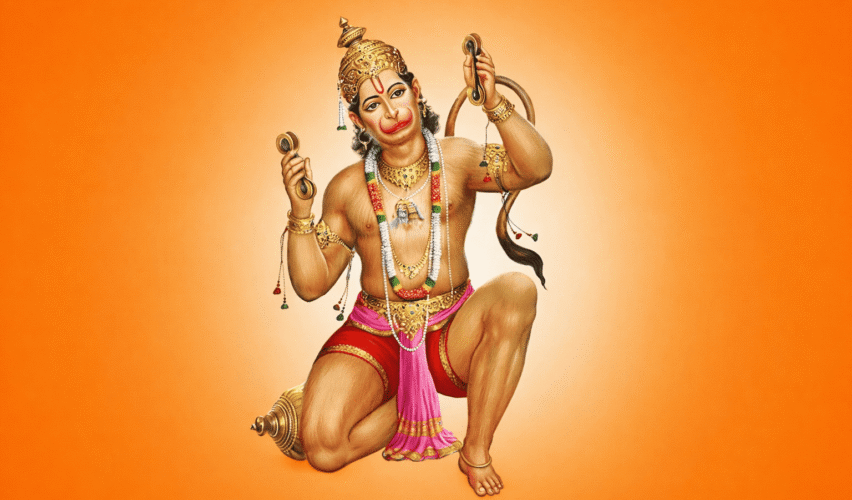
Every year, millions of devotees across India and around the world wake before sunrise, light a diya, and offer their hearts to Lord Hanuman with love and devotion. Hanuman Jayanti is not just a festival on the calendar. It is a deeply personal moment for every Hindu who has ever sought strength in difficulty, courage in fear, or peace in chaos.
In 2026, Hanuman Jayanti falls on Thursday, April 2. The auspicious Chaitra Purnima tithi begins on the evening of April 1 and the sunrise window on April 2 is the most sacred time for puja and worship.
This post shares everything you need to know about Hanuman Jayanti 2026: the confirmed date, the beautiful origin story of Lord Hanuman, the spiritual significance of this day, and how to observe the festival with full devotion.
Hanuman Jayanti also known as: Bajrangbali Jayanti, Anjaneya Jayanti, Hanumath Jayanthi.
When Is Hanuman Jayanti in 2026?
Many people wonder: is Hanuman Jayanti 2026 on April 1 or April 2? The answer is April 2, 2026 (Thursday). Here is why this question comes up.
The festival is observed on Chaitra Purnima, the full moon day of the Chaitra month in the Hindu calendar. In 2026, the Purnima tithi begins on the evening of April 1 but the full moon is still present at sunrise on April 2. Since most traditions observe Hanuman Jayanti at sunrise, April 2 is the correct and widely accepted date.
Hanuman Jayanti 2026: Key Timings
| Detail | Timing / Info |
| Festival Date | Thursday, April 2, 2026 |
| Purnima Tithi Begins | April 1, 2026 (evening) |
| Sunrise on April 2 | Approx. 06:00 AM (IST) |
| Brahma Muhurat | 04:59 AM to 05:45 AM (most auspicious) |
| Shubh Puja Time | Sunrise to 07:41 AM |
| Abhijit Muhurat | Approx. 11:54 AM to 12:46 PM |
| Akhand Path Tradition | Hanuman Chalisa recitation from April 1 evening to April 2 sunrise |
Note: Times may vary slightly by city. Please confirm the sunrise time for your location using a trusted Hindu Panchang.
The Birth Story of Lord Hanuman on Hanuman Jayanti

The birth of Lord Hanuman is a story filled with divine grace, celestial blessings, and the supreme will of God. It is not just a mythological account. It is the story of how the most devoted servant of Lord Ram came into this world.
The Parents of Lord Hanuman
Lord Hanuman was born to Mata Anjana and Shri Kesari, a Vanara king. His mother, Mata Anjana, was an apsara who had taken birth on earth due to a curse. She spent years in deep penance and prayer, seeking a divine son.
Lord Vayu dev, the God of Wind, played a special role in Hanuman’s birth. By the grace of Lord Shiva and the blessings of Vayu Dev, Mata Anjana conceived a son of extraordinary divine energy. This is why Lord Hanuman is also called Pavan Putra, the son of the wind.
The Auspicious Moment of Birth
Hanuman Jayanti marks the moment Lord Hanuman came into the world. He was born on Chaitra Purnima, during the Brahma Muhurat, in the Treta Yuga. He was born with the strength of a thousand elephants, the speed of the wind, and the radiance of the sun itself.
The Sun-Swallowing Leela
As an infant, Hanuman saw the rising sun and, mistaking it for a ripe fruit, mango, leaped into the sky to eat it. Even the king of heavens, Lord Indra, had to intervene. He struck Hanuman with his Vajra, injuring Hanuman’s jaw (hanu). This is how he received the name Hanuman, meaning “one with a prominent jaw.
Vayu Dev, grief-stricken at the injury to his son, withdrew all air from the universe. The world began to suffocate. Lord Brahma and all the devas rushed to console Vayu Dev and blessed the infant Hanuman with countless divine gifts, including immortality.
The Eleven Rudra Avatar
Scriptures describe Lord Hanuman as the eleventh avatar of Lord Shiva. He took this form to serve Lord Ram in the Treta Yuga. His birth was not ordinary. It was orchestrated by the divine to fulfil the purpose of the cosmos. This is why Hanuman Jayanti is observed with such reverence.
Spiritual Significance of Hanuman Jayanti
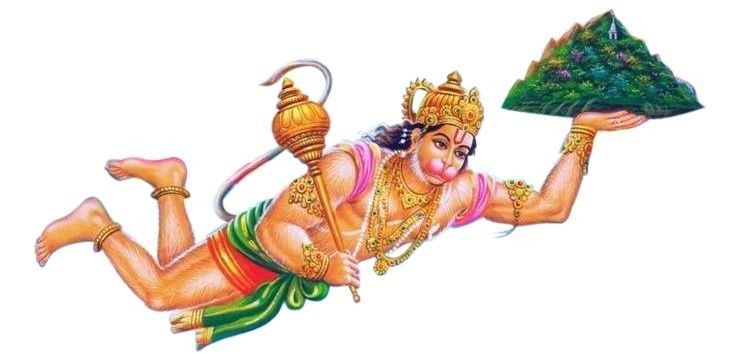
Hanuman Jayanti is one of the most powerful days in the Hindu calendar. It is the day when the boundary between the devotee and the Lord feels thinner than usual. Hanuman Ji is always present where Shri Ram name is taken with love. And on this day, His blessings flow in abundance.
Hanuman Ji as the Ideal Devotee
Every aspect of Lord Hanuman’s life teaches us what true Bhakti looks like. He had infinite strength but never used it for personal glory. The intelligence of the greatest scholars but used it only to serve Lord Ram. He could have asked for anything, but he only asked for a place at the lotus feet of his Lord.
This is Dasya Bhakti, the path of devoted service. Hanuman Jayanti reminds every Hindu that the greatest power in the universe is not force or wealth. It is surrender to God with complete love and faith.
Why Hanuman Ji Is the Ideal Deity for Kalyug?
We live in the Kalyug, an age of confusion, temptation, and spiritual difficulty. The scriptures say that in this age, calling upon Bajrangbali with sincerity removes all obstacles and fears. Lord Hanuman is considered the most accessible of all deities. His grace does not require elaborate rituals. It requires only a pure heart and a genuine call.
This is why Hanuman Jayanti 2026 carries such deep meaning. In a world full of noise, this day invites every devotee to pause, bow, and simply say: “Jai Hanuman.”
The Significance of Sindoor on Hanuman Jayanti
One of the most moving traditions on Hanuman Jayanti is the offering of sindoor. Here is the story behind it.
One day, Mata Sita was applying sindoor to her hair. Hanuman Ji asked why she did this. She replied that it was for the long life and happiness of Lord Ram. Hanuman Ji, in his boundless love, covered his entire body with sindoor so that Lord Ram would live forever. Lord Ram was so moved by this act that he blessed Hanuman Ji with eternal life.
On Hanuman Jayanti, devotees offer sindoor to Hanuman Ji as a symbol of this infinite love and surrender.
Removing Fear and Granting Courage
One of the most beloved aspects of Lord Hanuman is that he removes all fear from the hearts of his devotees. Whether it is fear of enemies, illness, evil forces, or the uncertainties of life, calling upon Pavan Putra Hanuman brings an immediate sense of protection and peace.
Reciting the Hanuman Chalisa, the Bajrang Baan, or the Sundarkand on Hanuman Jayanti is considered especially powerful. Many families stay awake through the night in prayer, experiencing a joy that words cannot fully describe.
How to Observe Hanuman Jayanti 2026
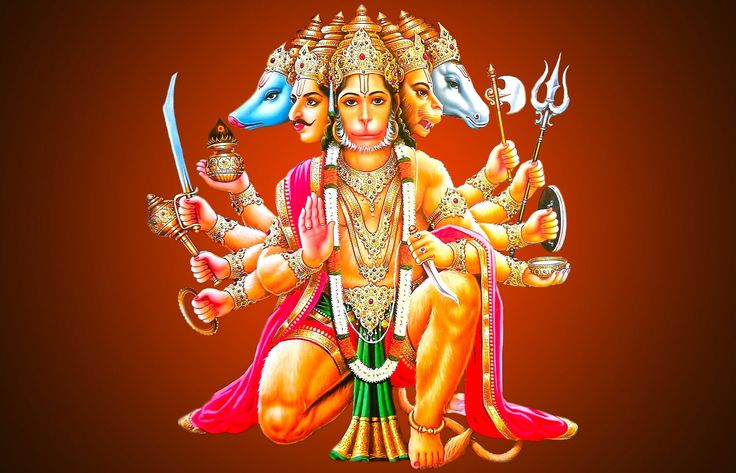
You do not need to follow a complex ritual to celebrate Hanuman Jayanti 2026 meaningfully. What matters most is the sincerity of your heart. Here is a simple and complete guide.
Early Morning Puja
- Wake up during Brahma Muhurat (around 4:59 AM) or before sunrise.
- Take a bath and wear clean clothes, preferably in red or saffron, Hanuman Ji’s favourite colors.
- Light a mustard oil diya or ghee lamp before Hanuman Ji’s image or idol.
- Offer fresh flowers, especially marigold and red flowers.
- Apply sindoor tilak and offer sindoor to the idol.
- Offer sweets such as boondi laddoo or banana, which are dear to Hanuman Ji.
Prayers and Recitations
- Recite the Hanuman Chalisa at least once, ideally eleven times.
- Read or listen to the Sundarkand from the Ramcharitmanas.
- Recite Bajrang Baan for courage and removal of obstacles.
- Chant “Om Han Hanumate Namah” as a simple and powerful mantra.
Vrat and Fasting
Many devotees observe a Nirjal vrat (waterless fast) or a Satvik vrat on Hanuman Jayanti. Those fasting avoid grains, onion, garlic, and non-vegetarian food. Fruits, milk, and nuts are commonly consumed by those following a partial fast.
Regional Celebrations
Hanuman Jayanti is celebrated differently across India, and each tradition adds a unique beauty to the day.
- Andhra Pradesh and Telangana: Devotees observe a 41-day Deeksha leading up to Hanuman Jayanti, reciting the Hanuman Chalisa daily.
- Karnataka: The state also observes Hanuman Vratam in December, but the April Jayanti is equally celebrated.
- Tamil Nadu: In some regions, Hanuman Jayanti, known as Hanumath Jayanthi, is observed in the Margashirsha month, but April celebrations are also widely observed.
- North India: Massive processions, jagrans, and Akhand Ramayan paaths fill cities and towns with devotion and festivity
Conclusion
Hanuman Jayanti 2026 arrives on Thursday, April 2. It is a day to go beyond the routine and sit quietly with the Lord who never abandons his devotees. To remember that true strength does not come from the world. It comes from within, and within is where Hanuman Ji lives for those who love Him.
Whether you recite the Hanuman Chalisa once or a hundred times, whether you fast or simply light a single diya, what Lord Hanuman asks for is your heart. Give it fully on this Hanuman Jayanti, and His grace will never leave you.
Jai Bajrang Bali. Jai Shri Ram.
Frequently Asked Questions
1. Is Hanuman Jayanti on April 1 or April 2 in 2026?
Hanuman Jayanti 2026 is on April 2, 2026. The Chaitra Purnima tithi begins on the evening of April 1 but the sunrise on April 2 falls within the Purnima window, making April 2 the correct day for worship.
2. What is the shubh muhurat for Hanuman Jayanti 2026?
The most auspicious time is the Brahma Muhurat from 4:59 AM to 5:45 AM. Puja performed at sunrise (approximately 6:00 AM) is also highly auspicious. The Abhijit Muhurat around midday is another powerful window for worship.
3. Why is Hanuman Jayanti celebrated?
Hanuman Jayanti marks the birth anniversary of Lord Hanuman, the greatest devotee of Lord Ram. It is celebrated to honour His life, His teachings, and His infinite compassion for all who call upon Him.
4. Can we eat non-vegetarian food on Hanuman Jayanti?
Devotees traditionally avoid non-vegetarian food, onion, and garlic on Hanuman Jayanti. Eating Satvik food on this day is considered respectful and spiritually beneficial.
5. What is the significance of Anjaneya Jayanti?
Anjaneya Jayanti is another name for Hanuman Jayanti, commonly used in South India. Anjaneya means “son of Mata Anjana,” referring to Lord Hanuman’s mother, Mata Anjana. The celebration carries the same spiritual meaning and devotion.
The journey does not end here. Follow MFC on Instagram and Facebook to explore more sacred places, festivals, and living traditions of Sanatan Dharma.