


॥ जय अम्बे गौरी ॥
॥ 1 ॥
जय अम्बे गौरी, मैया जय श्यामा गौरी।
तुमको निशदिन ध्यावत, हरि ब्रह्मा शिवरी॥
॥ जय अम्बे गौरी… ॥
॥ 2 ॥
माँग सिंदूर विराजत, टीको मृगमद को।
उज्ज्वल से दोउ नैना, चन्द्रवदन नीको॥
॥ जय अम्बे गौरी… ॥
॥ 3 ॥
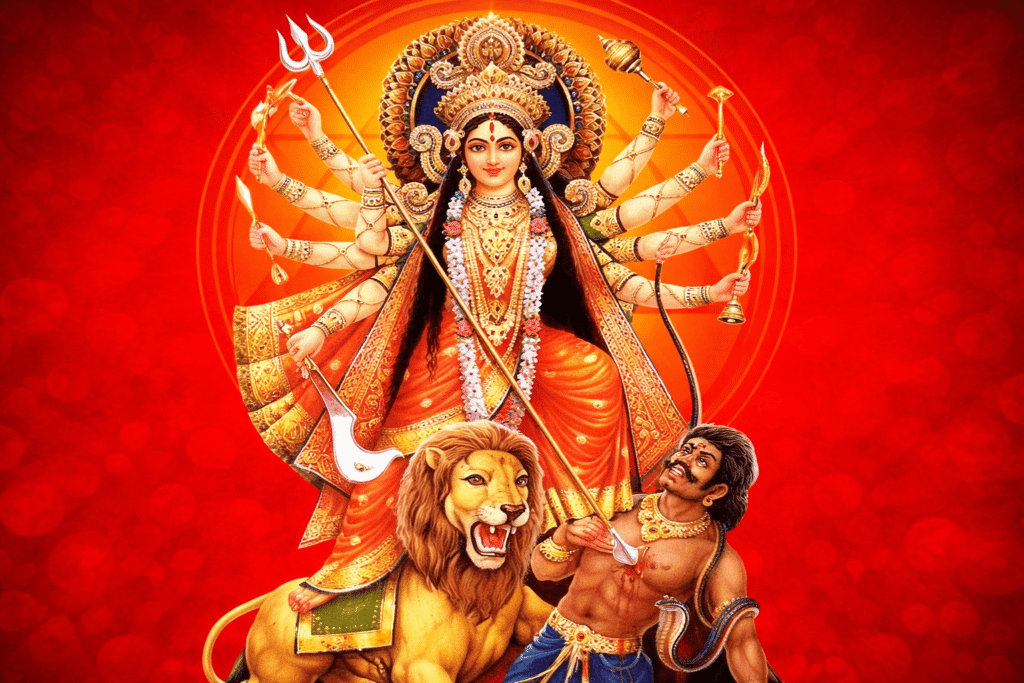
कनक समान कलेवर, रक्ताम्बर राजै।
रक्तपुष्प गल माला, कण्ठन पर साजै॥
॥ जय अम्बे गौरी… ॥
॥ 4 ॥
केहरि वाहन राजत, खड्ग खप्परधारी।
सुर-नर मुनि-जन सेवत, तिनके दुखहारी॥
॥ जय अम्बे गौरी… ॥
॥ 5 ॥
कानन कुण्डल शोभित, नासाग्रे मोती।
कोटिक चन्द्र दिवाकर, सम राजत ज्योती॥
॥ जय अम्बे गौरी… ॥
॥ 6 ॥
शम्भु निशम्भु बिदारे, महिषासुर घाती।
धूम्र विलोचन नैना, निशदिन मदमाती॥
॥ जय अम्बे गौरी… ॥
॥ 7 ॥
चण्ड-मुण्ड संहारे, शोणित बीज हरे।
मधु-कैटभ दोउ मारे, सुर भयहीन करे॥
॥ जय अम्बे गौरी… ॥
॥ 8 ॥
ब्रह्माणी रुद्राणी तुम कमला रानी।
आगम निगम बखानी, तुम शिव पटरानी॥
॥ जय अम्बे गौरी… ॥
॥ 9 ॥
चौंसठ योगिनि गावत, नृत्य करत भैरों।
बाजत ताल मृदंगा, अरु बाजत डमरू॥
॥ जय अम्बे गौरी… ॥
॥ 10 ॥
तुम ही जग की माता, तुम ही हो भरता।
भक्तन की दुख हरता, सुख सम्पत्ति करता॥
॥ जय अम्बे गौरी… ॥
॥ 11 ॥
भुजा चार अति शोभित, वर-मुद्रा धारी।
मनवांछित फल पावत, सेवत नर-नारी॥
॥ जय अम्बे गौरी… ॥
॥ 12 ॥
कंचन थाल विराजत, अगर कपूर बाती।
श्री मालकेतु में राजत, कोटि रतन ज्योती॥
॥ जय अम्बे गौरी… ॥
॥ 13 ॥
श्री अम्बेजी की आरती, जो कोई नर गावै।
कहत शिवानन्द स्वामी, सुख-सम्पत्ति पावै॥
॥ जय अम्बे गौरी… ॥
Durga Aarti in Hindi with Meaning
1
Jai Ambe Gauri, Maiya Jai Shyama Gauri.
Tumko nishadin dhavat, Hari Brahma Shivari.
Meaning:
Victory to you, O Ambe Gauri. Victory to you, O Shyama Gauri. Hari, Brahma, and Shiva meditate upon you day and night without rest. You are the one whom even the highest gods turn to in devotion.
2
Maang sindoor virajat, teeko mrigamad ko.
Ujjwal se dou naina, chandravadan neeko.
Meaning:
Your parting is adorned with vermilion and your forehead bears a mark of musk. Your two eyes shine with radiance and your face glows like the full moon. This verse honors the Goddess in her complete, luminous form.
3
Kanak saman kalevar, raktambar rajai.
Raktapushp gal mala, kanthan par sajai.
Meaning:
Your body shines like gold and you are adorned in red garments. A garland of red flowers rests beautifully around your neck. Red is the color of Shakti, power, and the fire of transformation.
4
Kehari vahan rajat, khadg khappardhhari.
Sur-nar muni-jan sevat, tinke dukhhari.
Meaning:
You ride the lion with grace and carry the sword and skull cup in your hands. Gods, humans, and sages all serve you, for you are the one who destroys their suffering. This verse establishes Devi as the remover of pain across all three realms.
5
Kanan kundal shobhit, nasagre moti.
Kotik chandra divakar, sam rajat jyoti.
Meaning:
Your ears are adorned with beautiful earrings and a pearl graces the tip of your nose. Your radiance equals crores of moons and suns combined. The devotee is reminded that the Goddess is not simply beautiful. She is light itself.
6
Shambhu Nishambhu bidare, Mahishasur ghati.
Dhumra vilochana naina, nishdin madmati.
Meaning:
You destroyed Shumbha and Nishumbha and slew the great demon Mahishasura. Your eyes blaze with power day and night. This verse recalls the Goddess’s most celebrated victories from the Devi Mahatmya.
7
Chand-Mund sanhare, shonit beej hare.
Madhu-Kaitabh dou mare, sur bhayhin kare.
Meaning:
You annihilated Chanda and Munda and destroyed the seed of Raktabeeja’s endless replication. You slew Madhu and Kaitabha and made the gods fearless. Each demon named here represents a force of darkness that the Goddess alone could overcome.
8
Brahmani Rudrani tum Kamala Rani.
Agam Nigam bakhani, tum Shiv Patrani.
Meaning:
You are Brahmani, Rudrani, and Kamala the queen. The Agamas and Nigamas praise you as the consort of Shiva. This verse honors the Goddess in her multiple forms across the Tridevi, the three great manifestations of the divine feminine.
9
Chaunsath yogini gavat, nritya karat Bhairon.
Bajat tal mridanga, aru bajat damru.
Meaning:
The sixty-four Yoginis sing in your praise and Bhairava dances before you. The mridanga beats with rhythm and the damru resounds in the celestial court. This verse paints a living picture of divine celebration that surrounds the Goddess at all times.
10
Tum hi jag ki mata, tum hi ho bharta.
Bhaktan ki dukh harta, sukh sampatti karta.
Meaning:
You are the mother of the universe and you are its sustainer. You remove the suffering of your devotees and bless them with happiness and prosperity. This is the verse that speaks most directly to the Goddess as the divine mother who holds her children close.
11
Bhuja char ati shobhit, var-mudra dhari.
Manvanchhit phal pavat, sevat nar-nari.
Meaning:
Your four arms shine with beauty and you hold the gesture of blessing. Men and women who serve you with devotion receive the fruit of their deepest wishes. The four arms of the Goddess represent her complete sovereignty over all directions and all aspects of life.
12
Kanchan thal virajat, agar kapoor bati.
Shri Malketu mein rajat, koti ratan jyoti.
Meaning:
A golden plate holds the flame of agarwood and camphor offered to you. In the Shri Malketu temple your light shines like crores of gems. The aarti at this point becomes an act of offering, the flame a symbol of the devotee’s own consciousness being surrendered to the Goddess.
13
Shri Ambaji ki aarti, jo koi nar gavai.
Kahat Shivanand Swami, sukh-sampatti pavai.
Meaning:
Swami Shivananda declares that whoever sings this aarti of Shri Ambaji will receive happiness and prosperity. This closing verse is the seal of the aarti, the composer’s own testimony to the power of sincere devotion.
Origin of Durga Aarti
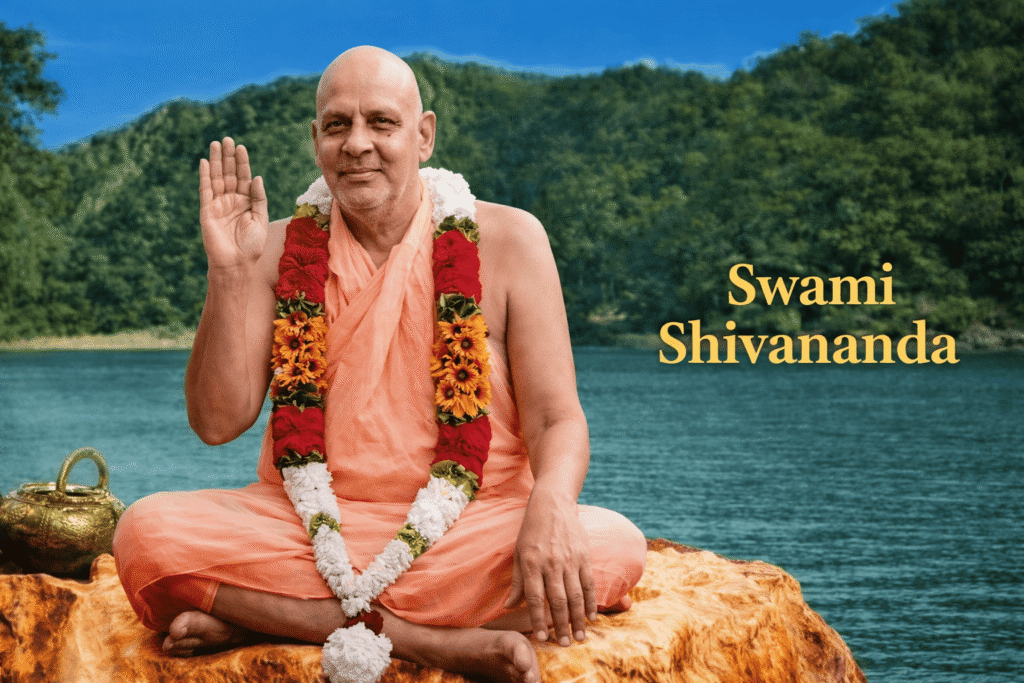
The Durga Aarti, known by its opening words Jai Ambe Gauri, is one of the most widely recited devotional compositions in the Shakta tradition across North India. It is traditionally attributed to Swami Shivananda, whose name appears in the final verse as the author and witness to the aarti’s power.
The aarti draws its devotional framework from the Devi Mahatmya, the principal scripture of Shakta Hinduism, which forms a part of the Markandeya Purana. The references within the aarti, including the slaying of Mahishasura, Shumbha and Nishumbha, Raktabeeja, and the demons Madhu and Kaitabha, all draw directly from this scripture. The aarti is therefore not simply a song of praise. It is a condensed retelling of the Goddess’s greatest victories set to a rhythm suitable for daily worship.
What distinguishes the Durga Aarti from a stotram or a shloka is its function. An aarti is performed as part of the puja ritual, typically with a lit diya or camphor flame being waved in circular motions before the murti or image of the Goddess. The flame represents the light of consciousness being offered to the divine. The singing of the aarti is the devotee’s act of complete surrender in that moment.
The Jai Ambe Gauri aarti became widespread across temples, homes, and public Navratri celebrations because of its accessible meter, its vivid imagery, and its ability to carry devotional energy even in congregational settings where many voices sing together.
Religious and Spiritual Significance
In Sanatan Dharma, the Durga Aarti occupies a central place in daily and seasonal worship. Its significance operates on multiple levels:
- Honors Devi in all her principal forms including Brahmani, Rudrani, and Kamala, acknowledging that she is one Shakti expressing through many names.
- Recalls her cosmic victories over the greatest demonic forces, reminding the devotee that no darkness is beyond her power to overcome.
- Addresses her as Jagat Mata, the mother of the universe, establishing the devotee’s relationship with her as a child before a mother.
- Connects the individual act of worship to the larger cosmic order that the Goddess sustains.
- The aarti flame symbolizes jnana, the light of knowledge, being offered back to the source of all light.
Performing the Durga Aarti is considered a complete act of worship in itself. Even when a full puja is not possible, the sincere singing of the aarti with a lit flame is regarded as sufficient to invite the Goddess’s presence and grace.
Best Time to Perform Durga Aarti
The Durga Aarti is performed both as part of scheduled daily worship and during special occasions:
- Morning and evening puja: performed daily at sunrise and sunset in Durga temples and devoted households.
- Navratri: performed every evening across all nine nights, with congregational singing in temples and public pandals.
- Ashtami and Navami: the eighth and ninth tithis hold particular power for Shakta worship and the aarti carries heightened significance on these days.
- Vijaya Dashami: performed as a final act of celebration on the tenth day marking the Goddess’s victory.
- Fridays: considered especially auspicious for the worship of the divine feminine throughout the year.
Traditional practice recommends performing the aarti at the same time each day to build a sustained relationship of devotion rather than limiting it to festival occasions alone.
How to Perform Durga Aarti?
The aarti is a ritual of light and song performed before the Goddess. The following steps reflect traditional practice:
- Place the murti or image of Maa Durga on a clean altar with a red cloth.
- Light a diya using ghee or camphor in a small plate or aarti thali.
- Ring a bell at the beginning to mark the start of the sacred act and to clear the space.
- Hold the flame with both hands and move it in a circular, clockwise motion before the Goddess while singing the aarti.
- Sing the aarti at a steady, devotional pace, allowing the words to be felt rather than rushed.
- After completing all verses, offer the flame to those present so they may pass their hands over it and receive the Goddess’s blessing.
- Conclude with a moment of silent prayer or a sankalp, a heartfelt intention offered at her feet.
The aarti does not require elaborate preparation. What it requires is presence, sincerity, and the willingness to stand before the Goddess with an open heart.
Benefits of Performing Durga Aarti
Hindu tradition holds that the sincere performance of Durga Aarti carries both inner and outer blessings:
- Removes fear and anxiety: the Goddess is the granter of abhaya, fearlessness, and her aarti carries this quality directly into the devotee’s mind.
- Destroys the influence of negative forces: the verses recalling her victories over demons are understood to act on the inner demons of pride, anger, delusion, and inertia.
- Builds a living relationship with Devi: regular aarti practice deepens the devotee’s sense of her presence rather than leaving worship as a once-a-year occasion.
- Invites prosperity and well-being: the final verse is a direct testimony by the composer that happiness and prosperity come to those who sing this aarti.
- Purifies the space of worship: the combination of fire, sound, and focused intention during the aarti cleanses the home or temple environment.
- Calms and focuses the mind: the rhythm and repetition of the aarti create a meditative state that carries into the rest of the day.
The aarti is not a transaction with the divine. It is an act of love. Its benefits flow naturally from that quality of offering.
Final Thought
The Durga Aarti is one of the oldest and most living forms of worship in the Shakta tradition. It has been sung in mountain temples, in village homes, in city pandals, and in the quiet of a devotee’s own room at dawn. What has never changed is what it does: it turns the face of the worshipper toward the Goddess and asks nothing except that the devotee show up.
Swami Shivananda placed his own name in the closing verse not as a claim of ownership but as a testimony. He had sung this aarti and received its grace. He was passing that assurance down to every devotee who would come after him.
When you sing Jai Ambe Gauri with a lit flame before Maa Durga, you are not performing a ritual. You are joining a line of devotion that stretches back through centuries and continues forward into every dawn that follows.
जय अम्बे गौरी। जय जगदम्बे।
Also Read:
1. श्री हनुमान चालीसा | Shri Hanuman Chalisa Timing, Benefit & Origin
2. श्री शिव तांडव स्तोत्रम् | Shiv Tandav Stotram Meaning, Origin & Benefit
3. सरस्वती वंदना | Saraswati Vandana with Meaning and Benefits
Save or bookmark this page so you can return to it whenever you seek calm, clarity, or devotion. Follow us on Instagram and Facebook to stay connected, and share your thoughts or suggestions in the comments.
This Bhakti corner is meant to be returned to, not just read once.