
You have heard the word karma your whole life. People say it casually, as though it simply means “what goes around comes around.” But if you were raised in a Hindu household, if you grew up hearing the Bhagavad Gita read aloud, if you have sat before an altar and offered your prayers, you know that karma carries a weight that no casual phrase can hold. So, what is karma?
Karma is the very law by which existence moves.
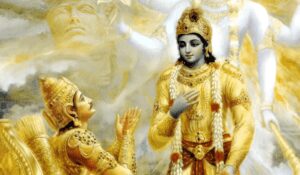
And Lord Krishna, in His conversation with Arjuna on the battlefield of Kurukshetra, gave humanity the deepest and most compassionate explanation of what karma truly is and how to live within it with both honesty and grace.
This post is an attempt to sit with that teaching. Not just to summarize it, but to understand it from the inside, the way our tradition has always invited us to.
What is the meaning of Karma?
The word karma comes from the Sanskrit root kr, which simply means “to do” or “to act.” In its most basic sense, it means action. In its fuller sense, it means action together with the consequences that naturally follow from it.
To understand what is Karma, it is important to understand from the start: it is not fate. It is not a punishment handed down by a judging force. It is cause and effect, as constant and as honest as any law of nature. Every thought you think, every word you speak, every deed you perform creates a ripple. That ripple is karma.
But what makes the Bhagavad Gita’s teaching extraordinary is this: Lord Krishna tells Arjuna that understanding karma is not simple. Even the wise get confused. And then He patiently teaches the difference between right action, wrong action, and the kind of action that leaves the soul free. This distinction is the heart of karma yoga, the path of selfless, devoted action.
What does Shri Krishna Says About Karma: Six Essential Verses From Bhagwat Geeta
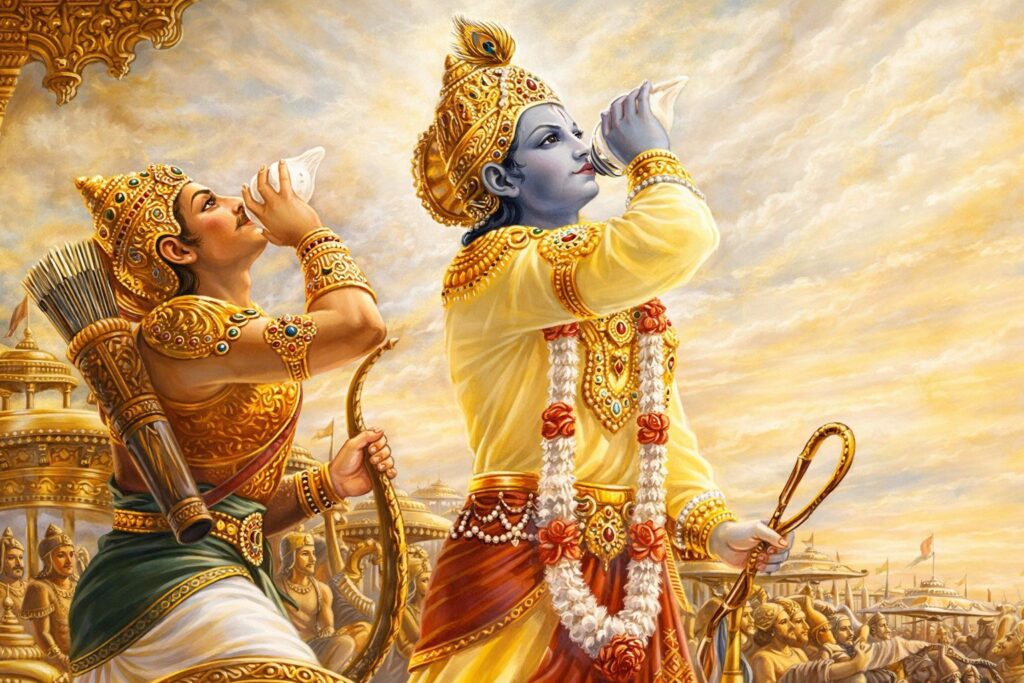
Lord Krishna does not just define karma. He walks Arjuna through it, layer by layer, with care. These six verses form the backbone of His teaching. Each one opens a door.
1. You Have the Right to Act, Not to the Fruits (BG 2.47)
कर्मण्येवाधिकारस्ते मा फलेषु कदाचन।
मा कर्मफलहेतुर्भूर्मा ते सङ्गोऽस्त्वकर्मणि॥
karmanye vadhikaras te ma phaleshu kadachana |
ma karma phala hetur bhur ma te sango ‘stvakarmanI
Translation: You have a right to perform your duties, but never to the fruits of your actions. Do not let the results be your motive, and do not become attached to inaction.
This is the most quoted verse in all of the Bhagavad Gita. And it is quoted so often because it speaks to something every human being recognizes: the exhausting habit of doing things only to monitor the result.
Shri Krishna is not asking Arjuna to stop caring. He is asking him to redirect his energy. Put everything into the action. Pour your devotion, your skill, your sincerity into the doing. And then, release the outcome to the Divine. This is the definition of karma yoga. It is not indifference. It is the deepest form of trust.
2. No One Can Escape Action, Not Even for a Moment (BG 3.5)
न हि कश्चित्क्षणमपि जातु तिष्ठत्यकर्मकृत्।
कार्यते ह्यवशः कर्म सर्वः प्रकृतिजैर्गुणैः॥
na hi kashchit kshanam api jatu tishthatyakarma-krit |
karyate hyavashah karma sarvah prakriti-jair gunaih
Translation: No one can remain even for a moment without performing action. Everyone is compelled to act by their natural qualities.
The mind often tries to escape karma by choosing inaction. “If I do nothing,” it thinks, “nothing can go wrong.” Shri Krishna closes that door gently but firmly. The three gunas, which are sattva (clarity), rajas (passion), and tamas (inertia), are always working inside us. Even lying still and doing nothing is an action driven by tamas. There is no neutral.
This verse is not meant to overwhelm you. It is meant to free you from the illusion of avoidance. Since action is inevitable, the real question becomes a meaningful one: what quality of action will you bring to this moment?
3. Perform Your Duty Without Attachment (BG 3.19)
तस्मादसक्तः सततं कार्यं कर्म समाचर।
असक्तो ह्याचरन्कर्म परमाप्नोति पुरुषः॥
tasmad asaktah satatam karyam karma samachara |
asakto hy acharan karma param apnoti purushah
Translation: Therefore, always perform your duties without attachment. By doing work without attachment, one attains the highest state.
The word Shri Krishna uses here is asakta, which means unattached. Not uninvolved. Not uncaring. Unattached to the outcome while being completely present in the doing.
A mother who tends to her child through illness does not love less because she is peaceful. A craftsman who carves with full attention is not lazy because he does not fret about who will buy the work. Detachment in the Gita’s sense is not coldness. It is a kind of wholeness that allows you to give everything to what is in front of you, because you are no longer divided by worry.
4. Even the Wise Get Confused About Karma (BG 4.16)
किं कर्म किमकर्मेति कवयोऽप्यत्र मोहिताः।
तत्ते कर्म प्रवक्ष्यामि यज्ज्ञात्वा मोक्ष्यसेऽशुभात्॥
kim karma kim akarmeti kavayo ‘py atra mohitah |
tat te karma pravakshyami yaj jnatva mokshyase ‘shubhat
Translation: Even the wise are confused about what is action and inaction. I will explain it to you, knowing which you will be freed from negativity.
There is something deeply reassuring about this verse. Shri Krishna acknowledges directly that the question of it confuses even learned people. He does not judge Arjuna for not knowing. He promises to teach.
This tells us that karma is not just about physical activity. It has three dimensions: karma (right, prescribed action), vikarma (forbidden or harmful action), and akarma (action in which no binding karma is created because the doer acts in perfect selflessness and awareness). The same outer act can belong to any of these three categories depending on the intention and consciousness behind it.
5. Selfish Work Binds, Selfless Work Frees (BG 3.9)
यज्ञार्थात्कर्मणोऽन्यत्र लोकोऽयं कर्मबन्धनः।
तदर्थं कर्म कौन्तेय मुक्तसङ्गः समाचर॥
yajnarthat karmano ‘nyatra loko ‘yam karma-bandhanah |
tad artham karma kaunteya mukta-sangah samachara
Translation: Work done for selfish reasons binds a person. But work done as a selfless offering frees them.
The word Shri Krishna uses is yajna, which means sacrifice or sacred offering. He is teaching that when you work only for personal gain, for your ego, for accumulation, that work ties you more tightly to the cycle of cause and effect. But when you work as an offering, when you dedicate your action to something beyond yourself, that work purifies rather than binds.
This is the root of nishkama karma, desireless action. It does not mean you work without purpose. It means you work without selfish craving for the result. Your work becomes worship. That is the transformation the Gita is pointing to.
6. The Nature of Karma is Deep, and That Depth is Worth Understanding (BG 4.17)
कर्मणो ह्यपि बोद्धव्यं बोद्धव्यं च विकर्मणः।
अकर्मणश्च बोद्धव्यं गहना कर्मणो गतिः॥
karmanno hy api boddhavyam boddhavyam cha vikarmanah |
akarmanas cha boddhavyam gahana karmano gatih
Translation: One must understand proper action, wrong action, and inaction. The nature of karma is deep and difficult to understand.
This verse is an invitation. Shri Krishna is saying: do not reduce karma to a simple formula. Take the time to truly understand it. Understand right action. Learn what makes an action harmful. Understand the rare and beautiful quality of action that creates no binding karma at all.
The depth He refers to is not there to discourage you. It is there to make the practice rich and alive. Every sincere person who has walked the path of dharma has found that karma, the more you understand it, the more it becomes not a constraint but a compass.
What are the Three Types of Karma in Hinduism?
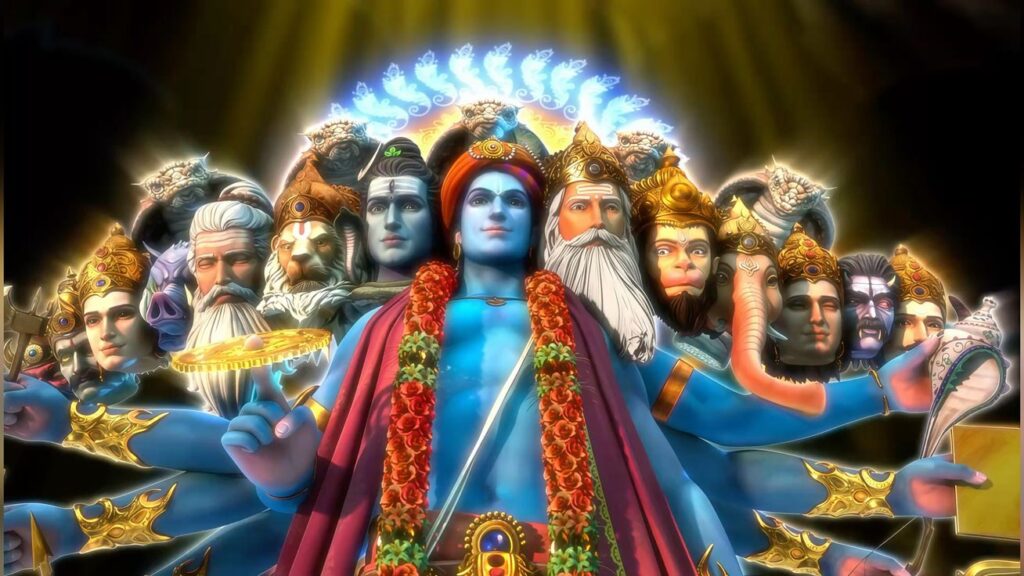
The Bhagavad Gita teaches karma yoga as the path forward. The broader Vedantic tradition also gives us a framework for understanding how karma accumulates and resolves across lifetimes. These are the three types of karma in hinduism:
- Sanchita Karma is the total karma accumulated across all past lives and all past actions. It sits in reserve, like seeds in a store. Most of it has not yet manifested.
- Prarabdha Karma is the portion of sanchita karma that is active in your present life. It shapes the circumstances you are born into, the conditions you cannot change. Even great saints, the scriptures tell us, must live out their prarabdha.
- Agami Karma (also called kriyamana karma) is the karma you create right now, through the choices you make today. This is where free will lives. This is the karma that your present awareness can shape.
Understanding these three types brings both humility and empowerment. You may not be able to undo what past karma has brought to your door. But you hold in your hands the quality of every action you take from this moment forward. That is where karma yoga begins.
What is Karma Yoga in Daily Life?
Lord Krishna did not give this teaching to a philosopher sitting in a quiet room. He gave it to a warrior standing in the middle of a battlefield, full of fear, grief, and confusion. That is not an accident. This teaching is meant for real life, with all its difficulty and beauty.Here is what karma yoga looks like when you actually live it:
- You bring full effort to what is yours to do. You do not hold back, and you do not perform for the audience of a particular result. The work receives your complete attention.
- You release the outcome with honesty. You do your best and then you let the result belong to the Divine. This is not passivity. It is a profound form of trust in the order of things.
- You act from dharma, not desire. You ask what is right rather than what is convenient. Duty guides the hand rather than appetite.
- You stay present. Karma yoga is the answer to the modern condition of being physically in one place while mentally somewhere else entirely. It calls you back, again and again, to the action in front of you.
None of this requires a monastery or a life free from responsibility. Krishna taught it precisely because Arjuna had responsibilities, relationships, pain, and purpose. The teaching holds in every kitchen, every office, every moment of honest work done with love and without grasping.
How Karma and Dharma Work Together?
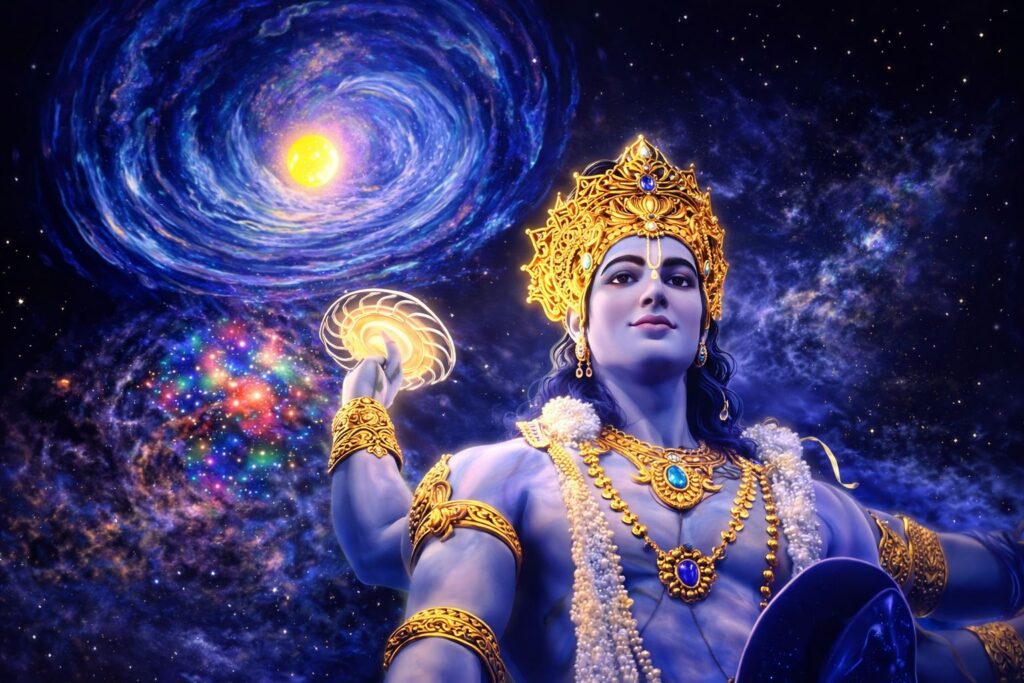
People often ask: what is the difference between karma and dharma? They are distinct but deeply connected.
Dharma is the right duty. It is the action that is appropriate for who you are, for the role life has given you, and for the moment you stand in. Karma is the action you actually take, and the consequences that flow from it.
When your karma aligns with your dharma, the action becomes clean.
It does not accumulate binding karma in the same heavy way. This is why Shri Krishna urges Arjuna not to abandon his dharma as a warrior, even in the face of grief. The warrior who fights with righteousness, without hatred, as a duty rather than a desire, creates a very different karma than one who fights out of rage or greed.
The simplest way to understand this is: dharma is the map, and karma is the journey you walk on it. Walk in alignment, and the journey itself becomes a form of moksha.
Conclusion
To grow up in the Hindu faith is to grow up with karma not as a concept but as a lived reality. You see it in the way your elders speak about choices and their fruits. And you feel it in the quiet accountability that dharma places in your hands. You encounter it in the Gita’s extraordinary honesty: yes, life is bound by action. And yes, action can become the very thing that sets you free.
Lord Krishna did not ask Arjuna to become a saint overnight. He asked him to act, to do the right thing, to stop clinging to a particular result, and to trust the order the Divine had placed beneath all things. That instruction is as alive today as it was on the banks of the Yamuna.
Whatever you face today, carry this with you: do the work with sincerity, offer the outcome with trust, and know that every action taken in that spirit is not just karma. It is karma yoga, the path of the devoted heart.
“The nature of karma is deep and difficult to understand.”
Bhagavad Gita 4.17
Jai Shri Krishna. May every action you take today be a quiet offering.
Frequently Asked Questions About Karma
1. What is karma in simple words?
Karma means action and its consequences. Every thought, word, and deed creates an effect. Good actions create positive outcomes, and harmful actions create suffering. More than that, karma is the field in which we grow spiritually.
2. What is karma yoga?
Karma yoga is the path of selfless action described in the Bhagavad Gita. It means performing your duty fully, without attachment to results, as a sacred offering. Lord Krishna teaches that this approach to work frees the soul rather than binding it.
3. What is the difference between karma and dharma?
Dharma is righteous duty, the right action for who you are and the moment you are in. Karma is the action you take and its consequences. When you act in alignment with your dharma, your karma becomes clean and spiritually freeing.
4. What are the three types of karma?
The three types of karma in Hindu dharma are sanchita karma (accumulated from all past lives), prarabdha karma (the portion active in your current life), and agami karma (the karma you create right now through your present choices).
5. Can karma be changed or removed?
Prarabdha karma must be lived through. But agami karma, the karma you generate today, is entirely within your hands. Through karma yoga, jnana (knowledge), bhakti (devotion), and surrender to the Divine, the binding quality of karma can be dissolved. This is the path to moksha.
The journey does not end here. Follow MFC on Instagram and Facebook to explore more sacred places, festivals, and living traditions of Sanatan Dharma.