
Many of us grow up hearing about heaven and hell. A place where good souls are rewarded, and wrong actions are punished. So it’s natural to wonder if there is a concept of heaven in Hinduism?
The answer is both yes and no.
Sanatan Dharma speaks of Swarga (heaven) and Naraka (hell), but not as eternal destinations. These realms are temporary stops in the soul’s journey, entirely shaped by karma, not final judgment. The Bhagavad Gita and the Vedas remind us that even heavenly pleasures end, and the soul returns again to the cycle of birth and death.
Because in Hinduism, the highest goal is not heaven. It is moksha, the ultimate freedom itself. So, let us understand what the scriptures truly say about heaven, hell, and what lies beyond them.
Is There Heaven in Hinduism?
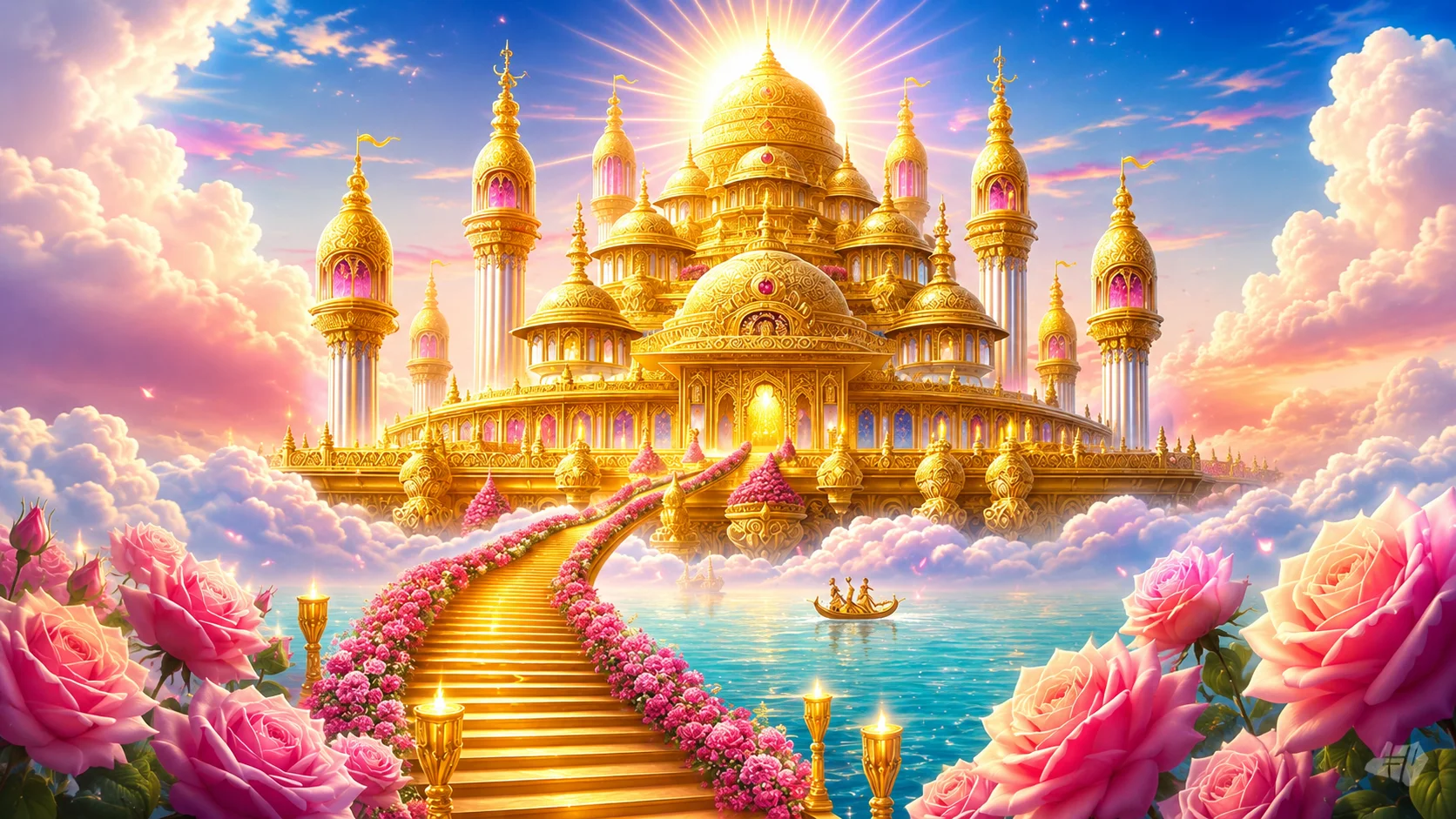
Yes, there is a concept of heaven in Hinduism. The scriptures describe Swarga Lok as a higher realm where souls experience pleasure, comfort, and the rewards of their good karma. And heaven is ruled by Indra and described as a place of light, abundance, and joy. But unlike the eternal heaven promised in some belief systems, heaven in Hinduism is not permanent.
It is simply a temporary result of punya (good deeds). Once the merit is exhausted, the soul must return to earthly life.
In Bhagavad Gita 9.20–21, Shri Krishna said:
“Te tam bhuktvā svarga-lokam viśālam
kṣīṇe puṇye martya-lokaṁ viśanti”
Meaning: After enjoying the vast pleasures of heaven, when their accumulated merit is spent, they return again to the mortal world.
This makes one thing very clear that heaven in Hinduism is real, but it is temporary. It is not the final destination of the soul, only a resting place along the long journey of karma and rebirth. That is why the Bhagwat Gita repeatedly guides seekers to aim beyond heaven, toward something higher and permanent.
What is Swarga Lok in Hinduism?
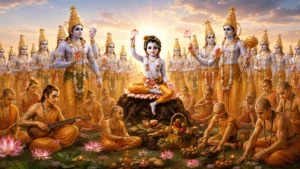
In Hinduism, heaven is known as Swarga Lok or simply Swarga. It is described as a higher celestial realm where souls enjoy the fruits of their good karma. Life in Swarga is said to be free from disease, sorrow, and suffering. There is beauty, music, abundance, and divine joy. The devas reside there, and Indra is often described as its ruler.
But Swarga is not a place of permanent liberation. It is a temporary reward, not freedom. Souls go there to experience the results of their righteous actions, and when those merits are exhausted, they must return to the cycle of birth and death.
Mentioned in Rig Veda 10.14.8:
“Yatra rājā Vaivasvato yatra devāḥ…”
“Where King Yama dwells and the righteous go, there the soul reaches the heavenly realms.”
This hymn describes the soul reaching higher worlds through virtuous living.
In Bhagavad Gita 9.21, Shri Krishna also said:
“Kṣīṇe puṇye martya-lokaṁ viśanti”
Meaning
When their good karma is exhausted, they return again to the mortal world. So even though heaven in Hinduism offers comfort and happiness, it remains temporary. It is still part of samsara, the ongoing cycle of coming and going.
And anything within this cycle cannot be eternal.
Is There Hell in Hinduism?
Yes, Hinduism also describes a concept similar to hell, known as Naraka. But just like heaven, Naraka is not eternal punishment. It is not a place of endless suffering or permanent damnation. Instead, it is a temporary realm where the soul experiences the consequences of negative karma. The purpose is not revenge, but correction and purification.
In Sanatan Dharma, Naraka is part of the law of karma, not divine anger. After the results of one’s actions are experienced, the soul moves forward again into rebirth.
In Bhagavad Gita 16.19–20, Shri Krishna said:
“Tān ahaṁ dviṣataḥ krūrān saṁsāreṣu narādhamān
kṣipāmy ajasram aśubhān āsurīṣv eva yoniṣu”
Meaning: Those who live with cruelty and harmful actions fall into lower births and suffering states repeatedly.
This shows that negative karma leads to painful realms and lower existences, but still within the cycle of rebirth, not eternal punishment.
In the Garuda Purana (Preta Khanda): The text describes various Narakas where souls undergo suffering according to their deeds, after which they are purified and reborn. It means that the suffering is temporary and karmic, meant to balance actions, not to condemn the soul forever.
So just like heaven in Hinduism, hell is also temporary. Both are experience-based on karmic fruit. Neither is the final destination. Because the soul always continues its journey.
How Long Do Souls Stay in Heaven or Hell?
In heaven and hell, the soul stays there as long as its karma lasts. Good actions lead to pleasant experiences in Swarga. Harmful actions lead to suffering in Naraka. But once those karmic results are fully experienced, the stay ends naturally. Then the soul returns to earthly birth.
So heaven and hell are not eternal destinations. They are temporary phases in the larger cycle of samsara that includes birth, death, and rebirth.
Bhagavad Gita 9.21 says:
“Te taṁ bhuktvā svarga-lokaṁ viśālaṁ
kṣīṇe puṇye martya-lokaṁ viśanti”
Meaning: After enjoying the vast pleasures of heaven, when their merit is exhausted, they return again to the mortal world.
This verse clearly shows that even heavenly life ends.
Bhagavad Gita 8.16 says:
“Ā-brahma-bhuvanāl lokāḥ punarāvartino ’rjuna”
Meaning: From the highest worlds to the lowest, all realms are places of return, O Arjuna.
Even the highest heavens are temporary. Rebirth continues. This is one of the most direct statements in the Gita. Nothing within creation is permanent. As long as the soul is bound by karma, it keeps moving.
Heaven. Earth. Hell. Again and again.
Which naturally raises a deeper question: If heaven in Hinduism itself is temporary, then what is truly permanent?
Why Heaven is Not The Final Destination in Hinduism?
After understanding heaven in Hinduism, one thing becomes clear. Swarga offers comfort but temporary. Naraka brings suffering, also temporary. And anything temporary cannot be the ultimate goal of the soul.
In Sanatan Dharma, heaven is not liberation. It is simply a reward for good karma. Once that merit ends, the soul must return to birth and death again. So even heavenly pleasure still keeps the soul bound to samsara. Which means it is still a form of bondage.
The scriptures repeatedly teach that the true aim of life is not reaching heaven, but going beyond all realms entirely.
That state is called moksha, freedom from the cycle itself. Not better experiences. Not higher worlds. But complete liberation.
Bhagavad Gita 8.16:
“Ā-brahma-bhuvanāl lokāḥ punarāvartino ’rjuna”
Meaning: Even the highest heavenly worlds are subject to return and rebirth. So heaven cannot be eternal freedom.
Bhagavad Gita 2.51:
“Karma-jaṁ buddhi-yuktā hi phalaṁ tyaktvā manīṣiṇaḥ
janma-bandha-vinirmuktāḥ padaṁ gacchanty anāmayam”
Meaning: The wise, giving up attachment to the fruits of actions, become free from birth and death and attain the state beyond suffering.
This “state beyond” is moksha. Not Swarga. Not pleasure. But freedom itself. That is why Hinduism does not encourage chasing heaven. It encourages transcending it because true peace is not found in a better place. It is found in becoming free from the need to go anywhere at all.
What Is Moksha in Hinduism?
Moksha is liberation from the cycle of birth, death, and rebirth. It is the state where the soul becomes free from karma and no longer returns to heaven, hell, or earthly life. Instead of moving between different realms, the soul realizes its true nature and attains permanent freedom and union with Brahman.
In Bhagavad Gita 8.15, Shri Krishna says:
“Mām upetya punar janma duḥkhālayam aśāśvatam
nāpnuvanti mahātmānaḥ”
Meaning: Those who attain Me do not take birth again in this temporary world of suffering.
This verse clearly states that liberation ends rebirth itself. A liberated soul does not return to any realm, not even heaven. That permanent freedom from samsara is called moksha.
Moksha vs Heaven in Hinduism Explained
By now, it’s clear that heaven in Hinduism is real, but temporary. So how is moksha different? The simplest way to understand this is to see them side by side.
| Heaven (Swarga) | Moksha |
| Reward for good karma | Freedom from all karma |
| Temporary stay | Permanent state |
| Pleasure and comfort | Complete liberation |
| Still within birth and death | Beyond birth and death |
| Soul returns to Earth | No rebirth |
| Part of samsara | Freedom from samsara |
Heaven gives enjoyment and depends on karma. On the other hand, Moksha gives freedom and ends karma itself. So while Swarga may sound attractive, it does not solve the real problem of life, that is repeated birth, death, and suffering.
In Bhagavad Gita 2.72, Shri Krishna says:
“Eṣā brāhmī sthitiḥ pārtha… na enaṁ prāpya vimuhyati
sthityāsyām anta-kāle ’pi brahma-nirvāṇam ṛcchati”
Meaning: One who attains this state is no longer deluded and reaches complete liberation (Brahma-nirvana). This is not a place. It is freedom itself.
Mundaka Upanishad 3.2.9:
“Bhidyate hṛdaya-granthiḥ… amṛtatvaṁ ca gacchati”
Meaning: When ignorance is destroyed, the soul attains immortality.
Not heavenly pleasure. But immortality beyond all worlds. That is moksha. So Hinduism does not promise an easy heaven. It points toward something far greater. Not a better destination. But the end of all journeys.
Conclusion
The idea of heaven comforts us.
A place without pain, without struggle, filled with joy and reward sounds beautiful. And yes, Hindu scriptures do describe Swarga as a real realm where good karma bears fruit. But they also remind us of something deeper.
Heaven in Hinduism is not eternal. It is temporary.
The Bhagavad Gita clearly teaches that even the highest worlds are subject to return. After the results of one’s karma are exhausted, the soul must come back again into the cycle of birth and death.
That is why Sanatan Dharma does not ask us to chase heaven. It guides us toward moksha, a state beyond all realms, beyond pleasure and pain, beyond coming and going.
But achieving moksha requires deep realization. So, we can start by being conscious about our karma and being kind even when no one is watching. So, experience heaven first, and moksha will follow when our soul is ready.