

Yes, imbalanced chakras can affect your digestion. In Ayurveda, digestion is not seen as a purely physical process. It reflects how the body, mind, and inner energy work together. When this balance breaks, digestive discomfort often follows.
Ancient traditions connect digestion with inner fire, discipline, and emotional stability. When stress, irregular habits, or emotional strain disturb this system, the body struggles to process food properly. This is why two people can eat the same meal and experience digestion very differently.
This blog explores how chakras relate to digestion, which chakra plays the key role, and why digestive issues may signal deeper imbalance rather than just poor food choices.
What Are Chakras and Why Do They Matter to the Body?
Chakras are energy centers described in ancient Indian systems. It was first described in Vedic and later Tantric texts around 1500 BCE. It explains the connection between the body and the mind. When we talk about chakras and digestion, we are looking at how internal energy balance influences physical processes like appetite, metabolism, and gut health.
And don’t get confused, Chakras are not physical organs, but they guide how the body responds to stress, emotions, and daily habits. Each chakra connects to specific emotions and bodily functions. When chakras remain balanced, energy flows smoothly, supporting digestion, immunity, and mental clarity.
But when this balance breaks, digestive issues linked to chakra imbalance often appear as discomfort, fatigue, or irregular digestion. And according to chakra, digestion is not limited to the stomach alone. Chakras and digestion work together, influenced by emotional stability, mental focus, and inner discipline.
This is why traditional wisdom views digestion as a whole-body and whole-mind process, not just a biological reaction to food.
What Are the Different Types of Chakras?
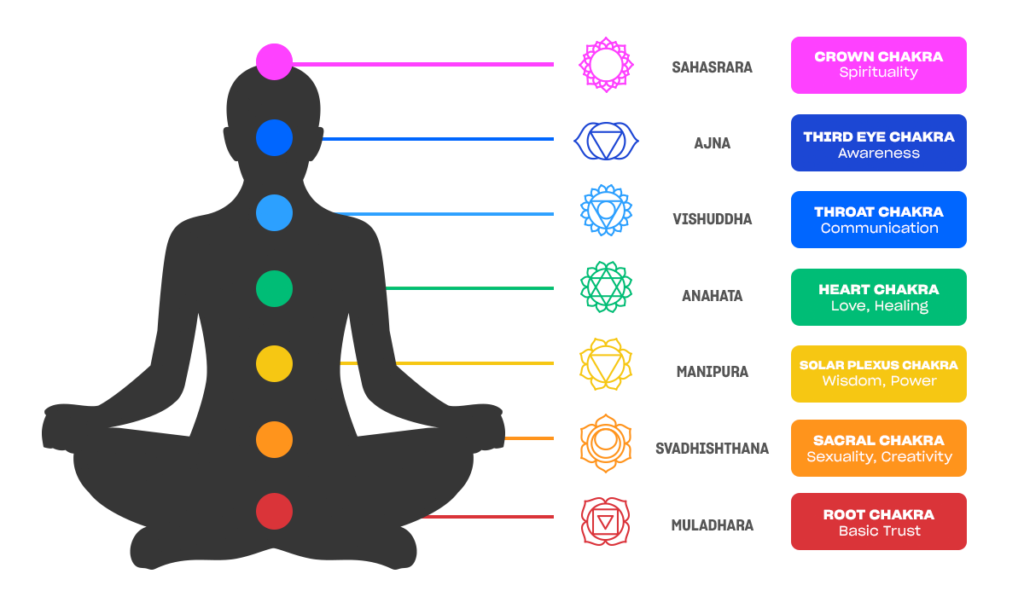
Traditional Indian wisdom describes seven primary chakras that govern different physical, emotional, and mental functions. Together, they form the energy system that influences overall well-being, including chakras and digestion.
Muladhara Chakra (Root Chakra)
Located at the base of the spine, this chakra relates to stability, safety, and survival. When imbalanced, it can affect feelings of insecurity and stress, which indirectly disturb digestion by keeping the body in constant alert mode.
Svadhisthana Chakra (Sacral Chakra)
Situated below the navel, this chakra governs creativity, pleasure, and emotional flow. Emotional suppression or imbalance here can influence eating patterns, cravings, and emotional eating.
Manipura Chakra (Solar Plexus Chakra)
Located around the navel region, this chakra plays a direct role in digestion and metabolic strength. It governs digestive fire, discipline, and the body’s ability to transform food into energy.
Anahata Chakra (Heart Chakra)
Positioned at the center of the chest, it connects emotions like compassion and balance. Emotional heaviness or unresolved stress here can influence gut discomfort through the mind–gut connection.
Vishuddha Chakra (Throat Chakra)
Located in the throat, this chakra relates to expression and truth. Suppressed emotions and unspoken stress can subtly affect digestion by increasing internal tension.
Ajna Chakra (Third Eye Chakra)
Situated between the eyebrows, this chakra governs awareness and clarity. Mental overload and overthinking often disturb digestion by disrupting natural hunger and eating rhythms.
Sahasrara Chakra (Crown Chakra)
Located at the top of the head, it represents higher awareness and connection. While not directly linked to digestion, an imbalance here can influence overall harmony in the body.
Which Chakra Is Responsible for Digestion?
The chakra responsible for digestion is the Manipura chakra, also known as the solar plexus chakra. In the context of chakras and digestion, Manipura plays the central role in regulating digestive strength, metabolism, and the body’s ability to process food efficiently.
The Manipura chakra is located around the navel region, close to the stomach and digestive organs. Ancient Indian wisdom associates this chakra with fire, transformation, and inner power. Just as fire transforms raw food into usable energy, the Manipura chakra governs how food turns into nourishment.
When the Manipura chakra remains balanced, digestion feels steady and reliable. Hunger appears naturally, food gets processed smoothly, and energy levels remain stable after meals. When this chakra becomes imbalanced, digestive issues such as acidity, bloating, sluggish digestion, or irregular appetite often begin to surface.
This is why discussions around imbalanced chakras and digestion almost always lead back to the Manipura chakra. It acts as the energetic bridge between what we eat and how the body absorbs and uses it.
How Does Manipura Chakra Affect Digestion?

The Manipura chakra influences digestion through the concept of inner fire, known in Ayurveda as Agni. This digestive fire determines how efficiently the body breaks down food, absorbs nutrients, and eliminates waste. When Manipura energy remains balanced, digestion feels smooth and predictable.
- Regulates appetite and hunger signals: A stable Manipura chakra allows natural hunger to arise at the right time. It also helps the body recognize fullness, preventing overeating or loss of appetite.
- Maintains energy after meals: Balanced chakra energy ensures food converts into usable energy. This prevents post-meal fatigue, heaviness, or sudden energy crashes.
- Influences digestion through emotions: Stress, self-doubt, and emotional pressure disturb the Manipura chakra. Over time, this emotional imbalance reflects as acidity, bloating, or sluggish digestion.
- Explains persistent digestive issues: When diet remains healthy but digestion continues to suffer, chakra imbalance and digestive problems often exist together. This highlights the deeper connection between chakras and digestion.
Signs of Imbalanced Chakras That Cause Digestive Problems
Digestive issues often appear long before we realize that internal balance is disturbed. When chakras and digestion fall out of sync, the body sends clear signals through both physical discomfort and emotional patterns.
Physical Digestive Signs:
- Frequent acidity, gas, or bloating even after simple meals
- Feeling heaviness or fatigue soon after eating
- Irregular appetite, either constant hunger or complete loss of it
- Slow digestion, constipation, or discomfort in the stomach region
- Sensitivity to food that previously felt easy to digest
Emotional and Behavioral Signs:
- Stress eating or loss of appetite during emotional pressure
- Feeling overwhelmed, restless, or mentally drained around mealtimes
- Difficulty maintaining regular eating habits
- Constant worry or overthinking that disrupts hunger signals
- Lack of satisfaction even after eating enough food
These signs suggest that digestion is being influenced by more than just food quality. In many cases, imbalanced chakras and digestion work together, reflecting how emotional strain and inner instability disturb the digestive process.
What Does Ayurveda Say About Digestion and Energy Balances?
Ayurveda places digestion at the center of health. It teaches that strong digestion depends on Agni, the digestive fire that breaks down food and transforms it into energy. When Agni remains balanced, the body processes food smoothly and maintains strength and clarity.
According to Ayurveda, weak or disturbed Agni leads to incomplete digestion. This results in heaviness, discomfort, and the buildup of toxins, known as ama. Over time, this weak digestion affects both physical health and mental stability.
Ayurvedic wisdom also recognizes that emotions, stress, and daily habits directly influence digestion. Irregular eating, constant mental pressure, and lack of routine weaken digestive fire even when food choices are correct. This aligns closely with the concept of chakras and digestion, where inner imbalance reflects through gut discomfort.
In this view, digestion is not just about what we eat, but how the body receives, processes, and transforms nourishment. Balance in energy supports balance in digestion.
Can Stress and Emotions Block Digestion Through Chakras?
Yes. Stress and unresolved emotions can directly interfere with digestion by disturbing the body’s internal balance. In the context of chakras and digestion, emotional pressure weakens the Manipura chakra, which controls digestive strength and metabolic fire.
When the mind stays under constant stress, the body shifts into survival mode. Digestion slows down because energy gets redirected toward coping rather than processing food. This is why meals eaten during anxiety, multitasking, or emotional tension often lead to bloating, acidity, or discomfort.
Emotions like fear, self-doubt, and suppressed frustration also affect digestion. These emotional states disturb the natural rhythm of hunger and fullness. Over time, this imbalance reflects as irregular appetite, stress eating, or complete loss of interest in food.
This explains why digestive issues often persist even when diet improves. Without emotional balance, chakras and digestion remain misaligned, and the gut continues to struggle despite healthy food choices.
Simple Daily Practices to Support Digestion Through Chakra Balance
Supporting digestion does not require complex rituals or strict routines. Small, mindful habits help maintain balance between chakras and digestion in everyday life.
- Eat with attention: Eating while distracted weakens digestion. Sitting calmly and focusing on food helps the body prepare for proper digestion.
- Respect natural hunger and fullness: Skipping meals or overeating disturbs the digestive rhythm. Listening to hunger cues supports a balanced Manipura chakra.
- Prefer warm, freshly prepared food: Ayurveda emphasizes warmth in meals to support digestive fire. Cold or processed food often weakens digestion over time. Choosing seasonal, warming meals also supports digestive fire, especially in colder months. You can explore best winter foods for warmth that align naturally with Ayurvedic principles and digestive balance.
- Create a regular eating routine: Eating at inconsistent times confuses the digestive system. Regularity strengthens digestion and energy balance.
- Pause before meals: Taking a few calm breaths before eating helps settle the mind. This simple pause supports smoother digestion by reducing stress.
These practices do not replace medical care. They simply help create an environment where digestion and inner balance can function more naturally.
Is Digestion Only Physical or Also Energetic?
Digestion is often treated as a purely physical process, limited to food, enzymes, HCl and the stomach. Ancient Indian Ayurveda takes a wider view. It sees digestion as a process of transformation that involves the body, mind, and inner energy working together.
In the context of chakras and digestion, food is not the only thing being processed. Emotions, stress, and daily experiences also pass through the same system. When the mind remains unsettled, digestion struggles, even if the diet looks ideal on paper.
This perspective explains why the same meal can feel nourishing on one day and uncomfortable on another. Inner balance determines how well the body receives and transforms what it consumes. Digestion reflects not just what we eat, but how we live.
Understanding digestion in this way encourages awareness rather than control. When balance improves, digestion improves naturally.
Conclusion
So, yes, imbalanced chakras can affect digestion, especially when the Manipura chakra loses balance. Ancient Indian Ayurveda and chakra balance remind us that digestion reflects more than food choices. It mirrors emotional stability, routine, and inner balance.
Understanding the connection between chakras and digestion shifts the focus from quick fixes to awareness. Digestive discomfort often signals that the body and mind are not moving in harmony. When we eat with attention, manage stress, and respect natural rhythms, digestion responds more gently.
Rather than treating digestion as a problem to fix, it helps to see it as a message. When balance returns, the body usually follows.
Let’s stay connected! Come say hi on Instagram or follow us on Facebook for more interesting knowledge.